

A July barbecue in Vaughan can change mood fast. One minute the grill is on, kids are moving between the patio door and the backyard, and someone notices wasps flying in a straight line to the same spot under the eave. The sound alone is enough to make people step back.
That reaction is appropriate. A wasp nest close to a home isn't a small annoyance. It creates a real safety issue for family members, guests, delivery drivers, and pets using the yard. The hardest part for many Vaughan residents is that the nest often seems reachable, which makes a quick do-it-yourself fix feel tempting.
That's usually when people make the problem worse. Hidden nests, active nests, and nests attached to structural gaps can turn aggressive quickly, and a rushed response can damage siding, soffits, vents, or wall spaces. Safe removal starts with knowing what you're looking at, what not to do, and when professional help isn't optional.
Table of Contents
- A Wasp Nest Discovery in Your Vaughan Backyard
- Identifying Wasp Nests and Assessing the Immediate Risk
- The Critical Choice DIY Dangers vs Professional Removal
- The Vanish Professional Wasp Removal Process Step by Step
- Your Year-Round Wasp Prevention Checklist for Vaughan Homes
- Vaughan Wasp Removal FAQs
A Wasp Nest Discovery in Your Vaughan Backyard
A common call starts with a family using the backyard on a warm weekend. Someone notices a steady stream of wasps slipping into a gap above the patio or under the deck. At first, it looks minor. Then a second person spots more movement around the same area, and the whole yard starts to feel off-limits.
That's how many wasp problems unfold in Vaughan homes. The nest often stays hidden until traffic increases. A few wasps around the barbecue, recycling bins, or sliding door usually aren't random. They're often part of a direct route back to an active nest on the structure.
The stress rises quickly for good reason. Children don't always recognise a danger zone, pets investigate corners and undersides, and adults often feel pressure to “handle it now” before guests arrive or before the weekend is ruined. But urgency doesn't mean rushing the job.
Practical rule: If wasps are entering one exact opening repeatedly, treat that spot as an active nest site and keep people away from it.
Some Vaughan residents first find nests near rooflines. Others discover them around a shed, deck skirt, hydro box enclosure, or over a side entrance. In homes with finished basements, garden-level patios, or busy rear yards, those nest locations create constant conflict with everyday use of the property.
The good news is that a safe solution is possible. The right approach depends on three things. First, whether the nest is exposed or hidden. Second, how close it is to normal household traffic. Third, whether the structure itself is part of the problem.
When handled properly, wasp nest removal in Vaughan isn't about knocking down a visible nest and hoping for the best. It's about controlling risk, treating the colony correctly, and making sure the same area doesn't become a repeat problem later in the season.
Identifying Wasp Nests and Assessing the Immediate Risk
What Vaughan residents usually notice first
Most homeowners don't see the full nest right away. They notice movement. Wasps tend to reveal themselves through repeated flight paths, especially around roof edges, deck framing, sheds, and exterior wall features.
A paper wasp nest often looks open and umbrella-like when viewed from a safe distance. A hornet-style nest is typically enclosed and paper-like, with a rounded outer shell. The shape matters, but the traffic pattern matters more. If several wasps are using the same route, the area should be treated cautiously even if the nest body isn't fully visible.
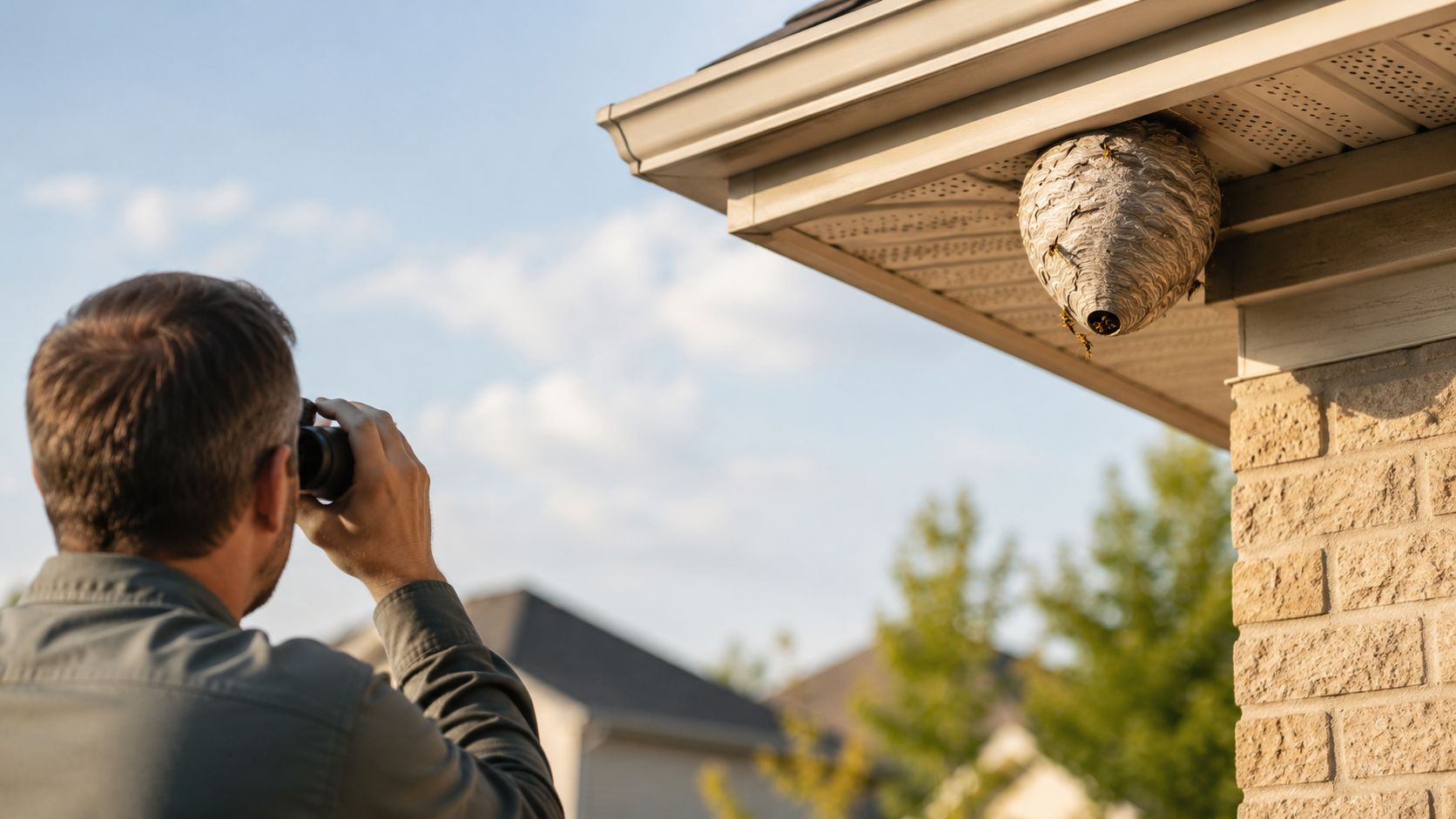
This is the safest way to inspect from a distance.
Homeowners who want broader background on nesting behaviour can review this guide on wasp infestation prevention and response.
Where nests are most often found on Vaughan homes
In Vaughan, nests are frequently built where the structure gives wasps cover from rain, wind, and foot traffic. Over 75% of residential infestations occur in sheltered, hard-to-reach areas such as soffits, roof eaves, deck undersides, and hydro box enclosures, according to local Vaughan wasp control data.
That pattern fits what technicians see every season. The problem isn't just access difficulty. These are also places where people use ladders, lean over railings, or reach into blind corners without seeing the full colony.
Common trouble spots include:
- Roof eaves and soffits: Wasps favour protected edges with easy entry points.
- Deck undersides: These stay shaded and are close to outdoor eating areas.
- Sheds and detached structures: Light traffic lets colonies develop unnoticed.
- Hydro box enclosures and utility corners: Tight, sheltered voids suit nesting.
What to do in the first few minutes
Once a possible nest is spotted, the first response should be simple and controlled.
- Create distance. Keep children, pets, and visitors away from the flight path.
- Don't tap, spray, or block the opening. That can push defensive wasps into a more aggressive response.
- Watch from indoors or from well back. A phone zoom or binoculars is safer than moving closer.
- Avoid sealing the entry point. If the nest is attached to siding or inside a cavity, trapping wasps in the wall can create a bigger structural and safety problem.
A hidden nest is often more dangerous than an exposed one because people underestimate it and disturb it by accident.
This is also where broader pest awareness matters. Vaughan homes can face other seasonal issues at the same time, from ants and carpenter ants around decks to mice in garages, raccoons in soffits, squirrels in roof voids, and cockroaches or bed bugs inside occupied spaces. Each pest needs a different response. With wasps, especially, close-range guesswork isn't worth the risk.
The Critical Choice DIY Dangers vs Professional Removal
Why DIY removal goes wrong so often
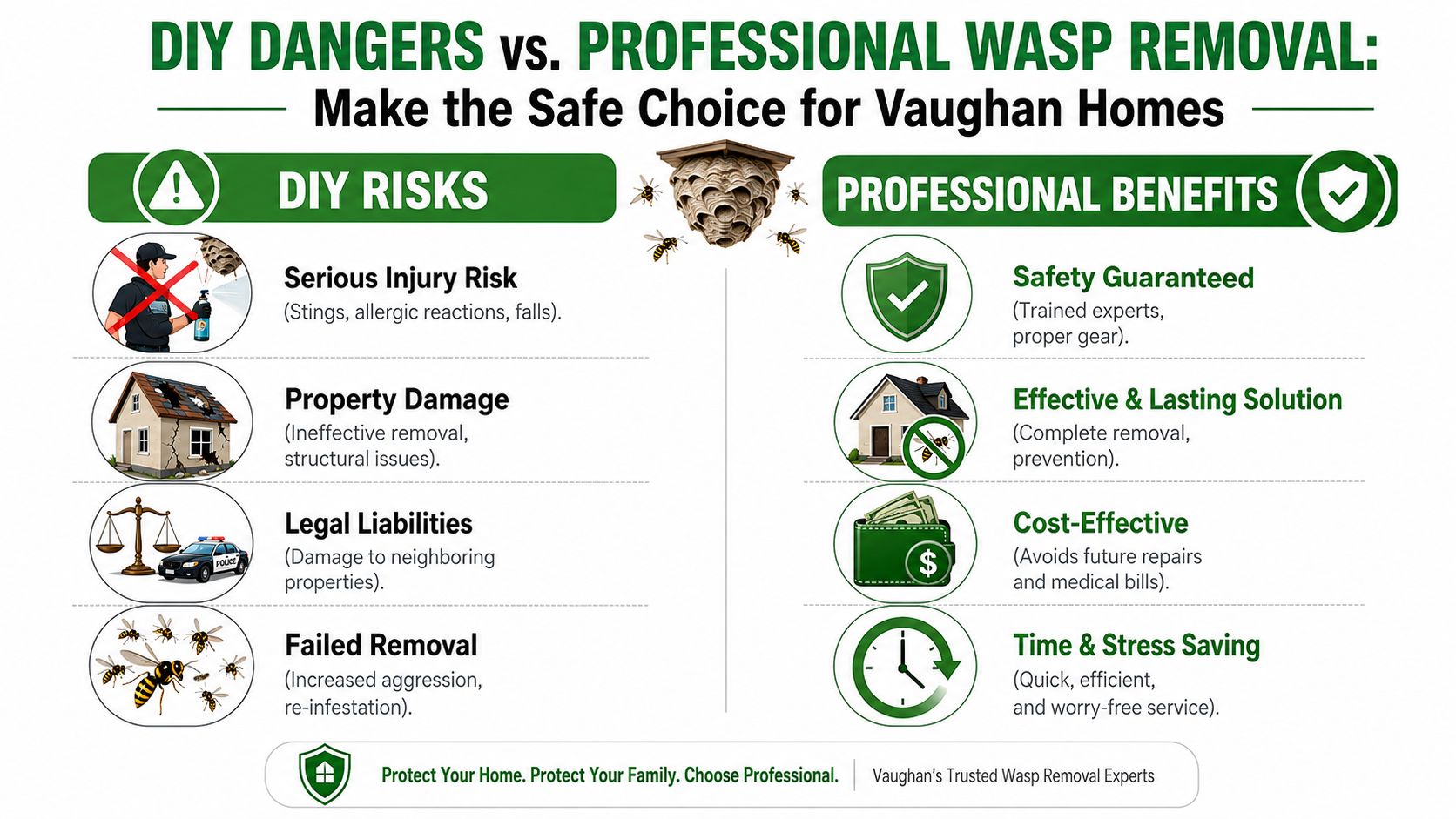
Most do-it-yourself wasp jobs fail for predictable reasons. Homeowners usually work at the wrong time of day, use incomplete protective gear, misread the nest type, or treat only what they can see. That combination puts people in danger and leaves part of the colony behind.
The gap between DIY and licensed removal is large. In Vaughan, professional wasp nest removal success rates exceed 95%, while 72% of DIY attempts fail in the GTA, often because of inadequate protective equipment and nest misidentification. Those failed attempts can also lead to a 40% re-infestation rate within three months, according to regional removal benchmarks.
This comparison captures the trade-off clearly.
A rushed daytime spray is a common mistake. So is hitting a nest with water or using household products that don't solve the colony. People often manage to irritate the nest without eliminating it. That's when calls come in after multiple stings, a fall from a ladder, or visible wasp activity that returns the next day.
The hidden nest problem in Vaughan homes
Exposed nests are dangerous enough. Hidden nests are where DIY becomes especially risky. Thirty per cent of infestations in GTA homes occur in hidden structural cavities rather than exposed locations, based on City of Vaughan wasp guidance.
That matters because the wrong response can affect the house itself. Spraying into siding gaps, sealing an active opening, or forcing wasps deeper into a wall void can create new issues behind the surface. The same city guidance also states that the City of Vaughan mandates hiring licensed exterminators for private property nests.
For residents also dealing with skunks under decks, squirrels in attic vents, or raccoons entering rooflines, it helps to understand when a problem crosses from nuisance to specialist work. This overview of expert wildlife removal services is a useful companion resource because hidden access points often attract more than one type of pest or wildlife issue over time.
What professional removal changes
A licensed approach changes the job in three ways. It improves safety, improves accuracy, and improves the odds that the nest won't become a repeat call.
The difference isn't only about wearing a suit. It's about knowing whether the nest is exposed, secondary, concealed, or linked to a structural void. It's also about treating the colony at the right time and checking the surrounding area for related activity.
For homeowners weighing the decision, this resource on why professional pest control services matter gives a practical overview of where DIY stops being reasonable.
If a nest is attached to the house, inside a cavity, above a doorway, or close to daily family use, professional removal isn't a luxury. It's the safe standard.
The Vanish Professional Wasp Removal Process Step by Step
Step 1 through Step 2
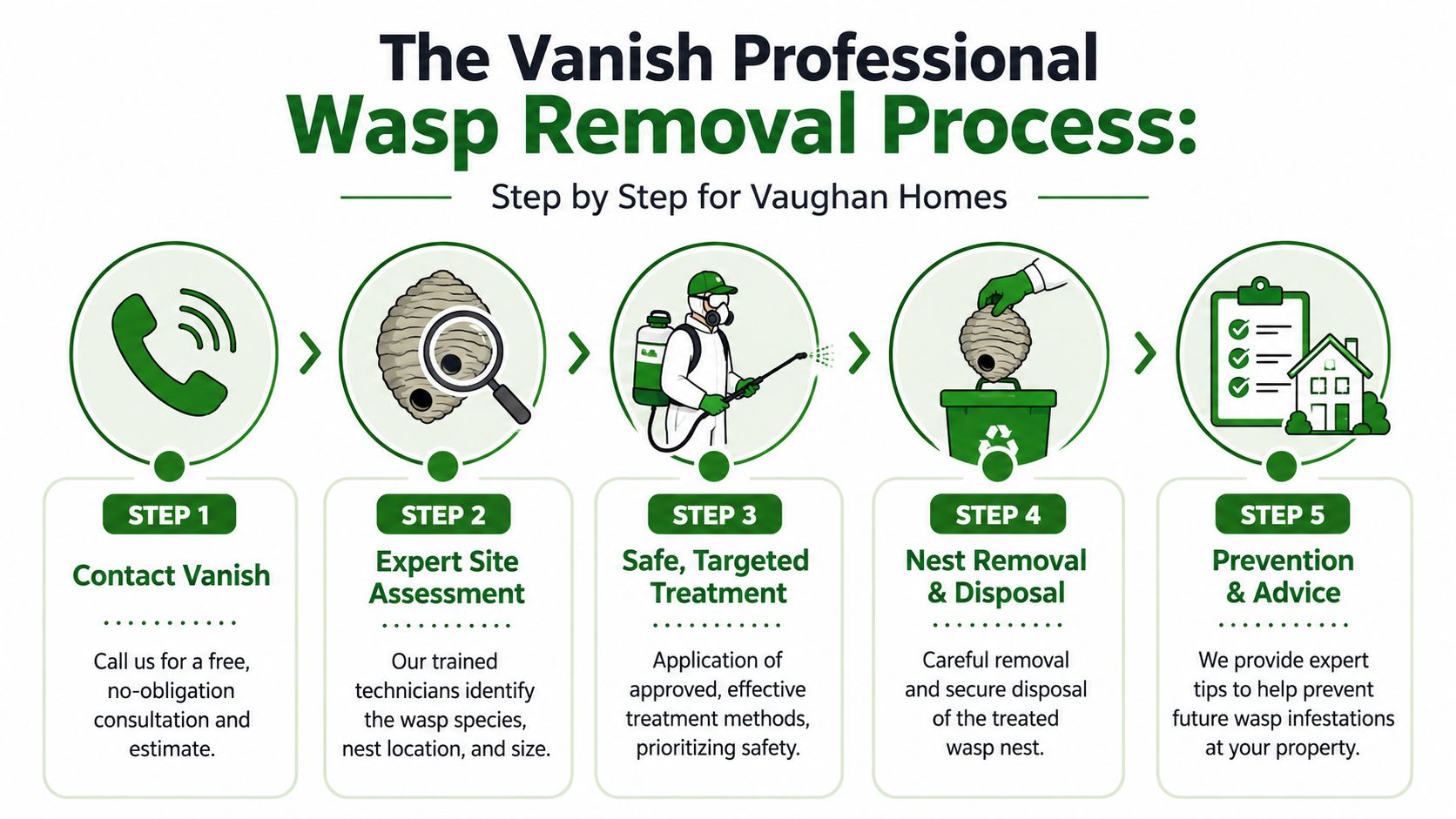
Professional removal should feel organised from the first contact. The first step is gathering clear information about the location, the visible wasp activity, how close the nest is to doors or patios, and whether anyone in the household has sting sensitivity. That early triage helps determine urgency and access needs before arrival.
The second step is the site assessment. A technician checks the nest position, likely species, entry routes, height, and whether the colony is fully exposed or working through a hidden gap. The inspection also focuses on structural features such as soffits, vents, fascia joints, deck framing, and utility boxes.
This process is easier to understand visually.
A good process also depends on consistency behind the scenes. For readers interested in how scheduling, documentation, and follow-up systems support field work, this overview of pest control management solutions offers helpful operational context.
Step 3 through Step 5
Treatment timing is critical. Professional wasp nest removal begins with evening or early morning application of targeted insecticides when wasps are least active, reducing aggression and sting risk by up to 85%, and technicians then perform physical nest detachment using full-body protective gear to ensure complete colony eradication, according to professional removal methodology used in the GTA.
That sequence matters because the goal isn't just to hit the nest. The goal is to control the colony when defensive behaviour is lower and the majority of activity is concentrated at the site. Once treatment is complete and the situation is safe, the nest can be detached and disposed of properly.
In some locations, chemical exposure isn't the preferred route. Sensitive areas such as play zones, garden-adjacent spaces, or parts of a property where residents want low-chemical intervention may be better suited to a thermal or exclusion-based strategy. Eco-conscious options are especially relevant in family yards, around pet areas, and near spaces where residents spend time daily.
A structured professional visit usually includes:
- Targeted inspection findings: The resident gets a clear explanation of where the colony sits and why that location was chosen by wasps.
- Controlled treatment timing: The work is scheduled when activity is lower, rather than at peak daytime movement.
- Safe nest handling: Removal happens only when it can be done without provoking residual activity.
- Practical prevention advice: The resident learns what on the structure made the site attractive in the first place.
The most effective wasp jobs don't end with removal. They end with the entry point, attractant, or shelter condition being addressed too.
That last step is where long-term value comes from. A house that has had one nest in an eave or deck corner can become attractive again if the same sheltered gap remains unchanged.
Your Year-Round Wasp Prevention Checklist for Vaughan Homes
Spring prevention matters most
Ontario's wasp cycle gives homeowners an important timing advantage. Every Ontario wasp nest naturally collapses after the first hard frost in the autumn, and removing or addressing nesting sites in early spring, before colonies expand, can reduce labour costs and safety risks by up to 60% compared with summer removal, according to Ontario seasonal guidance on wasp nest timing.
That's why April and May are the best months to inspect vulnerable areas. By then, overwintered nests are no longer active, and new colonies are still small if they've started at all. For residents curious about seasonal behaviour, this article on where wasps go in the winter adds useful Ontario context.
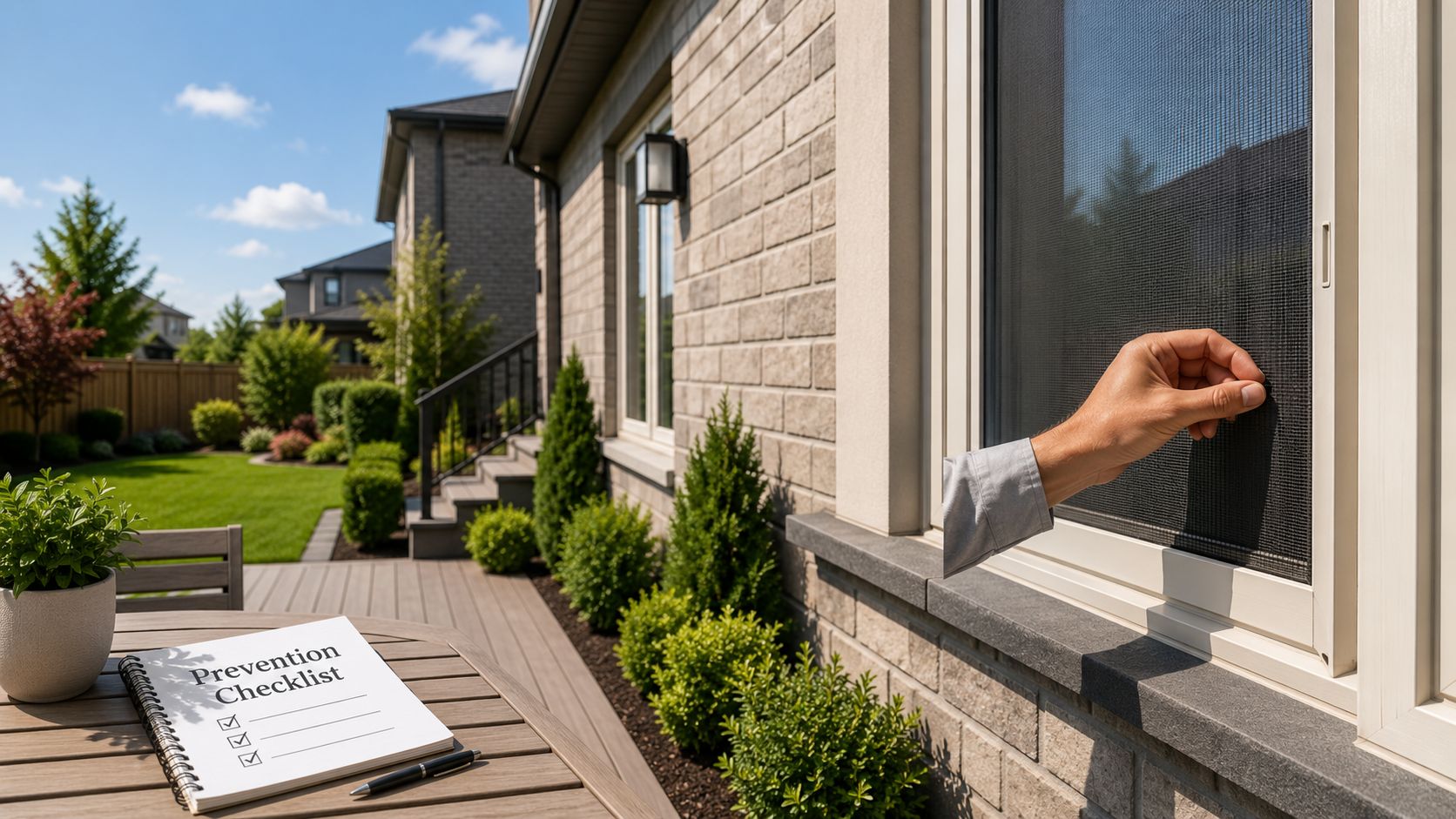
This is the checklist image many homeowners find easiest to follow.
Summer habits that reduce attraction
Prevention isn't only about sealing gaps. It's also about reducing the things that draw foraging wasps close to family activity.
- Keep lids closed: Garbage and recycling areas should stay shut tightly.
- Clear food quickly: Outdoor meals, sugary drinks, and pet food shouldn't sit out longer than necessary.
- Watch deck and fence lines: Shaded protected corners deserve a quick scan every week during active season.
- Repair screens and trim gaps: Openings around windows, vents, and eaves can invite inspection by new queens.
A broader smarter pest control approach is helpful here because lasting prevention usually comes from combining inspection, exclusion, sanitation, and monitoring rather than depending on one product.
What to check in autumn and winter
After frost, old nests can still remain attached even though the colony has collapsed. That doesn't mean they should be ignored entirely. Winter is a good time to inspect the structure, remove old visible nest material where safe, and plan repairs to soffits, screens, trim, or deck features before spring.
Vaughan homes that also battle mice in garages, ants near foundations, rats around waste areas, termites in structural wood, or wildlife around attics benefit from this seasonal inspection habit. One careful exterior review often helps prevent multiple pest problems, not just wasps.
Vaughan Wasp Removal FAQs
Some questions come up repeatedly after a nest is found. The answers below keep the focus on safety, timing, and what Vaughan residents should do next.
Vaughan Wasp Nest FAQ
| Question | Answer |
|---|---|
| What should a homeowner do first after spotting a nest? | Keep people and pets away from the area, avoid disturbing the nest, and observe from a safe distance. If the nest is attached to the home or hidden in a structural gap, professional assessment is the safest next step. |
| Is a visible nest always safer than a hidden one? | Not necessarily. Visible nests are easier to locate, but hidden nests in walls, soffits, or siding gaps can create more complicated safety and structural issues. |
| Can a homeowner remove a nest after dark? | That's still risky. Wasps may be less active, but the nest can remain highly defensive if disturbed, and ladder work in low light adds another hazard. |
| What if the nest is on public property in Vaughan? | Vaughan city contractors inspect reported public property wasp nests within 24 to 48 hours after a report is submitted through Service Vaughan's public wasp reporting process. |
| Are eco-friendly options available for sensitive areas? | Yes. In some situations, low-chemical or non-chemical approaches can be used, depending on nest location and site conditions. A proper inspection determines what's realistic and safe. |
| Should pets stay away after treatment? | Yes. Residents should follow the technician's site-specific instructions carefully before letting pets back into the treated area. |
If a wasp nest is making part of a Vaughan property unsafe, quick and careful action matters. Vanish Pest Control Inc. provides licensed, eco-conscious pest control and wildlife removal across Vaughan and the GTA, with practical help for hidden nests, active colonies, and prevention work that keeps the problem from returning.




