

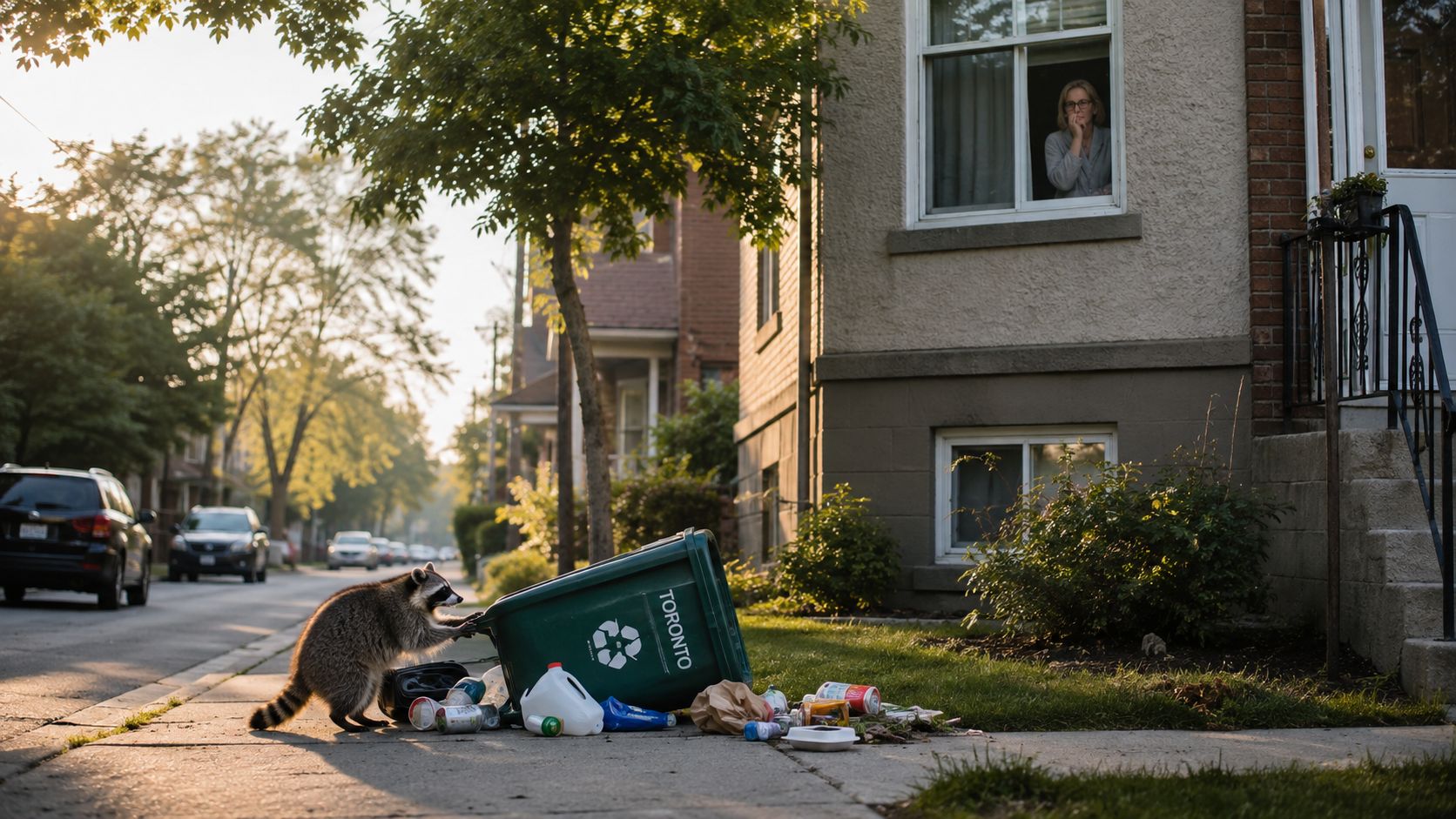
A raccoon tipping a green bin before sunrise, a mouse slipping behind a pantry kick plate, a tenant in a basement suite hearing scratching inside the wall, those are the calls that usually start a pest control East York conversation. In this neighbourhood, the problem is rarely just one pest in one room. Older low-rise homes, duplexes, attached houses, and multi-unit rentals near the Don Valley all change how pests move, where they hide, and which fix holds.
East York residents tend to notice the first sign in the kitchen, basement, or waste area, but the core issue is often structural. Shared walls, utility penetrations, aging trim, and damp storage spaces can turn a small finding into a building-wide pattern if it's handled like a one-off. For a practical way to think about property risk, the neighbourhood-level framing in hazard real estate risk assessment is useful because it pushes the question back to the building itself, not just the pest.
Table of Contents
- Why East York Homes Face Unique Pest Pressure in 2026
- The Pests Driving East York Service Calls Right Now
- How a Professional Inspection and Treatment Plan Works in East York
- Choosing the Right Treatment Method for Your Property
- What Homeowners and Property Managers Should Do Before and After Treatment
- What Toronto-Scale Pest Data Means for East York Landlords and Condo Boards
- Pricing, Guarantees, and How to Book Same-Day Service in East York
- East York Pest Control Questions Homeowners Ask Most
Why East York Homes Face Unique Pest Pressure in 2026
On a quiet East York street, the first sign might be a raccoon on a porch chair, the second a mouse dropping in a pantry drawer, and the third a tenant saying the wall sounds active after dark. Those are not random events. They point to a neighbourhood where older construction, shared boundaries, and nearby green corridors all shape what enters a home and how hard it is to push back.
A detached house on a larger lot does not carry the same risk profile as a duplex with service lines between units, and a basement apartment near the Don Valley behaves differently again. Entry points matter more than people expect, especially where additions, window wells, and utility chases were never built to modern pest-proofing standards. In a building like that, one untreated gap can keep feeding the same complaint.
The practical question is always the same. Is the issue coming from food access, harborage, or structure. East York homes with cluttered basements, open garbage storage, older soffits, or damp utility rooms usually have more than one of those at work at once.
Practical rule: if a property has old trim, shared walls, and easy access to bins or basement voids, assume pests are using more than one route.
That's why a clean-looking home can still get repeat pressure. The exterior may look fine from the street, but a raccoon can still work a loose lid, a squirrel can still use a roof edge, and mice can still follow heat and scent into a storage area. The building type decides whether the fix is mostly exclusion, sanitation, or a more direct treatment plan.
For East York residents, three features usually matter most. Age of the structure, how many units or shared walls it has, and how close it sits to green space or waste storage. Once those are identified, the likely pest pattern becomes much easier to predict.
The Pests Driving East York Service Calls Right Now
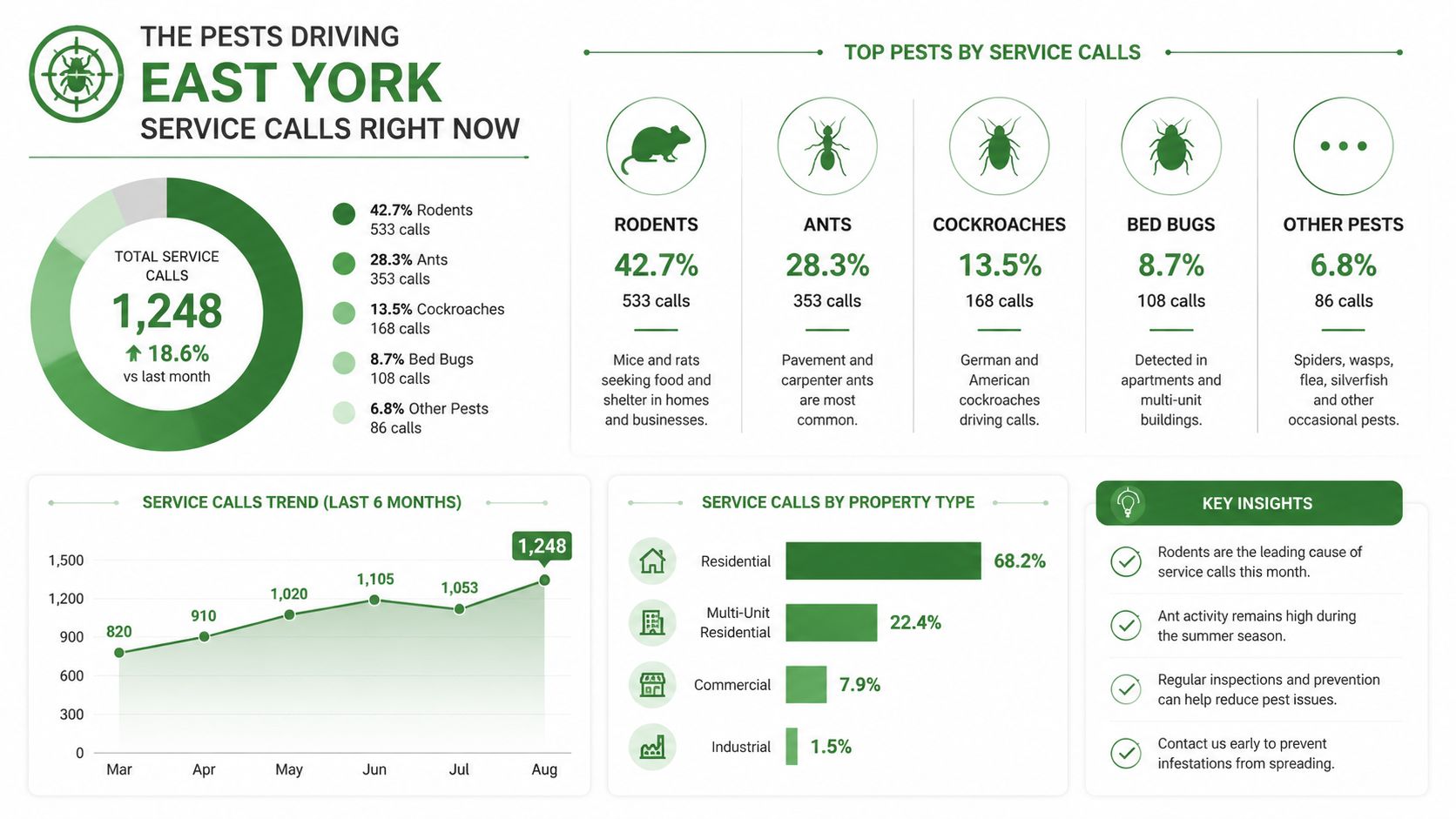
East York service calls usually come in with one complaint, then the inspection turns up signs of a second or third pest nearby. The local snapshot in Pest Sentinel's Toronto Pest Activity Report shows East York scoring 88 for bed bugs, 87 for raccoons, 85 for squirrels, 81 for carpenter ants, and 82 for groundhogs, with an overall peak score of 88. That pattern matters because East York's older low-rise houses, duplexes, and multi-unit rentals do not all fail in the same way.
Week-over-week movement points in the same direction. Rodents moved from 38 to 59, cockroaches from 45 to 54, mosquitoes from 15 to 27, and wasps from 9 to 14. Those shifts do not mean every property has all of those pests, but they do show multiple categories pushing upward at the same time. On a job site, that usually means I have to inspect beyond the original complaint and check the parts of the building that support repeat activity.
What those scores mean in practice
High bed bug pressure changes how move-in, move-out, and tenant turnover need to be handled. In a duplex or walk-up with shared walls, one missed unit can keep the problem alive, even after the visible room has been treated. Heat can help when furnishings and access allow it, but it is not always the right first move if the building needs sealing, monitoring, or follow-up baiting around travel paths.
High raccoon and squirrel pressure points to rooflines, soffits, attic access, and waste areas. Those calls are different from insect work. Exclusion matters more than product use, because if the entry point stays open, the animal problem stays open too. In older East York housing, that often means checking trim, vents, eaves, and any place where the structure has relaxed over time.
A high carpenter ant score usually points to moisture or hidden wood damage, not a simple surface problem. That can mean checking behind finished walls, around plumbing chases, and near damp framing before deciding whether baiting or repairs should lead the job. If the wood stays wet, the ants keep coming back.
The rodent and cockroach upticks matter most in East York's multi-unit stock. Shared utilities, damp basements, and poor waste handling can keep feeding adjacent suites even after one room is treated. In that setting, I am looking for the source of the movement, not just the room where the complaint started. Bait works in some setups, heat in others, and exclusion often has to come first if the structure is giving pests a route in.
A technician who only treats the visible room may miss the source that keeps sending pests back.
That is why broad inspection, monitoring, and targeted treatment matter more than a single-product response. East York's service calls show pressure across insects and wildlife at the same time, and that mix usually means the building type is driving the choice between heat, bait, and exclusion.
How a Professional Inspection and Treatment Plan Works in East York
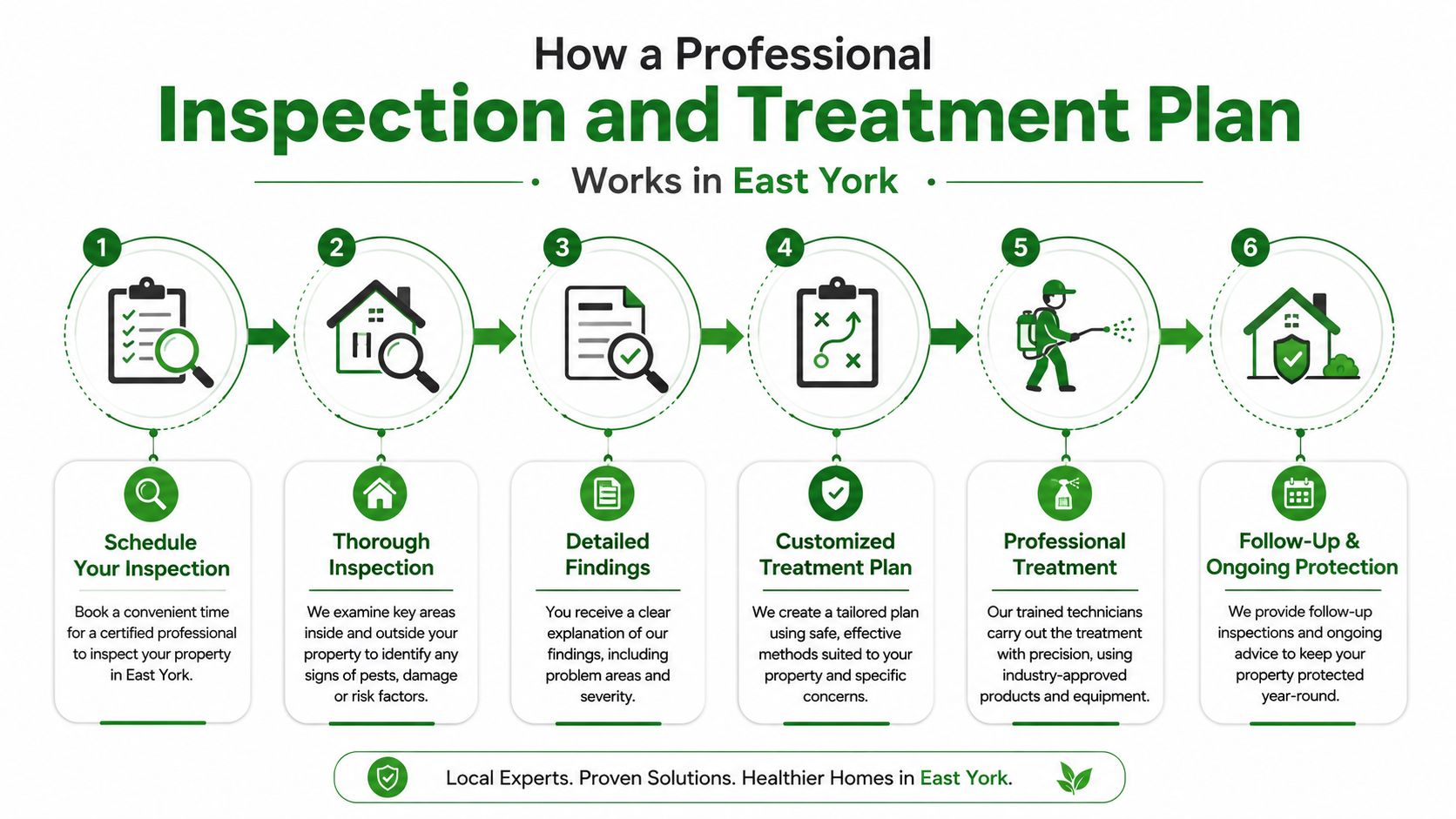
A proper inspection starts with the room that brought the call, but it should never stop there. In an East York house, the technician needs to check the basement, kitchen edges, utility penetrations, storage rooms, baseboards, and any exterior point where pests can enter or harbour. Droppings, frass, shed skins, gnaw marks, grease trails, and nesting material all tell a different story, and the pattern matters more than any one clue.
What gets checked first
The best walkthroughs are evidence-led. A technician looks for active movement, then traces likely travel lines, then checks the conditions that are letting pests stay. That usually means storage clutter, unsealed gaps, moisture, food residue, damaged screens, and hidden voids behind appliances or utility lines.
A good inspection also includes photo documentation and clear notes on what was seen where. That helps the homeowner understand why one room was flagged while another only needs monitoring. It also gives the treatment plan a factual base instead of guesswork.
The strongest plans are staged, not rushed. The first stage is identification. The second is source reduction, which may include sanitation guidance, vacuuming, steaming, trapping, or sealing. The third is targeted product application only where the evidence supports it, not across every surface in the home.
A homeowner should ask three things during the walkthrough. Where is the activity strongest? What is feeding it? What will prevent it from coming back? Those questions force the plan to address the cause, not just the symptom.
Useful standard: if the inspection doesn't produce a clear list of harborage zones and entry points, the treatment plan is probably incomplete.
When the findings point to a mixed issue, a technician may recommend a staged approach rather than one big treatment. That's especially true in older East York properties where one suite, one attic, or one basement wall can hide multiple pathways at once. A rushed visit usually looks tidy on paper and weak in practice.
Choosing the Right Treatment Method for Your Property
A treatment plan should start with the property, then the pest. In East York, that matters because an older low-rise with shared walls behaves differently from a duplex with attic voids, and both behave differently from a multi-unit rental near the Don Valley. Bed bugs in a furnished bedroom set call for a different approach than cockroach pressure in a kitchen chase, so the building type should shape the method, not the other way around.
Heat, baiting, exclusion, and sanitation each solve different problems
For bed bugs, chemical-free heat treatment is often the cleaner fit in furnished homes because it can reach mattresses, seams, cluttered edges, and furniture surfaces where the insects hide. It works well in rooms where sleeping areas and living space overlap. The trade-off is prep. If items are not sorted and the space is not cleared properly, heat has more work to do and the result is less reliable.
For cockroaches and ants, inspection-led baiting and monitoring usually make more sense than blanket spraying, especially in multi-unit buildings. Baits work best after competing food sources are reduced, and they perform better when placed at the actual activity points instead of over open surfaces. That is the logic behind integrated pest management in building programs, and a clear explanation of those principles is laid out in our own pest management approach for Toronto properties. The method is slower than a broad spray, but it gives more control in kitchens, utility chases, and shared walls.
For rodents and wildlife, exclusion and sealing do the heavy lifting. If a squirrel keeps using a roof edge or mice keep moving through a wall opening, short-term treatment will not hold unless the route is closed. In ground-level East York rentals near green space, that usually beats repeated reactive service because the entry pressure keeps coming from outside.
Matching method to building type
Older duplexes and semi-detached houses often do best with a combination of sealing, sanitation, and targeted treatment because the entry points are physical and persistent. Condo units need more coordination around common areas, waste rooms, and neighbouring suites, since the issue can move through shared space. Detached homes near ravines usually need a tighter exterior inspection because wildlife pressure starts outside as often as it does inside.
A written treatment plan matters when the property needs more than one step. One practical option is to pair the inspection with a clear plan from Vanish Pest Control Inc. when a building needs treatment and follow-up coordination. The goal is not extra product. The goal is the right sequence for the building.
Heat is strongest when the pest hides in furnishings. Baiting is strongest when the pest keeps returning to food and grease. Exclusion is strongest when the pest has a repeat entry route.
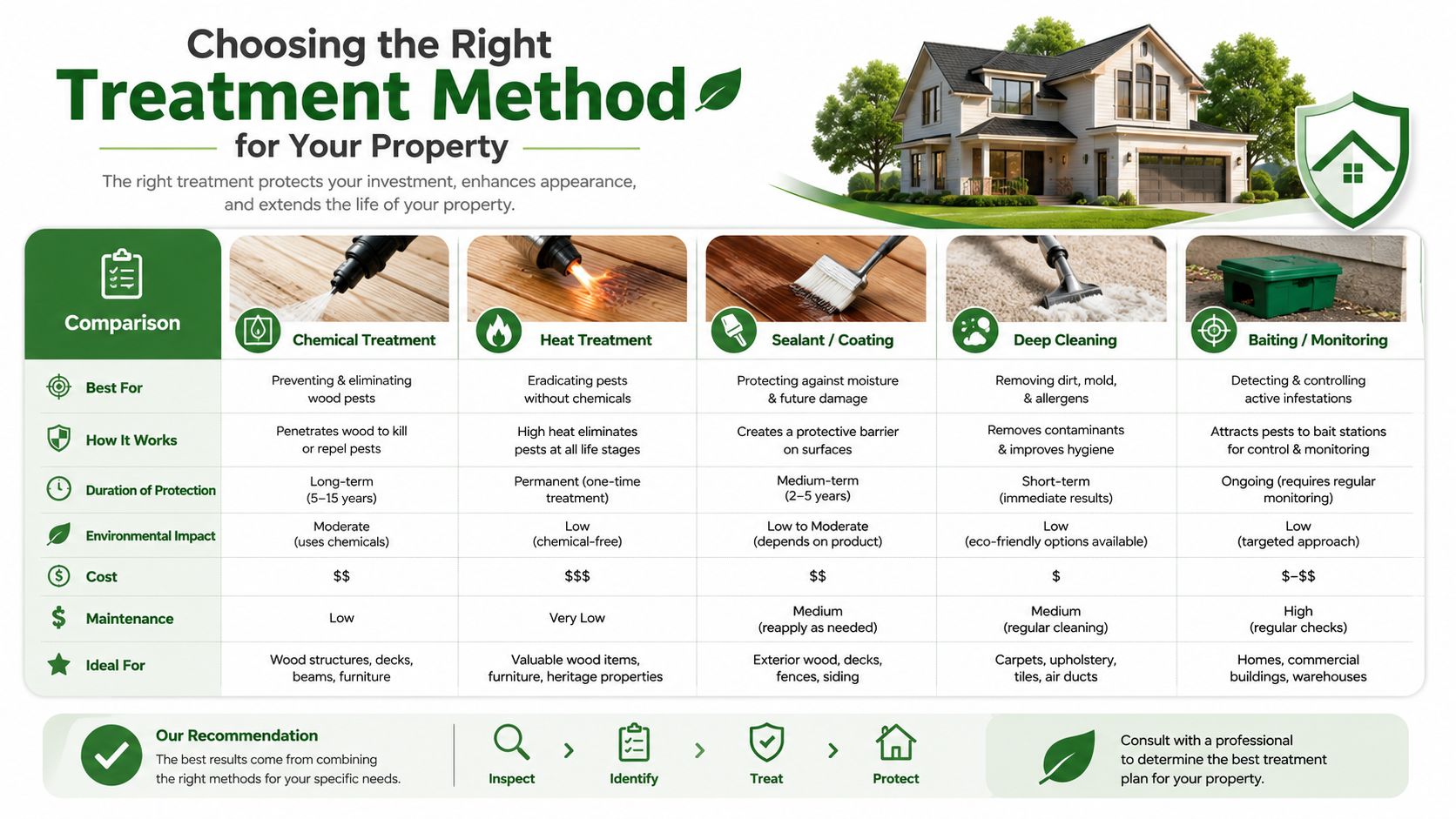
The practical trigger is straightforward. Choose heat when the pest is embedded in furnishings. Choose baiting when activity is concentrated in cracks or harborage zones. Choose exclusion when the pest is entering from outside. Choose sanitation first when the space itself is feeding the problem.
What Homeowners and Property Managers Should Do Before and After Treatment
Preparation changes the result. A home that is prepped well gives the technician access to harbourage, entry points, and activity zones. A home that is left cluttered or half-cleared often forces the treatment to work harder than it should.
Before the visit
For homeowners in detached or semi-detached East York houses, the first job is to clear access around baseboards, appliances, and storage walls. Laundry should be bagged or moved according to the treatment type, food should be sealed, and anything blocking the basement or utility area should be shifted so the technician can inspect properly. If the treatment is heat-based, fabric items usually need more careful handling than hard goods.
For property managers, the priority is different. Common areas, waste rooms, utility closets, and adjacent units may need access. Tenant notices should be specific, not vague, because pest work fails quickly when one unit is prepared and the neighbouring unit isn't.
After the visit
Aftercare matters just as much. The home should stay monitored for fresh droppings, live activity, damaged packaging, or new gnaw marks. If baits were used, they should be left alone unless the technician gives a different instruction. If exclusion work was done, the new seals need to stay intact and undisturbed.
| Treatment Type | Prep Steps | Aftercare Steps | Re-Entry Time |
|---|---|---|---|
| Heat treatment | Clear fabrics, reduce clutter, open access to targeted rooms | Monitor for live activity, keep treated areas tidy, report anything new | Follow technician's clearance instructions |
| Baiting and monitoring | Reduce competing food sources, expose activity areas, avoid moving bait placements | Leave bait stations in place, watch for decline, report persistent activity | Usually immediate unless told otherwise |
| Exclusion and sealing | Provide exterior and basement access, identify entry points, move items away from walls | Keep seals intact, monitor new gaps, watch for fresh droppings or scratching | Usually immediate after work is complete |
| Sanitation-led prep | Remove refuse, clean grease, empty clutter, bag infested items where directed | Maintain cleaning routine, reduce harbourage, keep food sealed | Immediate once cleaning is finished |
A good rule is to keep notes for the following weeks. If activity shifts rather than disappears, that tells the technician where the remaining pressure is coming from. If nothing changes, the original source may not have been fully addressed.
What Toronto-Scale Pest Data Means for East York Landlords and Condo Boards
A tenant reports bed bugs in one unit, another resident sees cockroaches near the waste room, and a basement hallway starts showing mouse droppings. In East York, that pattern is usually a building issue, not a one-off complaint. Toronto housing data shows how large systems keep generating pest work when the building is dense, aging, and hard to fully isolate.
Toronto Community Housing Corporation reported 50,654 pest-management work orders in 2020 in its annual pest control report. The biggest categories were bed bugs and cockroaches, and the East area also recorded 1,034 bed-bug-related treatments, 596 cockroach treatments, 193 mouse treatments, and 185 other pest treatments in that dataset. For East York landlords and condo boards, the practical reading is simple, recurring pest pressure has to be planned for as part of normal operations. In older low-rise stock, duplexes, and multi-unit rentals near the Don Valley, the treatment choice often depends on how the building is laid out, not on a generic pest menu.
What that means for documentation and cadence
A scheduled inspection-led IPM program usually works better than waiting for the next complaint. Boards and landlords should keep dated records of inspections, treatment method, access problems, tenant notices, and follow-up findings. That record helps show what was checked, what was done, and where the pressure is coming back from.
For common areas, the common area maintenance overview fits the same approach. Waste rooms, hallways, utility rooms, shared laundry areas, and storage spaces often drive the next infestation before anyone finds activity inside a unit. Those areas need regular attention because they connect units that would otherwise be treated as separate problems.
Why prevention has to be built into the building routine
In older East York buildings, pest control is strongest when it includes inspection, sealing, waste control, and written follow-up. A one-time call-out may solve the complaint in front of you, but it does not change the building's risk on its own. Shared walls, shared services, and repeated tenant turnover keep creating new access points and new food sources.
For many properties, the right answer is not the same everywhere. Heat can make sense for bed bugs in a furnished suite, baiting can fit a mouse problem in a basement or utility area, and exclusion matters most where the building envelope is letting pests move between units. A technician working through East York pest control services in Toronto has to match the method to the building type, because an older duplex, a low-rise walk-up, and a condo with shared corridors do not fail in the same way.
If the building keeps producing pest complaints, it needs a programme, not just a visit.
For landlords and boards, the takeaway is direct. Keep the records, treat the common areas as part of the pest plan, and set an inspection rhythm that fits the age and density of the property. That is what lowers repeat pressure, instead of just reacting to the next report.
Pricing, Guarantees, and How to Book Same-Day Service in East York
Quotes in East York should be built around the inspection size, pest type, treatment method, and severity. A basement mouse issue, a bed bug problem in a furnished suite, and a wildlife exclusion job on a roofline are not priced the same way because the labour and materials are different. That transparency matters more than a low number that doesn't cover the actual work.
What the offer should include
A homeowner should expect a clear explanation of what is included, what follow-up looks like, and what the guarantee covers. Same-day response matters when a tenant reports bed bugs in the morning or when a raccoon has already damaged a roof edge. Speed by itself isn't the point, but speed plus a real plan does reduce the damage window.
The value of that model is easy to see in home services marketing. A practical discussion of how providers can win more leads in home services usually comes back to the same thing, clarity beats hype. The same applies here, because families and property managers want to know what happens next, not hear a sales pitch.
Why repeat-service pricing can matter
Repeat visits are common in pest work, especially where monitoring or staged treatment is needed. A plan that scales discounts across multiple visits can help property managers keep follow-up on schedule instead of skipping it when budgets get tight. That's useful when the problem is not a single event but a recurring building condition.
For those comparing options, the treatment-cost details at Vanish Pest Control Inc.’s treatment cost page can help frame the budget conversation before a call. The important part is not the exact quote online, but whether the quote reflects the property type and the likely follow-up work.
A strong booking decision usually comes down to three things. Fast dispatch, clear pricing, and some form of protection if the first round doesn't fully solve the issue. If those are in place, the call is easier to make.
East York Pest Control Questions Homeowners Ask Most
Wildlife removal in Toronto needs to be humane and properly sequenced. Raccoons and squirrels are usually handled through exclusion, not simple removal alone, because the entry point has to be closed after the animal is out. That's especially important on East York rooflines and porch structures.
Heat is usually the better default for bed bugs in furnished homes because it reaches hidden surfaces and reduces the need for blanket chemical use. Spray can still have a role in cracks or inaccessible areas, but it's not the first choice when the insects are living in seams, furniture, or crowded sleeping spaces.
Landlords and tenants both have responsibilities, but the practical obligation on the owner side is to keep the unit habitable and respond to pest issues without delay. Tenants still need to follow prep instructions, report activity early, and avoid actions that hide the problem. If activity returns between visits, the right move is to leave the monitoring tools in place and contact the technician with the new location and timing, not to move bait or seal areas on guesswork.
If you're dealing with pest pressure in East York right now, Vanish Pest Control Inc. handles inspection-led pest control, wildlife exclusion, and targeted treatment for homes, rentals, and multi-unit properties across the GTA. For a plan that fits your building type and the pest showing up, visit Vanish Pest Control Inc. and book a visit with a team that can assess the property and move quickly.




