

A Toronto homeowner opens the blinds on a mild winter morning and spots a slow, clumsy wasp bumping against the window. That moment usually triggers the same thought. If there's one, are there more hiding somewhere inside the house?
That concern is reasonable. In winter, a wasp indoors doesn't usually mean a full summer-style nest is active behind the drywall. It often points to a fertilized queen that tucked into a protected space earlier in the season and woke up during a brief warm spell. In Toronto homes, that can happen in attics, wall voids, soffits, and other insulated spaces that stay calmer than the outdoor air.
The practical question isn't just where do wasps go in the winter. It's whether the one being seen now is a clue about what could happen in spring. Toronto residents already deal with seasonal pests moving indoors for shelter, much like the winter pattern covered in this guide to cold-weather pest activity in Ontario homes. Wasps follow a different biology, but the same property principle applies. Small gaps and protected voids invite trouble.
Table of Contents
- That Lone Winter Wasp A Sign of Trouble for Your Toronto Home?
- The Great Die-Off The Annual Wasp Lifecycle Explained
- Where Queens Hide A Guide to Common GTA Wasp Species
- How Toronto's Climate and Buildings Create Wasp Havens
- Your Proactive Wasp Prevention Checklist for 2026
- When to Call a Professional for Wasp Control in Toronto
- Frequently Asked Questions About Winter Wasps
- Do wasps die in winter in Toronto?
- Do wasps hibernate in their old nest?
- Why is there a wasp in the house in December?
- Is one winter wasp a sign of infestation?
- Should an old wasp nest be removed in winter?
- Can a condo have a winter wasp problem?
- What part of the house should be checked first?
- Is a winter wasp aggressive?
That Lone Winter Wasp A Sign of Trouble for Your Toronto Home?
A single winter wasp usually means clue, not crisis.
In most Toronto homes, the wasp seen crawling near a window in November, December, or even later in winter isn't part of a busy colony hidden indoors. It's more often one queen that spent the cold months in a protected pocket of the structure and became active when indoor warmth or sunlight nudged her out of dormancy.
That's why the sight feels odd. Summer wasp problems are noisy and obvious. Winter wasp problems are quiet. They show up as one insect at a time, often near light, often sluggish, and often in rooms below an attic, beside an exterior wall, or near a ceiling line.
What that sighting usually means
A lone wasp indoors in winter can point to a few practical possibilities:
- An overwintering queen in a wall void who found her way into living space through a gap around trim, lighting, or venting
- A queen in the attic that drifted downward on a warmer day
- A wasp trapped indoors from autumn that remained inactive until conditions changed
- A sheltered structure issue where the home offers better winter protection than the outdoors
Practical rule: One winter wasp shouldn't trigger panic. Multiple winter wasps from the same area deserve inspection.
When concern is justified
The issue becomes more important when the pattern repeats. If Toronto residents keep seeing wasps near the same upstairs window, skylight, pot light, or bathroom exhaust area, the house may have a protected harbourage site nearby. That doesn't mean a summer colony survived intact. It means queens may have chosen the structure as a winter refuge.
For detached homes, semis, row houses, and condos alike, the smart move is to treat winter sightings as early warning. A queen hidden now can become the founder of a spring nest later. That's the main reason this matters.
The Great Die-Off The Annual Wasp Lifecycle Explained
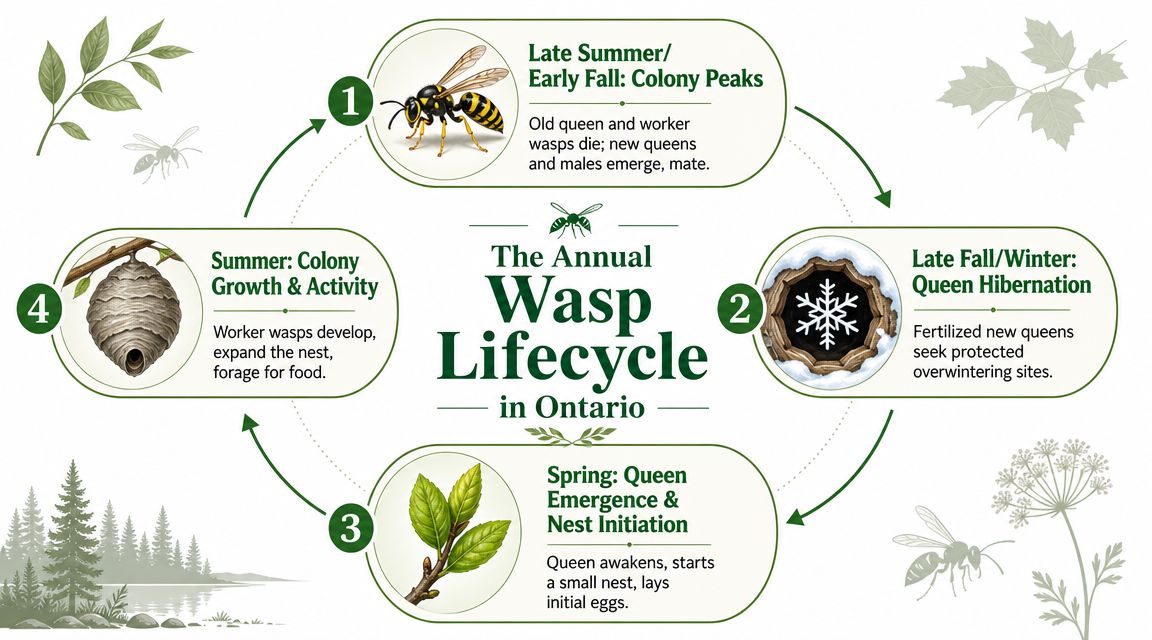
It is commonly assumed that wasps either disappear or keep nesting somewhere unseen. In Ontario, the cycle is sharper than that. The colony rises through summer, peaks, then collapses as cold and food scarcity take hold.
The key survivor is the fertilized queen. In temperate regions such as Ontario, paper wasps survive winter through diapause. After mating, new queens leave the colony and move to sheltered hibernation sites, while workers, males, and the old queen die when cold and food scarcity set in, as described in this Ontario paper wasp research summary.
Why the nest doesn't carry through winter
That's the part many homeowners miss. The paper nest under the eaves or tucked into a shed may still be visible, but it isn't a durable year-round headquarters. The old workforce is gone. The nest itself is usually just a leftover structure by the time deep cold settles in.
For Toronto properties, this has two direct implications:
- Removing an old nest can help tidy a known risk area, but it doesn't solve the core problem if queens already entered wall gaps or attic spaces nearby.
- Winter sightings indoors are usually tied to overwintering queens, not to a hidden population of workers maintaining a live colony.
What diapause means inside a Toronto house
Diapause is a dormant survival state. The queen isn't operating like a summer forager. She's conserving energy in a protected spot until conditions improve.
That's why winter wasps often behave differently from the aggressive insects people remember from patio season. They tend to be slow, disoriented, and drawn toward light once they wake. A homeowner may find one on a curtain, windowsill, or upper hallway and assume it flew in from outside. In winter, that's often the wrong conclusion.
A winter wasp indoors is usually coming from inside the structure, not from the backyard.
The practical takeaway is simple. If the summer colony is the visible problem, the overwintering queen is the future problem. Understanding that cycle makes prevention far more effective.
Where Queens Hide A Guide to Common GTA Wasp Species
Toronto homeowners often use “wasp” as a catch-all term. In practice, the insects turning up around homes can differ in where they nest, how noticeable they are in summer, and where queens are likely to hide once winter arrives.
The wasps Toronto homeowners usually confuse
Paper wasps are usually the easiest to connect with porches, soffits, railings, and overhangs. Their summer nests are often open and visible. In winter, queens look for narrow, dry, protected spaces. A crack near siding, a sheltered attic edge, or a gap behind trim can be enough.
Yellowjackets create more confusion because they're often linked with high activity around food, bins, and outdoor gathering areas during late summer. Their queens can use sheltered ground sites, but around urban Toronto properties they may also take advantage of structural voids when conditions favour it.
Hornets are less often identified correctly by homeowners, and many people use the word for any large wasp. From a property standpoint, the important part is that larger wasps also seek protected overwintering locations rather than maintaining a busy winter colony in the old nest.
Winter hiding spots for common Toronto wasps
| Wasp Type | Key Identifier | Common Winter Hiding Spot |
|---|---|---|
| Paper wasp | Slender body, often seen around eaves and sheltered exterior features | Attics, soffits, behind siding, cracks near windows and trim |
| Yellowjacket | Stockier body, frequent around food and rubbish in summer | Wall voids, sheds, sheltered crevices, protected ground-level cavities |
| Hornet | Larger wasp, often noticed because of size and enclosed paper nest structure in season | Tree bark, structural gaps, attic edges, dry concealed cavities |
A few patterns matter more than exact species ID. Queens want dryness, shelter, and low disturbance. Toronto houses provide all three. Semi-detached homes have shared wall lines and utility penetrations. Older homes often have mature wood features, layered additions, and small exterior gaps. Condo buildings add service penetrations, balcony junctions, and mechanical spaces.
The exact species matters less than the hiding conditions. If a structure offers warmth, dryness, and a crack to enter, a queen may use it.
For homeowners trying to decide where to look first, the best starting points are upper exterior junctions, attic-adjacent areas, detached sheds, and wall penetrations where cables, piping, or vents pass through the envelope.
How Toronto’s Climate and Buildings Create Wasp Havens
Generic pest advice often says wasps die off in winter and the problem ends there. For Toronto homes, that answer is only partly useful. Southern Ontario conditions are more complicated, especially in dense neighbourhoods with insulated housing stock.
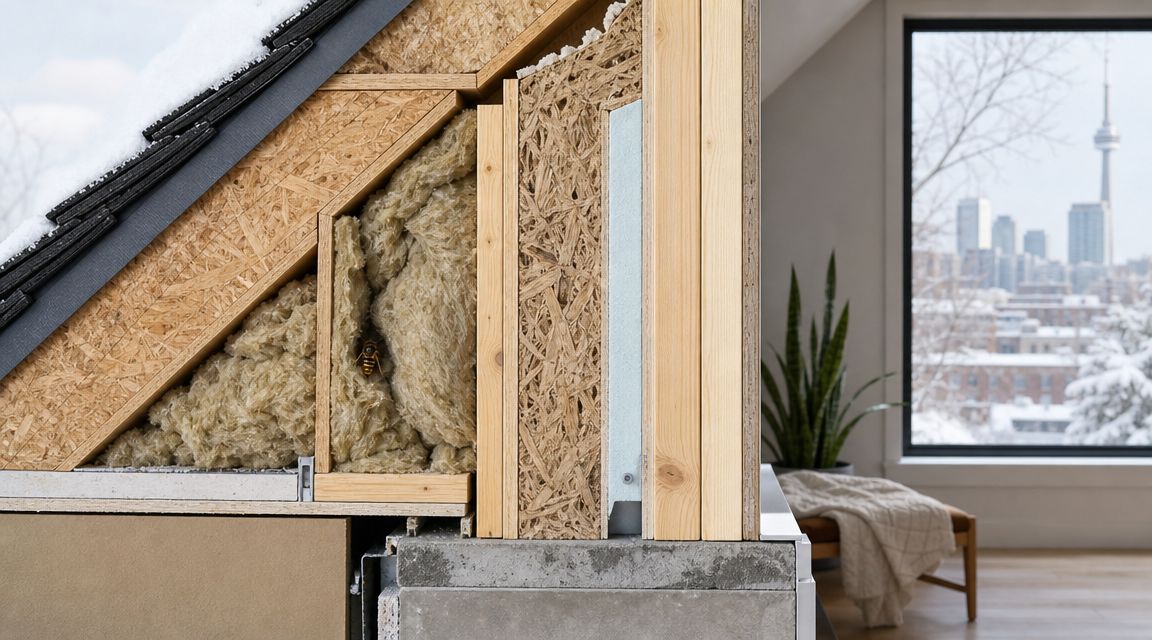
While many sources state wasps die off, some colonies in mild winters or insulated structures can persist longer. This is relevant in southern Ontario where urban heat islands and insulated buildings, like those in Toronto, create microclimates that can lead to unexpected winter wasp activity, as noted in this southern Ontario winter wasp overview.
Why a warm December day can bring one indoors
A mild day in Toronto can warm exterior walls, rooflines, and attic spaces enough to disturb a dormant queen. Once active, she may move toward light or follow airflow through a gap around pot lights, trim, vents, or hatch edges.
That’s why homeowners sometimes report a single wasp in a bedroom, stairwell, bathroom, or top-floor hallway during winter. The insect wasn’t necessarily thriving. It was likely hidden, then stirred.
This is especially common in homes with:
- Sun-exposed upper walls that warm quickly during bright winter afternoons
- Attics with uneven insulation where some pockets stay milder than others
- Wall void connections around exhausts, plumbing, or electrical openings
- Older soffits and fascia details that create small but usable entry routes
The building features that make hiding easy
Toronto’s housing mix creates lots of microclimates. Brick homes with retrofitted insulation, narrow side-yard airflow, stacked rooflines, additions, dormers, and enclosed porch transitions all create pockets where temperature changes are softer than outdoors.
Attic and eaves ventilation also matters. Poor screening or damaged vent components can open the door to overwintering insects. Homeowners reviewing these weak points may find this practical guide to understanding roof eaves and attic vent details useful when checking how exterior openings are protected.
A winter sighting doesn’t automatically mean a dangerous indoor nest is active. It does mean the house may have a hidden access route and a protected void that worked well enough for a queen to survive.
Your Proactive Wasp Prevention Checklist for 2026
Prevention works best when it follows the wasp’s calendar, not the homeowner’s frustration. By the time summer brings obvious nest traffic, the easier prevention window has already passed.
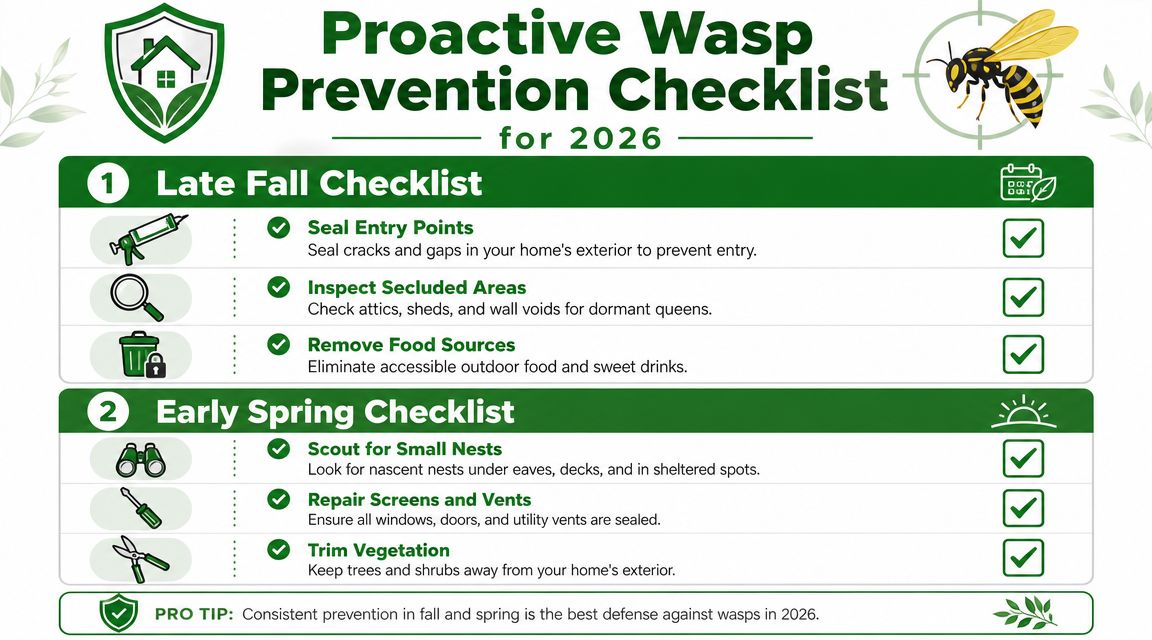
Wasps are generally unable to remain active when temperatures drop below 10°C (50°F), and the colony’s workers die off when conditions fall below freezing. Most adult workers and males are gone by late October or November in regions like Southern Ontario, according to this seasonal wasp activity guide. For Toronto homes, that makes late fall and early spring the most practical inspection periods.
Late fall checklist
Once summer nest activity drops off, the house becomes easier to inspect without active traffic around every overhang.
- Seal exterior cracks: Focus on utility entries, siding gaps, window trim joints, soffit edges, and points where different building materials meet.
- Repair screens and covers: Torn screens, loose vent covers, and damaged soffit components let queens slip into protected spaces.
- Check sheds and garages: Detached structures often get ignored until spring, even though they offer dry, quiet shelter.
- Remove attractants near the building: Keep bins closed and clean up sugary residue around outdoor eating areas before the cold season.
- Clean exterior surfaces: Dirt, residue, and neglected corners make inspections harder. Homeowners planning broader maintenance may want these complete residential exterior cleaning tips when working through siding, eaves, and outdoor structures.
Early spring inspection
Spring inspection is about catching queens before a full colony gets established.
Look closely at:
- Eaves and soffits, especially sheltered corners
- Porch ceilings and deck undersides
- Attic access points and upper windows
- Sheds, fences, and gazebo frames
- Wall penetrations for cables, pipes, and vents
Key check: A tiny new nest is far easier to address than a mature summer nest hidden inside a wall.
If a home has had wasp activity before, this more detailed guide to preventing and solving wasp infestations around the property can help residents turn scattered maintenance into a proper prevention routine.
The goal isn’t to make the property airtight. It’s to remove the sheltered entry points queens consistently choose.
When to Call a Professional for Wasp Control in Toronto
Some winter wasp situations stay simple. One slow queen on a windowsill can often be removed without much drama. Other situations point to a larger structural issue that needs a proper inspection.
For pest management, the practical winter implication is that most visible wasp activity is gone, but overwintering queens may hide in building structures like attics, wall voids, and sheds. Finding these queens indicates where a new colony might start in spring, as explained in this winter pest management note on overwintering queens.
Situations that go beyond DIY
Professional help makes sense when any of the following show up:
- Repeated winter sightings: More than one wasp over time, especially from the same room or upper-floor area
- Buzzing in a wall or ceiling cavity: That points to a concealed structural location, not a random wanderer
- An old or current nest in a hard-to-reach spot: Rooflines, high soffits, voids, and tight overhangs aren’t safe DIY targets
- Multi-unit or shared-wall properties: In semis, condos, and apartment settings, the source may not sit neatly within one unit’s visible envelope
- Unclear entry points: If the home has several potential access routes, guessing often wastes time
What not to do with winter wasps
Don’t start opening finished walls because one wasp appeared. Don’t spray random indoor gaps and hope for the best. Don’t assume the issue is solved because the insect count is low.
Winter wasps are deceptive. Low activity can still point to a spring problem if queens are tucked into the structure. In those cases, a targeted assessment is safer and more efficient than trial-and-error DIY work. Toronto property owners dealing with repeat sightings or suspected concealed nests can learn more about professional wasp nest removal and prevention in Toronto.
Frequently Asked Questions About Winter Wasps
Do wasps die in winter in Toronto?
Most of the colony does. The workers, males, and old queen don’t typically carry through the cold season. The queen that was fertilized before winter is the one that usually survives in a sheltered hiding place.
Do wasps hibernate in their old nest?
Usually, no. The old nest is generally abandoned. Winter survivors tend to shelter in protected spaces such as attics, wall voids, cracks, sheds, and similar dry crevices.
Why is there a wasp in the house in December?
A warm spell, indoor heat, or direct sunlight may have disturbed an overwintering queen. In Toronto, insulated building spaces can create the kind of microclimate that lets this happen.
Is one winter wasp a sign of infestation?
Not necessarily. One wasp is often a lone queen. If sightings keep happening, especially in the same area, the house may have a hidden overwintering site or a vulnerable entry point.
Should an old wasp nest be removed in winter?
If it’s accessible and can be removed safely, winter is a practical time to deal with an old nest because there’s little visible activity. Still, nest removal alone won’t fix the structural gaps that allowed queens to shelter nearby.
Can a condo have a winter wasp problem?
Yes. Condos can have wasps around balcony junctions, soffits, service penetrations, roof edges, and wall cavities. Shared structures can make the source less obvious than in a detached house.
What part of the house should be checked first?
Start high. Upper windows, attic edges, soffits, ceiling corners, and vent penetrations are better first checkpoints than the basement. Winter wasps are often tied to upper structural voids and sun-warmed exterior sections.
Is a winter wasp aggressive?
Usually not in the way people expect from summer activity. A queen disturbed during dormancy is often sluggish and disoriented. Caution still makes sense, especially around children, pets, or anyone sensitive to stings.
If a Toronto home keeps producing winter wasps, the safest move is to have the structure inspected before spring nesting begins. Vanish Pest Control Inc. helps GTA homeowners identify hidden wasp harbourage areas, remove active risks, and close the entry points that let queens settle into attics, wall voids, and soffits in the first place.




One Response