

A Newmarket homeowner usually doesn't start searching for an exterminator until something has already gone wrong. It might be scratching above the ceiling after dark in an older home near Main Street, droppings under the sink in a newer subdivision kitchen, or a sudden line of ants moving across the counter before breakfast. The problem feels personal fast, because pests turn ordinary rooms into places that no longer feel clean or settled.
That reaction makes sense in this city. Newmarket's mix of residential homes, country estates, and commercial facilities like healthcare centres and food establishments creates diverse environments for pests like carpenter ants, roaches, and rodents. That variety demands customized pest control solutions for the community's over 70,000 residents.
A practical response starts with two things. First, identify what's currently active on the property. Second, choose treatment based on the pest's behaviour, not guesswork. That's where many do-it-yourself attempts fail. Sprays get used where exclusion is needed, traps get set where sanitation is the primary issue, and surface treatments get applied to pests hiding deep in wall voids, attics, or upholstered furniture.
Table of Contents
- Your Guide to a Pest-Free Newmarket Home
- Common Pest Problems in Newmarket Properties
- Understanding Pest Control Services and Pricing
- What to Expect From Your Pest Control Service
- The Vanish Advantage for Newmarket Residents
- Proactive Pest Prevention for Newmarket Homes
- Newmarket Pest Control FAQs and Booking Your Service
Your Guide to a Pest-Free Newmarket Home
A pest issue in Newmarket rarely stays small for long. Mice don't remain in one cupboard. Carpenter ants don't limit themselves to one damp piece of trim. Wasps don't keep a nest harmless once foot traffic starts passing underneath it every day.
Newmarket properties also vary more than many homeowners expect. A detached family house, an older home with settling gaps, a country property with outbuildings, and a commercial kitchen all create different entry points and harbourage areas. That's one reason a generic treatment plan often misses the mark.
The local reality inside Newmarket homes
Some pest activity is tied directly to how homes are built and used. Older houses may have hidden voids, aging weather seals, and foundation gaps. Newer homes can still attract rodents, ants, and cockroaches if food, moisture, or heat sources are easy to access.
A proper response starts with the right questions:
- Where is the activity strongest: kitchen, basement, attic, bedroom, garage, or exterior?
- What changed recently: rain, renovation, travel, garbage storage, or a new pet feeding area?
- Are there repeat sightings: one random insect is different from consistent evening activity.
Practical rule: The first sign matters less than the pattern. One mouse sighting in the kitchen usually means the technician should inspect the whole route, not just set a trap where the mouse appeared.
What a homeowner should expect from a real solution
An effective exterminator in Newmarket doesn't just remove visible pests. The job is to locate entry points, nesting conditions, food sources, moisture problems, and the hidden zones where activity continues after a surface spray wears off.
That's why long-term control usually combines inspection, targeted treatment, and prevention work. For one property, that may mean baiting and sealing around a utility line. For another, it may mean heat treatment, monitoring, and follow-up. The right plan depends on what's active and why it's there in the first place.
Common Pest Problems in Newmarket Properties
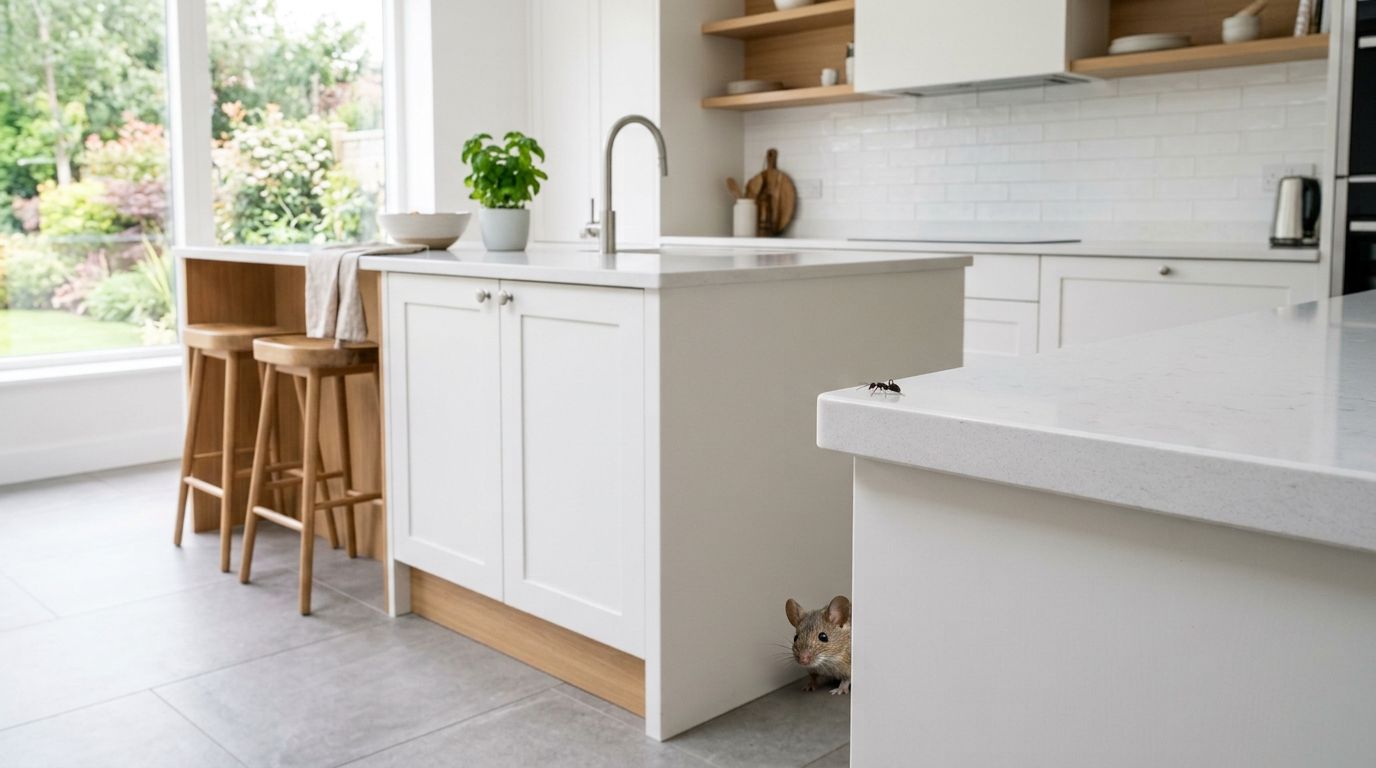
Newmarket pest problems follow seasonal patterns, but the warning signs often show up in everyday spaces first. Kitchens, basements, bedrooms, attics, garages, and utility rooms tell the story early if a homeowner knows what to look for.
What homeowners usually notice first
Carpenter ants often show up as large ants near windows, baseboards, or damp wood areas. The more serious sign is subtle. Fine wood debris, faint rustling in a wall, or repeated worker ants in the same area can point to nesting activity inside the structure.
Mice and rats leave the most obvious clues. Droppings in cupboards, gnaw marks on food packaging, scratching sounds after dark, and greasy rub marks along travel routes all suggest regular movement. In basements and utility rooms, rodent activity can spread unnoticed before a homeowner sees a live animal.
Bed bugs usually get noticed through bites, small marks on bedding, or live bugs near mattress seams and bed frames. Bedrooms aren't the only risk area. Upholstered furniture, baseboards, and nearby clutter can all become hiding spots.
Cockroaches favour kitchens, bathrooms, laundry areas, and warm hidden spaces near appliances. A single sighting during the day can be enough to justify an inspection, especially where food handling or multi-unit living increases exposure risk.
Why some infestations keep coming back
Wasps and hornets create a different kind of urgency. The issue isn't only the nest. It's the nest location. Eaves, soffits, decks, sheds, and wall voids can turn normal outdoor movement into a sting risk for residents, children, and pets.
Wildlife problems in Newmarket usually involve raccoons, squirrels, skunks, or bats entering attics, rooflines, crawl spaces, or under structures. Noise is often the first clue, but damage can spread into insulation, vents, and wiring pathways if the entry point stays open.
Cluster flies are another local issue that catches homeowners off guard. Cluster flies are a significant seasonal pest in the region, particularly in the fall and spring, as older Newmarket homes with their inherent small gaps and cracks provide ideal overwintering spots for these insects.
For pet owners, some pest problems overlap. Rodents and wildlife can create conditions that support secondary pests, and households with animals should also know the signs of dealing with cat fleas if scratching, bites, or bedding issues appear at the same time.
A broader look at recurring regional issues is covered in common GTA pest problems and solutions.
A pest that appears in daylight, near food, or in a sleeping area should never be treated as a minor nuisance.
Understanding Pest Control Services and Pricing
A homeowner in Newmarket usually calls about price after the pest has already started affecting daily life. Mice in the basement, wasps over the deck, scratching in the attic, or bed bugs in a bedroom all create the same pressure. You want the problem handled safely, and you do not want to pay twice for a treatment that only partly works.
Cost depends on four things. The pest involved, how far the activity has spread, how difficult the access is, and whether the job ends with treatment alone or also requires repair and sealing work. A small ant issue in one room costs less than rodents moving through wall voids. A visible wasp nest is usually simpler than wildlife entering through the roofline.
In Newmarket, single-issue treatments often start at the lower end when the source is easy to reach and the infestation is still contained. Pricing climbs when the work needs attic access, multiple visits, specialized equipment, or exclusion to stop re-entry. That difference matters because the cheapest visit is not always the lowest total cost.
What changes the final cost
The main pricing factors are practical, not arbitrary:
- Property size and layout: Larger homes take longer to inspect and create more harbourage areas, entry points, and treatment zones.
- Access difficulty: Crawl spaces, steep rooflines, finished basements, cluttered storage areas, and wall voids increase labour time.
- Pest biology: Some pests can be handled in one visit. Others, especially bed bugs and established rodent infestations, require a staged approach.
- Exclusion and repair work: Wildlife and rodent control often includes sealing gaps, screening vents, or reinforcing vulnerable areas so the problem does not return.
- Follow-up requirements: Monitoring, trap checks, and second visits may be necessary when activity is heavy or the pest has a repeat cycle.
Bed bug work is a good example of where homeowners need a clear cost-benefit discussion. A lower-priced spot treatment can make sense for a very limited issue, but widespread activity often calls for a full-room or whole-home strategy. Chemical-free heat treatment usually costs more upfront because it needs specialized equipment, setup time, and careful monitoring. It can also reduce the chance of repeat service by reaching bugs and eggs in furniture, baseboards, and other hard-to-treat areas.
Wildlife pricing works the same way. Removing the animal is only part of the job. If the entry point stays open, the same home often gets another raccoon, squirrel, or skunk problem later, along with more insulation damage, odour, and contamination cleanup. Paying for removal plus exclusion is often the better financial decision.
Typical Pest Control Cost Ranges in Newmarket
| Service Type | Common Price Range |
|---|---|
| Ant treatment | $150 to $250 |
| Rodent removal | $200 to $350 |
| General pest control treatment | $150 to $400 |
| Bed bug heat treatment | $300 to $600 |
| Wildlife removal | Starts at $400 |
Those ranges are useful for budgeting, but the inspection determines the actual scope. In practice, the smartest quote is the one that explains what is included, what may require follow-up, and what steps will prevent the same pest from coming back next season. Homeowners who want a clearer breakdown can review this Newmarket pest control pricing guide.
What to Expect From Your Pest Control Service
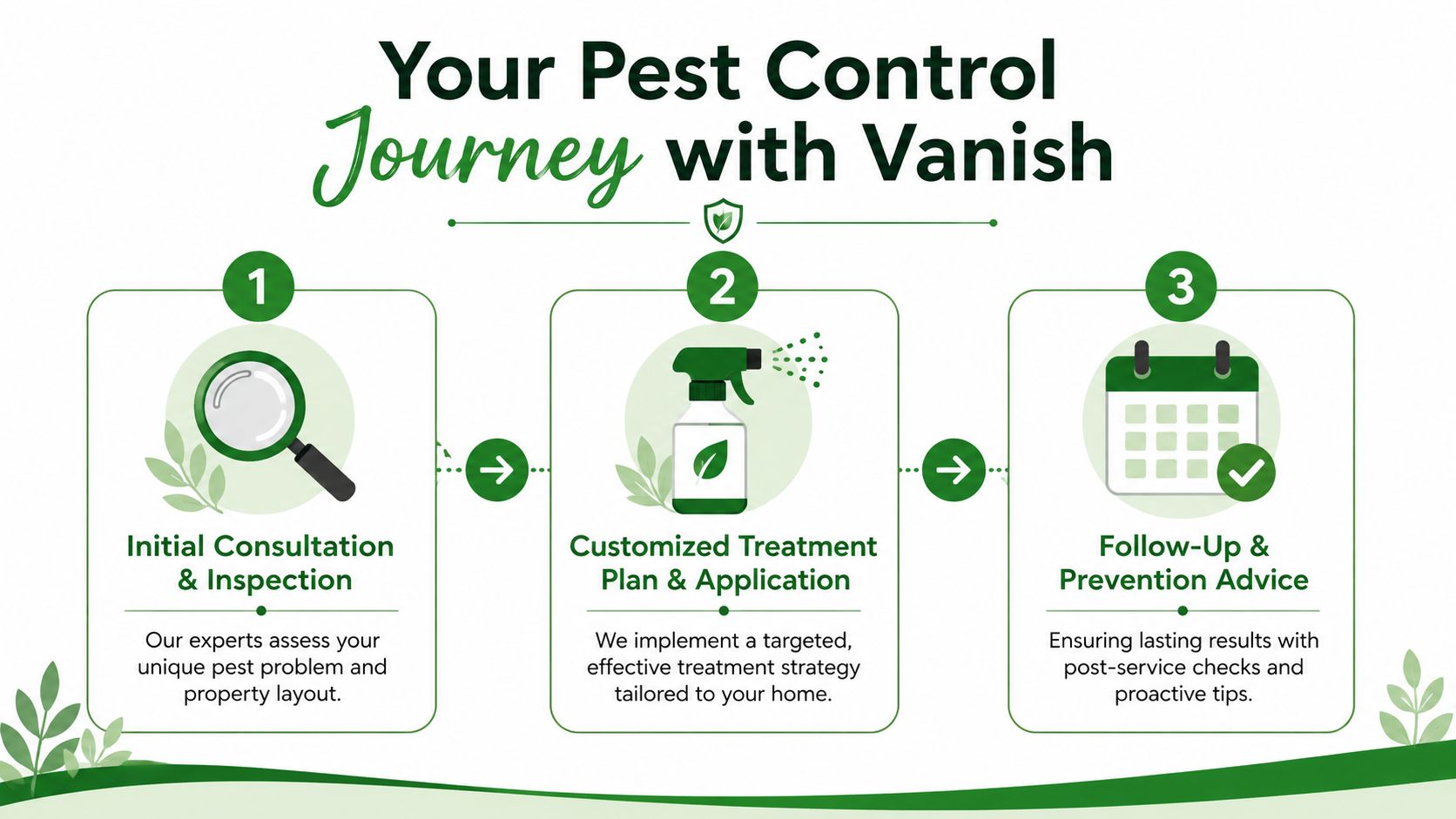
Homeowners usually feel better once the process is clear. A professional pest control visit should be organised, predictable, and specific to the pest involved. The work isn't the same for bed bugs, mice, wasps, or wildlife, but the service flow is usually straightforward.
Before the visit
Preparation usually starts with access and safety. Food may need to be stored properly, clutter moved away from treatment zones, and pets secured so the technician can inspect baseboards, utility lines, attics, or cabinetry without interruption.
For rodent work, technicians often need clear access to basements, furnace rooms, garages, and under sinks. For bed bugs, bedrooms and furniture need to be available for close inspection. Wildlife calls may require attic, roofline, or exterior perimeter access.
During the treatment
The technician should inspect first, then explain the plan in plain language. That matters because treatment only works when the method matches the pest's behaviour. Baits, traps, exclusion materials, dusts, residual products, heat, and monitoring tools all have different uses.
A typical appointment often includes:
- Inspection: Identifying pest type, activity level, travel routes, and entry points.
- Targeted treatment: Applying the right method where pests live and move, not only where they were seen.
- Site advice: Pointing out sanitation, storage, moisture, or structural issues that support the infestation.
Residents shouldn't have to guess what was done in their home. A proper visit includes clear explanation, clear safety guidance, and clear next steps.
After the service
Aftercare depends on the pest. Some treatments need time to work. Others require a follow-up check, especially where monitoring is part of the control plan. Homeowners may be asked to avoid cleaning certain treated areas immediately or to keep traps and monitors undisturbed.
The most useful post-service advice is practical. Keep food sealed. Don't move infested items from room to room. Report continued activity in the places the technician asked you to watch. That kind of follow-through often determines whether the problem fades out or starts up again.
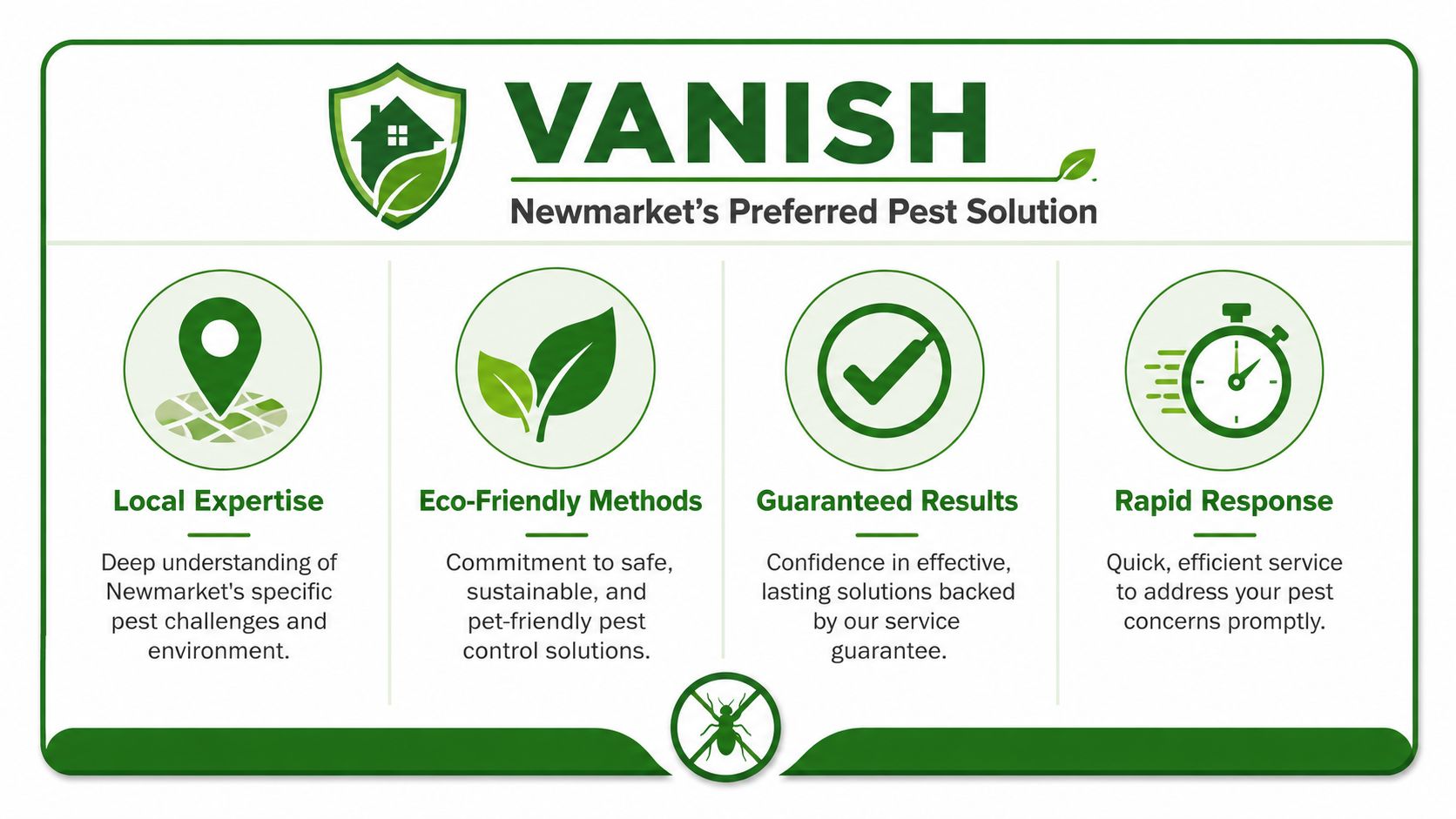
The Vanish Advantage for Newmarket Residents
You hear scratching in the attic at 2 a.m. or wake up with fresh bites after already trying sprays, traps, or a one-time treatment. At that point, the real question is not whether someone can remove the pest today. It is whether the work will hold up next week and next season.
Where advanced treatment makes a real difference
Bed bugs are a good example because shortcuts usually fail. If bugs are spread through beds, upholstered furniture, baseboards, and nearby belongings, a light treatment may lower activity without clearing the infestation. That often leads to more bites, more laundering, and another paid visit.
Chemical-free heat is often the better value in those heavier cases. It costs more upfront than a basic application, but it treats the full room volume, including cracks, seams, and furniture areas that are easy to miss with limited surface work. Vanish Pest Control Inc. offers this type of bed bug heat treatment in Newmarket for homeowners who want a stronger first pass instead of a drawn-out cycle of retreatments.
That cost-benefit decision matters. A cheaper start can become the expensive option if it leaves surviving insects behind.
Clutter also affects bed bug work. Fewer hiding spots means better inspection access and more reliable treatment results. Homeowners who need help preparing can review decluttering tips for Portland residents and apply the same room-by-room logic before service.
Why exclusion work changes the long-term outcome
Wildlife service has the same basic rule. Removal handles the animal. Exclusion handles the reason it got in.
In Newmarket, that usually means roof vents, soffit gaps, damaged flashing, loose siding edges, chimney junctions, and other entry points around older homes, treed lots, and outbuildings. If those areas stay open, the next squirrel, raccoon, or mouse often finds the same route. Homeowners then pay again, and the risk of insulation damage, odours, droppings, and wiring issues stays in place.
The better investment is full entry-point repair and prevention planning after the immediate problem is controlled. That is where Vanish stands out for local residents. The work is not limited to taking pests out. It includes finding how they entered, sealing those areas properly, and giving homeowners practical next steps. For ongoing prevention habits after treatment, their guide on how to protect your home from future pest infestations in the GTA is a useful reference.
Good pest control should reduce repeat calls, not create them. In practice, that means choosing treatment depth based on the actual infestation, the structure, and the cost of failure.
Proactive Pest Prevention for Newmarket Homes
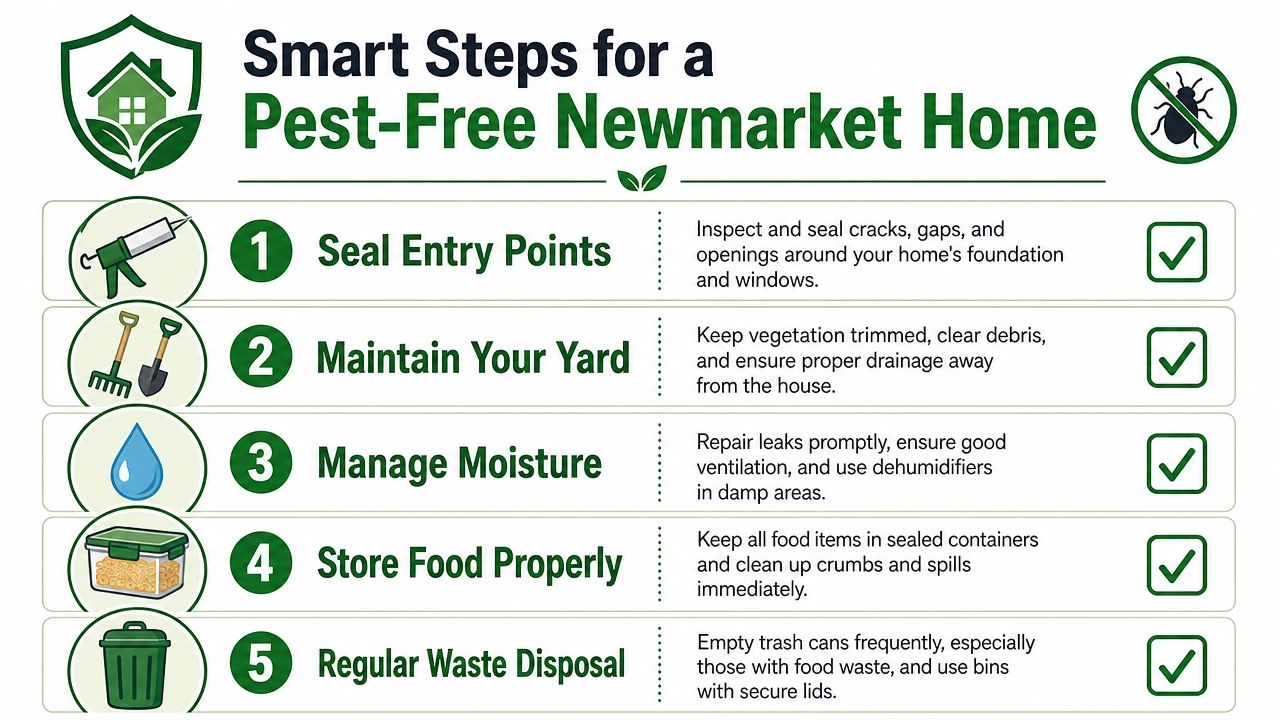
Most Newmarket pest problems start with access, food, moisture, or shelter. Prevention works best when those four conditions are reduced consistently. The good news is that homeowners can make a real difference with a few habits and a careful seasonal check.
Outside the home
Exterior prevention starts with a slow walk around the building. Check the foundation, siding transitions, door sweeps, vent covers, and roofline edges. Small gaps often become entry points long before a homeowner sees pest activity indoors.
Focus on these tasks:
- Seal openings: Caulk cracks, repair torn screens, and close utility gaps.
- Trim back vegetation: Branches touching the roof or siding can create direct routes for insects and wildlife.
- Store waste properly: Use bins with tight lids and keep them clean.
Kitchen and food storage areas
Kitchens attract ants, cockroaches, and rodents because they combine food, water, and heat. Pantry control matters more than homeowners think. Dry goods in weak packaging are easy targets, especially in lower cupboards and basement storage.
Useful habits include wiping spills quickly, storing food in sealed containers, and checking under appliances for crumbs and grease. Pet food should also be managed carefully, especially overnight.
Basement attic and storage spaces
Basements and attics are often the least disturbed areas in the home, which makes them attractive harbourage zones. Moisture, cardboard storage, and low traffic create ideal conditions for mice, spiders, and occasional insect activity.
A few practical steps go a long way:
- Control dampness: Fix leaks, improve ventilation, and use a dehumidifier where needed.
- Reduce clutter: Keep storage off the floor and avoid dense piles of cardboard and fabric.
- Inspect seasonally: Look for droppings, chewed materials, staining, and new gaps.
For homeowners who need help getting storage under control, even general housekeeping guides can support pest prevention. These decluttering tips for Portland residents are useful because the same clutter patterns that make cleaning harder also make inspection and monitoring harder.
More property-specific prevention ideas are outlined in this guide on protecting your home from future pest infestations in the GTA.
Newmarket Pest Control FAQs and Booking Your Service
You hear scratching in the wall at night, find droppings under the sink the next morning, and want two answers right away. Is it safe to stay in the house, and what will it cost to fix properly?
Those are fair questions. In Newmarket, the right answer depends on the pest, how long the activity has been building, and whether the job needs a single treatment, follow-up visits, or repair-focused exclusion work. The cheapest option is not always the lowest-cost option once repeat visits, damaged insulation, contaminated storage, or missed entry points are factored in.
Frequently asked questions
Are treatments safe for kids and pets?
Yes, when the treatment is chosen for the specific pest and applied as directed. A licensed technician should explain prep steps, re-entry timing, and any areas that need to stay undisturbed until the product has settled or dried. For some jobs, a low-chemical or non-chemical option makes more sense, especially in bedrooms, nurseries, or homes with sensitive occupants.
How long does a service call take?
A straightforward wasp nest or exterior ant treatment may be relatively quick. Bed bug inspections, rodent tracing, and wildlife assessments usually take longer because the technician needs to inspect hidden travel routes, utility gaps, attic spaces, or bed-frame and furniture details. Rushing that stage often leads to missed harbourage and repeat service.
Will a homeowner need to leave the house?
Sometimes. Many treatments allow homeowners to remain in unaffected parts of the property, while others require a temporary vacancy. Heat treatment for bed bugs, for example, is often chosen because it can reduce chemical use, but it requires tighter preparation and controlled operating conditions. The trade-off is upfront cost versus the potential cost of repeated conventional treatments.
Is one treatment enough?
Sometimes, yes. Small wasp problems, isolated ant activity, and a single exterior nest may be resolved in one visit. Rodents, bed bugs, cockroaches, and wildlife problems often need more than one step. Lasting control usually means combining treatment with sealing work, sanitation corrections, and follow-up checks.
Why do quotes vary so much?
Scope changes the price. A basic insect treatment is very different from a bed bug heat service, and both are very different from wildlife removal with one-way doors, vent protection, and full entry-point sealing. In Newmarket homes, the more complete service often saves money over time because it reduces call-backs, repeat infestations, and repair costs tied to chewing, nesting, and contamination.
Property owners who also oversee storage, shipping, or commercial spaces often run into the same planning issues on a larger scale. Guidance on managing pests in your facility can help frame inspection routines, exclusion priorities, and response timing.
Booking service should be simple. Describe what you are seeing, where you are seeing it, and how long it has been happening. Photos help. Droppings, rubbing marks, insect sightings, sounds in walls or ceilings, and the time of day activity occurs all help narrow the cause before the visit.
Vanish Pest Control Inc. provides licensed pest control and humane wildlife removal for Newmarket homes and businesses, including bed bugs, ants, rodents, wasps, termites, and nuisance wildlife. Homeowners who want a clear inspection, transparent pricing, and practical next steps can contact the company to book service and start restoring a pest-free home.




