

A Toronto resident usually discovers bed bugs at the worst possible time. It's late, the sheets are off the bed, and there's a small brown insect near the mattress seam that wasn't there yesterday. In a downtown condo, that moment often comes with a second worry. If the unit has them, did they come from next door, the hallway, shared laundry, or a recent trip on transit?
That stress is justified. Bed bugs in Toronto aren't a rare, isolated problem tied to one type of home. They show up in condos, apartment towers, student housing, older semis, hotels, offices, and other high-traffic spaces across the city. The right response isn't panic. It's fast identification, a disciplined treatment plan, and proper preparation so the infestation doesn't drag on.
Table of Contents
- Toronto's Unwanted Roommates The Reality of Bed Bugs in the GTA
- Is It Bed Bugs A Definitive Identification Guide
- Choosing Your Battle Plan Bed Bug Treatments in Toronto
- The Cost of Peace of Mind Pricing Bed Bug Control in Toronto
- Your Role in Success A Guide to Treatment Preparation
- Why Toronto Residents Choose Vanish for Bed Bug Control
- Frequently Asked Questions About Toronto Bed Bugs
Toronto's Unwanted Roommates The Reality of Bed Bugs in the GTA
A common Toronto scenario starts with uncertainty. Someone in Liberty Village notices marks on bedding but no clear bites. A family in a Scarborough semi hears that a neighbouring unit in their building had treatment done. A tenant in an older midtown walk-up sees tiny dark spotting near the headboard and starts wondering whether the problem is already beyond one room.
In Toronto, those concerns aren't overreactions. The city has consistently held the distinction of being the most infested city in Canada regarding bed bugs, with community housing buildings alone recording more than 17,000 infestations in 2022. By 2025, Southern Ontario accounted for approximately 50% of the nation's reported bed bug cases, with 15 of the top 25 most infested cities located in this region, according to Toronto Life's reporting on Toronto's bed bug crisis.
That matters because Toronto pest problems are shaped by density. High-rise living, frequent travel, shared walls, common corridors, and constant turnover in some buildings all make bed bug control more complicated than a simple single-room issue. A detached home can be difficult enough. In a condo or apartment, the strategy has to account for nearby units and hidden movement paths.
Why Toronto homes face a different level of risk
Bed bugs don't care whether a home is spotless or cluttered, upscale or modest. What changes in Toronto homes is access. Multi-unit buildings give them more routes to spread, and older buildings often give them more hiding places.
This is why pest control Toronto bed bugs searches are often coming from people who have already tried to reassure themselves that it's probably nothing. It usually isn't “nothing” for long.
Practical rule: The first confirmed sign of bed bugs should be treated as a time-sensitive problem, not a wait-and-see problem.
The emotional side is real, but the response should stay methodical
Residents often feel embarrassed, angry, or overwhelmed the moment bed bugs are found. None of that helps with removal. What helps is identifying the signs properly, avoiding the DIY mistakes that scatter bugs, and getting treatment planned before the infestation spreads into furniture, baseboards, and adjoining spaces.
For Toronto residents, the challenge isn't just killing visible bugs. It's breaking the cycle inside dense housing where reinfestation can happen if the approach is too narrow.
Is It Bed Bugs A Definitive Identification Guide
The first mistake many people make is relying on bites. That's unreliable in Toronto homes, especially in condos where residents may not see the insects themselves for some time.
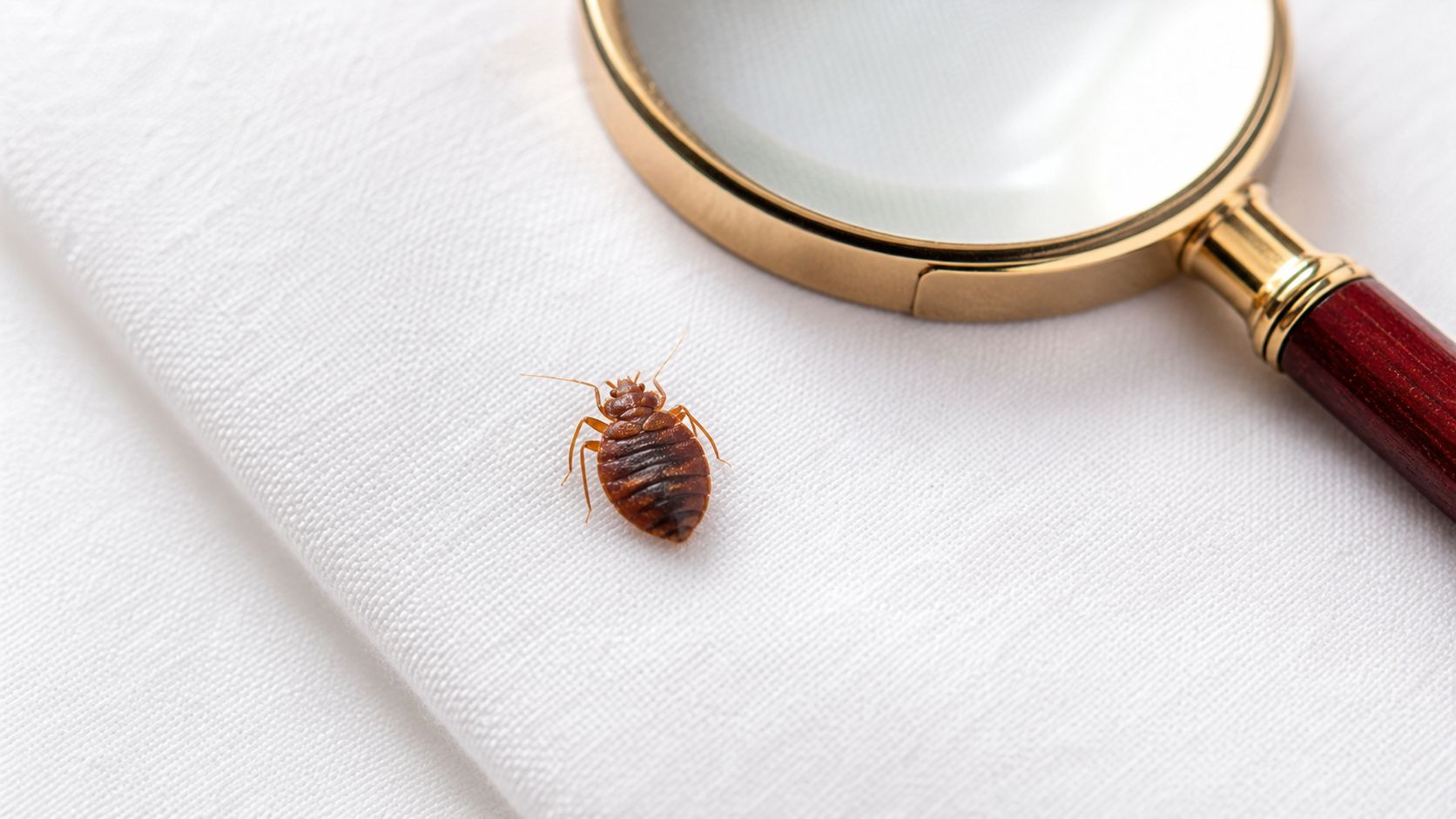
Why bites are a poor test
Precise identification requires physical evidence, not skin reactions. 70% of people do not show physical reactions to bed bug bites because the pest's saliva contains a natural painkiller, as noted in Daily Hive's summary of bed bug signs in Toronto.
The strongest signs are mechanical:
- Black specks: Small dark spotting on mattress seams, box springs, bed frames, or nearby cracks. These are often easiest to spot on light-coloured fabric.
- Shed exoskeletons: Bed bugs grow by shedding. These dry skins collect in hiding areas and often appear translucent or pale brown.
- Sweet, sour odour: In heavier infestations, some residents notice an unpleasant sweet and sour smell.
Bites can support suspicion, but they should never be the deciding factor. No bites doesn't mean no infestation.
Where to inspect in Toronto homes
Start where people stay still for long periods. Bed bugs prefer tight, undisturbed spaces close to a host.
Check these areas carefully:
Mattress seams and piping
Pull back the fitted sheet and inspect all seams, tags, corners, and the area near the head of the bed.Box spring and bed frame joints
Look underneath. Wooden joints, screw holes, and fabric stapling points often hide activity.Headboard and wall edge
In both condos and older Toronto houses, the gap behind the headboard is a prime inspection point.Baseboards near the bed
Older homes in East York, the Danforth, or Parkdale often have gaps and trim lines that offer shelter.Nightstands and upholstered furniture
Remove drawers and inspect undersides, corners, and joints.
Bed bug identification gets easier when the search focuses on where they hide, not where people expect to feel bites.
A short inspection checklist
| Area | What to look for | Why it matters |
|---|---|---|
| Mattress seams | Black specks, shed skins | Common early harbourage |
| Bed frame joints | Live bugs, skins | Tight cracks protect them |
| Baseboards | Spotting, debris | They move beyond the bed quickly |
| Upholstered chairs | Hidden signs in seams | Secondary resting area |
| Behind wall fixtures | Dark spotting | Useful in severe infestations |
If a Toronto resident finds even one of these signs, the safest assumption is that more insects may be hidden nearby. That's when random sprays should stop and a proper treatment plan should begin.
Choosing Your Battle Plan Bed Bug Treatments in Toronto
Once bed bugs are confirmed, treatment choices matter. A weak plan often creates a stronger infestation because disturbed bugs don't disappear. They spread into adjacent rooms, deeper furniture voids, and shared structural gaps.
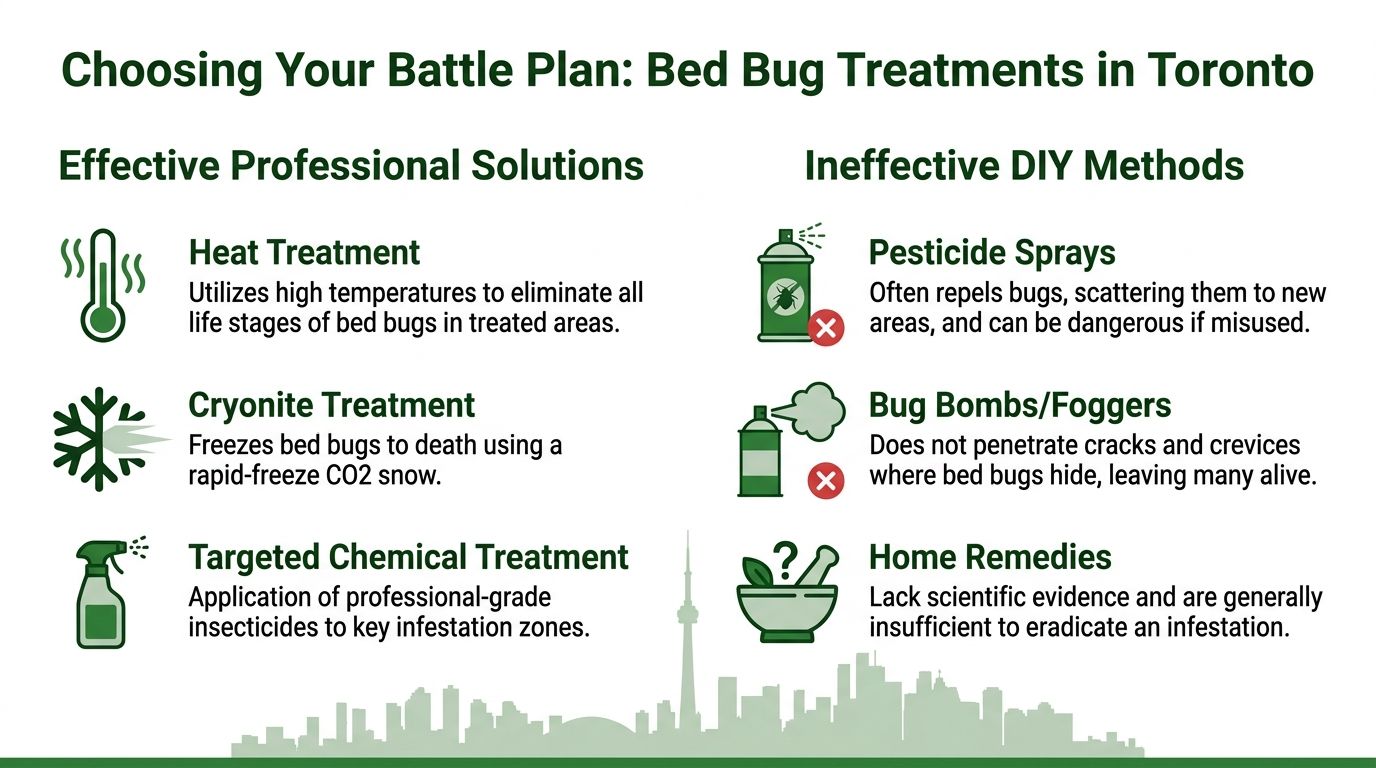
Why DIY usually makes the job harder
Most DIY bed bug efforts fail for one simple reason. They target what's visible and miss what's hidden.
Common mistakes include:
- Store-bought sprays: These often hit exposed bugs but don't reach eggs or deep harbourages.
- Foggers and bug bombs: They rarely penetrate the cracks and seams where bed bugs live.
- Throwing out furniture too early: This can spread bugs through hallways, elevators, stairwells, or other rooms in the home.
- Sleeping elsewhere: That can shift feeding activity to a new room and widen the infestation.
DIY also creates safety issues. Misapplied insecticides in bedrooms, around children, or near pets introduce unnecessary risk without solving the core problem.
Heat treatment versus other professional options
Professional bed bug work usually falls into a few categories. Heat treatment, targeted chemical treatment, and freezing-based methods all have a place depending on the layout and severity. But for complete eradication, especially in Toronto's dense housing, heat is the method with the clearest technical advantage.
In Toronto, the most effective and technically validated method for complete eradication is extreme heat treatment, which requires raising ambient temperatures to 75°C (167°F) to ensure mortality of all life stages, including eggs, by penetrating cracks, crevices, and furniture voids where bugs hide, according to this Toronto bed bug heat treatment explanation.
A simple comparison makes the trade-offs clearer:
| Treatment type | Main strength | Main limitation |
|---|---|---|
| Heat treatment | Reaches hidden bugs and eggs throughout treated contents | Requires proper setup and trained execution |
| Targeted chemical treatment | Useful in specific zones and follow-up work | Can miss eggs and concealed harbourages |
| Cryonite treatment | Helpful for direct-contact applications | Coverage depends heavily on access and technique |
Residents who want a fuller breakdown of process and safety can review this bed bug heat treatment guide.
Field reality: The treatment that reaches hidden eggs is the treatment that prevents the “it seemed gone for a week” problem.
Why shared walls change the strategy
Toronto condo owners and apartment tenants face an added complication. One treated room may not stay isolated if adjacent units aren't addressed. Shared plumbing runs, electrical penetrations, and wall voids can undermine a narrow single-unit response.
Heat has a practical advantage. It creates a strong, immediate kill inside the treated unit instead of relying only on residual contact over time. That doesn't eliminate the need for building coordination, but it gives residents a cleaner reset when preparation is done properly and neighbouring risk is managed.
For pest control Toronto bed bugs work in multi-unit buildings, the reliable approach is usually coordinated, professional, and inspection-driven. It is rarely a can of spray and a mattress cover.
The Cost of Peace of Mind Pricing Bed Bug Control in Toronto
Cost is usually the next concern after identification. Toronto residents want a number, but bed bug pricing depends on scope, access, preparation requirements, and whether the job involves one room or a whole home.
The safest way to think about price is by variables, not by a flat promise. A one-bedroom condo in CityPlace presents different challenges than a semi-detached home in the east end or a larger detached property with multiple furnished rooms.
What changes the quote
Several factors push a quote up or down:
- Size of the property: More rooms and more contents mean more inspection and treatment time.
- Level of spread: A bed-only issue is different from an infestation involving sofas, closets, and baseboards in multiple rooms.
- Access and clutter: Technicians need clear access to edges, joints, and furniture voids.
- Treatment method: Heat-based work often carries a different price structure than limited targeted applications.
- Building context: Condos and apartments can require extra planning around neighbouring risk and management coordination.
Toronto city materials referenced in public discussion of preparation note that vendors list prices ranging from $99 to $1500 based on home size, as reflected in the City of Toronto background report on bed bug control and preparation. That range is broad, and it shouldn't be treated as a universal quote. It shows why residents need a property-specific assessment.
Estimated Bed Bug Treatment Costs in Toronto 2026
| Property Type | Typical Size (sq. ft.) | Estimated Price Range |
|---|---|---|
| One-bedroom condo | Small to mid-size | Varies based on infestation level, treatment method, and preparation |
| Semi-detached house | Mid-size family home | Varies based on room count, furnishing density, and spread |
| Larger detached home | Large home with multiple treatment zones | Varies based on access, contents, and building-wide considerations |
Because verified pricing data is limited, a precise citywide table would be misleading. The more useful question is what the resident is paying for: inspection, equipment, trained labour, treatment execution, and the time needed to address hidden harbourages correctly.
For a more direct breakdown of how quotes are structured, residents can review this bed bug treatment price page.
A cheap treatment that misses eggs, hidden cracks, or shared-wall migration often becomes an expensive treatment after repeat visits, replacement furniture, lost sleep, and more disruption.
Your Role in Success A Guide to Treatment Preparation
Preparation decides whether treatment reaches the places bed bugs use. That's why it isn't a side task. It's part of the extermination itself.
Toronto City staff reports state that public education on identification, prevention, and preparation is the “single most effective approach” to infestation control, and failure to prepare properly, such as not moving furniture 12–18 inches from walls, directly causes treatment failure in the city's own guidance, as outlined in the Toronto bed bug background report.
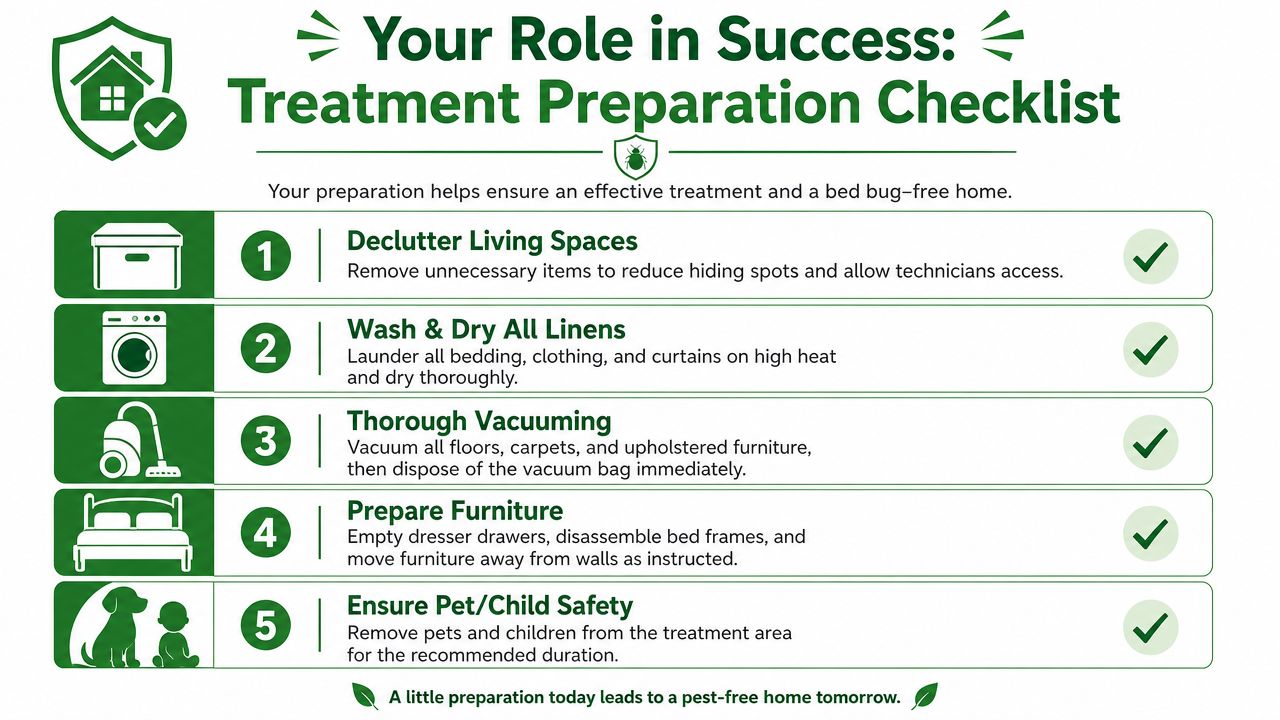
The preparation steps that matter most
Residents should expect detailed prep instructions before service. The essentials usually include the following.
Declutter living spaces
Clear loose items from floors, under beds, closet bottoms, and furniture edges so technicians can access likely harbourages. For households already sorting belongings for a move, this extra step can also save on your move by decluttering, which is useful when bed bug prep and move planning overlap.Wash and dry linens and clothing
Bedding, curtains, and clothing from affected areas should be bagged, laundered as directed, and kept contained after drying so cleaned items don't mix with untreated ones.Vacuum thoroughly
Floors, rug edges, mattress surfaces, upholstered furniture, and baseboards should be vacuumed carefully. Dispose of vacuum contents immediately and clean the unit as directed.
What residents often miss
The small details are where many treatments fail.
Furniture must be pulled from walls
That gap matters because bed bugs use the wall line, baseboards, and rear furniture joints as shelter.Drawers and storage zones must be addressed
Leaving packed drawers untouched can preserve active hiding places.Electrical and pipe entry points matter in condos
Shared-unit structures can allow movement through openings around utilities.Bagging has to stay organised
Mixing treated and untreated textiles undoes progress fast.
A technician can only treat what a technician can reach.
Preparation is part of the partnership
Children, pets, and unnecessary foot traffic should be kept out of the treatment area for the required period given by the provider. Residents should also avoid moving infested contents casually from bedroom to living room, or from one floor to another. Bed bugs spread by being transported.
For Toronto homes, especially apartments and condos, preparation isn't just about being tidy. It's about making sure the treatment touches seams, wall edges, furniture voids, and stored contents in a way that gives the infestation nowhere to hide.
Why Toronto Residents Choose Vanish for Bed Bug Control
Those seeking help aren't searching for a brand first. They're searching for certainty. They want licensed technicians, a realistic plan, and a service window that doesn't leave them waiting through another week of bites, anxiety, and failed home remedies.

What people need from a provider
For Toronto bed bugs, the key questions are practical:
- Can the company handle condos and apartment buildings?
- Do technicians understand heat treatment and preparation requirements?
- Is the service licensed and insured?
- Can the provider respond quickly enough to stop the problem from spreading?
- Will the process be explained clearly, without vague instructions?
Vanish Pest Control Inc. is one local option that provides bed bug extermination in Toronto and the GTA, including chemical-free heat treatment, same-day service availability, and work across residential, commercial, and industrial properties. Residents comparing local services can review the company's Toronto-area bed bug exterminator availability.
The right provider doesn't just “spray for bugs.” The right provider inspects the layout, explains the prep, and treats the unit like a system.
Service areas and property types
Toronto residents often need help beyond a single bedroom. Bed bugs are found in condos, rental apartments, student housing, houses, offices, and hospitality settings. A provider working in this market needs to be comfortable with high-rise access, shared-wall risk, move-in and move-out timing, and treatment coordination around tenants or building management.
That local reach also matters outside the core. Service across Toronto, Newmarket, Woodstock, London, and nearby GTA communities gives property owners and managers one process they can use across multiple sites.
For individuals seeking pest control Toronto bed bugs, the deciding factor is rarely flashy marketing. It's whether the company can manage a stressful urban infestation safely, quickly, and with instructions clear enough for the treatment to work the first time.
Frequently Asked Questions About Toronto Bed Bugs
Can bed bugs move between condo units?
Yes. In multi-unit buildings, they can move through wall voids, around plumbing lines, near electrical openings, and through shared structural gaps. That's one reason isolated DIY treatment often fails in condos and apartments.
Should a resident throw out the mattress right away?
Usually, no. Throwing out a mattress too early can spread the infestation through the home or building. In many cases, a professional treatment plan can address the mattress and surrounding harbourages without immediate disposal.
Are bites enough to confirm bed bugs?
No. Physical evidence is more reliable than bites. Many residents don't react visibly, and many skin reactions resemble other causes.
Is one room treatment always enough?
Not always. If activity has spread into nearby furniture, adjacent rooms, or hidden structural areas, a broader treatment scope may be necessary. In condos, the building context matters too.
What should be done first after finding signs?
Keep the issue contained. Avoid random sprays, don't move infested items through the home, and get a proper inspection and treatment plan in place quickly.
Are bed bugs only found in beds?
No. Beds are common harbourages, but bed bugs also hide in couches, chairs, baseboards, nightstands, wall gaps, and other tight spaces close to where people rest.
If bed bugs have shown up in a Toronto home, condo, rental unit, or business, Vanish Pest Control Inc. offers licensed service across the GTA with bed bug treatment, heat treatment options, and support for residential and commercial properties. The fastest path is a proper inspection, a clear preparation checklist, and a treatment plan matched to the layout of the property.




