

Professional bed bug treatment in Toronto usually starts at $500 for a small job, and most GTA treatments fall between $800 and $2,000, while full-home heat treatment can go beyond $2,500 depending on size and severity. That's the honest starting point most Toronto homeowners and condo residents need to hear before the panic sets in.
A lot of people search for bed bug treatment price late at night, usually after finding bites, dark spotting on bedding, or signs around a mattress or baseboard. The stress is real. Toronto residents worry about cost, how fast the infestation may spread through a condo or older house, and whether the problem can be solved without turning the home upside down for weeks.
Toronto homes also bring local complications that national guides usually miss. Downtown condos have shared walls, shared hallways, and frequent turnover. Older detached homes in Toronto often have more cracks, more hiding places, and more rooms to inspect. Rental units add another layer because Ontario law handles payment very differently than many U.S. guides suggest.
This guide gives Toronto homeowners, condo residents, landlords, and tenants a practical view of what bed bug treatment price really looks like in the GTA, what changes the quote, and which choices usually save money in the long run.
Table of Contents
- Your Guide to Bed Bug Treatment Prices in Toronto
- Understanding the Average Bed Bug Treatment Price in Toronto
- Key Factors That Determine Your Final Cost
- Comparing Bed Bug Treatment Methods and Prices
- A Look at Real Toronto Bed Bug Treatment Prices
- Landlords and Tenants Who Pays for Treatment in Ontario
- How to Save Money and Prevent Future Infestations
- Frequently Asked Questions About Bed Bug Costs
Your Guide to Bed Bug Treatment Prices in Toronto
Toronto homeowners usually don't need another vague article telling them prices “vary.” They need a realistic range, and they need it early. Across the GTA, a professional bed bug treatment price often begins around the low end for a small single-level unit and rises sharply once the infestation spreads across bedrooms, living areas, upholstered furniture, and adjoining rooms.

For Toronto condos, the lower end of the market usually applies when activity is caught early, access is good, and preparation is done properly. For detached Toronto homes, especially older properties with more rooms, more fabric surfaces, and more hiding places, the quote usually rises because the technician has more area to inspect and more locations to treat thoroughly.
Practical rule: Bed bug treatment gets expensive when the infestation spreads, not when the homeowner acts quickly.
A useful way to think about pricing is this. A light infestation behaves like a small brush fire. It's still serious, but it's more contained. A heavy infestation is closer to a fire moving through several rooms, with eggs, adults, and harbourage points in multiple locations.
Why Toronto homes need local pricing context
Toronto residents face housing conditions that directly affect treatment planning:
- Condo units: Shared walls and neighbouring units can complicate containment.
- Older homes: Cracks, trim gaps, and layered renovations create more hiding spaces.
- Basements and secondary suites: These increase inspection scope and can add treatment zones.
- Rental turnover: Frequent move-ins and move-outs make reintroduction more likely.
That's why local bed bug treatment price guidance matters more than generic online averages. A realistic Toronto quote should reflect the actual structure, the extent of activity, and the treatment method being used. It should also leave room for follow-up, not just the first visit.
What stressed homeowners should focus on first
Before comparing prices, Toronto residents should focus on three things:
- Confirm the problem quickly: Delays let bed bugs spread into more rooms and belongings.
- Ask what the quote includes: Inspection, treatment, follow-up, and warranty matter.
- Match the method to the situation: The cheapest first visit isn't always the lowest total cost.
That's the difference between buying a service and buying a resolution.
Understanding the Average Bed Bug Treatment Price in Toronto
Toronto residents looking for hard numbers can use one local benchmark as a practical baseline. In the GTA, professional bed bug treatment costs typically start at a minimum of $500 for a single-level unit, with an average range of $800 to $2,000 depending on property size and infestation severity. Inspection fees can range from $100 to $800, and extermination is often priced around $0.50 to $2.00 per square foot, according to this GTA bed bug treatment cost breakdown.
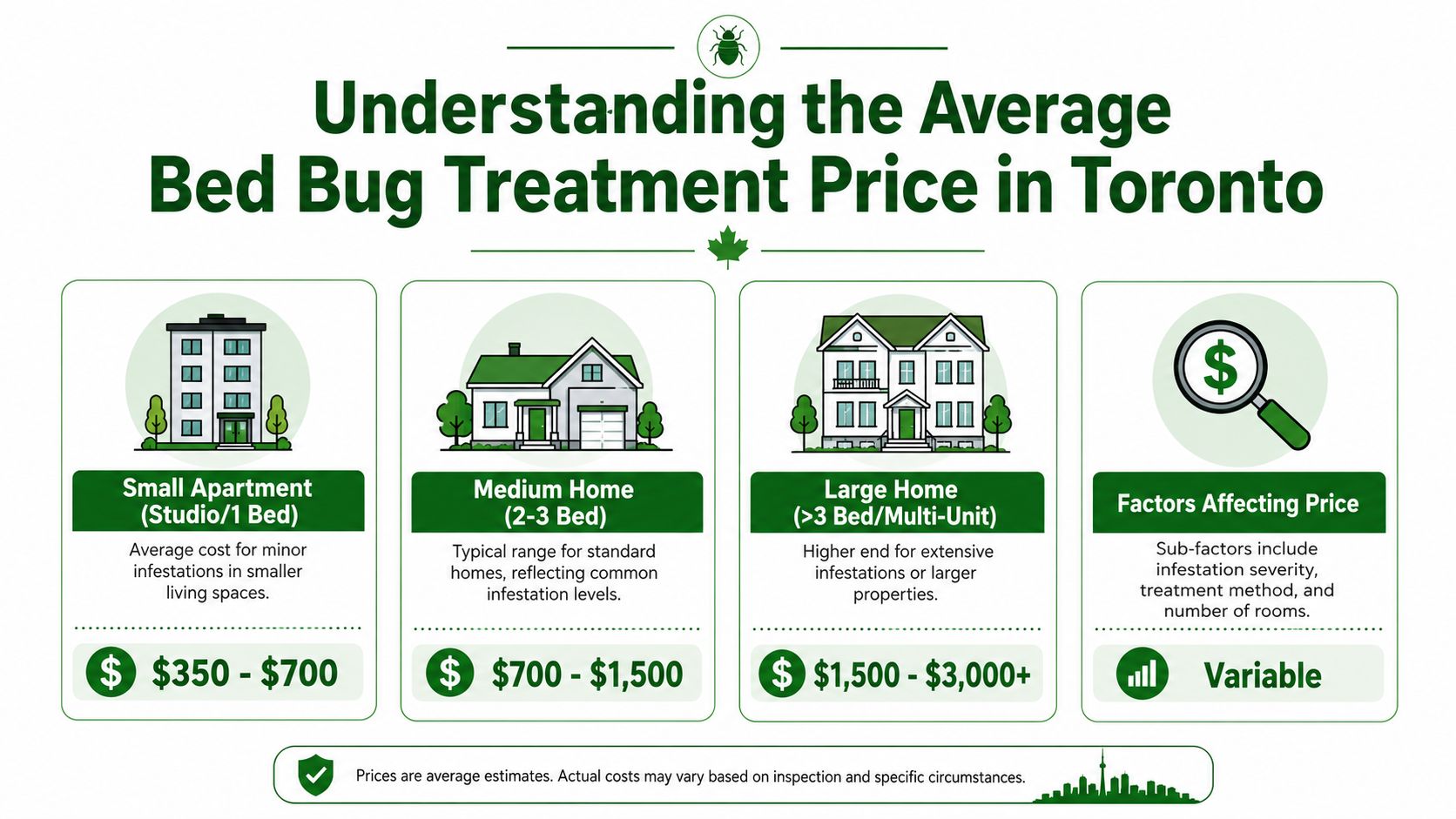
Those numbers matter because they immediately show whether a quote is in the normal Toronto range or whether something feels off. A very low quote may leave out follow-up work, while a high quote may still be reasonable if the property is large, cluttered, or spread across multiple floors.
What Toronto residents usually pay
A small single-level condo with limited activity usually lands closer to the lower end of the range. A multi-bedroom Toronto house, especially one with bugs in several rooms, often moves toward the upper end because the technician has to treat more furniture, more perimeter areas, and more harbourage points.
A quote also changes based on how far the infestation has travelled. If the bugs are mainly around one bed and one seating area, the job is more contained. If they've reached bedrooms, sofas, baseboards, closets, and adjacent rooms, treatment becomes broader and more labour-intensive.
For readers comparing broader service costs, Toronto homeowners can also review general pest control pricing in the GTA to understand how bed bug work differs from standard pest calls.
Why inspections are priced separately
Inspection fees frustrate people until they understand what a proper inspection is meant to do. Bed bugs hide in seams, joints, headboards, baseboards, electrical areas, furniture edges, and nearby belongings. In larger Toronto homes or mixed-use properties, that work takes time and careful attention.
A strong inspection should help answer these questions:
- Where is the activity concentrated
- How many rooms show signs
- What treatment method fits the property
- Whether neighbouring areas may also need review
A rushed inspection can make a cheaper quote look attractive at first, then expensive later when missed areas keep the infestation alive.
The best homeowners in these situations ask a simple question up front. What exactly is included in the inspection fee, and how is that fee applied if treatment goes ahead?
Key Factors That Determine Your Final Cost
In Toronto and the GTA, two homes with bed bugs can end up with very different treatment prices even if the problem sounds similar on the phone. We understand how frustrating that is, especially if you are already losing sleep and worrying about bites, laundry, and whether the bugs have spread. The final price depends on how much work it will take to remove the infestation fully and reduce the chance of it coming back.
Severity changes the scope of work
The biggest cost driver is how far the infestation has spread inside the unit. A problem limited to one bed, one headboard, and a nearby nightstand is a very different job from activity found in multiple bedrooms, upholstered furniture, closets, and baseboards across the home.
Technicians price based on treatment zones, hiding spots, and time on site. In practical terms, more active areas mean more inspection time, more preparation checks, more product or heat setup, and more follow-up.
Clutter also affects cost. That is not a judgment. It is a treatment issue. In many Toronto condos and apartments, storage is tight, closets are full, and under-bed space gets used heavily. Every packed bag, fabric bin, and stack of clothing creates more harbourage points and slows access to the places bed bugs hide.
Property type changes the work as well:
| Property factor | Why it affects price |
|---|---|
| Small condo | Fewer rooms, but shared walls and neighbouring units can affect the treatment plan |
| Older detached home | More cracks, trim gaps, radiator areas, and separated rooms to inspect and treat |
| Multi-level property | More square footage, stairs, and distinct treatment zones |
| Heavily furnished home | More seams, joints, drawers, and soft surfaces where bed bugs can hide |
Older Toronto housing often costs more to treat well. Victorian and post-war homes commonly have more voids, wood trim, floor transitions, and repaired wall sections that give bed bugs extra places to stay hidden. In condos, the square footage may be smaller, but management rules, elevator booking, and concern about adjacent units can add time and coordination.
Heat versus chemical treatment
Method is the next major factor behind price. Chemical programs usually have a lower starting cost, but they often involve multiple visits and strict preparation. Heat treatment costs more upfront because the equipment, setup, monitoring, and labour are heavier. Many homeowners still choose it for faster resolution, especially in smaller Toronto condos where repeated appointments are hard to manage.
The best option depends on the layout, the level of clutter, whether sensitive occupants are present, and how quickly you need the unit back to normal. Homeowners comparing approaches can review our guide to safe chemical-free bed bug heat treatment in Toronto to understand what is involved before approving a quote.
Price also reflects what is included. Some treatment plans include re-inspection, limited warranty coverage, interceptor placement, or clear prep support. Others cover only the initial visit. Ask for that in writing.
Other cost drivers Toronto residents often miss
A few factors push pricing up after inspection, and they are common across the GTA:
- Preparation problems: If beds are not stripped, clothing is not bagged, or access to baseboards and furniture is blocked, treatment takes longer or has to be rescheduled.
- Condo spread risk: In apartment and condo buildings, technicians may recommend a broader inspection strategy if activity could involve neighbouring units.
- Late reporting: Waiting gives bed bugs more time to move from the sleeping area into sofas, personal items, and additional rooms.
- Follow-up requirements: Some infestations need monitoring or a second visit to confirm control, especially after chemical treatment.
- Access restrictions: Downtown condos, older walk-ups, and buildings with strict booking windows can affect labour time and scheduling.
A useful quote explains the areas being treated, the method being used, how many visits are expected, and what happens if activity continues during the warranty period.
For Toronto tenants and landlords, one more factor affects real out-of-pocket cost. Who pays is not always the person who first notices the bites. Ontario rental rules can change the financial responsibility, particularly in multi-unit buildings where the source may extend beyond one suite.
Comparing Bed Bug Treatment Methods and Prices
For Toronto homeowners, the method you choose changes both the invoice and how disruptive the process feels in the next few weeks. We understand the pressure here. People want the problem gone fast, they want their home to feel safe again, and they do not want to spend more than they have to.
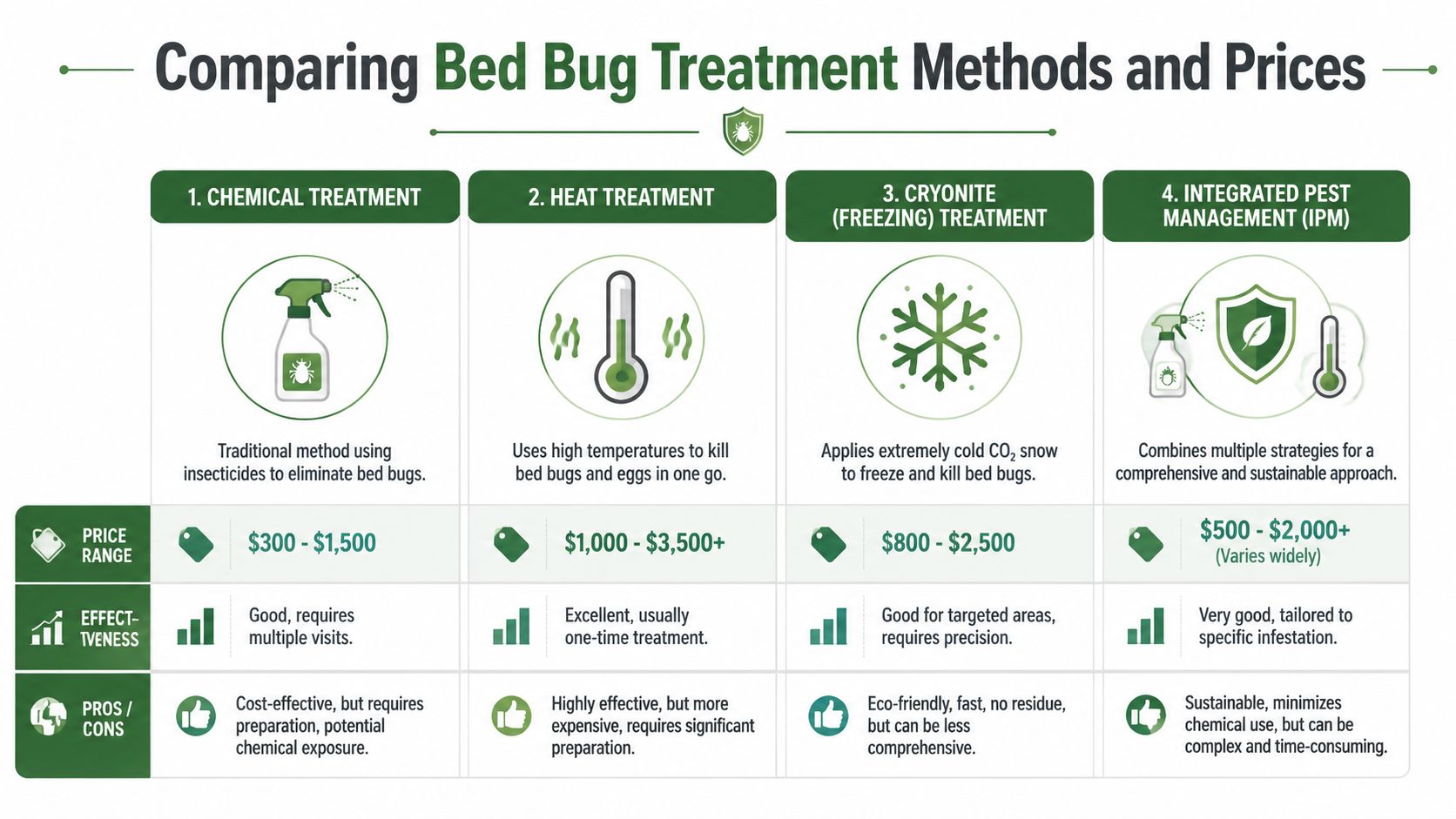
In the GTA, the two methods residents ask about most are heat treatment and chemical treatment. Heat usually carries a higher upfront price, but it is often chosen when the goal is to clear the infestation quickly and reduce the chance of eggs surviving. Chemical treatment usually starts at a lower price, but it commonly involves multiple visits, repeat preparation, and more time living with restrictions inside the home.
That difference matters in Toronto housing.
A compact condo in Liberty Village, North York, or Scarborough often has one big advantage for heat treatment. The space is smaller, access is more controlled, and residents often want one coordinated service window instead of several follow-up appointments with building management, elevator bookings, and time off work. A homeowner comparing options can review this guide to safe chemical-free bed bug heat treatment to understand how thermal remediation is handled inside real homes.
Older Toronto houses create a different pricing conversation. Semi-detached homes in East York, the Danforth, or Parkdale often have more rooms, more belongings, more hiding spots, and more surfaces to inspect closely. In that setting, some owners choose chemical treatment because the initial bill feels easier to manage. That can be a practical decision if the infestation is still limited and the household can follow every prep instruction on schedule.
The trade-off is usually time and consistency. If clothing is not bagged properly, furniture is not pulled out, or follow-up access gets delayed, chemical programs can stretch out longer than expected. I have seen homeowners save money on the first visit, then lose that advantage through repeat preparation, extra laundering, and weeks of stress waiting to confirm the activity is gone.
Here is the comparison most Toronto residents find useful:
Heat treatment
Often chosen for: Faster turnaround, strong egg control, fewer treatment appointments
Main drawback: Higher upfront cost
Common fit in Toronto: Condos, busy households, situations where residents want the issue resolved as quickly as possible
Chemical treatment
Often chosen for: Lower starting price, staged service plan
Main drawback: More visits, more preparation cycles, more time before full confirmation
Common fit in Toronto: Smaller or earlier infestations, households that can manage follow-up access and detailed prep
A simple way to judge the options is this. Heat tends to cost more at the start. Chemical treatment can cost less on day one, but the total burden may rise if the infestation is widespread, the home is hard to prepare, or the household cannot keep up with multiple service visits.
The best choice comes from the property itself. Condo layout, clutter level, severity of activity, building rules, and how quickly you need your home back to normal all affect which method gives better value in Toronto.
A Look at Real Toronto Bed Bug Treatment Prices
A Toronto quote gets real fast when the problem is in your own bedroom, your child's room, or a condo unit with neighbours on both sides. We understand the pressure. People want a price they can trust, not a wide national range that ignores how homes are built and managed in the GTA.
In Toronto, bed bug pricing usually reflects the property type, access, and how far the activity has spread. A small condo unit caught early will often cost less than an older semi with multiple sleeping areas, heavy baseboards, and more hiding spots around trim, outlets, and floor transitions. In apartments and condos, treatment can also be shaped by building access rules, elevator booking windows, and whether adjoining units need inspection.
How quotes tend to look across Toronto properties
Here is how pricing usually plays out in real GTA housing stock:
- Smaller condo or apartment: Quotes are often lower when activity is limited to one bedroom and the unit is prepared properly before service. In Toronto towers, this is a common starting point, but shared walls can make inspection scope more important.
- Older semi-detached or detached home: Costs usually rise because there are more rooms to inspect and treat, plus more cracks, trim details, and furniture density than you see in a newer condo.
- Larger family home or multi-level property: Pricing climbs with square footage, room count, and the time needed to inspect sleeping areas, soft furniture, and adjacent rooms carefully.
- Basement suite or divided house: These jobs can become more complex if there are separate entrances, shared laundry, or concern about spread between units.
That is why two Toronto homes with the same treatment method can still receive very different quotes.
What a solid quote should include
A proper estimate should explain the scope in plain language. Homeowners and tenants should be able to see which rooms are included, whether the price covers one visit or a full program, what preparation is required, and whether follow-up inspections are part of the cost.
I tell Toronto clients to slow down and read the details, especially in condos and rentals. A lower number is not always the lower final bill if the quote leaves out follow-up service, additional rooms, or re-treatment conditions. The goal is not just to start treatment. The goal is to finish it and get your home back.
Why Toronto pricing often causes disputes
Cost disagreements are common in the GTA because people compare unlike situations. A clean one-bedroom condo in Liberty Village is not priced the same way as a cluttered older home in East York or a divided house in Scarborough. The treatment method matters, but the layout and access matter too.
Clear documentation lowers tension. If the inspection report shows where signs were found, which rooms are affected, and what the service includes, landlords, tenants, and homeowners can judge the quote on facts instead of assumptions. In attached housing, that clarity also helps speed up approvals before the issue spreads further.
Landlords and Tenants Who Pays for Treatment in Ontario
This is one of the most misunderstood parts of any Toronto bed bug situation. Under Ontario's Residential Tenancies Act, landlords are legally required to pay for the extermination process and cannot charge tenants for the treatment. Tenants are responsible for replacing personal belongings unless landlord negligence is proven, and tenants may seek rent abatement at the Landlord and Tenant Board, as noted in this Ontario landlord and tenant discussion of bed bug extermination obligations.
What Ontario law requires
For Toronto renters, the key point is simple. The landlord pays for extermination. That doesn't mean every cost connected to a bed bug event falls on the landlord. Personal belongings, discarded furniture, or replacement items are a separate issue unless negligence changes the situation.
This legal framework matters because many online articles are written for U.S. readers and suggest cost-sharing, tenant reimbursement, or other arrangements that don't fit Ontario rules.
In Ontario rentals, the argument over who caused the infestation shouldn't delay treatment.
What each side should do right away
A practical response works better than a blame-first response.
- Tenants should report signs immediately: Delayed reporting can make the infestation worse and make scheduling harder.
- Landlords should book inspection and treatment quickly: Waiting increases spread risk in multi-unit properties.
- Both sides should document preparation and instructions: Written records reduce conflict later.
- Everyone should follow the preparation sheet exactly: Missed steps can undermine even a good treatment plan.
Toronto property managers deal with this constantly in condos, apartment buildings, and converted homes. The fastest and least expensive path usually comes from cooperation, not debate.
How to Save Money and Prevent Future Infestations
The cheapest bed bug treatment is the one that happens before the infestation spreads through the whole home. Once professionals are needed, there are still smart ways Toronto residents can control cost and reduce the chance of doing this all over again.
Ways to reduce immediate costs
Preparation affects labour. Labour affects price. A well-prepared home is easier to inspect and easier to treat properly.
Toronto residents can usually help the process by doing the following before service:
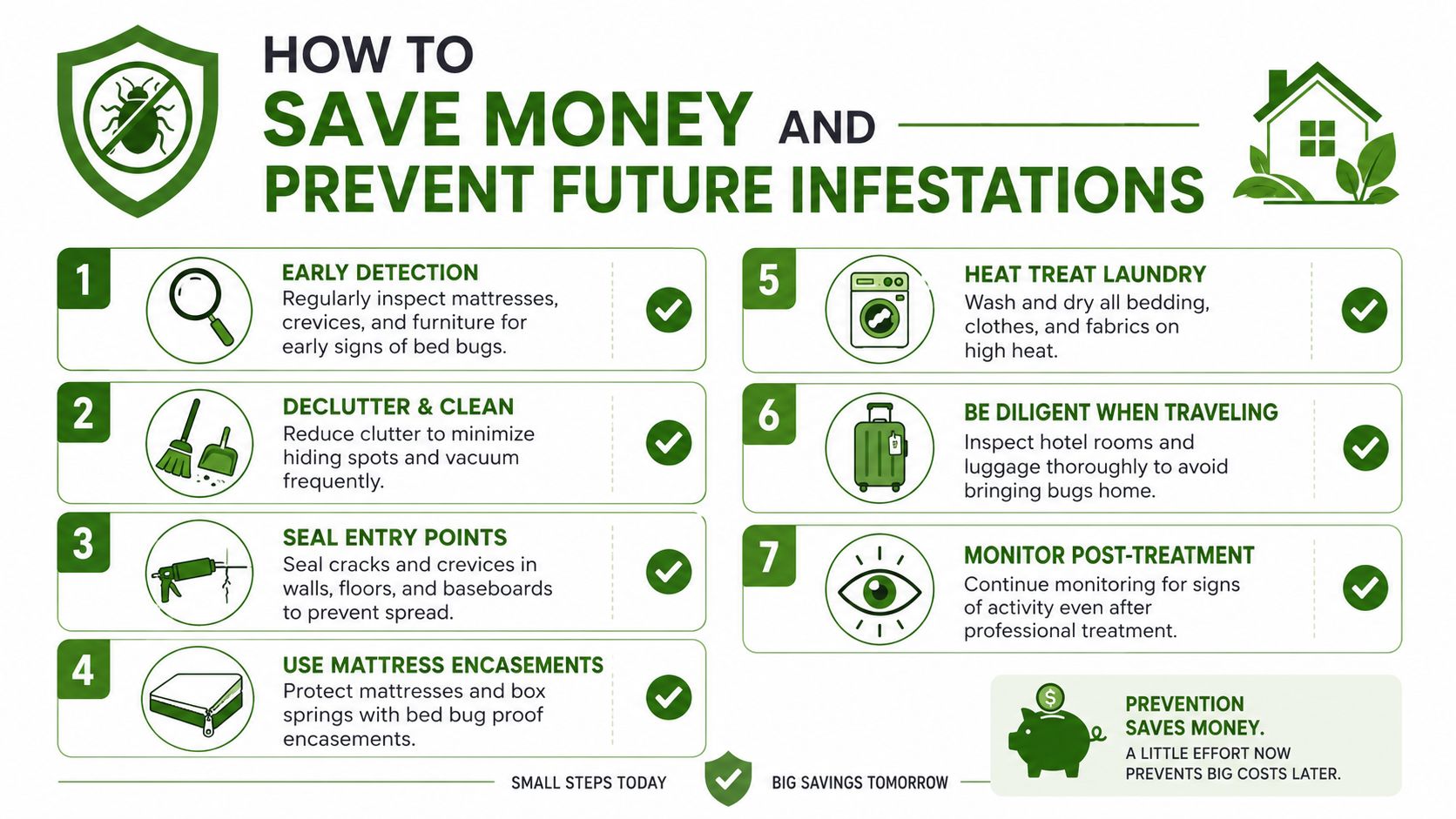
- Declutter sleeping and lounging areas: Clear floors, under-bed storage, and tight corners so treatment can reach hiding spots.
- Launder and bag fabrics properly: Bedding, clothing, and soft items should be handled exactly as instructed by the technician.
- Don't move infested items around the home: Shifting things room to room can spread the problem.
- Ask about warranty terms: A slightly higher quote may carry better value if it includes follow-up support.
Mattresses deserve extra attention because they're often the centre of concern. For households storing or protecting mattresses during treatment or move-related transitions, Admiral's Yard tips for mattress care offer useful guidance on keeping mattresses covered and protected in a practical way.
Habits that help Toronto homes stay protected
Long-term prevention is less about one magic trick and more about routine habits.
- Inspect second-hand furniture carefully: Sofas, bed frames, and chairs deserve a close check before entering the home.
- Use proper mattress and box spring encasements: These help reduce hiding spots and support monitoring.
- Be careful after travel: Luggage, clothing, and soft bags are common ways bed bugs hitchhike into Toronto homes.
- Keep bedrooms and baseboards easier to inspect: Less clutter means fewer hidden harbourage areas.
For broader prevention strategies specific to local housing conditions, Toronto homeowners can review this guide to protecting a home from bed bug infestation in the Toronto GTA.
Best habit: Treat every used furniture purchase and every trip home from travel as a possible inspection moment.
What doesn't usually save money
Some homeowners try to cut corners with random sprays, repeated mattress disposal, or partial DIY cleaning while postponing a proper inspection. That often backfires. Bed bugs hide beyond the mattress. They settle into frames, furniture joints, cracks, and nearby rooms.
What saves money is early reporting, proper preparation, and choosing a treatment plan that matches the scope of the infestation.
Frequently Asked Questions About Bed Bug Costs
Is DIY worth trying first
DIY steps can help with preparation and short-term containment, but they rarely solve a full infestation permanently. Bed bugs hide in too many places, and partial treatment often leaves eggs or hidden pockets behind. If Toronto residents are seeing repeated bites, visible bugs, or signs in more than one area, professional treatment is usually the practical next move.
Are treatments safe for children and pets
Safety depends on the method used and whether the household follows preparation and re-entry instructions exactly. Heat treatment is often chosen by families who want a chemical-free option. Chemical treatment can also be used responsibly when applied correctly and paired with clear directions from the technician.
How long does the process take
That depends on the method and the size of the property. Heat treatment is often selected by residents who want a faster one-visit resolution path. Chemical programs usually take longer because they commonly involve staged visits and monitoring.
Should a low quote always be trusted
Not automatically. A low quote may be fair for a small, contained problem, but it can also mean the inspection was too shallow or the plan leaves out follow-up. Toronto residents should ask what's included, whether re-treatment is covered, and how the company defines success.
Can bed bugs spread to other pest areas in the home
Yes, they can move beyond the bed into sofas, baseboards, closets, and nearby furniture. They don't behave like ants, cockroaches, mice, rats, wasps, termites, or wildlife such as raccoons, squirrels, skunks, and bats, but they create the same core lesson seen in many Toronto pest problems. Early action is always cheaper than delayed action.
Toronto residents dealing with bed bugs don't need guesswork. They need a clear plan, a fair quote, and treatment that effectively solves the problem. Vanish Pest Control Inc. provides licensed bed bug control and heat treatment across Toronto and the GTA, with practical inspections, transparent recommendations, and fast help for condos, homes, and rental properties.




