

A Toronto pest problem usually starts small. A rustle in the ceiling above a bedroom. A single cockroach seen when the kitchen light flips on. Ants crossing a condo counter after a humid stretch. Then the worry sets in: who can solve this properly, safely, and without wasting time on repeat visits?
That question matters more in Toronto than many property owners realise. This isn't a niche service category. Statistics Canada reports 1,368 businesses in Canada's exterminating and pest control services sector in June 2022, up from 1,320 in June 2021 and 1,285 in 2020, showing steady expansion in a service category tied to dense residential and commercial buildings like those across Toronto's housing stock and food-service corridors (Statistics Canada on pest control businesses in Canada). For a homeowner, condo resident, landlord, or restaurant operator, that growth means choice. It also means noise. Many providers sound similar until an infestation tests whether their process is real.
The right way to assess pest control companies in Toronto is to look past slogans and measure standards. Licensing. Inspection quality. Written guarantees. Response speed. Treatment fit for the actual pest and property type. Clear explanation of what will happen before, during, and after service. Those are the factors that separate a useful service call from an expensive delay.
Table of Contents
- Your Checklist for Selecting a Toronto Pest Control Expert
- The Vanish Canada Commitment to Toronto Residents
- Solving Toronto Pest Problems in Real-Life Scenarios
- Practical Pest Prevention Tips for Your Toronto Property
- Understanding Pest Control Costs and Value in Toronto
- Frequently Asked Questions About Toronto Pest Control
Your Checklist for Selecting a Toronto Pest Control Expert
Toronto residents aren't choosing from a tiny pool. The market is crowded, and quality has to be judged on evidence. IBISWorld reports 1,554 pest-control businesses nationwide in 2026, with growth in the number of businesses from 2021 to 2026, which helps explain why the Greater Toronto Area has so many operators competing on speed, guarantees, and specialisation rather than price alone (IBISWorld's Canada pest control industry profile).
A quick screening table
| What to check | What a professional company should provide | What to avoid |
|---|---|---|
| Licensing and certification | Clear proof that technicians are qualified for the work being offered | Vague answers or no documentation |
| Insurance | Confirmation of active business insurance | “Don't worry, we've never had an issue” |
| Inspection process | A real inspection before treatment is recommended | Quoting a fix without assessing the site |
| Written guarantee | Terms in writing, especially for recurring pests | Verbal promises only |
| Response time | A realistic service window for urgent infestations | Open-ended scheduling |
| Treatment fit | Different methods for rodents, bed bugs, cockroaches, termites, and wildlife | One generic treatment for every problem |
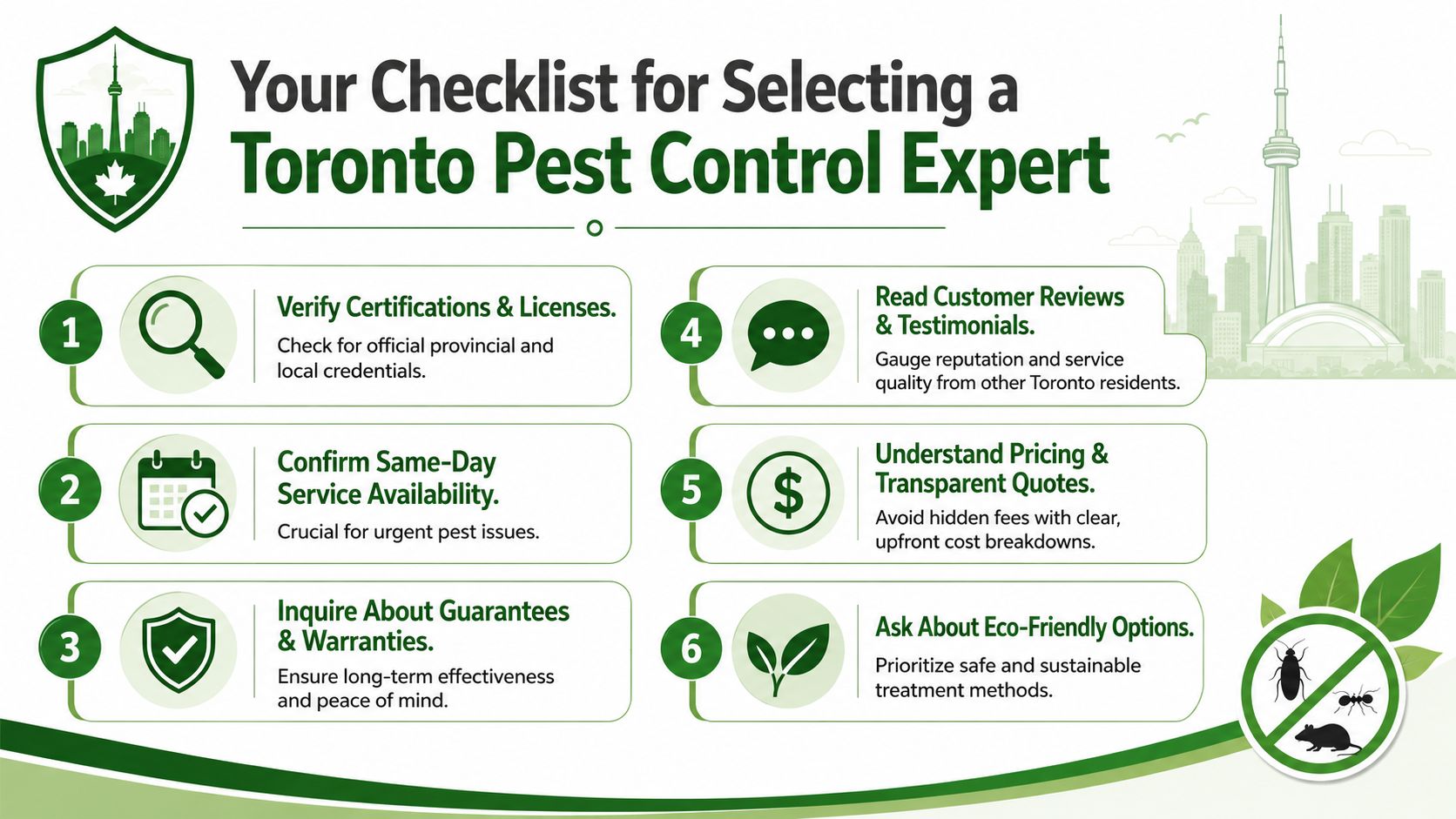
The six standards that matter
A proper Toronto screening starts with credentials. Residents should confirm that the company is properly licensed for pest control work in Ontario and insured for service in occupied homes, condos, restaurants, and commercial buildings. That isn't paperwork for its own sake. It reduces risk when treatments involve regulated products, roofline access, attic work, or exclusion repairs.
Response time comes next. In Toronto traffic, “fast” has to mean more than a promise on a website. Bed bugs in a condo, rats in a restaurant bin area, or wasps near a school entrance can't wait through a long booking gap. A provider should explain the actual service window and what happens if the issue needs immediate containment.
Practical rule: If a company can't explain who arrives, what they inspect, and what the first visit is meant to achieve, the property owner is still buying uncertainty.
Written guarantees matter because some pests need follow-up by nature. Bed bugs, rodents, and cockroaches often require inspection, treatment, monitoring, and proof that activity has stopped. A guarantee should say what's covered, how long support lasts, and whether follow-up visits are included or charged separately.
Specialisation also matters more than many buyers expect. The methods used for a raccoon in an attic shouldn't look anything like a cockroach treatment in a food-handling area. The same goes for carpenter ants in damp structural wood versus mice entering through utility gaps. Toronto properties vary widely, from high-rise condos and old detached homes to mixed-use storefronts, so the treatment plan has to fit the structure.
For households that care about indoor air quality and low-residue methods, it's worth reviewing related home-care standards too. This overview of the benefits of professional eco-friendly cleaning is useful because it shows the same principle that applies in pest work: “safer” only means something when the method is clearly described.
One more practical benchmark helps. Any serious buyer comparing pest control companies in Toronto should expect the company to explain inspection findings in plain language and put the scope in writing. Detailed service standards are also part of why expert pest control services matter when the goal is long-term control rather than a short-term spray.
The Vanish Canada Commitment to Toronto Residents
A company should be judged against the same checklist it asks clients to use. That includes speed, transparency, treatment detail, and what happens after the first appointment.
Vanish Pest Control Inc. is a Toronto-based option that provides same-day service, money-back coverage, chemical-free bed bug heat treatments, rodent-proofing, wildlife removal, and ongoing service through a Royalty Plan with discounts of up to 40% on repeat services, as described in the company background provided for this article. That combination matters because Toronto pest issues often don't fit a one-visit model.
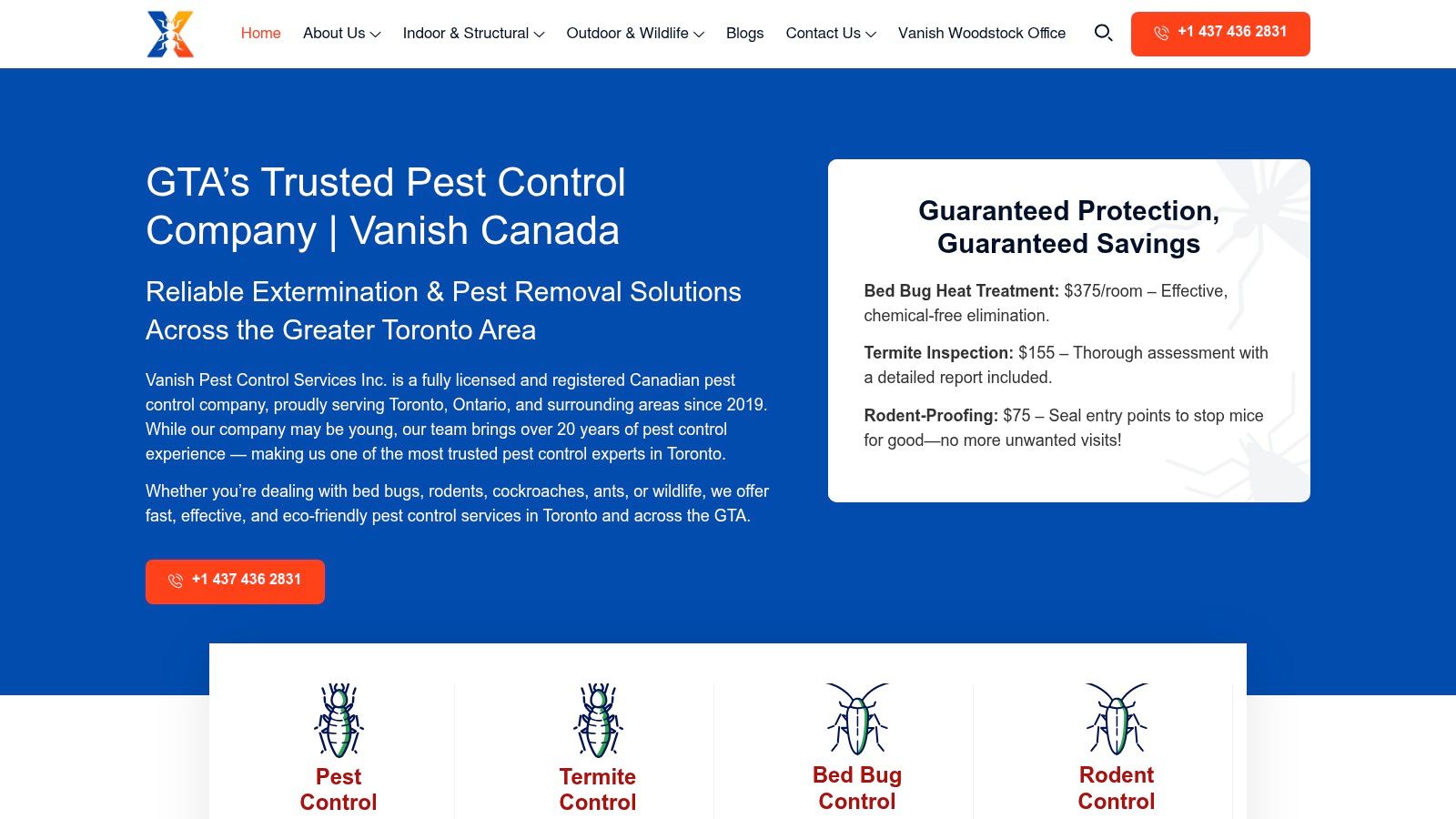
What eco-conscious service should look like
A lot of local marketing uses the word “eco-friendly” loosely. That leaves property owners guessing whether a company means lower-toxicity materials, reduced-application strategies, exclusion-first methods, or non-chemical treatment.
That gap matters in Toronto. The verified brief for this article states that a 2024 Environment and Climate Change Canada report indicates 68% of Toronto homeowners worry about pesticide exposure, while only 12% of local ads detail specific non-toxic methodologies. It also notes that 88% of local ads fail to specify their protocols. The practical takeaway is simple: a real eco-conscious service should name the method, not just the value statement.
Why guarantees and follow-through matter
The strongest service model is built around inspection, treatment, re-evaluation, and prevention. In practice, that means a technician should explain where pests are entering, where they're nesting, what environmental factors are sustaining them, and which parts of the solution depend on repair or sanitation rather than chemistry alone.
A money-back guarantee only has value when the company also has a repeatable process behind it.
The company background for this article states that the team brings 20+ years of experience, which supports that kind of repeatable field process. It also states that service includes detailed inspections, targeted plans, and pre- and post-treatment cleaning support when required. For Toronto residents comparing providers, those details matter more than broad promises because they show how the work is organised from first visit to resolution.
For anyone reviewing company standards, team history, and service scope before booking, the most direct starting point is the about page for Vanish Pest Control Inc.. The useful point isn't branding. It's that a serious provider should disclose what it does, where it works, and what kinds of properties it handles.
Solving Toronto Pest Problems in Real-Life Scenarios
Advice only helps if it matches what occurs in Toronto homes and businesses. Pest issues in this city are shaped by shared walls, old brick, laneways, food density, attic voids, basement moisture, and constant movement of people and goods.

Condo bed bugs after travel
A common downtown scenario starts with bites, anxiety, and no visible insect. In a Toronto condo, that's enough to justify a focused inspection. Bed bugs often spread through luggage, soft furnishings, and shared building pathways, and guessing wrong can make the problem worse.
A professional response starts with confirmation, not panic. The resident should avoid dragging furniture into hallways, moving bedding loose through common areas, or relying on random retail sprays. In multi-unit buildings, the right plan is usually a documented inspection, preparation guidance, treatment of affected rooms, and coordination with management if adjacent units may be involved.
Chemical-free heat treatment can be particularly useful in this setting because it targets the affected space without leaving residents to interpret vague “green” language. The bigger point is method fit. A condo problem needs discretion, containment, and building-aware communication.
Wildlife in an attic above a family home
Another Toronto pattern shows up in older homes and leafy residential streets. The first sign is often nighttime scratching over a bedroom or hallway. By the time the sound is obvious, wildlife may already be denning in insulation or moving through soffit and roof gaps.
The correct response isn't trapping first and asking questions later. Humane wildlife removal begins with identifying the entry route, checking whether young are present, excluding animals properly, and sealing the vulnerable points that allowed access in the first place. If the access point stays open, the same problem often returns.
If wildlife work doesn't include exclusion and repair recommendations, it's incomplete.
Attic cases also need contamination awareness. Insulation disturbance, droppings, and chewed venting can turn an animal-removal job into a sanitation and repair job. That's why homes in Toronto need companies that understand both removal and building protection.
Cockroaches in a busy commercial kitchen
Restaurants and food businesses face a different type of pressure. A single sighting can affect staff confidence, shift routines, and compliance expectations. The wrong response is a cosmetic treatment that ignores harbourage, drains, equipment voids, delivery practices, and after-hours activity.
A professional commercial plan should combine inspection, targeted treatment, monitoring, sanitation corrections, and staff instructions. In kitchens, pests survive where heat, moisture, food residue, and hidden cracks line up. The treatment has to follow that biology, not just the floor plan.
The same principle applies to ants, mice, and rats in commercial sites. Toronto businesses need pest control companies in Toronto that understand service documentation, discreet scheduling, and prevention standards that hold up after the initial visit.
Practical Pest Prevention Tips for Your Toronto Property
Prevention doesn't replace professional treatment when an infestation is active. It does reduce the chance that a small issue becomes a recurring one. Toronto homes, condos, and mixed-use buildings each have their own weak points.
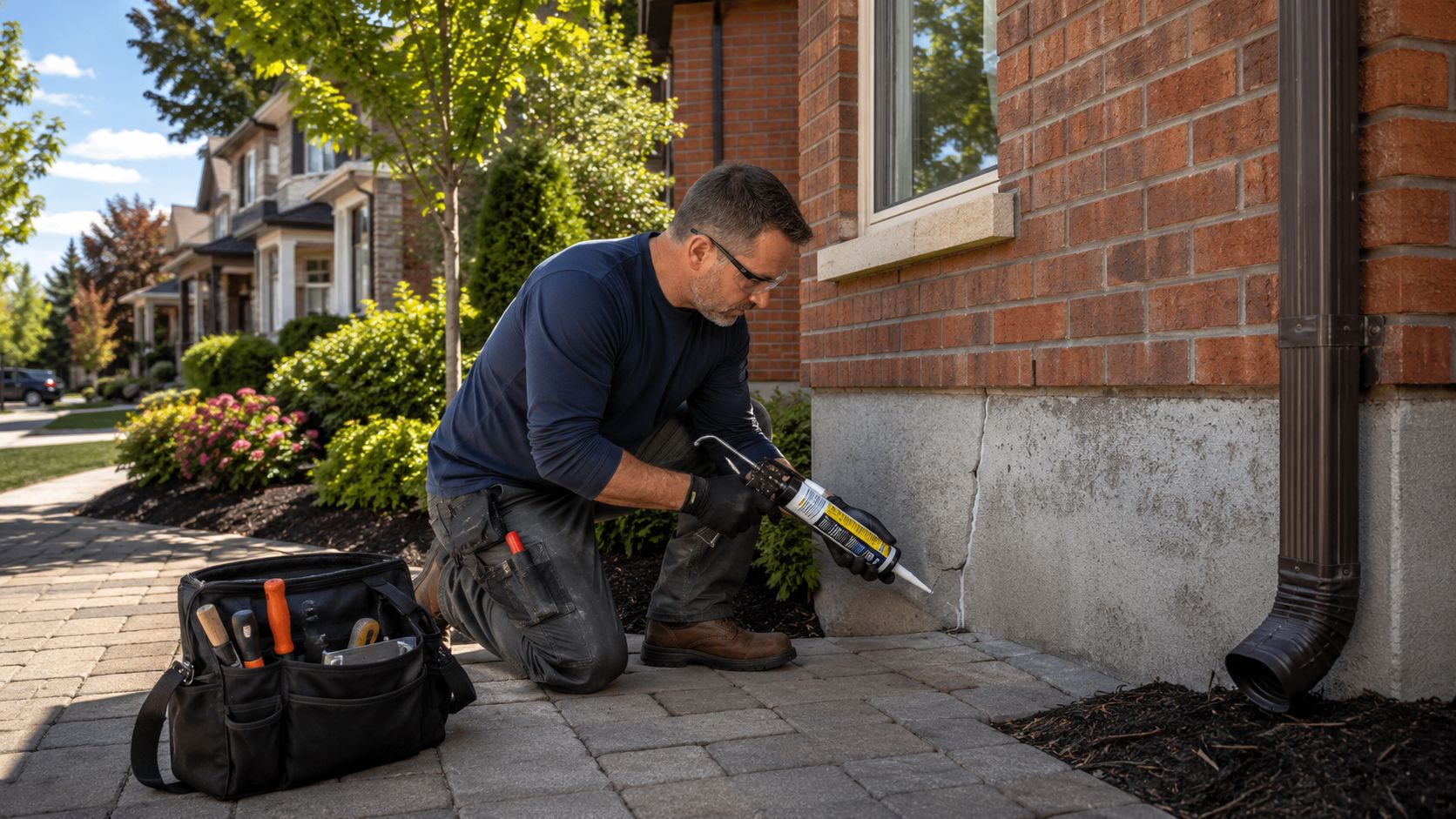
For detached and semi-detached Toronto homes
Start outside. Walk the foundation, utility penetrations, dryer vent edges, door sweeps, and garage corners. Small gaps around pipes and cables are common rodent entry points, especially where older repairs have shrunk or cracked.
Then look up. Roof edges, soffits, and gutters often contribute to carpenter ant, wasp, and wildlife problems because trapped moisture and damaged trim create easy access. Homeowners who want a practical maintenance refresher can review this expert advice on gutter problems because poor drainage often supports the damp conditions that pests exploit.
A few routine habits make a difference:
- Keep bins controlled: Close lids fully, rinse sticky containers, and avoid overflow around the storage area.
- Trim contact points: Tree branches touching the roof and dense vegetation against siding give pests cover and access.
- Store smartly: Don't leave cardboard and clutter against basement walls where insects and rodents can hide.
- Watch for wood moisture: Soft trim, wet window frames, and damp sill plates attract the wrong kind of attention.
For condos and townhouses
Shared walls change the prevention plan. Residents should focus on baseboard gaps, plumbing penetrations under sinks, closet corners, and kitchen voids around dishwashers and stoves. A tiny opening behind a cabinet can be more important than a visible crack in the middle of the room.
Condo residents should also report issues early. Waiting until sightings become frequent gives pests more time to spread through adjacent units or service chases. If there's travel history, used furniture, or repeated sightings near the same source, documenting dates and locations helps the technician narrow the inspection quickly.
Small repairs done early are often more valuable than large cleanups done late.
Understanding Pest Control Costs and Value in Toronto
Price matters, but price alone is a poor filter. Pest control costs in Toronto vary because the job itself varies. A mouse issue in a detached home, a bed bug treatment in a high-rise unit, and a raccoon exclusion with entry-point repair are completely different scopes.
The verified brief for this article states that a 2025 Consumer Protection Ontario survey found 74% of Toronto residents distrust pest control pricing due to hidden fees. It also states that 42% of Toronto condo residents have faced pest issues, especially bed bugs and rodents. Those two figures explain why buyers ask hard questions about what a quote includes, what triggers additional charges, and whether follow-up support is part of the plan.
What changes the quote
A proper quote usually depends on the pest involved, the size and layout of the affected area, the severity of activity, access difficulty, and whether monitoring or exclusion work is required after treatment. Commercial sites may also need service records, off-hours scheduling, or stricter sanitation coordination.
The strongest companies spell that out before work begins. If a quote sounds unusually simple for a complicated issue, that's often because part of the job hasn't been priced yet.
Why the cheapest service often costs more
A one-time low quote can become expensive when the original cause is left behind. Rodents return if entry points stay open. Cockroaches rebound if harbourage and sanitation failures aren't addressed. Wildlife comes back if exclusion isn't completed.
That's why guarantees and maintenance plans can have real value when they are transparent. A written program can make the cost predictable and reduce the chance of paying again for the same unresolved issue. For readers who want to compare scope, inclusions, and service structure in more detail, the Toronto pest control pricing page is a useful example of what transparent pricing information should help clarify.
Frequently Asked Questions About Toronto Pest Control
| Question | Answer |
|---|---|
| Is pest control safe for pets and children? | It can be, if the company explains the method clearly and gives preparation and re-entry instructions that match the treatment being used. Exclusion, trapping, heat treatment, targeted application, and sanitation-based control all carry different precautions. |
| Do residents need to prepare before treatment? | Usually, yes. Preparation may include reducing clutter, emptying certain cabinets, laundering fabrics, moving items away from walls, or securing pets. Good companies give written preparation steps because poor prep can weaken results. |
| Is commercial pest control different from residential service? | Yes. Restaurants, offices, warehouses, and retail units often need more documentation, more discreet scheduling, and different treatment placement because of compliance, staff traffic, and operational risk. |
| Should a homeowner try DIY treatment first? | For a very minor and clearly identified issue, basic sanitation and sealing may help. But bed bugs, cockroaches, rodents, termites, and wildlife usually need professional inspection because partial treatment often pushes the problem deeper into the property instead of solving it. |
If a Toronto home, condo, restaurant, or commercial property needs a proper inspection and a clear treatment plan, Vanish Pest Control Inc. offers licensed pest control and wildlife removal across the GTA, with same-day service, transparent pricing, and methods designed around safe, practical long-term control.




One Response