

A warm afternoon on a Toronto deck can change fast when someone notices a papery nest under the eaves and a steady line of wasps moving in and out. At first, many Toronto residents hope it's a minor nuisance that will pass. It usually doesn't. Once wasps choose a nesting spot near a patio, roofline, balcony, kitchen window, or condo vent, the risk shifts from annoyance to safety.
That's why how to get rid of wasps isn't just a summer housekeeping question for Toronto homes. It's a decision about timing, access, sting risk, and whether the nest is in a place that turns a simple job into a dangerous one. A small exposed nest under a shed overhang is one thing. A colony in a wall void, soffit, or above a second-storey roof edge is something else entirely.
Table of Contents
- Introduction to Wasp Removal in Toronto Homes
- Identify Wasp Species and Nest Locations
- Ensure Safety and Provide First Aid for Stings
- Complete DIY Wasp Removal with Seasonal Timing
- Implement Preventive Measures and Habitat Modification
- Understand Pesticide Risks and When to Call Professionals
- FAQ
Introduction to Wasp Removal in Toronto Homes
Toronto residents usually notice wasps in stages. First it's a few insects circling a recycling bin, outdoor drink, or deck railing. Then someone spots a regular flight path under the soffit, into a light fixture, or through a gap near the roofline. By the time activity is obvious, the nest is often established enough that swatting a few workers won't change anything.
In Toronto homes, the most common problems show up around eaves, decks, garages, sheds, rooflines, and wall openings. Condo residents run into a different version of the same issue. Wasps may use vents, cladding gaps, or narrow exterior seams that lead into hidden interior spaces. Businesses see similar trouble near bin areas, rear entrances, and loading zones where sweet residue or food waste lingers.
A practical approach starts with three questions. What species is present. Where is the nest. Can the location be treated safely without forcing the colony into living space or triggering a defensive swarm.
Practical rule: If the nest is hidden, high, or connected to the structure of the building, the removal method matters more than the product.
Toronto homes also deal with overlapping pest problems through the season. A property that attracts wasps with exposed food waste may also invite ants, cockroaches, mice, rats, and wildlife such as raccoons or squirrels. The good news is that a careful wasp plan often improves overall pest prevention around kitchens, basements, patios, and commercial entry points.
Identify Wasp Species and Nest Locations
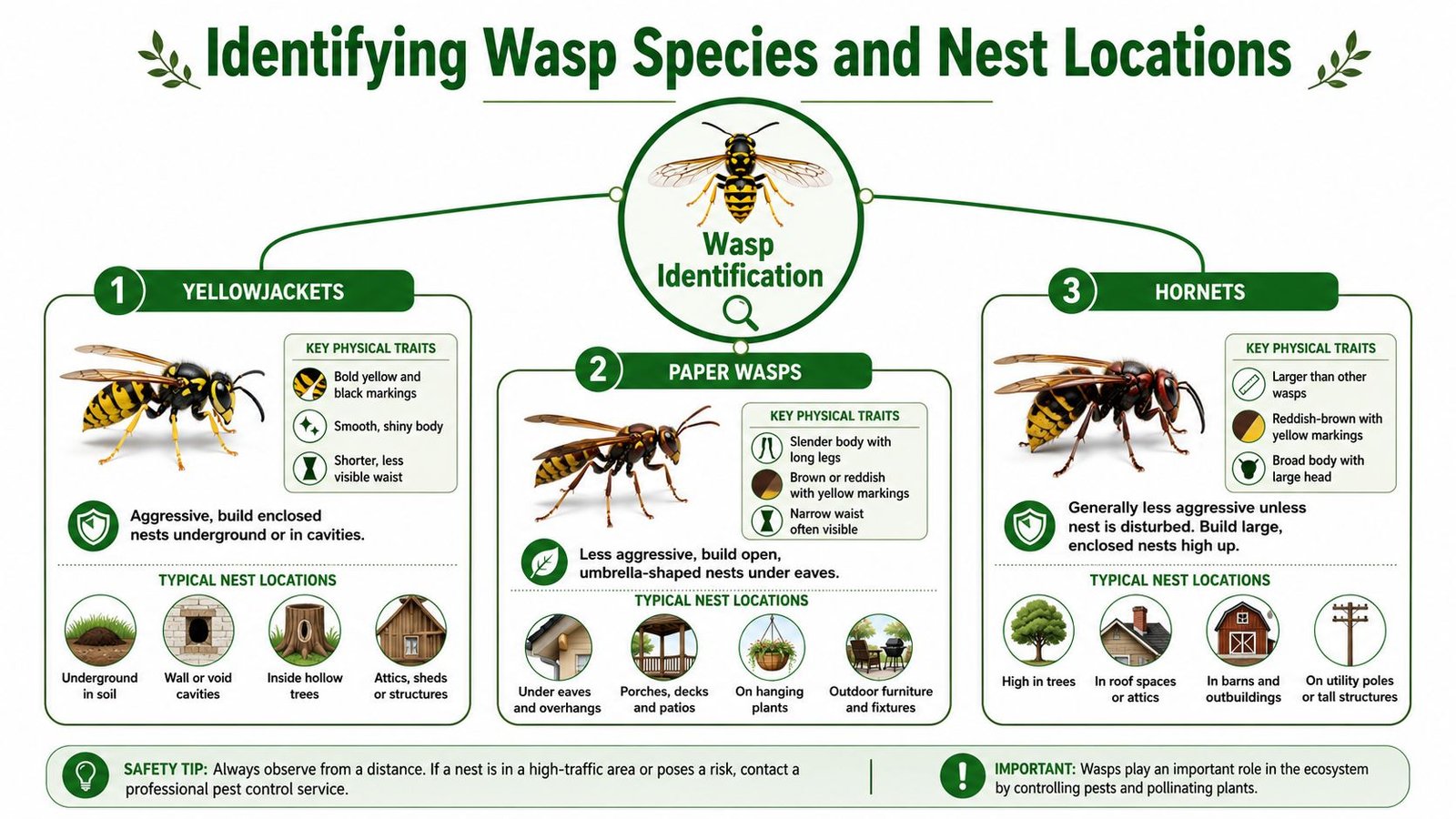
Common wasps around Toronto homes
The removal method depends on what Toronto residents are dealing with. Paper wasps usually build open, umbrella-style nests that hang under eaves, railings, porch ceilings, and sheltered overhangs. These nests are often visible from below, which makes them easier to identify before anyone gets too close.
Yellowjackets create a different problem. They're more likely to use hidden spaces such as ground cavities, wall voids, deck gaps, and structural openings. If wasps seem to vanish into a crack rather than gather on an exposed paper comb, that's a warning sign that the colony may be inside the structure.
Hornet-type aerial nests are enclosed and more rounded in appearance. Toronto homeowners may find them attached to soffits, tree branches, or outbuildings. When the nest is fully enclosed and activity is concentrated around a single outer opening, residents should assume the colony will defend itself aggressively if disturbed.
For readers who also manage outdoor vegetation and want a broader look at pest pressure around yards and tree cover, these tree health tips for Perth properties offer a useful reminder that insect problems often start with habitat conditions, not just the nest itself.
Where nests usually appear
Toronto homes produce repeat wasp hotspots. The list below covers the places technicians check first.
- Under eaves and soffits: sheltered, dry, and close to roof warmth
- Inside wall voids: common around vents, trim gaps, and utility penetrations
- Around decks and fences: especially in hollow spaces and board joints
- In the ground: often near foundation edges, lawns, and garden borders
- Near sheds and garages: quiet, undisturbed corners attract early nest building
One of the most important safety distinctions is the difference between sealing an unused gap and plugging an active nest entrance. Experts emphasize that interior wall void wasp nests must not be plugged or capped, as blocking an active opening forces wasps deeper into living spaces, a nuance missing from 90% of DIY guides according to guidance on getting rid of wasps nests.
That matters in Toronto condos and tightly built homes. A resident who seals an active exterior opening may think the problem is solved, only to drive wasps into a bathroom fan cavity, fireplace chase, or interior ceiling line. When the nest is in a hidden structural space, a dedicated hornets nest removal service or another licensed structural treatment option is the safer route.
Ensure Safety and Provide First Aid for Stings
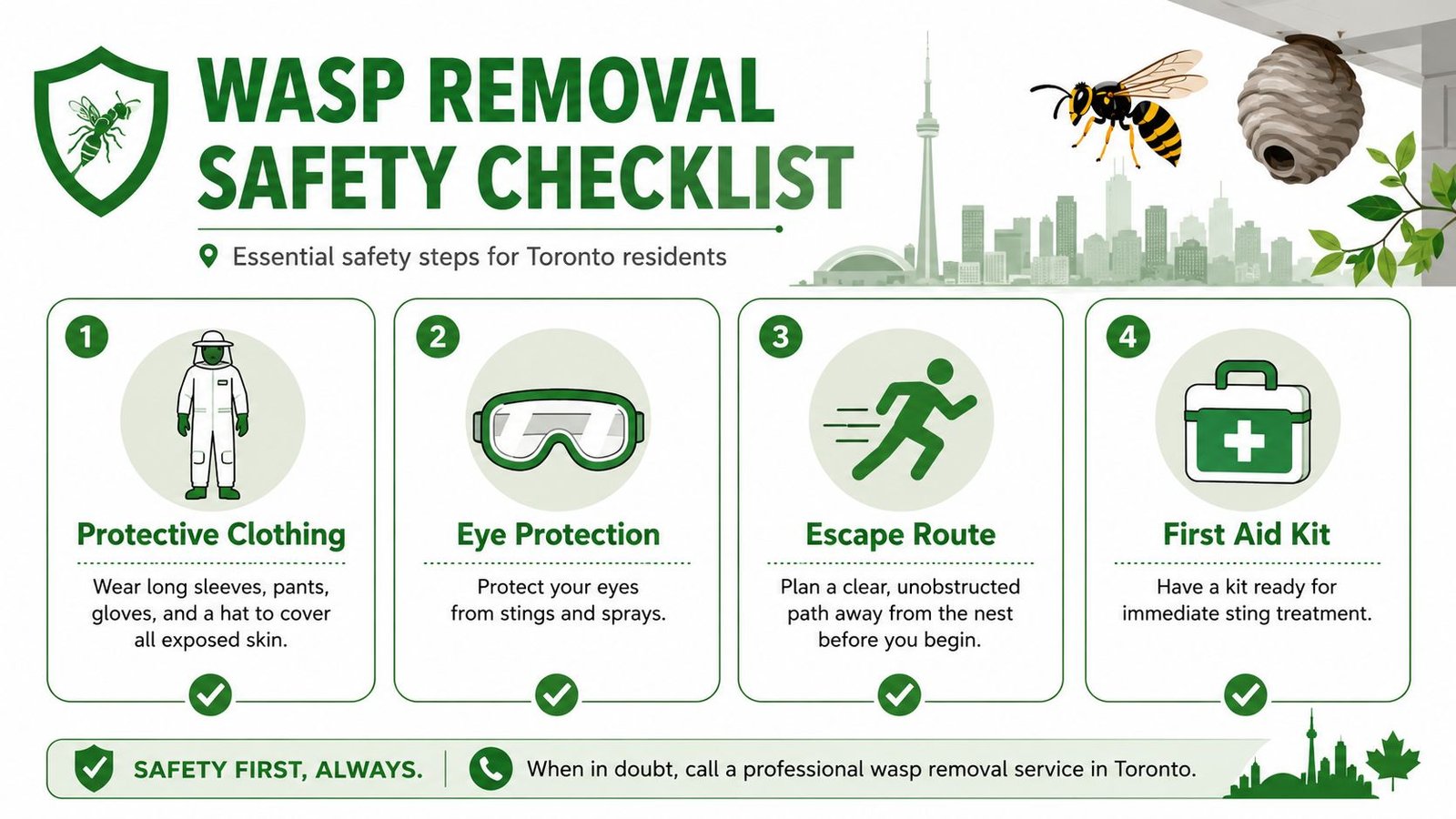
Set up before going near a nest
Before any Toronto resident attempts wasp removal, the safety setup needs to be done first, not halfway through. The nest should be observed from a distance to confirm the entry point, nearby obstacles, and the fastest route away from the area. Deck furniture, hoses, toys, and bins shouldn't be left in the escape path.
A practical setup includes:
- Covered skin: long sleeves, long pants, closed footwear, gloves, and a hat reduce exposed areas
- Eye protection: goggles help protect against both stings and accidental spray drift
- Clear retreat path: anyone treating the nest should know exactly where to move if activity spikes
- Controlled access: children, pets, and other household members should stay indoors and away from windows near the nest
The location matters as much as the gear. A nest above a deck door, near a second-storey window, or tucked beside a business entrance creates a risk of trapping someone in a narrow exit path. In those cases, even a small nest can become unsafe to approach.
A wasp job should never begin from directly below the nest if there's any chance the colony will drop or swarm downward.
What to do after a sting
If someone gets stung, immediate first aid should stay simple and calm. Wash the area with soap and water. Apply a cold compress to limit swelling and discomfort. Then watch closely for signs that the reaction is spreading beyond the sting site.
Toronto households should treat the following as urgent warning signs: trouble breathing, swelling of the face or throat, dizziness, or a fast worsening reaction. If those symptoms appear, call 911 right away. That applies especially to children, older adults, and anyone with a known sting allergy.
Pets need attention too. If a dog or cat is stung around the face, mouth, or throat area, swelling can become serious quickly. Residents shouldn't assume a pet will “sleep it off” after a bad sting response.
Complete DIY Wasp Removal with Seasonal Timing
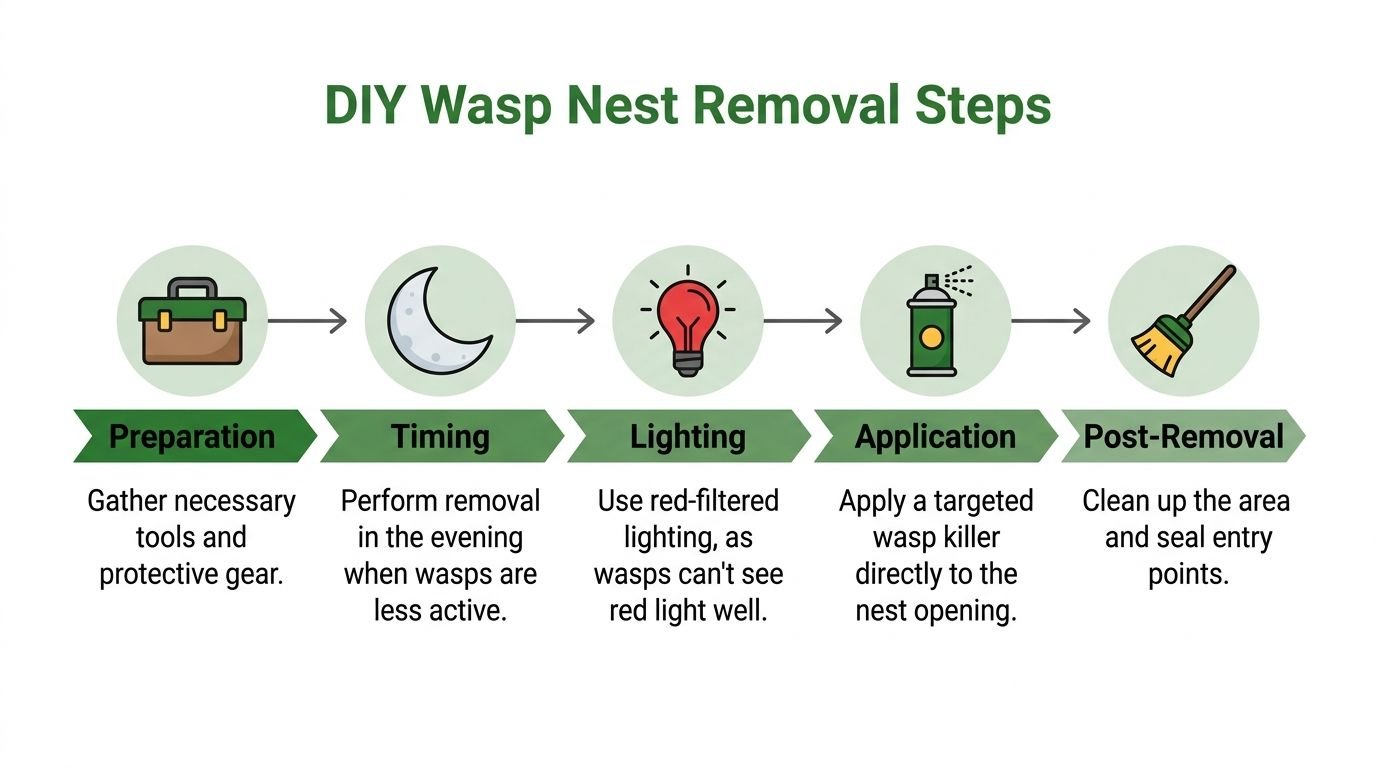
A Toronto homeowner usually notices the problem the same way. Wasps start tracking past the deck table in July, then one afternoon you spot a grey paper nest under the soffit or steady traffic disappearing into the lawn. The right response depends on the season, the nest type, and whether the colony is fully exposed or already inside the structure.
That timing gets missed in a lot of DIY advice. A starter nest in spring is a very different job from a mature late-summer colony. The legal and safety line matters too. If the nest is in a wall, above a roofline, or near a doorway that people use every day, stop treating it like a weekend project.
Small aerial nests that are exposed and reachable
The safest DIY job is a small exposed paper nest attached under an eave, fence rail, shed overhang, or similar open surface. It needs to be reachable from stable ground, with no ladder stretch and no sign that wasps are entering a cavity behind it.
For that type of nest, night treatment is the standard approach. Health Canada advises treating active nests after dark, when wasps are less active, and using a red filter on the flashlight to reduce disturbance in Health Canada's wasp control guidance.
Use this sequence:
- Wait until dusk or later, when flight activity has stopped.
- Approach from the side, not directly underneath.
- Use a red-filtered flashlight.
- Apply a labelled wasp aerosol according to the product directions, aiming at the nest opening and outer surface.
- Leave the nest in place until the next day.
- Check for activity from a safe distance before removal.
- Bag the nest and dispose of it only after you confirm it is inactive.
The trade-off is simple. Acting early on a small open nest is usually manageable. Acting late on the same nest, after it has grown and become more defensive, raises the chance of a bad outcome fast.
Spring is the easiest season for control because colonies are still small. By mid to late summer in Toronto, worker numbers are up, food competition increases, and yellowjackets in particular become more aggressive around bins, drinks, and patios. If you want the seasonal pattern behind that behaviour, this overview of where wasps go in the winter helps explain why the problem seems to disappear and then restart each year.
Ground nests need a narrower DIY limit
Ground-nesting yellowjackets are where homeowners get into trouble. In the field, these are the nests that trigger panic because people often discover them by stepping near the entrance and getting swarmed from ankle height.
A visible hole in the lawn does not always mean a single entry point. Yellowjackets can use more than one opening, and the main nest chamber may sit away from the hole you can see. That is why quick fixes such as stomping the entrance, pouring random liquids into the hole, or plugging it in daylight often fail and can drive wasps into a more defensive cycle.
A ground nest is only a reasonable DIY job when all of these are true:
- the entry point is clearly visible
- the nest is well away from doors, play areas, and neighbour access
- the soil is level and easy to approach at night
- there is no sign of multiple openings
- no one in the home has a known sting allergy
If any of those conditions are missing, call for licensed help.
For suitable ground nests, the seasonal rule stays the same. Treat at night, follow the pesticide label exactly, and do not stand over the entrance. Watch the site the next day from a distance. If activity continues, or if wasps start using a second hole nearby, the job has moved out of the DIY category.
Seasonal timing for Toronto homes
Toronto's wasp season usually starts with queen activity in spring, then shifts into worker expansion through summer. That matters because the method stays similar, but the margin for error gets smaller as the colony matures.
A practical schedule looks like this:
| Season | What usually works | What usually does not |
|---|---|---|
| Early spring | Removing very small exposed starter nests before they grow | Ignoring repeat nesting spots |
| Early to mid-summer | Treating small open aerial nests at night | Daytime spraying or ladder work |
| Late summer | Limited DIY only on small, low-risk exposed nests | Treating mature ground nests or structural nests |
| Fall | Confirming whether activity has naturally dropped before acting | Assuming every quiet nest is dead without checking |
Late summer is where many Toronto homeowners misread the situation. The nest may still look small from the outside while the traffic level tells a different story. If wasps are running in and out of siding, brick joints, soffits, roof vents, or attic edges, the colony is using the building envelope. DIY treatment there often pushes surviving wasps deeper into the void.
When DIY stops making sense
Some jobs are not worth testing.
Call a licensed professional if the nest is inside a wall, soffit, attic, chimney cap, roofline, or any area that requires ladder work. The same applies to nests near front doors, condo walkways, restaurant patios, school pickup paths, or anywhere people cannot reliably avoid the flight path. Toronto property owners also need to think about liability and occupant safety when handling property pest issues.
One more field note. If a first treatment only seems to quiet the nest for a day or two, do not keep escalating with more spray. Repeated partial treatments are how a simple exposed nest turns into a concealed problem inside the structure.
Implement Preventive Measures and Habitat Modification
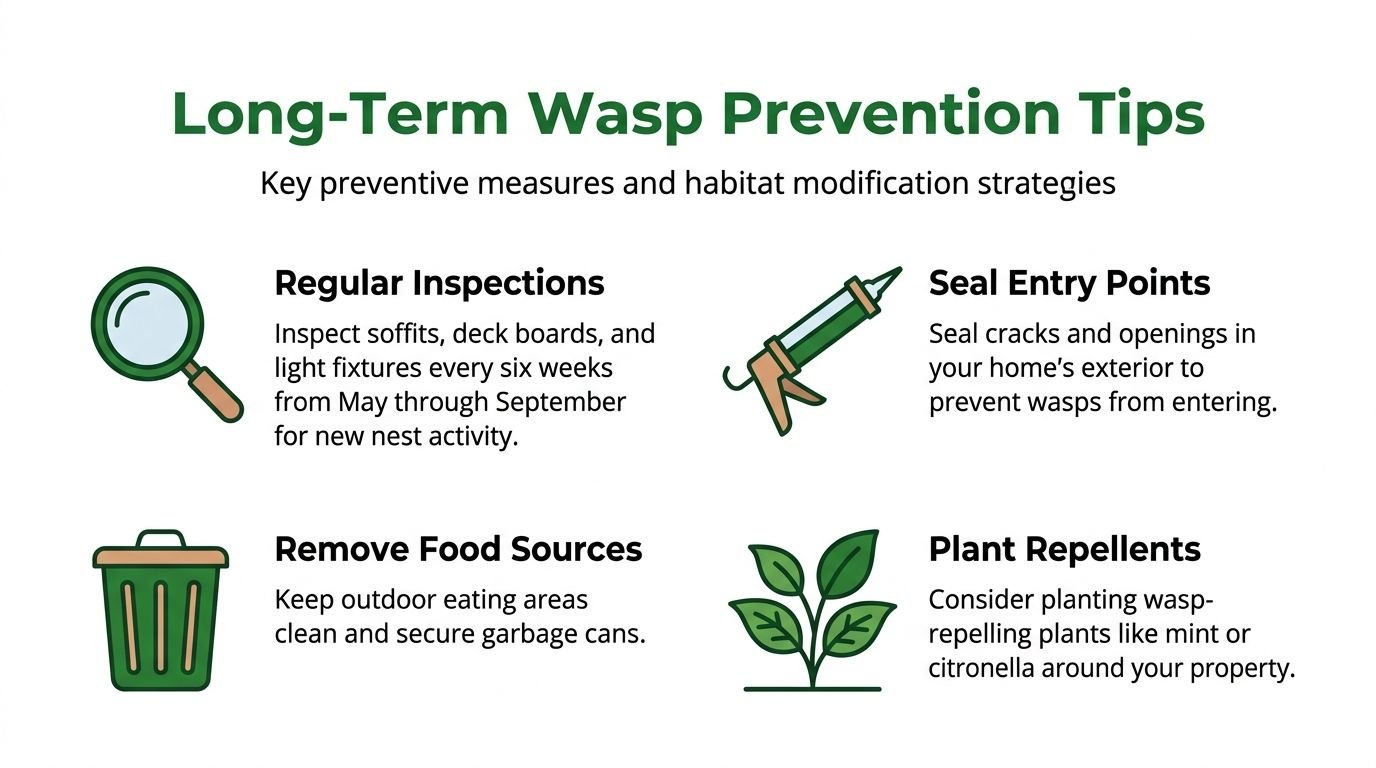
A prevention routine that fits Toronto homes
A lot of repeat wasp calls start the same way. The nest is gone, the yard feels quiet for a week or two, then activity shows up again around the bins, soffits, or deck.
Prevention works best when it targets the places Toronto wasps reuse year after year. On most homes, that means sheltered roof edges, light fixtures, gaps around siding and trim, recycling areas, and outdoor eating spaces. The goal is simple. Remove food cues, reduce sheltered voids, and catch new activity early before a small problem turns into a wall or roofline issue.
A practical routine for Toronto properties includes checking the same exterior zones regularly through wasp season, keeping traps well away from patios and entrances, replacing bait before it goes stale, and washing bin areas often enough that sugary residue does not build up. Homeowners who want a broader summary of wasp infestation prevention and solutions can review that alongside the seasonal steps in this guide.
Use this checklist during exterior walkarounds:
| Area | What to check |
|---|---|
| Soffits and fascia | Small gaps, papery starter nests, repeat flight paths |
| Light fixtures | Sheltered voids and hidden entry points |
| Decks and steps | Openings below boards and signs of ground activity nearby |
| Rear bins and patios | Sticky residue, open drink containers, fallen fruit, food waste |
Trap placement needs judgment. A trap can reduce pressure on the far edge of a yard, but it can also draw wasps toward people if it is hung beside a table, balcony door, or front step. Set traps on the perimeter where foraging traffic is already passing through, not where people gather.
For landlords, agents, and sellers, wasp prevention is also part of basic property upkeep. This guide on handling property pest issues is useful because the same cleanup and repair work that discourages wasps often helps reduce other recurring pest complaints.
Sanitation and exclusion that actually help
On Toronto homes, sanitation matters most from mid-summer into early fall, when workers are hunting for sugar and protein. The common draws are rinsing bins too infrequently, leaving pet food out, letting fallen fruit sit under trees, and carrying overflowing garbage or recycling too long between pickups.
Clean-up has to be specific. Rinse cans and bottles before they go into recycling. Wipe down outdoor tables after meals. Keep bin lids closed. If a blue box or garbage area smells sweet, wash it. Wasps do not need much residue to keep returning.
Exclusion work belongs in the off-season or before fresh nest building starts. Seal gaps around soffits, fascia boards, utility penetrations, and vent edges once you have confirmed there is no active traffic using the opening. Fine mesh on appropriate vents and weather-resistant sealants on small gaps are usually enough for low-risk entry points. If wasps are already entering a wall, soffit, or roof edge, stop at inspection and use the professional boundary set out later in this article.
A solid prevention plan looks like this:
- Inspect the same exterior zones on a set schedule through the active season
- Keep traps at the yard perimeter, away from doors, decks, and seating areas
- Replace bait often enough that the trap still attracts foragers
- Clean bin lids, recycling containers, and patio surfaces before odours build up
- Seal accessible gaps during cool-season maintenance, not during active nest traffic
That approach is what cuts repeat activity. It also fills the gap many wasp tutorials skip. Prevention is not just about making the yard less attractive. It is also about knowing when routine maintenance is safe for a homeowner, and when hidden structural use of the building means the job has crossed into licensed professional territory.
Understand Pesticide Risks and When to Call Professionals
A Toronto homeowner usually reaches the danger point when the nest is no longer fully visible and the spray can becomes the plan.
That is where DIY jobs go wrong. The main problem is not just getting stung. It is treating the wrong opening, missing the nest core, contaminating a doorway, soffit, or play area, or driving agitated wasps deeper into a wall or roof edge where the job gets harder and the risk goes up.
For any pesticide product, the first check is simple. It should be labelled for wasp nest use in Canada and show a PCP number. If the label does not match the job, do not use it. If the nest cannot be reached from stable ground, do not use it there either. A legal product can still be the wrong choice in the wrong location.
Hidden nests are the clearest line for calling a licensed professional. If wasps are entering a crack in brick, a soffit joint, siding overlap, roofline gap, chimney area, or wall penetration, the visible entry point is rarely the full nest location. Spraying the opening often leaves a live colony inside the structure. In the field, that is one of the most common reasons homeowners end up with wasps appearing indoors a day or two later.
Height changes the risk fast. So does nest size. Once the nest is well established, set above normal reach, or attached near doors, decks, air-conditioning units, meter boxes, or children's play areas, the trade-off shifts. The chance of a clean one-step treatment drops, while the chance of falls, repeated applications, and defensive swarming rises.
Some properties should skip DIY treatment from the start:
- anyone in the home has a history of allergic sting reactions
- the nest is in a wall, soffit, roofline, chimney chase, or other enclosed void
- the work would require a ladder, roof access, or leaning over a stairwell
- children, pets, tenants, customers, or neighbouring units could be exposed
- the nest remains active after an initial labelled treatment
- the species is uncertain, especially around ground voids or concealed entries
Multi-unit buildings need extra caution. In Toronto condos, semis, and houses with basement apartments, a treatment in one area can redirect wasps into another suite or common space. That is a building issue, not just a nest issue.
Licensed professionals also work under rules homeowners do not always account for. They assess where the colony is established, choose products and application methods that fit that site, and reduce the chance of contamination or insect movement into occupied areas. That matters most with void nests, recurring activity around the same entry point, and jobs where removal may involve access equipment or opening exterior materials.
If the nest is hidden, high, structurally involved, or creating immediate risk around people or pets, stop at inspection and arrange professional service. A provider such as Vanish Pest Control Inc. can be an appropriate option for Toronto properties that need licensed treatment rather than another round of trial-and-error spraying.
FAQ
Can household soap replace pesticide for every wasp problem
No. Soap-water has a defined role in the ground-nest method covered earlier, but it isn't a universal substitute for every nest type. For exposed aerial nests, the wrong approach often leaves surviving workers behind.
What if wasp activity appears around a condo fireplace
Residents shouldn't block the opening if the activity suggests an interior nest path. In a condo, that can redirect wasps deeper into the unit or adjacent spaces. Property management and a licensed pest professional should be involved.
How long should someone wait before repainting eaves after nest removal
Only after the nest is fully inactive and the area is cleaned. If there's any doubt about recurring flight activity, repainting should wait until the entry point issue has been addressed so fresh paint doesn't end up covering an active problem.
Do traps solve the nest problem on their own
Usually not. Traps can reduce nuisance activity around patios, decks, and rear entrances, but they don't replace nest removal when a colony is established in or on the structure.
Toronto wasp problems usually start small and become urgent fast. When the nest is visible, low, and quite minor, careful timing and the right method can work. When it's hidden, high, inside a wall, or close to people and pets, licensed help is the safer move. For Toronto homes, condos, and businesses that need a professional assessment, Vanish Pest Control Inc. provides wasp control and wildlife removal across the GTA.




