

A Toronto homeowner walks into the basement to grab laundry, looks up near the rim joist, and spots a web with a small brown spider tucked into the corner. Later that same week, another one turns up in the bathroom, then a fast-moving spider darts across the kitchen floor at night. That's usually the moment concern sets in. Is it dangerous? Is this an infestation? Should the whole house be sprayed?
For most Toronto homes, the answer is calmer than people expect. Ontario has a huge range of spider species, but the typical indoor spider isn't a danger to the family, pets, or the structure itself. What matters is identifying what's there, separating fear from fact, and deciding whether simple removal, better exclusion, or a professional inspection makes sense.
Adopting a rational approach helps. Toronto residents don't need panic. They need practical guidance for real spaces like basements, kitchens, utility rooms, condo storage lockers, and small business back rooms. Most spider problems are manageable once the source of shelter, moisture, and insect activity is understood.
Table of Contents
- That Uninvited Guest A Guide for Toronto Residents
- Identifying Your Eight-Legged Neighbours in Toronto
- The Real Risk of Spider Bites in Ontario A Rational Look
- Humane Removal and Proactive Spider-Proofing for Your Home
- Interpreting the Signs An Infestation vs Isolated Spiders
- When to Call Vanish Pest Control for Professional Treatment
- Frequently Asked Questions About House Spiders
That Uninvited Guest A Guide for Toronto Residents
In Toronto homes, spider sightings often happen in the same places. A finished basement with storage tucked against the wall. A bathroom ceiling corner that doesn't get disturbed often. A kitchen window where outside light attracts insects at night. These aren't random locations. They're sheltered spots close to food sources and entry points.
That's why a single spider doesn't automatically mean a serious pest problem. In many houses, especially older Toronto homes with small foundation gaps, aging weatherstripping, or cluttered utility spaces, an occasional spider is taking advantage of a quiet corner. The right response depends on what kind of spider it is, how often it's being seen, and whether there are signs that other pests are feeding the activity.
Most spider calls start with fear, but the better question is usually, “What is attracting them indoors?”
Ontario also has unusual spider diversity. The province has more than 800 distinct spider species across 35 families, according to Ontario Nature's spider guide. That sounds alarming until the rest of the picture is added. The overwhelming majority are harmless to people and rarely bite.
For Toronto residents, that changes the conversation. The issue usually isn't danger. It's nuisance, repeated sightings, web buildup, and whether the home has underlying conditions that support insects and spiders together.
What tends to worry homeowners most
A few patterns come up again and again in Toronto pest problems:
- Basement corners and storage rooms: These areas stay quiet, darker, and harder to clean thoroughly.
- Kitchen and bathroom windows: Flying insects gather there, and spiders follow the food.
- Commercial back rooms and utility spaces: Restaurants, offices, and small businesses often notice webs where stock sits undisturbed.
- Condo balconies and door thresholds: Outdoor spiders build near lighting, then wander indoors through gaps.
What usually works better than panic
A calm response is more effective than automatic spraying:
- Identify first: Web type, body shape, and where the spider was found all matter.
- Remove what's visible: One spider can often be handled humanely in a minute.
- Inspect the surroundings: If ants, flies, cockroaches, or moisture issues are present, those conditions need attention.
- Escalate only when signs support it: Repeated web rebuilding, egg sacs, or regular sightings in multiple rooms change the assessment.
Identifying Your Eight-Legged Neighbours in Toronto
Toronto residents usually don't need a full field guide. They need a practical way to tell whether the spider in the laundry room is a common indoor species, a wandering hunter, or a harmless visitor that came in from outside.
What Toronto residents usually find indoors
The Common House Spider is one of the most familiar Ontario house spiders. It often sits in an irregular web in an undisturbed corner, behind stored items, or near a ceiling junction. The common house spider in Ontario typically measures between 6 mm to 8 mm in length, with a width of approximately 3 mm, according to Orkin Canada's house spider profile. Another useful detail is reproduction. A single female can produce up to 17 egg sacs containing more than 3,760 eggs, which is why neglected webbing and egg sacs shouldn't be ignored in a busy basement or storage area.
That same source also settles one of the biggest myths in local spider identification. There has never been a verified record of the Brown Recluse spider establishing a population anywhere in Ontario. For Toronto residents, that means the spider in the corner is almost certainly not the species many people fear online.
The Cellar Spider is another frequent indoor sighting. It has a tiny body with very long, delicate legs and tends to build loose, messy webs in ceiling corners, furnace rooms, and unfinished basements. It's often mistaken for “daddy long-legs.” In practice, it's more of a housekeeping nuisance than a safety concern.
The Wolf Spider looks more intimidating because it's larger, sturdier, and moves quickly across floors instead of waiting in a web. Homeowners often find it in basements, mudrooms, garages, or near door thresholds. It hunts rather than trapping prey in a web, so sightings are usually of a single roaming spider.
A Jumping Spider may also show up on sunny interior walls or windowsills. These are compact, alert spiders that move in quick bursts rather than building catch webs. For readers who want a closer look at that group, this guide to jumping spiders in Ontario gives more detail on how they look and behave in GTA homes.
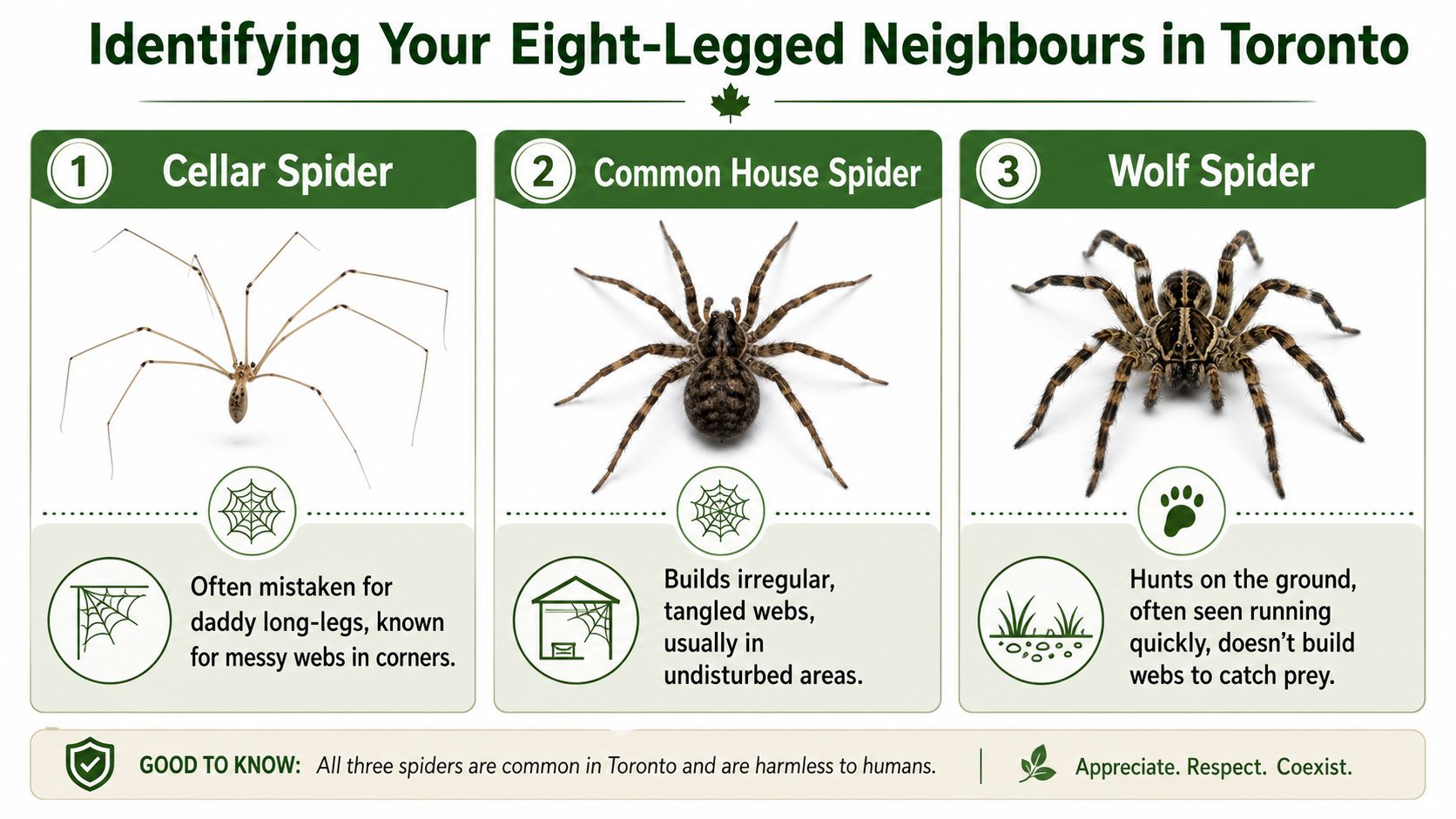
Common Toronto house spider identification
| Spider Species | Size & Appearance | Web Type | Common Location |
|---|---|---|---|
| Common House Spider | Small brown spider with a rounded abdomen | Irregular tangled web | Basement corners, closets, utility spaces |
| Cellar Spider | Tiny body with very long thin legs | Loose messy web | Ceiling corners, furnace rooms, unfinished basements |
| Wolf Spider | Robust, fast-moving, often hairy-looking | No prey-catching web | Floors, garages, basements, entry areas |
| Jumping Spider | Small compact body, active movement | No catch web | Windowsills, sunny walls, trim areas |
A few details that matter during identification
Identification gets easier when the whole scene is considered, not just the spider itself.
- Look at the web first: Tangled web in a quiet corner usually points to a house spider or cellar spider.
- Notice movement: Fast ground movement without a web often suggests a wolf spider.
- Check the location: Window frames, basements, and storage rooms each attract different behaviour.
- Watch for egg sacs: Multiple sacs suggest an established indoor breeding presence, not a one-off visitor.
Practical rule: If the spider is indoors, sitting quietly in a corner web, and the space has low traffic, it's usually one of the common harmless species Toronto homeowners see every year.
The Real Risk of Spider Bites in Ontario A Rational Look
Spider fear is common in Toronto, but fear and actual risk aren't the same thing.
Why fear and real risk don't match
According to Spider Squad's Ontario spider season guide, 78% of Ontario homeowners express fear of spider bites, yet there have been zero recorded medically significant bites in the province over the last decade. The same source notes that Ontario has no established populations of Brown Recluse spiders, the rare Northern Black Widow is shy and seldom encountered, and 99% of indoor spiders are harmless predators of other pests.
That should reset how Toronto residents think about ontario house spiders. A startling sight doesn't equal a dangerous one. Most of the spiders found in homes, condos, sheds, and small commercial spaces are nuisance animals, not medical threats.
Ontario-specific spider information also points to a very limited geographic concern for the only medically significant species in the province. The northern black widow, Latrodectus variolus, is rare and restricted mainly to extreme southern Ontario, primarily the Niagara Peninsula and the Carolinian forest zone, according to Spider Squad's Ontario spiders page. That makes routine encounters in Toronto homes unlikely.
Why spiders often help more than they harm
Spiders stay where food is available. In practical terms, that means many indoor spiders are feeding on the insects homeowners want gone, such as flies and cockroaches. If a kitchen, basement, or commercial prep area has repeated spider activity, the spiders may be signalling an underlying insect issue.
That's one of the trade-offs in treatment decisions. Broad, fear-driven spraying may kill visible spiders, but if moisture, crumbs, gaps, and insect pressure remain, the conditions that attracted them won't change. Rational management focuses on the full environment.
A spider in the corner is often less important than the insect traffic supporting it.
For most Toronto residents, the safer and more sensible approach is straightforward. Identify the spider, reduce the insect activity drawing it indoors, and reserve aggressive treatment for situations that justify it.
Humane Removal and Proactive Spider-Proofing for Your Home
Most homeowners don't want spiders killed if they don't have to be. They just want them out of the living space. That's a reasonable approach, especially since common house spiders are found indoors year-round in Ontario, while outdoor activity is limited to spring through mid-fall, creating a predictable prevention window, according to Terminix Canada's house spider page.
How to remove a spider without crushing it
The simplest method is still the cup-and-card technique.
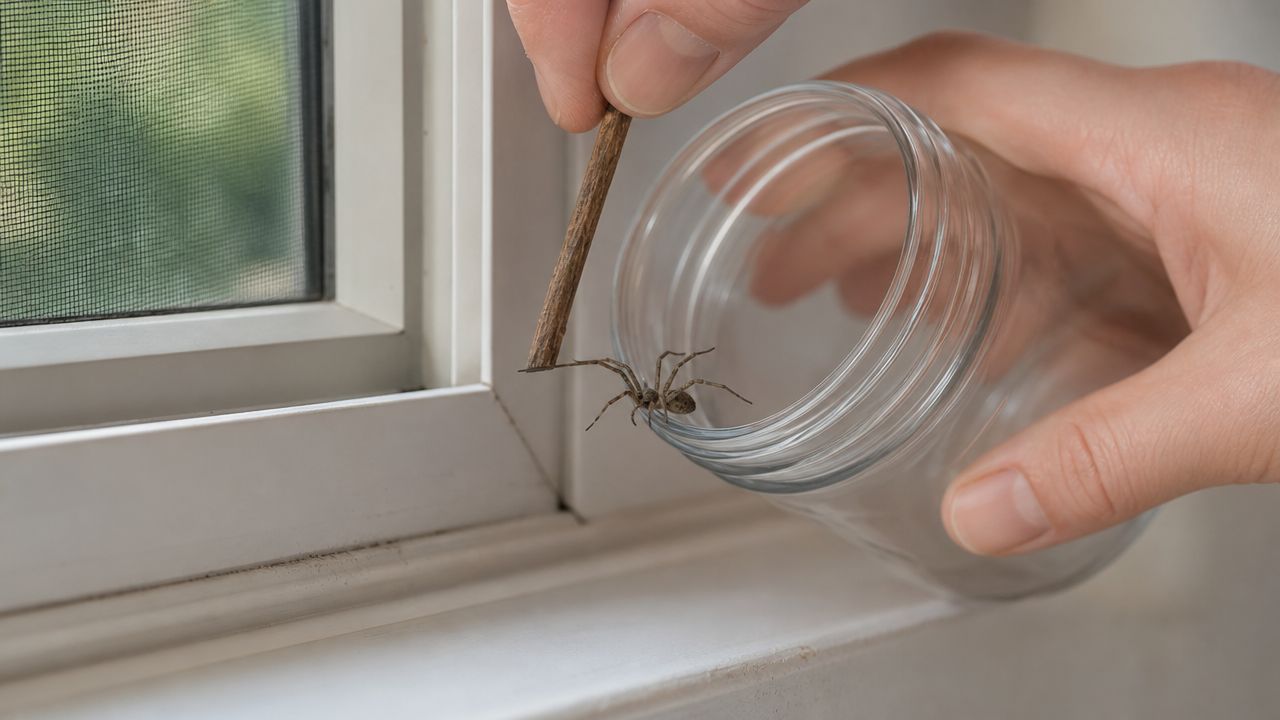
Use a clear glass or container so the spider stays visible. Place it gently over the spider, slide a stiff card or thin piece of cardboard underneath, then carry it outside away from the immediate doorway. This works best for visible spiders on walls, windows, and floors. It's less effective for webbing species tucked behind shelving or inside ceiling corners.
For recurring sightings, simple removal needs to be paired with cleanup. Vacuum old webs, remove egg sacs, and reduce clutter in the immediate area. Otherwise the site remains suitable for the next spider.
How Toronto homes become easier for spiders to enter
Many Toronto homes have predictable weak points. Worn door sweeps, utility penetrations, basement foundation gaps, torn screens, and poorly sealed window frames all create access. Spiders also follow prey, so bright exterior lighting near entry doors often increases activity by attracting flying insects at night.
Seasonality matters here. Outdoor spiders are more active from spring through mid-fall, which is when exclusion work has the biggest payoff. Homeowners doing seasonal exterior maintenance can combine pest prevention with practical tasks like sealing trim gaps and improving weather protection. For anyone already reviewing drafts and air leaks, these DIY window winterization tips are useful because the same weak points that leak cold air also let insects and spiders in.
A practical spider-proofing checklist
A good spider-proofing plan doesn't need to be complicated, but it does need to be thorough.
- Seal obvious gaps. Check around basement windows, door frames, pipe entries, cable lines, and foundation cracks.
- Reduce insect attraction. Use warmer outdoor bulbs where possible and avoid leaving bright entry lights on unnecessarily.
- Clean the quiet zones. Storage rooms, laundry corners, under-sink cabinets, and behind shelving are where webs build undisturbed.
- Manage moisture. Damp basements and utility rooms support insects, which then support spiders.
- Trim exterior clutter. Dense vegetation, stacked lumber, and stored items against the foundation create sheltered transition zones.
- Watch food-related pests. If ants, flies, or cockroaches are active, spider sightings may continue until those pests are controlled.
For homeowners who want a broader step-by-step approach, this practical guide on how to get rid of spiders covers removal and prevention in more detail.
Humane removal works for isolated sightings. Exclusion works for repeat sightings. Treatment only makes sense when the conditions keep rebuilding the problem.
Interpreting the Signs An Infestation vs Isolated Spiders
A single spider in a Toronto home usually means very little. Several spiders in the same week still might not mean much if weather has shifted or a door sweep is loose. The pattern matters more than the moment.
What an isolated spider usually looks like
An isolated spider issue tends to have a few features. Sightings are occasional, often limited to one part of the home, and there's little or no visible web buildup. The spider may appear near a window, in a basement corner, or on a floor after rain or a change in temperature.
That kind of activity usually points to wandering behaviour or a temporary indoor visitor. In houses, condos, and businesses alike, an isolated spider is often handled with simple removal and a quick check for entry gaps.
What points to a breeding population
The assessment changes when visual evidence starts to accumulate.
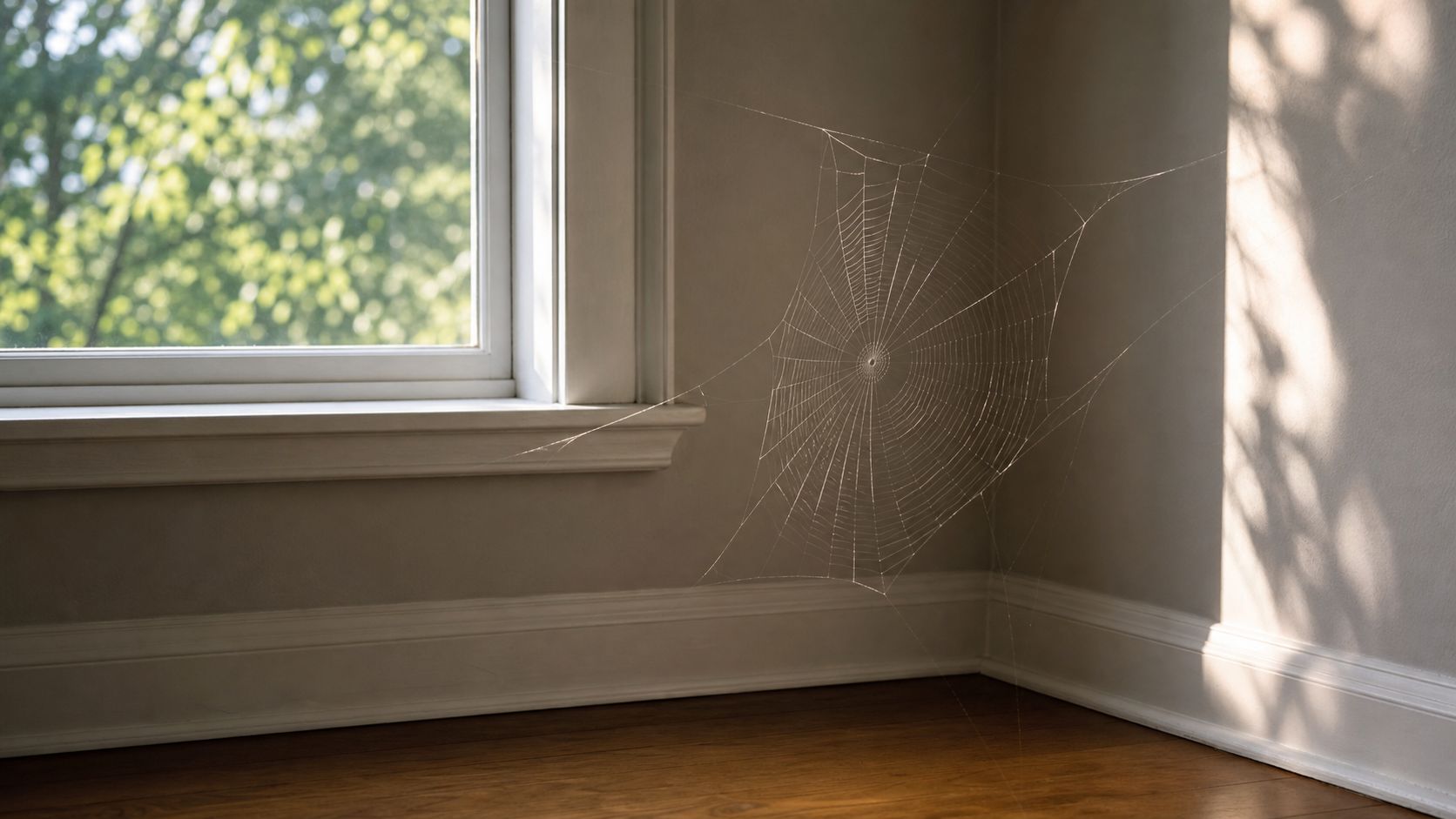
Signs that deserve closer attention include:
- Frequent sightings in several rooms: Basements, bathrooms, kitchens, and bedrooms all showing activity suggests more than a single entry point.
- Numerous webs in quiet areas: Repeated webbing in corners, around windows, or behind stored items indicates active occupation.
- Egg sacs attached to surfaces or webbing: This points to reproduction, not just occasional wandering.
- A related insect problem: Ants, flies, or cockroaches can sustain ongoing spider presence.
If spiders keep returning after webs are removed, the home is supporting them. The answer is usually environmental, not cosmetic.
This is why spider activity sometimes turns out to be a symptom, not the primary problem. In Toronto homes and businesses, spiders often reveal hidden conditions like cluttered storage, moisture issues, or another pest population nearby. Treating only what's visible can leave the underlying cause untouched.
When to Call Vanish Pest Control for Professional Treatment
There's a point where DIY stops being efficient. That usually happens when the same rooms keep producing spiders, webs return quickly after cleaning, or the homeowner finds multiple egg sacs and can't tell whether another pest issue is feeding the problem.
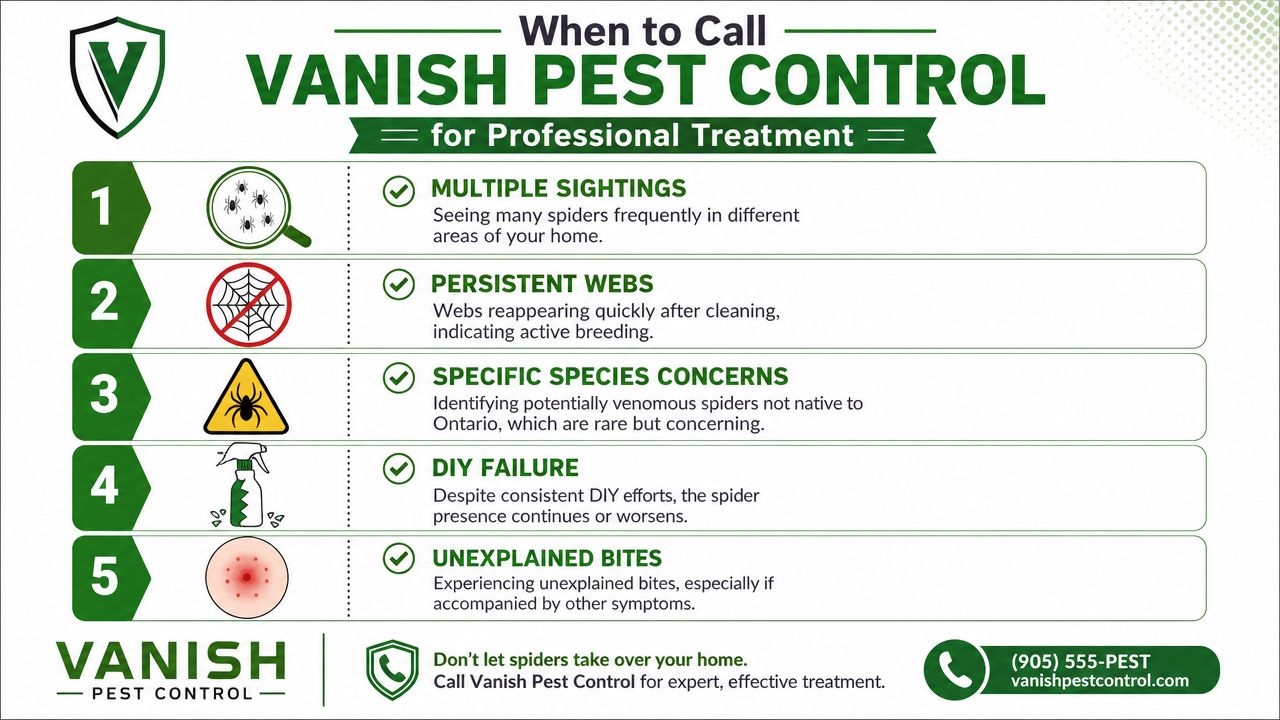
Situations where DIY usually falls short
Professional help makes sense in a few specific situations:
- Recurring activity after proofing: Gaps have been sealed and cleaning has improved, but sightings continue.
- Heavy webbing in low-traffic spaces: Basements, crawl spaces, garages, or commercial storage rooms keep rebuilding web networks.
- Large numbers of egg sacs: That suggests a breeding population that needs a more systematic response.
- Confusion about the species: The homeowner isn't sure what's being seen and wants a proper inspection.
- Underlying pest pressure: Cockroaches, ants, flies, mice, or rats may be present alongside the spider issue.
What professional treatment should address
A proper spider service shouldn't focus only on killing visible spiders. It should inspect entry points, identify conducive conditions, and check whether another pest issue is maintaining the activity. In Toronto, that often means looking at basements, window frames, utility penetrations, exterior lighting patterns, and cluttered storage.
For property owners who want a local service option, Vanish Pest Control Inc. handles spider treatment in Toronto and the GTA, along with related pest issues that often overlap with spider complaints. That matters because a house with spiders may also have ants, cockroaches, wasps, mice, rats, termites, or even wildlife concerns such as raccoons, squirrels, skunks, or bats somewhere on the property.
For Toronto, Newmarket, Woodstock, and London residents, the value of a professional visit is clarity. It answers whether the issue is isolated, seasonal, structural, or connected to something larger in the building.
Frequently Asked Questions About House Spiders
Why do spiders show up more often in the fall
Toronto residents often notice spiders more in the fall because outdoor conditions change and indoor spaces become more attractive as shelter. Cooler nights, gaps around doors and windows, and increased movement near exterior walls all make encounters more noticeable. The spiders may have been nearby for some time, but seasonal shifts push them into view.
Do ultrasonic repellents work on spiders
Homeowners often ask about plug-in ultrasonic devices. In practical pest control work, these aren't something to rely on as a primary answer for spider problems. Exclusion, web removal, clutter reduction, and addressing the insect prey base are much more dependable than passive repellent gadgets.
Can spiders damage a Toronto home
Spiders don't cause structural damage in the way termites, carpenter ants, mice, rats, or wildlife can. They don't chew wood, tear insulation, or tunnel through building materials. The primary issue is nuisance. Webs collect dust, corners look neglected, and repeated sightings make people uncomfortable.
Why are spiders showing up in a business or restaurant
In commercial spaces, spiders usually appear where there's low traffic, lighting that attracts insects, delivery door gaps, or hidden moisture. Storage shelves, mop closets, prep-adjacent back rooms, and basement utility areas are common trouble spots. For restaurants and food businesses, spider activity may be a sign that fly or cockroach control needs closer attention.
Toronto homes and businesses don't need to treat every spider as an emergency. They need accurate identification, sensible prevention, and a clear threshold for when an issue has become persistent enough to justify outside help.
If spider activity in a Toronto home, condo, restaurant, office, or rental property keeps coming back, Vanish Pest Control Inc. can inspect the space, identify what's driving the sightings, and recommend a practical treatment plan that fits the property.




One Response