

A Toronto homeowner usually finds bed bugs the same way. A small bug on the mattress seam. A line of itchy bites after waking up. Rust-coloured spotting on sheets that wasn't there before. Stress kicks in fast, and for good reason. Bed bugs spread subtly, hide well, and in condos they can move farther than is generally known.
Natural treatment can work, but only when it's done methodically. Random sprays, essential oils, and one deep clean won't solve it. Toronto homes need a plan that combines inspection, containment, heat, steam, encasement, and ongoing monitoring. In single-family homes and small early infestations, that approach can be enough. In many condo units and connected buildings, there's a clear point where professional chemical-free heat treatment becomes the practical next step.
Table of Contents
- Confirming the Unwanted Guest in Your Toronto Home
- Your Immediate Action Plan Containing the Infestation
- Applying Systematic Natural Treatments
- Fortifying Your Home Against Future Invasions
- When Natural Methods Fail The Toronto Condo Challenge
- Frequently Asked Questions About Natural Bed Bug Control
Confirming the Unwanted Guest in Your Toronto Home
The first job isn't treatment. It's identification. Toronto residents lose time every year treating the wrong pest, especially when carpet beetles or spider beetles are mistaken for bed bugs.
What bed bugs look like and where they hide
Adult bed bugs are small, reddish-brown, and flat. They don't jump like fleas and they don't have the hairy, rounded look that carpet beetle adults often show. Spider beetles can also confuse homeowners because of their shape, but they tend to look more bulbous and beetle-like, not flat and broad.
Bed bugs leave a pattern of evidence, not just a single bug. The most useful signs are:
- Live bugs tucked into mattress piping, bed frame joints, headboards, and box spring edges
- Rust-coloured fecal spots on sheets, encasements, wood slats, and nearby baseboards
- Shed skins in tight crevices where they've been moulting
- Tiny pearly-white eggs glued into seams, cracks, and fabric folds
A proper search starts at the bed and moves outward. In Toronto bedrooms, that usually means checking the mattress seams first, then the box spring underside, bed frame joints, bedside tables, baseboards, and any upholstered chair within the room. In small condos, the bugs may also harbour behind outlet covers near the bed or along shared walls.
Practical rule: Don't rely on bites alone. Skin reactions vary too much from person to person.
For homeowners who want a visual checklist before starting treatment, this guide to identifying bed bug infestations is useful because it focuses on signs found in the sleeping area rather than guesswork.
How to avoid mistaking them for other pests
Bites cause panic, but bites don't confirm bed bugs on their own. Some Toronto residents react strongly to one insect and barely react at all to another. Others mistake irritation, hives, or contact dermatitis for bed bug activity. This resource on telling bedbug bites from allergies helps separate skin symptoms from actual pest evidence.
A quick comparison helps:
| Pest | Typical look | Common location | Main clue |
|---|---|---|---|
| Bed bugs | Flat, reddish-brown | Mattress seams, bed frames, furniture joints | Fecal spotting, shed skins, eggs |
| Carpet beetles | Small beetles, often patterned or hairy | Carpets, closets, fabrics | Larvae and fabric damage |
| Spider beetles | Rounded, beetle-like body | Stored goods, pantry-type areas, hidden corners | More associated with stored products than beds |
A Toronto homeowner doesn't need to become an entomologist. The goal is simpler. Find the insect, find the hiding spot, and confirm the signs before doing anything else.
Your Immediate Action Plan Containing the Infestation
A typical Toronto bed bug call starts the same way. Someone finds signs in the bedroom at night, panics, then starts carrying bedding, pillows, and laundry through the unit first thing in the morning. That is how a small bedroom problem turns into a sofa problem, a hallway problem, or in a condo, a building management problem.
The first 24 hours are about containment. Keep the population boxed into one area so natural treatment has a real chance to work.
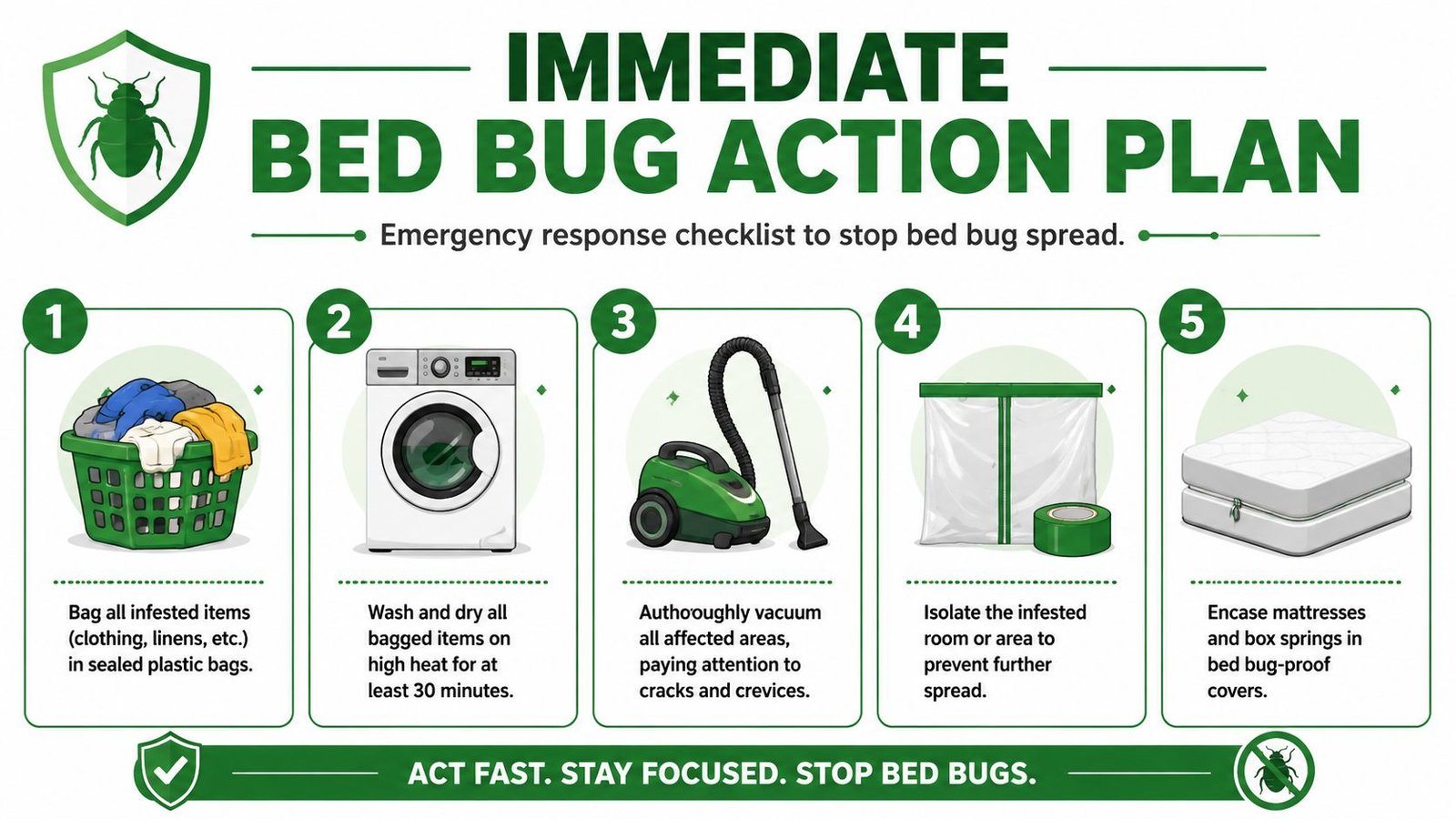
Start with anything loose in the affected room. Clothing, bedding, blankets, soft toys, and curtains should go into sealed plastic bags before they leave the room. In a Toronto condo or apartment, that matters even more because shared hallways, elevators, and laundry rooms create extra chances for bugs to drop off and spread.
Next, strip away hiding spots you do not need. Bed bugs are not attracted to dirt, but clutter gives them more cracks, folds, and surfaces to hide in. Shoes under the bed, stacks of paper, overfilled drawers, open baskets, and storage bins all slow treatment down. Keep what matters, but bag it or seal it in containers until you can treat it properly.
Bed bugs spread fastest when infested items are moved before they are sealed.
Laundry and vacuuming without spreading bugs
Heat does the heavy lifting with washable items. For fabric that can go in the dryer, bag it first, move it in a closed bag, then dry it on a hot setting for a full cycle. Washing helps clean the items, but the dryer is usually the part that kills the insects. Low-heat and eco settings often fall short, especially with thick blankets and dense clothing.
A simple sequence works best:
- Bag items in the room first
- Move them in sealed bags only
- Wash if the fabric needs it
- Dry on adequate heat for a full cycle
- Store cleaned items in fresh sealed bags or bins
If you are tempted to put bagged items outside during a Toronto winter, be careful. Cold can help only under specific temperatures and exposure times, and casual use of a balcony or garage usually does not give reliable control. This explanation of whether cold temperatures kill bed bugs covers why freezing sounds easier than it is.
Vacuuming is useful for reducing live bugs, cast skins, and debris, but it is a cleanup tool, not a complete treatment. Use the crevice attachment slowly along mattress piping, tufts, bed frame joints, screw holes, baseboards, carpet edges, and the underside of furniture. On upholstered items, work every seam and fold. In my experience, rushed vacuuming misses the exact places where bed bugs stay packed together.
The disposal step matters just as much as the vacuuming itself. The bag or contents should be sealed and taken outside right away, because bed bug management guidance from the University of Minnesota Extension notes that vacuumed bugs can survive and that the vacuum contents should be removed promptly and sealed for disposal. If debris sits indoors, some insects can crawl back out and re-establish in the room.
A few errors cause containment to fail:
- Moving furniture into another room creates fresh harbourage
- Leaving open laundry baskets nearby gives bugs an easy transfer point
- Stacking untreated bags in common areas risks spreading them outside the unit
- Vacuuming only visible surfaces leaves bugs in joints, seams, and cracks
- Keeping vacuum debris inside allows surviving insects to escape
For Toronto homeowners, tenants, and condo residents, the rule is simple. Seal first, move second, and only move what you have contained. That discipline is what keeps one room from becoming a whole-home infestation.
Applying Systematic Natural Treatments
By the time a Toronto homeowner reaches this stage, the stress is usually high. The room has been bagged, laundry is under control, and now the question is simple. What natural treatment puts pressure on the infestation?
In homes, condos, and basement apartments across the city, two low-toxicity methods do most of the practical work. Steam kills on contact when it is used slowly and precisely. Food-grade diatomaceous earth helps wear down bugs that keep travelling after the main hiding spots have been treated.
Using steam properly in Toronto homes
Steam is the strongest natural contact treatment available to homeowners, but technique decides the result. A fast pass over the surface does very little. The nozzle has to move slowly enough for heat to penetrate seams, cracks, tufts, and joints where bed bugs and eggs are tucked in. Research on bed bug steam treatment has shown that lethal results depend on delivering enough heat directly into the harbourage and not just across the fabric surface, according to bed bug steam treatment research from a university extension source.
In practical terms, that means working in narrow passes and treating the places bed bugs use, not the places that are easiest to reach.
Focus on:
- Mattress seams and tufts
- Box spring corners, stapled edges, and underside fabric
- Bed frame joints, screw holes, and slat pockets
- Baseboard gaps close to the bed
- Upholstered chair seams and skirt folds
- Cracks in wood furniture within a few feet of the sleeping area
In older Toronto houses, I pay close attention to floorboard gaps and wooden bed frames that have dried and split over time. In condos, the pattern is different. Bed bugs often stay tight to the bed, sofa, and nearby baseboards at first, then spread through cluttered storage, shared walls, and adjacent seating.
Steam also has limits. It leaves no residual protection, it can damage some finishes, and it does not travel deep into wall voids. Over-wetting mattresses, particleboard furniture, or outlet areas creates a different set of problems, so use a low-moisture steamer and let treated surfaces dry fully before reassembly.
Cold gets mentioned often during Toronto winters, especially by people hoping a balcony or garage will solve the problem. Sometimes it helps with isolated items, but only if temperature and exposure time are controlled closely. Anyone considering that option should read this guide on whether the cold will kill bed bugs before relying on it.
Slow, targeted steam kills. Rushed steam mostly adds moisture.
Using diatomaceous earth the right way
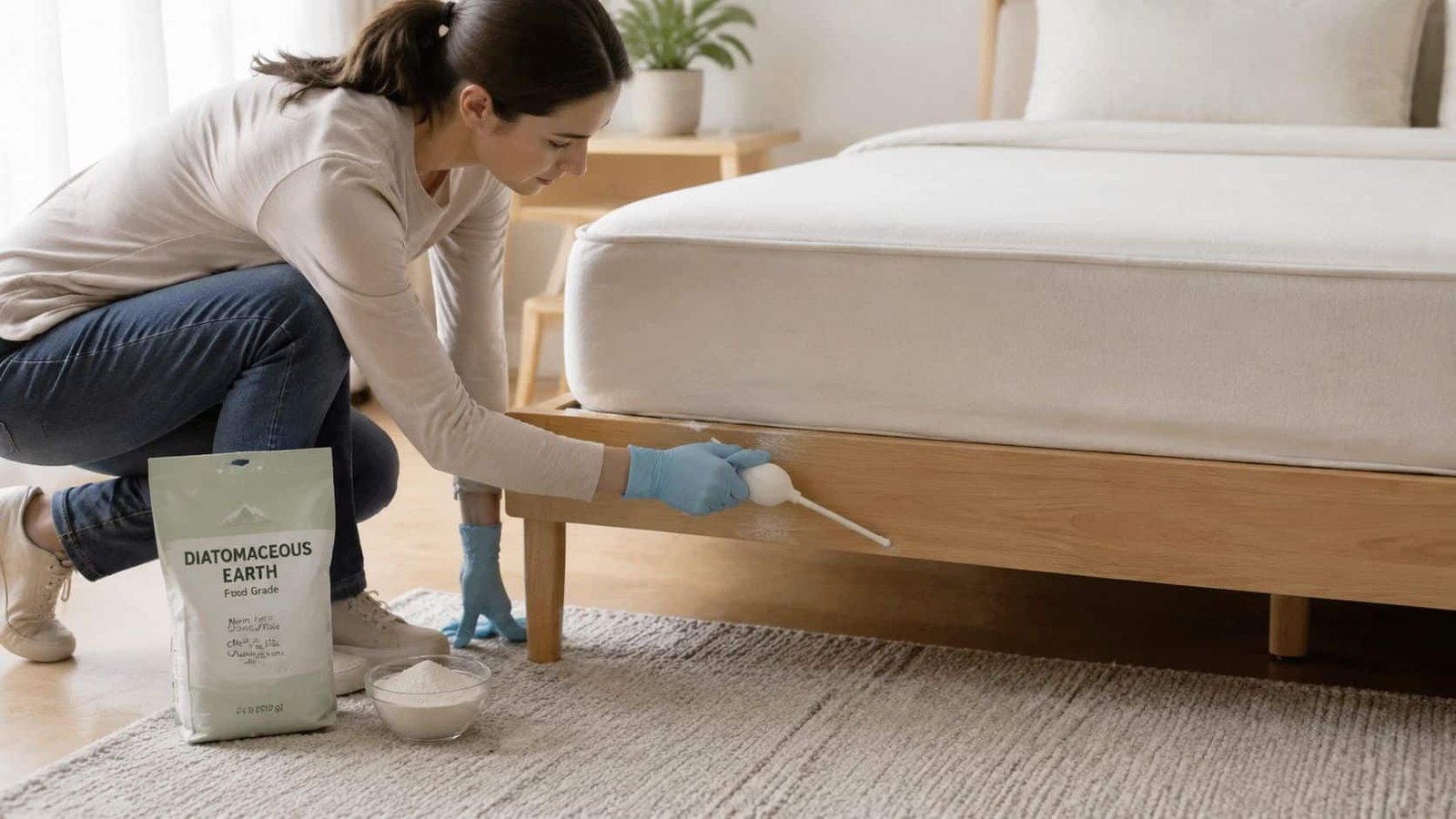
Food-grade diatomaceous earth works as a dry desiccant. Bed bugs cross it, the fine particles damage their protective outer layer, and they dehydrate over time. That process is useful around travel routes and edge zones, but it is not a quick knockdown method and it does nothing to eggs.
That trade-off matters in Toronto's humid months. In basements, near radiators with condensation issues, or in rooms with poor air circulation, the powder can clump and lose effectiveness. I also see homeowners apply far too much. A heavy white pile looks active, but bed bugs often go around it.
Use a light, barely visible dusting in places that stay dry:
| Area | Why it works there | Common error |
|---|---|---|
| Baseboards | Bed bugs follow wall-floor edges during movement | Leaving thick visible piles |
| Bed frame legs | Insects pass through these points to feed | Missing one leg or one side |
| Electrical outlet perimeters | Can help near shared wall pathways if kept dry | Forcing powder into the outlet itself |
| Furniture cracks and edges | Adds a residual barrier after steam treatment | Applying before cleaning and steaming |
A few rules keep this method useful and safe:
- Use food-grade only
- Apply a very thin dust, not heaps of powder
- Keep it in dry locations
- Recheck and refresh light applications after cleaning or moisture exposure
- Do not rely on it as the only treatment
For soft furnishings and surrounding floor areas, good physical cleaning still matters. Homeowners who want a stronger housekeeping routine alongside natural bed bug work often pair treatment with scheduled deep cleaning support from Clean Space SA, especially in multi-use rooms where dust, fabric clutter, and storage make follow-up harder.
The best natural plan is systematic. Steam the active harbourages first. Apply a thin desiccant barrier in the dry travel paths that remain. Inspect again in the following days, because in dense Toronto housing, surviving bugs often show up in the same few pressure points until every hiding place has been addressed.
Fortifying Your Home Against Future Invasions
Natural treatment isn't finished when the bites stop. A Toronto home needs barriers that keep old survivors trapped and make new introductions easier to spot.
Why encasements matter long after treatment
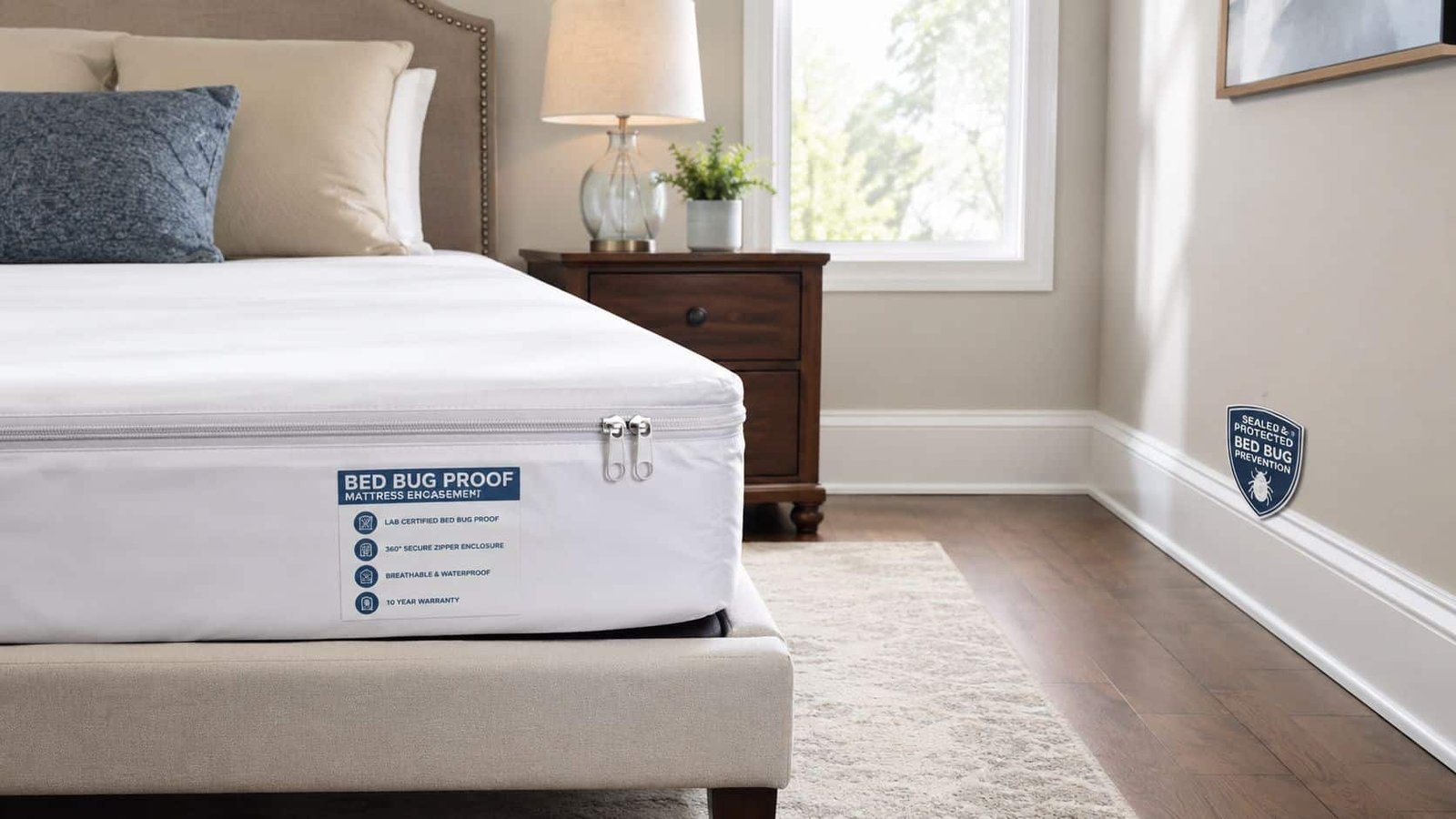
Mattress and box spring encasements are one of the strongest non-chemical defences available. According to a 2019 to 2023 University of Guelph study, encasing mattresses and box springs prevents 95% of new infestations in tested units, making it one of the most cost-effective natural barriers within an Integrated Pest Management program (verified encasement findings).
That's why good encasements aren't optional in many Toronto homes, especially condos, student rentals, furnished units, and guest rooms. They do two jobs at once. They trap any hidden insects already inside the mattress or box spring, and they remove the easiest harbourage for future bugs.
Look for:
- A full zippered design that completely seals the mattress
- Tight seams and reinforced fabric
- A secure zipper closure that won't gap open
- An encasement sized correctly so it doesn't tear under tension
How Toronto residents can reduce re-entry risk
Prevention in the city also means controlling pathways. Bed bugs hide near sleeping areas, but they also travel in bags, laundry, used furniture, and belongings moved between units. Shared infrastructure in apartment buildings raises the risk, so residents need habits that reduce fresh introductions.
A solid prevention routine includes sealing small cracks around baseboards, keeping beds slightly pulled from the wall when practical, and using interceptor traps under bed legs to monitor activity. In homes with recurring clutter, regular deep housekeeping matters too. For general residential cleaning habits that support a less hospitable indoor environment, Clean Space SA offers a useful example of the kind of structured cleaning checklist people can adapt at home.
Prevention works best when the bed becomes the hardest place in the room for a bed bug to live.
This same thinking helps with other Toronto pest problems too. Clutter, hidden gaps, and neglected storage don't just help bed bugs. They also create good conditions for cockroaches, mice, and even ants in kitchens and basements.
When Natural Methods Fail The Toronto Condo Challenge
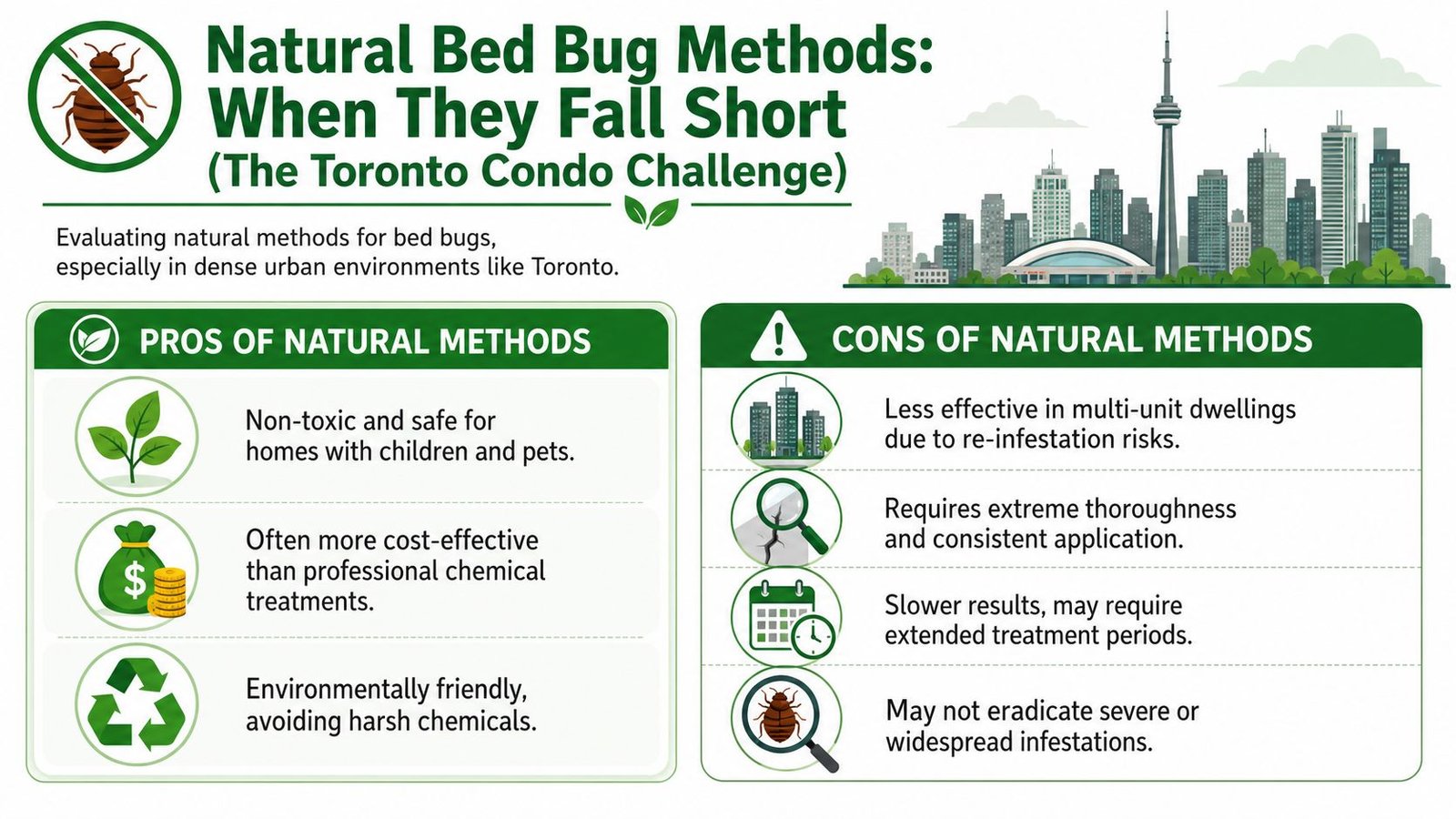
Natural methods are often enough for a small, early infestation in an isolated room. Toronto condos change that equation because the unit may not be isolated at all.
Why condos change the rules
In multi-unit buildings, bed bugs don't respect lease lines or suite numbers. They move through wall voids, around electrical penetrations, under baseboards, and along shared plumbing routes. A homeowner can steam thoroughly, bag carefully, and install encasements, then still see new activity because the source wasn't only inside that unit.
The numbers are blunt. In the GTA, natural DIY attempts in multi-unit buildings have a 65% failure rate, with reinfestation remaining above 60% within 90 days. In contrast, professional chemical-free heat treatments achieve 98% efficacy, according to verified findings from the Ontario Ministry of Health and the University of Toronto (documented GTA bed bug outcomes).
That's the trade-off Toronto residents need to understand. Natural DIY treatment is attractive because it feels safer and more affordable at the start. In detached homes with limited spread, that can make sense. In a condo tower or older apartment block, the same effort may only suppress the problem while bugs continue moving through the building.
A mattress can also carry lingering contamination and harbourage issues even after visible activity drops. For homeowners trying to restore sleeping surfaces after treatment, this guide to professional mattress cleaning by Rubber Ducky offers practical cleaning context, though cleaning alone won't replace full eradication.
When chemical-free professional heat becomes necessary
A Toronto resident should stop relying on home treatment alone when any of these conditions apply:
- Bugs return after careful steam, laundry, and encasement
- Activity appears in more than one room
- There's evidence near shared walls or entry points
- The unit is in a condo, apartment, or rooming house with known neighbouring issues
- The infestation has spread into sofas, stored items, or multiple sleeping areas
That's the point where chemical-free structural heat becomes the practical solution. Whole-room or whole-unit heat reaches cracks, furniture joints, and hidden voids that piecemeal DIY methods often miss. Homeowners dealing with repeated reappearance in Toronto buildings usually need a provider focused on complete building-aware treatment, not another round of partial spot work. For local help, this page on a bed bug exterminator near Toronto explains what full-service intervention looks like.
Frequently Asked Questions About Natural Bed Bug Control
Toronto residents usually ask the same few questions once treatment starts. The answers below keep expectations realistic and help avoid the most common mistakes.
FAQ on Natural Bed Bug Control in Toronto
| Question | Answer |
|---|---|
| Can bed bugs travel between condo units? | Yes. In Toronto condos and apartments, they can move through shared wall spaces, around pipes, and through other connected gaps. That's why one well-treated unit can still be re-exposed if the surrounding problem isn't addressed. |
| Do lavender, cedar, or essential oils prevent bed bugs? | They shouldn't be relied on for prevention. A 2025 report from the City of Toronto's Public Health Unit highlighted that 70% of new bed bug cases in the GTA originated from shared laundry facilities where residents relied solely on natural repellents (verified Toronto public health finding). |
| What should be done with items that can't go in the dryer? | Items that can't tolerate dryer heat should be isolated in sealed bags or containers and treated with an appropriate non-chemical method based on the item. Delicate belongings shouldn't be moved loosely around the home. |
| How long does natural bed bug treatment take? | It depends on how early the infestation was found, how disciplined the containment was, and whether the property is a detached home or a connected building. Natural control usually takes persistence, repeated follow-up, and close monitoring rather than a single event. |
| Is baking soda enough to eliminate bed bugs? | No. Some powders may help in limited ways when used in specific trapping setups, but they don't replace heat, steam, encasement, and proper containment. |
| Should furniture be thrown out? | Not automatically. Many mattresses, box springs, bed frames, and upholstered items can be treated and isolated effectively. Throwing items out carelessly can spread the infestation through common areas if they aren't sealed and handled properly. |
Toronto homes, basements, bedrooms, and condo units all present different challenges, but the principle stays the same. Natural control works when it's organised, precise, and realistic about the limits of DIY. The moment the infestation becomes recurrent, widespread, or tied to a multi-unit building, the strategy has to change.
Toronto property owners who need fast, chemical-free bed bug help can contact Vanish Pest Control Inc.. The team handles inspections, natural treatment planning, and professional heat-based eradication across Toronto and the GTA, with support for homes, condos, rentals, and commercial spaces that need the problem solved properly.




