

Extreme, sustained cold can kill bed bugs, but only when items are held at 0°F (-17.8°C) for 3 days or colder under tightly controlled conditions. For a Newmarket home infestation, relying on outdoor winter weather is risky and ineffective, so professional guidance matters from the start.
A lot of Newmarket residents arrive at the same idea on the first brutally cold morning of winter. If the driveway is frozen, the porch rail is iced over, and the backyard furniture feels like metal, surely that same cold should wipe out bed bugs too.
That hope is understandable. Bed bugs are stressful, expensive in time, and emotionally draining. People want a fast answer that feels simple. Drag the chair outside. Put the bag on the balcony. Leave the mattress in the garage. Wait for nature to do the work.
The problem is that bed bug control doesn't work on guesswork. It works on exposure, penetration, and consistency. In actual Newmarket homes, condos, apartments, and townhouses, winter air rarely gives all three at once. A sofa left outside may feel frozen on the surface while the deepest seams, folds, and inner framing stay warm enough for survivors to persist.
That gap between what feels cold and what is scientifically lethal is where DIY winter treatments fail. The hard science supports controlled freezing for certain small items. It does not support using an Ontario cold snap as a dependable whole-home solution. For Newmarket residents dealing with bites, spotting, or a confirmed infestation, the safer path is to use cold only where it applies and treat the larger problem with methods built for complete control.
Table of Contents
- That Glimmer of Hope on a Frosty Newmarket Morning
- The Scientific Truth Bed Bugs vs The Thermometer
- Your Practical DIY Guide to Freezing Infested Items
- Why a Newmarket Winter Wont Solve Your Bed Bug Problem
- Professional Treatments Cold Simply Cant Replace
- Your Action Plan for a Bed Bug-Free Newmarket Home
- Frequently Asked Questions About Bed Bugs and Cold
That Glimmer of Hope on a Frosty Newmarket Morning
The typical scenario is easy to recognise. A Newmarket homeowner wakes up, notices fresh bites or finds a suspicious bug near the bed, and glances outside at a bitter cold yard. The first thought is practical and hopeful. Maybe the winter weather can finally do something useful.
That instinct often leads to quick decisions. Bags get loaded onto a deck. Cushions go into a shed. A bed frame gets moved into the garage. For stressed households, especially families trying to protect children's rooms or condo residents trying to avoid spreading the problem, that reaction feels sensible.
It isn't foolish. It just isn't enough.
Why this idea keeps coming up
Cold sounds appealing because it seems clean and simple. There's no spray bottle, no prep sheet, and no visible treatment process. For Newmarket homes already dealing with clutter, laundry, and disrupted sleep, "leave it outside" sounds easier than a coordinated treatment plan.
Practical rule: If a method depends on hoping the weather behaves perfectly, it isn't a reliable bed bug treatment.
The issue is that bed bugs don't sit exposed on a flat surface waiting to freeze. They wedge into screw holes, fabric piping, wood joints, box spring cavities, luggage seams, and baseboard gaps. In condos and apartments, they also move through wall voids and shared building spaces. That means one cold-exposed object doesn't equal full control of the infestation.
The real question Newmarket residents should ask
The better question isn't just will the cold kill bed bugs. The better question is whether cold can reach every life stage, every hiding place, and every infested item with enough consistency to end the problem.
For outdoor winter air in Newmarket, the answer is usually no. For a controlled freezer used correctly on a limited number of small belongings, the answer can be yes. That distinction matters because many homeowners lose time by treating the wrong target in the wrong way.
A delayed response gives bed bugs more opportunity to remain in bedrooms, spread to nearby furniture, and reappear after a cold spell that seemed promising but never fully worked.
The Scientific Truth Bed Bugs vs The Thermometer
The science is much stricter than commonly expected. Bed bugs don't die just because something feels freezing to human skin. They die when temperature and exposure time stay within a lethal range long enough to affect all life stages.
Cold only works when time and temperature stay controlled
University guidance states that all life stages of bed bugs are killed on objects left in a freezer at 0°F (-17.8°C) for 3 days, and a peer-reviewed study found that exposure below -13°C can produce 100% mortality. That is why controlled freezing works for certain items, while casual cold exposure does not. This cold-control threshold is outlined by the University of Minnesota Extension bed bug guidance.
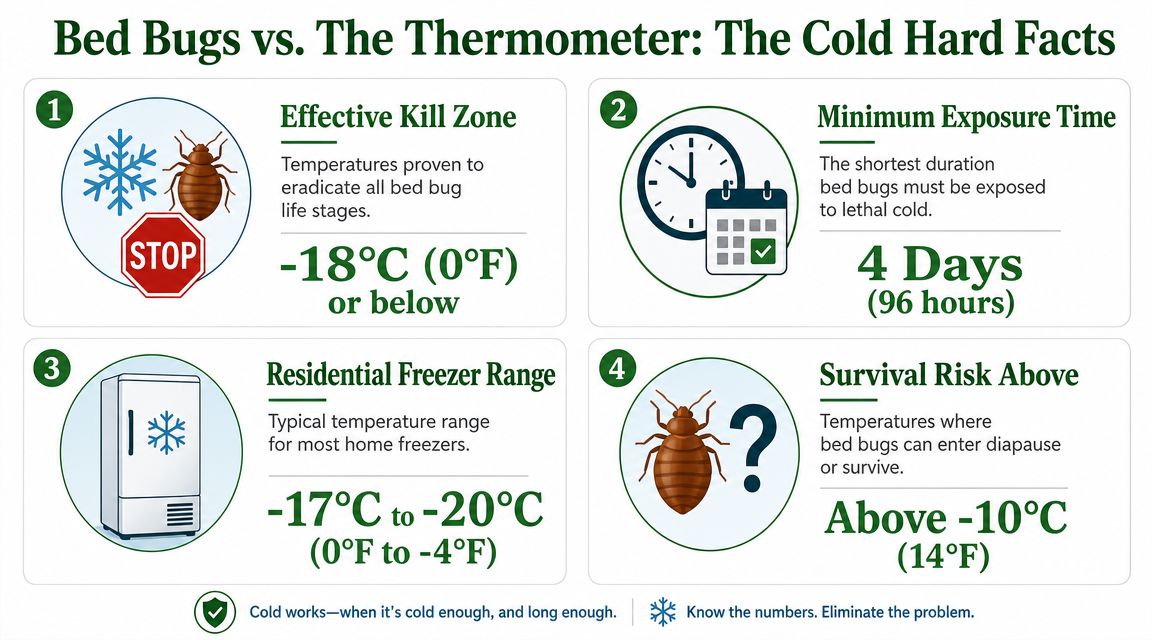
A simple way to think about it is cooking or baking. The oven has to reach the right temperature, and the food has to stay there long enough all the way through. If the outside is done but the centre isn't, the result fails. Cold treatment follows the same logic.
Why precision matters more than winter air
This is why trained technicians separate controlled freezing from cold weather. One is a measurable process. The other is a guess.
A residential freezer can be monitored. A bagged item can stay sealed. The exposure can remain uninterrupted. Outdoor treatment can't offer that consistency because temperatures rise and fall, sunshine warms surfaces, wind changes, and large objects insulate the exact areas where bed bugs hide.
For readers who are still confirming what they're seeing, this bed bug identification and removal guide for Newmarket and Woodstock helps distinguish bed bugs from other household pests and shows why accurate identification matters before treatment starts.
Controlled cold is a tool, not a shortcut. It works best when the item is small enough, the temperature is known, and the exposure is uninterrupted.
The takeaway is simple. Cold has real scientific value, but only when it is applied with precision. That makes it useful for selected belongings, not for gambling on a Newmarket cold snap to clear a bedroom, sofa, or whole home.
Your Practical DIY Guide to Freezing Infested Items
A home freezer can help with some items. It can't solve a full infestation, but it can remove bed bugs from selected belongings that are hard to wash or heat safely.
What belongs in the freezer and what doesn't

Good candidates include books, shoes, soft toys, decorative fabrics, some handbags, and other compact possessions that may harbour bugs in seams or folds. Small electronics may sometimes be treated this way, but they should be protected carefully from moisture and condensation.
Poor candidates include mattresses, large upholstered furniture, broad storage bins packed too tightly, and anything so dense that the centre may not cool properly. Those items often look manageable at first, but they create the same problem seen outdoors. The surface chills while hidden areas lag behind.
Households that are also trying to reduce irritants in sleeping areas may find it useful to create an allergy-proof home environment while sorting bedding, linens, and soft furnishings during cleanup.
A safe freezer routine for small belongings
For Newmarket residents who want to use cold correctly, the process should stay narrow and deliberate.
Choose only small, manageable items. Pick objects that fit comfortably into the freezer without being crammed together. Air circulation matters.
Bag items before freezing. Seal items in clean plastic bags to reduce moisture exposure and keep contents contained during handling.
Avoid overloading the freezer. A packed freezer may struggle to cool items evenly. Small batches are safer than one oversized load.
Leave the items undisturbed for the full freezing period. Opening the freezer repeatedly adds temperature fluctuation. The whole point is consistency.
Bring items back to room temperature while still bagged. That helps limit condensation forming directly on delicate surfaces.
A freezer is for selected belongings, not for replacing inspection, treatment, and follow-up.
This method works best as part of a broader response plan. If the home itself is infested, frozen belongings can still be reintroduced into an untreated room and become exposed again. That's why homeowners should pair freezer use with a complete prevention and containment strategy. This guide to effective bed bug prevention strategies for the home is a useful next step for handling laundry flow, room preparation, and reintroduction risks.
Why a Newmarket Winter Wont Solve Your Bed Bug Problem
Newmarket winters feel severe, but outdoor cold is still a gamble when bed bugs are hidden inside real-world objects. The problem isn't whether winter is cold. The problem is whether it stays cold enough, long enough, and deep enough inside the item.
Outdoor temperatures don't stay where they need to
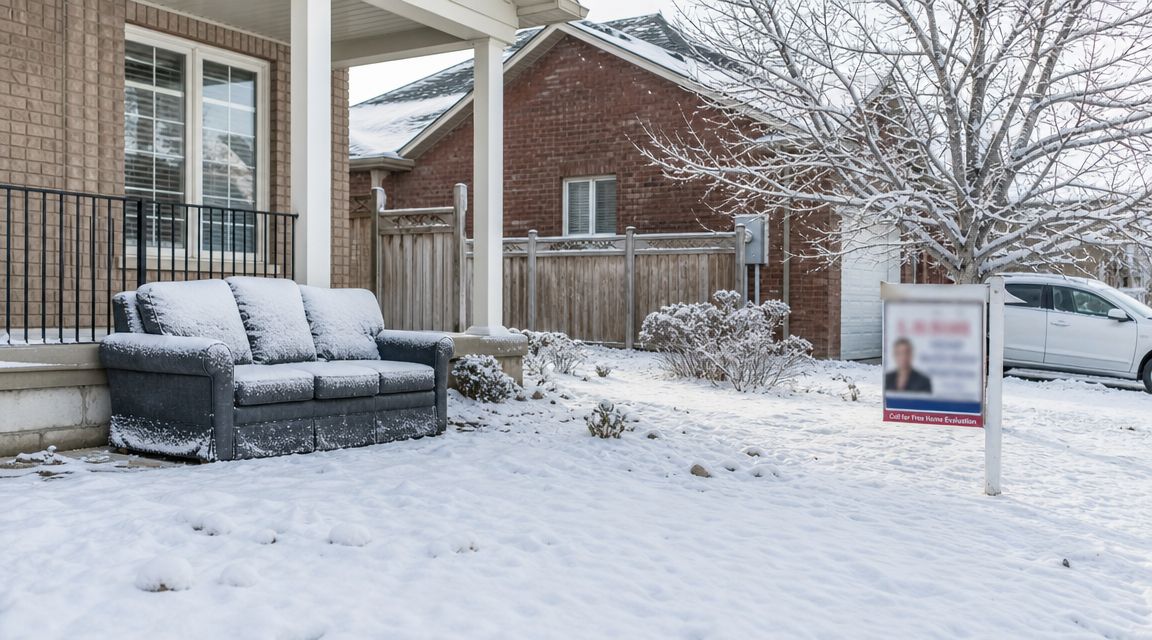
Research on bed bug cold tolerance found survival could still occur at temperatures above -12°C even after 1 week of continuous exposure, and surviving bugs were still capable of feeding afterward according to this peer-reviewed study on bed bug cold tolerance. That matters because Ontario winter weather fluctuates. Temperatures change between day and night. Sunlight warms dark surfaces. Garages, balconies, and covered porches rarely mimic the stable conditions of a controlled freezer.
This is the core reason leaving belongings outside doesn't produce dependable results. The item may spend part of the day cold enough at the surface, then drift out of the lethal range before the centre has cooled sufficiently.
Furniture and buildings protect bed bugs from the cold
A wooden bed frame, a thick upholstered chair, or a packed storage tote doesn't cool evenly. The outer layer gets cold first. The inner seams, staple lines, folded fabric, and screw channels stay insulated longer. That's exactly where bed bugs prefer to hide.
In Newmarket townhouses, condos, and apartment buildings, another issue appears. Bugs don't need to remain in the cold-exposed object if warmer harbourages exist nearby. They can remain in bedrooms, behind baseboards, inside headboards, or within shared wall spaces.
Consider these common local missteps:
- Balcony storage: Condo residents seal bags and place them outdoors, but the bags heat in sunlight and cool unpredictably overnight.
- Garage isolation: Homeowners move furniture to an unheated garage, but the structure buffers temperature swings enough to protect hidden bugs.
- Curbside furniture: Residents drag an infested item outside, only to leave the rest of the infestation active indoors.
Cold weather outside a home doesn't mean lethal cold inside a sofa, mattress, or wall void.
For Newmarket homes, the folk method fails because it treats winter like a professional tool. It isn't. Weather is inconsistent. Bed bugs exploit inconsistency.
Professional Treatments Cold Simply Cant Replace
Cold has a narrow role. Once bed bugs are in sleeping areas, furniture, cracks, and surrounding rooms, homeowners need methods that treat the entire environment instead of a few removable objects.
Why whole-structure cold isn't the answer
Extension guidance states that cold treatments for rooms or buildings have not been well studied and are not often employed, and freezing does not provide long-lasting control, so reinfestation can still occur. That practical limitation is explained in Purdue Extension guidance on bed bug control.
That is why professional work focuses on complete reach. A proper treatment plan addresses harbourages in beds, baseboards, upholstered furniture, surrounding clutter zones, and adjacent hiding areas. It also addresses what happens after treatment, because reintroduction is a real risk in multi-unit properties and busy family homes.
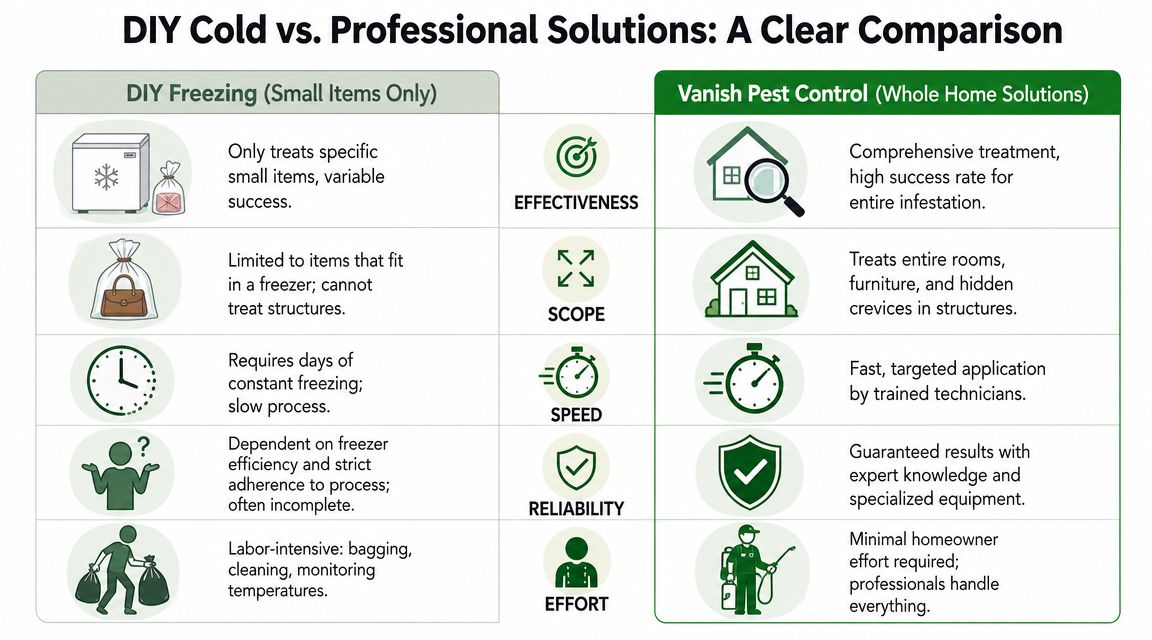
One professional option available locally is bed bug heat treatment with chemical-free whole-room elimination. This approach is designed to reach the hidden spaces that DIY cold cannot reliably penetrate.
Comparing DIY cold with professional treatment options
A homeowner deciding between freezer use, heat, and targeted chemical application should think in terms of scope rather than convenience.
| Method | Effectiveness | Scope | Best For |
|---|---|---|---|
| DIY freezer treatment | Effective for selected small items when conditions are tightly controlled | Individual belongings only | Books, shoes, soft toys, compact items |
| Professional heat treatment | Broad whole-room control when applied correctly | Rooms, furniture, cracks, hidden harbourages | Confirmed infestations affecting multiple areas |
| Targeted professional chemical treatment | Useful in specific treatment plans and follow-up work | Selected hiding areas and routes of movement | Situations where a technician determines it fits the site conditions |
Heat is often the more practical answer when infestation signs appear in several parts of the room or when the source isn't limited to one object. Targeted chemical work can also play a role depending on layout, clutter level, and where activity is found. The point isn't that homeowners should never use cold. The point is that cold can't replace structure-wide treatment.
For Newmarket property managers, that distinction matters even more. In a multi-unit setting, treating one chair or one bag while ignoring wall voids, adjacent units, or shared corridors does not solve the actual problem.
Your Action Plan for a Bed Bug-Free Newmarket Home
A clear plan prevents panic and bad decisions. When residents discover bed bugs in a Newmarket home, the first priority is containment without scattering the infestation.
What to do today
Start with these steps:
- Keep infested items inside until there is a plan. Moving furniture outdoors or through common areas can spread bugs to other parts of the property.
- Use freezer treatment only for suitable small belongings. Reserve it for selected items that can be sealed, monitored, and handled properly.
- Reduce clutter around sleeping areas. Open floor space and accessible baseboards make inspection and treatment more effective.
- Avoid shifting items from room to room. A contaminated laundry basket, blanket, or backpack can carry bugs farther than expected.
- Arrange a professional inspection. Homes, condos, and rental units need the full scope identified before treatment decisions are made.
How Newmarket residents can reduce the chance of reintroduction
Long-term prevention is practical, not complicated.
- Check second-hand furniture carefully. Used bed frames, upholstered chairs, and nightstands deserve extra scrutiny before entering the home.
- Inspect luggage after travel. Unpack in a controlled area, isolate travel items, and wash or dry what can be processed safely.
- Seal cracks and repair loose trim. Bed bugs exploit small gaps near baseboards, outlets, and bed-adjacent walls.
- Protect sleeping areas. Mattress and bedding care matter, and households comparing options can explore bedding and mattress care to support cleaner, easier-to-monitor sleeping spaces.
For older Newmarket homes and shared buildings, prevention also means communication. Landlords, tenants, and condo residents should report issues early instead of experimenting with balcony storage or curbside furniture removal. Early, coordinated action is easier to manage than a problem that has had time to spread.
Frequently Asked Questions About Bed Bugs and Cold
Can a cold garage kill bed bugs?
Usually not reliably. A garage may feel freezing, but it doesn't provide the controlled, sustained conditions needed for dependable treatment of infested belongings.
Will one night outside kill bed bugs?
No. One cold night tells a homeowner almost nothing about the temperature reached inside seams, folds, and hidden cavities.
Can freezing help with clothes and small household items?
Yes, it can help with selected small items when the process is controlled and the items are bagged and handled properly. It should be viewed as a limited tool, not a full-home solution.
If an item feels frozen, is it safe to bring back in?
Not necessarily. Surface temperature isn't proof that the deepest hiding areas reached lethal conditions. That is where DIY winter treatment often fails.
Why do bed bugs keep coming back after DIY cold attempts?
Because surviving bugs may remain in untreated furniture, surrounding rooms, wall gaps, or nearby units. Killing some bugs on a few belongings isn't the same as eliminating the infestation.
When should a homeowner call for help?
As soon as there are repeated bites, visible bugs, spotting near sleeping areas, or uncertainty about whether the problem has spread. Fast action prevents wasted time and reduces the chance of moving bugs deeper into the property.
If bed bugs are active in a Newmarket home, condo, or rental unit, Vanish Pest Control Inc. can help assess the scope of the problem and recommend a treatment plan that fits the property. Controlled freezing has a place for small belongings, but full infestations need a method that reaches the places winter weather can't.




