

A Toronto resident usually finds cockroaches at the worst possible moment. The kitchen light flips on late at night. Something moves behind the toaster. A small brown insect disappears under the baseboard before there's time to process what happened.
That first sighting creates a lot of stress, especially in condos, apartments, and older homes where neighbours, shared plumbing, and hidden wall voids make the problem feel bigger than one unit. In Toronto, that concern is justified. Cockroaches don't stay contained for long, and a single untreated source can keep feeding activity through kitchens, bathrooms, laundry rooms, and commercial prep areas.
For cockroach extermination Toronto, the most useful advice starts with realism. Cleanliness matters, but it isn't the whole story. Moisture, entry gaps, appliance heat, clutter, food residue, and connected building systems all matter. Toronto's multi-unit buildings make those factors even more important because one unit's problem often becomes several units' problem.
Table of Contents
- Toronto's Cockroach Problem Signs Species and Risks
- Comparing Professional Cockroach Treatment Methods
- When to Call for Professional Cockroach Extermination
- What to Expect from a Toronto Extermination Service
- Your Proactive Prevention Plan for Toronto Properties
- Frequently Asked Questions About Cockroach Control
Toronto's Cockroach Problem Signs Species and Risks
The species Toronto residents usually face
In the Greater Toronto Area, the German cockroach dominates infestations in multi-unit residential and food-service buildings, and Health Canada notes that a single female can produce 35 to 40 offspring per brood across 4 to 6 broods annually, which is why populations can expand quickly when sanitation and moisture controls are weak (Health Canada on cockroaches in Canada).
That matters in Toronto homes because the insects residents see in kitchens and bathrooms usually aren't random strays from outdoors. They're indoor-adapted pests that prefer warmth, tight harbourage, and reliable access to water. In condos and apartments, they often hold up behind fridges, under sinks, inside cabinet voids, around dishwashers, and near plumbing penetrations.
A useful primer on movement patterns and entry routes appears in this guide on how cockroaches invade our homes, especially for residents trying to understand why a clean unit can still become infested.
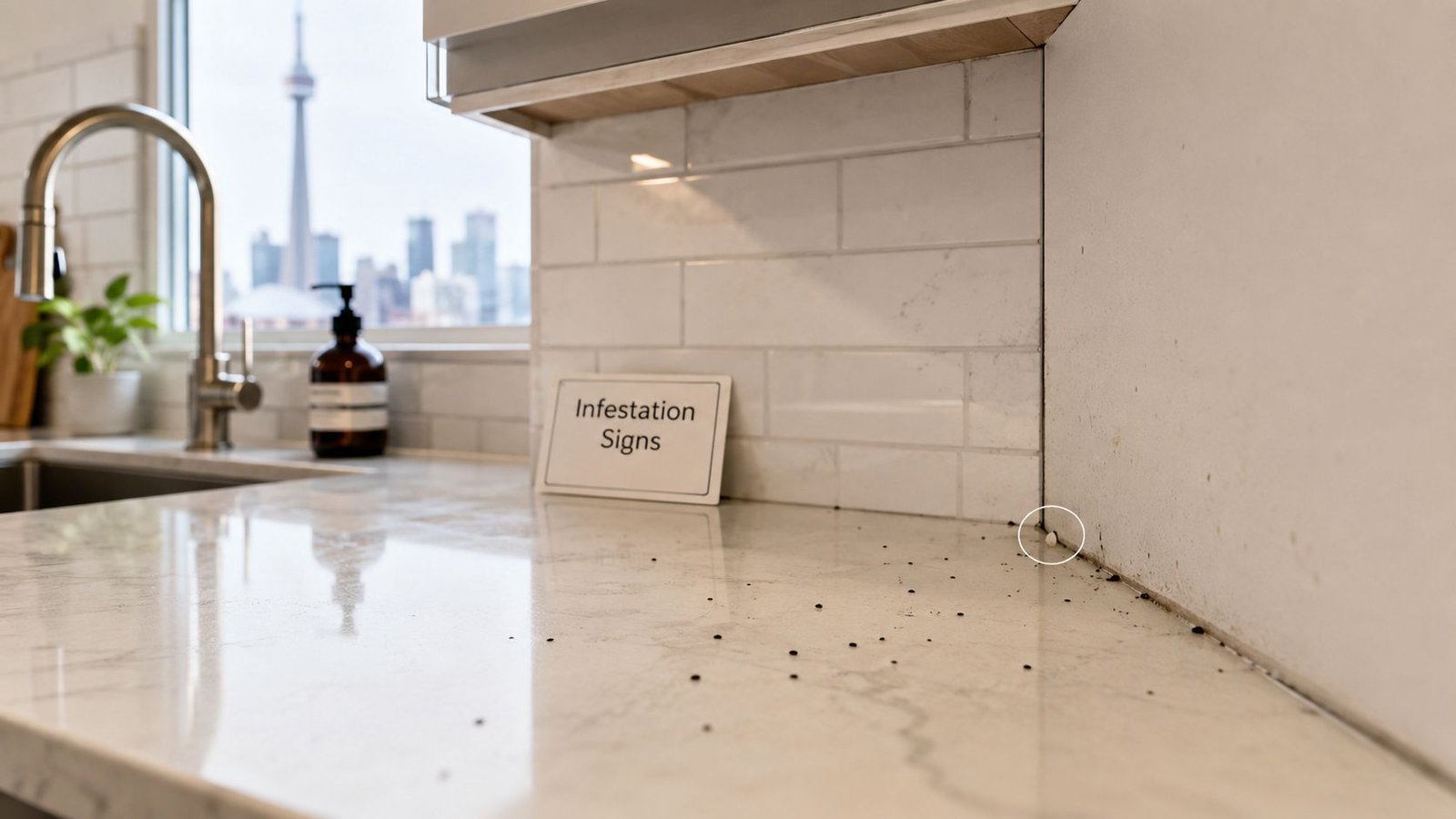
The signs that matter more than a single sighting
Most established infestations reveal themselves through traces before live insects are seen regularly. Toronto residents should inspect the areas nearest heat, moisture, and food first.
Key signs include:
- Pepper-like debris: Cockroach droppings from species common in Toronto homes, such as the German cockroach, are tiny and resemble coffee grounds or black pepper, especially inside drawers, cabinet corners, and along counter seams.
- Shed skins and egg casings: These often collect under sinks, behind appliances, and in cupboard hinges.
- Musty or oily odour: A lingering smell in a closed kitchen cabinet or bathroom vanity often points to active harbourage nearby.
- Smear marks and hidden congregation points: In tight corners, repeated movement can leave subtle residue where surfaces stay slightly damp or greasy.
Practical rule: A resident shouldn't wait for repeated sightings if droppings, shed skins, and odour are already present. Those signs usually mean the colony is established.
Why these infestations affect health
Cockroaches are more than a nuisance issue. Their shed skins and droppings are linked to allergy and asthma symptoms, particularly in children, and residents may notice watery eyes, sneezing, runny nose, or breathing irritation as contamination builds in hidden spaces.
For families in Toronto homes, the problem often gets worse when activity reaches food storage areas, dish cabinets, and small appliances. For restaurants and other food businesses, the implications are more serious because pest-proofing and source removal are part of normal food safety expectations.
A resident who finds droppings in the kitchen and under the bathroom sink is usually dealing with a broader problem than the visible evidence suggests. The visible debris is the tip of the infestation. The colony itself is usually behind the surfaces people don't open.
Comparing Professional Cockroach Treatment Methods
A Toronto tenant sprays under the sink, the roaches disappear for two days, then show up in the bathroom vanity and behind the stove. That pattern usually means the insects were disturbed, not removed. In multi-unit buildings, good treatment has to reach the breeding pockets inside voids, around plumbing, and along shared utility lines.
Why targeted treatment beats broad spraying
Professional cockroach control is built on inspection first. The technician needs to find where the insects are feeding, where they are hiding, and how they are moving between units. In Toronto apartments and condos, that often means checking under sinks, behind fridges, around dishwasher motors, inside cabinet hinge areas, and at pipe penetrations that connect one suite to another.
Gel baits are often the backbone of the job because they put active material where cockroaches already travel and feed. Roaches consume the bait in hidden spaces, which helps the treatment reach harbourage that a resident cannot access with store products. Insect growth regulators, or IGRs, add another layer by disrupting development and reproduction. They do not give the quick visible result some residents expect, but they matter on German cockroach jobs where the breeding cycle is the reason the infestation keeps rebuilding.
Contact sprays still have a role. I use them to treat exposed activity, edge areas, and certain cracks during service, especially when immediate reduction is needed. The trade-off is simple. Sprays can knock down what is out in the open, but they do not solve a building-linked infestation by themselves if the colony remains active behind cabinets, under appliances, or in wall voids.
Cockroach Treatment Method Comparison
| Method | How It Works | Best For | Notes |
|---|---|---|---|
| Gel baits | Attracts cockroaches to feed, then affects insects inside hidden harbourage after transfer | Kitchens, bathrooms, cabinet voids, behind appliances | Strong choice for established indoor infestations where direct access is limited |
| Insect growth regulators | Disrupts normal development and breeding cycle | Ongoing infestations with recurring juvenile activity | Works best as part of a larger treatment plan, not as a stand-alone quick fix |
| Contact sprays | Kills insects that contact treated areas directly | Visible activity in exposed cracks and edges | Useful tool, but limited if the colony remains behind walls or equipment |
| Exclusion and sealing | Blocks movement through cracks and penetrations | Multi-unit buildings, recurring reinfestation routes | Important after activity is identified, especially around plumbing and utility lines |
| Monitoring and follow-up | Tracks whether treatment reached the primary nesting zones | Condos, rentals, restaurants, repeat problems | Necessary because activity often shifts after the first visit |
Method choice also depends on the building. In a detached house, exclusion and sanitation corrections may hold well once the active sites are treated. In a Toronto high-rise, one clean unit can still be reinfested through pipe chases, hallway thresholds, laundry rooms, garbage areas, or neighbouring kitchens. That is why residents, landlords, and condo boards sometimes need coordinated access and building-wide treatment rather than isolated service in one suite.
For readers comparing general treatment approaches, this overview of Pestless for residential cockroach issues is useful as a broad service reference because it reflects the same core logic used in residential cockroach work: inspection, targeted treatment, and follow-up instead of one-time surface spraying.
A local cost breakdown helps frame the difference between repeated DIY spending and a structured service plan. This guide on roach treatment pricing in Toronto gives residents a practical baseline.
What fails in severe Toronto infestations
Severe infestations usually get worse when residents rely on foggers, heavy repellent sprays, or random products applied without inspection. Those treatments can scatter roaches deeper into wall voids and force them into adjacent rooms or units. Public health guidance on integrated pest management supports a targeted approach that combines monitoring, sanitation, exclusion, and carefully placed control materials rather than routine broadcast pesticide use (Health Canada guidance on integrated pest management).
That point matters even more in rentals and condos. If one tenant treats aggressively while the source unit is left untouched, the problem often shifts instead of ending. Landlords and property managers need to handle access, resident prep, and follow-up across affected areas. Condo residents may also need management approval for entry coordination, common-area inspection, or treatment around shared building systems.
Surface relief is temporary. Control comes from reaching the breeding population and stopping the movement routes that keep feeding the infestation.
When to Call for Professional Cockroach Extermination
A resident doesn't need to wait until the kitchen feels overrun. There are clear points where professional help stops being optional and becomes the practical next step.
The clear trigger points
One of the strongest warning signs is daytime activity. If a Toronto resident sees one cockroach during daylight hours, it is a strong indicator of a high-level infestation because these insects are nocturnal and typically disperse in the open only when hidden nests are overcrowded.
Other signs that usually mean DIY control is losing include:
- Recurring sightings after store-bought products
- Activity in more than one room, especially kitchen plus bathroom
- Roaches in a condo or apartment, where shared walls and plumbing make reinfestation likely
- Business exposure, where food handling areas can't tolerate ongoing pest pressure
Residents comparing local service options often start with practical availability and response time. A search for cockroach control near Toronto homes and condos usually makes more sense than buying another round of products that won't reach the source.
Why condos and rentals need coordinated action
Toronto's hardest cockroach jobs often happen in high-rises and older apartment buildings. One unit gets treated, activity drops briefly, then insects reappear from the unit beside it, the suite below, or the plumbing chase behind the sink wall.
That's why single-unit treatment often fails in shared buildings unless management addresses the entire pathway network. Kitchens may be separate on paper, but cockroaches treat connected pipe runs, electrical openings, and wall voids as one continuous habitat.
A condo resident can do everything right inside the unit and still lose the battle if the adjoining units and common pathways stay active.
How Toronto residents can push for action
An underserved issue in Toronto is the gap between “report the problem” and getting building-wide treatment approved. Residents are often told to contact 311 for bylaw complaints, but what matters in practice is documenting sightings, preserving photos of droppings and casings, reporting the issue in writing to property management, and asking specifically for a coordinated treatment plan when multiple units are affected. That gap in guidance is a recurring frustration discussed in Toronto tenant conversations about roach complaints and building-wide response.
For landlords and property managers, the practical lesson is simple. If the infestation spans shared structures, isolated unit service usually won't hold. Building-wide coordination is the responsible move and often the only durable one.
What to Expect from a Toronto Extermination Service
A proper service call should feel organised, not rushed. Residents dealing with cockroach extermination in Toronto should expect a clear sequence: inspection, preparation guidance, treatment, and follow-up.
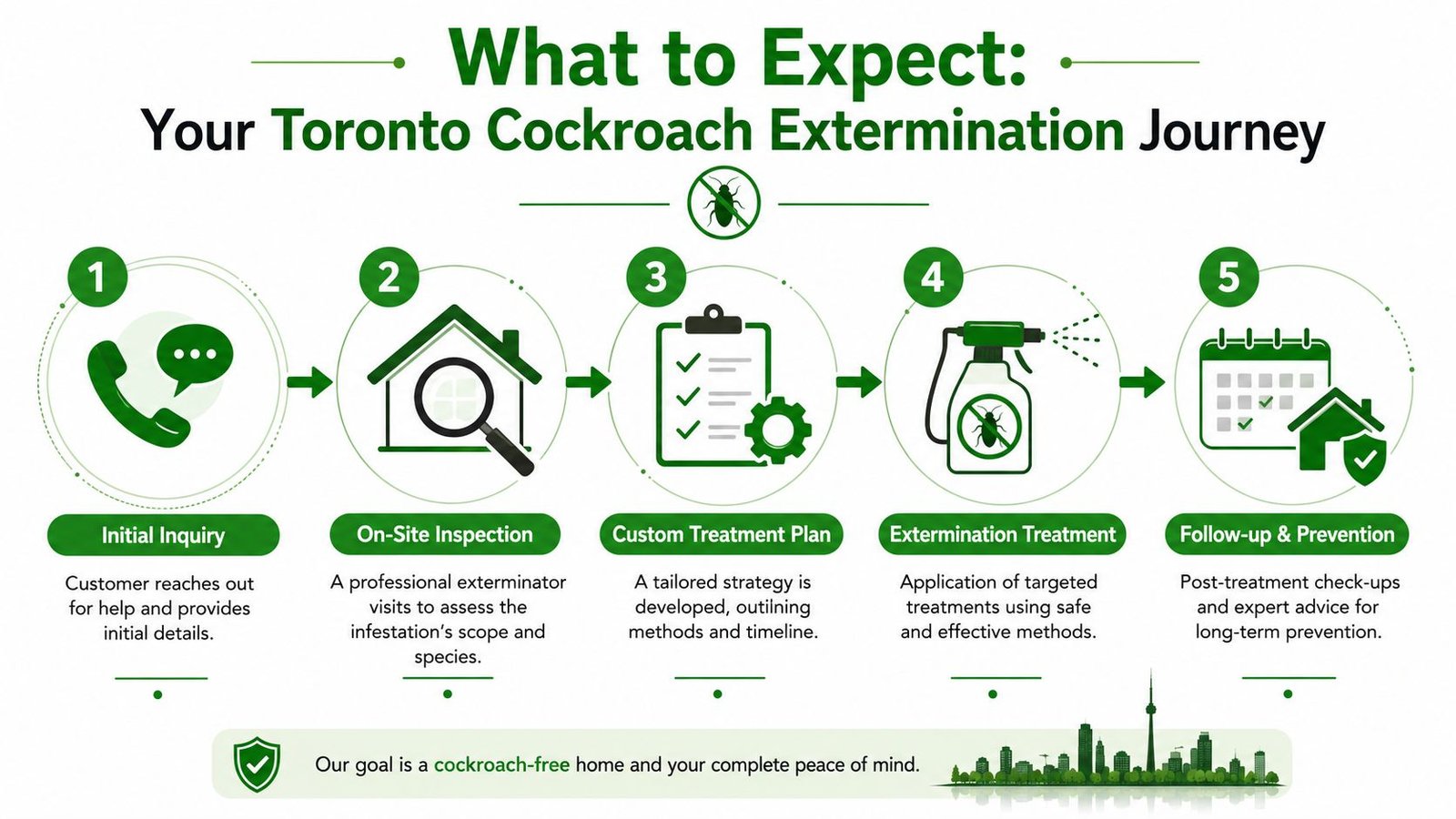
Inspection and preparation
Inspection comes first because treatment without mapping the infestation is guesswork. A technician should check under sinks, behind fridges and stoves, inside cabinet hinges, around dishwashers, along kick plates, near water lines, and in bathroom vanities. In condos and apartments, they should also pay attention to shared utility penetrations and signs of migration from adjacent units.
Preparation matters because clutter and grease interfere with treatment placement. Most residents should expect instructions such as:
- Clear countertops: Remove small appliances, food items, and loose packaging.
- Empty problem cabinets: Especially under sinks and near heavy activity.
- Vacuum and wash floors: This removes loose food residue and makes fresh droppings easier to monitor after treatment.
- Store food properly: Sealed containers matter more than folded bags or cardboard packaging.
- Follow pet and family guidance: A good provider gives direct instructions for re-entry and room use.
Treatment day and follow-up visits
Treatment day usually combines targeted products with placement strategy. Gel bait may go into cracks, cabinet joints, and appliance voids. Other materials may be applied in specific areas where harbourage and movement are obvious. Exclusion work often follows once the activity points are identified.
Established infestations in Ontario homes require two to three follow-up visits spaced 2 to 4 weeks apart because egg cases protect developing embryos from the initial chemical treatment, which prevents immediate eradication.
That follow-up schedule is not a sales add-on. It's part of the treatment logic. Eggs survive the first round, new nymphs emerge later, and those insects must be intercepted before the infestation rebuilds.
What a proper service standard looks like
A professional service should explain what was found, where it was found, what was applied, and what the resident needs to do next. It should also include realistic expectations. Activity may change before it fully stops, especially when hidden harbourage gets disrupted.
Vanish Pest Control Inc. offers a Toronto cockroach control service that follows this general model of inspection, targeted treatment, and long-term prevention planning. That approach is what residents should look for in any legitimate service, whether the property is a downtown condo, a detached house, or a commercial kitchen.
Your Proactive Prevention Plan for Toronto Properties
A Toronto tenant can scrub the kitchen every night and still keep seeing roaches. I see that in apartment towers, older multiplexes, and some condo stacks where plumbing chases, pipe gaps, and shared walls let insects move unit to unit. Prevention has to match that reality. Good habits inside one suite matter, but in many Toronto buildings they only hold if the building also fixes the routes and conditions feeding the problem.
Sanitation that reduces pressure
Cleanliness lowers food access and forces cockroaches to travel farther, which makes baiting and monitoring more effective. It does not solve a building-linked infestation on its own. In detached homes, sanitation can make a major difference. In multi-unit properties, it is one part of control, not the whole plan.
The habits that help most are specific and repeatable:
- Store food in sealed containers: Pantry pests are one issue. Roaches feeding on open flour bags, cereal liners, pet food, and counter snacks are another.
- Empty garbage and recycling before residue builds up: Beverage containers, takeout packaging, and food scraps are common pressure points in small kitchens.
- Clean under and beside appliances: The gap beside a stove or the tray under a fridge often holds grease, crumbs, and harbourage.
- Pay attention to overlooked cleaning spots: These essential apartment cleaning areas line up closely with the places where cockroaches feed undisturbed.
A clean unit still needs inspection if activity continues. Ongoing sightings in a well-kept apartment usually point to a hidden water source, untreated harbourage, or migration from another unit.
Exclusion and moisture control

Cockroaches use small openings around plumbing, cabinets, baseboards, and utility lines. In Toronto apartment buildings, those openings often connect directly into wall voids and service spaces that residents never see. Sealing visible gaps helps, but cosmetic caulking in one room will not solve movement through a whole riser or utility chase.
Check the places that repeatedly cause trouble:
- Pipe penetrations under sinks and behind toilets
- Openings around radiators and heating lines
- Gaps behind stoves, dishwashers, and stacked laundry
- Loose escutcheon plates and split caulking
- Cracks at cabinet backs, toe-kicks, and baseboards
Water matters as much as food. German cockroaches settle fastest where they can feed and drink without crossing open floors. A slow leak under the kitchen sink, condensation around plumbing, or dampness behind a bathroom vanity can keep activity going even after treatment.
Useful prevention steps include:
- Repair leaks quickly: Shut-off valves, drain traps, and fridge water lines are common sources.
- Dry sinks and counters overnight: This matters most in kitchens with repeated late-night sightings.
- Improve ventilation in bathrooms, basements, and laundry areas: Damp air supports survival in hidden voids.
- Remove cardboard and reduce clutter near water sources: Harbourage close to moisture gives roaches cover and makes service harder.
A dry kitchen with sealed food and closed gaps is harder for cockroaches to hold.
Extra prevention steps for restaurants and shared buildings
Restaurants need tighter control because food, heat, grease, and water are present every day. Under-equipment cleaning, floor drain sanitation, storage rotation, and strict closing routines make a real difference. If those steps slip, roaches usually rebound fast.
Shared buildings need coordination. That is the Toronto piece many articles miss. If one tenant prepares properly but the unit next door stays active, the pressure often returns. Landlords, supers, and condo managers need to address recurring units, leaks in common lines, garbage room conditions, and openings in service areas. Condo boards also need to work within their bylaws so access, notice, and treatment scheduling do not stall for weeks while the infestation spreads.
Residents should report sightings early and document where they occur. Property managers should treat repeat complaints in the same stack as a building issue, not a single housekeeping problem. Building-wide treatment is often the only reliable way to stop reinfestation in older Toronto apartments and condos.
Frequently Asked Questions About Cockroach Control
How long does cockroach control take
It depends on the scale of the infestation, the layout of the property, and whether the issue is confined to one area or tied to a shared building pathway. Small problems can calm down fairly quickly after targeted treatment, but established infestations usually take more than one visit and more than one life cycle to eliminate.
Residents often expect instant results, but cockroach work is usually a process of reducing active numbers, interrupting breeding, and closing the conditions that allowed the infestation to hold.
Is treatment safe around children and pets
A professional service should give direct preparation and re-entry instructions based on the products and treatment areas involved. In most homes, the safest approach is to follow those instructions exactly, keep pets away from active treatment zones until cleared, and avoid disturbing placed baits.
Residents should also mention pet bowls, feeding stations, aquariums, and children's play areas before treatment begins. Good preparation makes the service safer and more effective.
Will cockroaches come back after treatment
They can, especially in apartments, condos, and mixed-use buildings where untreated adjoining spaces remain active. Reinfestation is common when the original conditions stay in place, such as leaks, accessible food residue, cluttered harbourage, or open structural gaps.
That doesn't mean treatment failed. It often means the problem wasn't fully addressed at the building level or the prevention steps weren't maintained long enough.
Can a landlord treat only one unit
A landlord can choose to start with one unit, but that approach often falls short when cockroaches are moving through shared walls, plumbing voids, and utility lines. In multi-unit Toronto properties, a coordinated program is often the only approach that matches how the insects spread.
For tenants, written documentation matters. Keep records of sightings, treatment dates, photos of evidence, and all communication with management. That record helps when asking for broader action.
Do cockroaches only infest dirty homes
No. Sanitation is foundational, but it isn't the only factor. Cockroaches also need water, shelter, access routes, and hidden space. A very tidy condo can still develop an infestation if neighbouring units are active or if roaches enter through service penetrations and settle behind appliances.
What should a resident do right after spotting one
Start by checking under the sink, behind the stove, beside the fridge, and inside nearby cabinets for droppings, shed skins, and odour. Don't rely on foggers or random spraying. Clean accessible food residue, reduce clutter, document what was found, and arrange a proper inspection if the evidence suggests established activity.
Toronto cockroach problems don't usually stay small for long, especially in condos, rentals, restaurants, and older homes with shared infrastructure. For residents and property managers who need a clear treatment plan, follow-up service, and practical prevention guidance, Vanish Pest Control Inc. provides licensed pest control across Toronto and the GTA.




