

A Toronto resident usually searches for cockroach control near me after a moment that turns an ordinary night into a stressful one. The kitchen light goes on, something dark moves across the counter edge, and the whole home suddenly feels different. In a downtown condo, that sight raises one set of worries. In a detached Toronto house with a finished basement, it raises another. In a restaurant, café, or food prep area, it becomes urgent immediately.
Cockroaches unsettle people for good reason. They hide well, move fast, and rarely stay confined to the one place where they were first spotted. In dense urban housing, the issue often isn’t just one resident’s cleaning routine or one missed crumb. It can be tied to shared walls, plumbing penetrations, garbage areas, moisture, and structural gaps that let pests move from one unit to another.
This guide lays out what Toronto residents, landlords, condo owners, and food-service operators need to know. It covers how to tell whether there’s a larger infestation, what professional treatment looks like, when a one-time visit makes sense, and when an ongoing prevention plan is the smarter decision.
Table of Contents
- That Sinking Feeling of Seeing a Roach in Your Toronto Home
- Is It One Roach or a Full-Blown Infestation
- The Real Risks Cockroaches Pose to Your Health and Property
- How Professionals Eradicate Cockroaches in Toronto
- What to Expect for Cockroach Control Costs and Timelines
- How to Keep Roaches Out and Choose Your Toronto Expert
- Frequently Asked Questions About Cockroach Control
That Sinking Feeling of Seeing a Roach in Your Toronto Home
A single cockroach sighting can make a Toronto home feel unclean, even when the resident keeps the place in good order. That reaction is normal. People often jump straight to embarrassment, but cockroach activity in a dense city is often bigger than one room and bigger than one household.
In a high-rise condo, a roach seen near the sink at midnight might have come from a neighbouring unit through a plumbing gap, a shared wall void, or a hallway service opening. In an older Toronto house that’s been renovated several times, it may be tied to a damp basement corner, a floor drain, or hidden harbourage behind kitchen cabinets. The visible insect is usually just the part that happened to be exposed.
What makes Toronto different is the housing mix. Condos, apartment towers, multiplexes, laneway suites, and older detached homes all create hiding places. Shared utility lines and warm indoor conditions give cockroaches exactly what they need to stay active and spread.
Practical rule: In a multi-unit building, cockroach control works best when the problem is treated as a property systems issue, not just a one-room nuisance.
Public health guidance from another dense urban centre makes that point clearly. The New York City cockroach indicator and prevention guidance notes that adults in nearly 30% of NYC households, or 874,000 households, reported cockroaches in 2003, and the practical lesson for Toronto-area decision-makers is that control in multi-unit housing depends on source reduction, moisture control, sanitation, and closing structural entry points rather than reacting only to visible pests (NYC cockroach indicator data and guidance).
Why Toronto residents often feel blindsided
Cockroaches don’t announce themselves early. They stay behind kick plates, under sinks, inside motor compartments of appliances, around garbage areas, and near warm moisture sources. Many residents only realise there’s a problem after seeing one in the open.
That’s why the search for cockroach control near me usually happens with a lot of urgency behind it. The resident doesn’t just want something sprayed. They want to know whether the infestation is inside the unit, moving through the building, or both.
The right response starts with calm, not panic
Panic leads to bad decisions. People often empty a store-bought aerosol into the kitchen, push roaches deeper into wall voids, and make inspection harder. A calmer first step is better: identify where the sighting happened, note the time, check nearby moisture and food sources, and look for supporting signs before treatment begins.
Is It One Roach or a Full-Blown Infestation
Not every sighting means the same thing. A stray insect can happen. A pattern of evidence points to a bigger issue. The difference matters because treatment should match the situation.
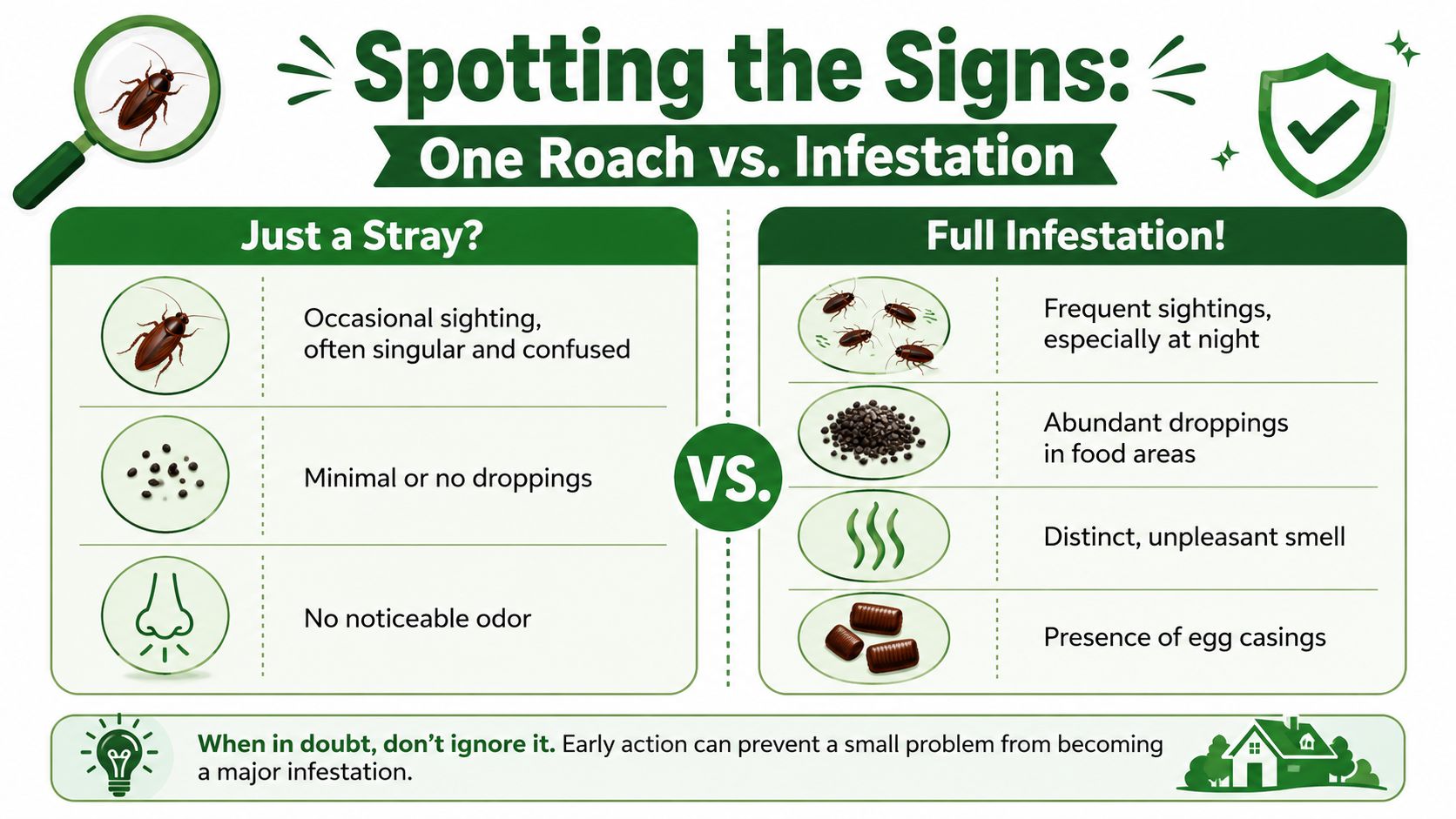
What to look for right away
Start with the areas where cockroaches naturally hide. Toronto residents should check under sinks, around dishwasher and fridge motors, behind stoves, along cabinet hinges, near garbage pullouts, around bathroom vanities, and in basement utility areas.
Common signs include:
- Droppings in active zones that look like dark specks, pepper, or coffee-ground residue.
- Egg casings tucked into corners, behind appliances, or along cabinet seams.
- Musty or oily odour that becomes stronger in enclosed, humid spaces.
- Smear marks on edges, corners, wall junctions, or around hidden runways.
- Night-time activity when lights come on suddenly.
A useful homeowner primer on how cockroaches enter living spaces can be found in this article on understanding how cockroaches invade homes. It helps residents connect what they’re seeing with likely access points and hiding areas.
Frequent sightings in a bright kitchen during the day often suggest the insects are being pushed out of crowded harbourages.
Why species matters in Toronto properties
In Toronto, species identification changes the treatment plan. German cockroaches are typically associated with indoor infestations near food and moisture. American cockroaches are more often tied to entry from exterior or moisture-prone areas such as basements and drains, which means the response for a condo kitchen can differ from the response for a basement mechanical room.
That distinction shows up in real properties every week. In a condo, German cockroaches usually turn up around kitchen cabinetry, bathroom plumbing, under-sink voids, and appliance heat sources. In a detached home or mixed-use building, American cockroaches are more likely to be associated with lower-level moisture, service entries, drain-linked zones, and utility spaces.
A quick comparison for Toronto residents
| Situation | More likely concern | Where to inspect first |
|---|---|---|
| Condo kitchen sightings | German cockroaches | Under sink, behind stove, fridge motor area, cabinet corners |
| Bathroom sightings in a high-rise | German cockroaches | Vanity voids, plumbing penetrations, shared wall areas |
| Basement or drain-linked sightings | American cockroaches | Floor drains, utility rooms, sump areas, entry points |
| Restaurant back-of-house activity | Often German cockroaches, sometimes mixed conditions | Prep lines, dish areas, storage, drains, equipment voids |
One sighting should never be ignored in Toronto housing. It also shouldn’t be overread without evidence. Inspection separates the two.
The Real Risks Cockroaches Pose to Your Health and Property
Cockroaches are more than a nuisance. Once they move through kitchens, bathrooms, storage rooms, garbage zones, or drains, they create sanitation concerns that residents and business operators can’t afford to brush off.
Health concerns in kitchens and shared spaces
The biggest immediate issue is contamination. Cockroaches move through unsanitary areas and then cross food-prep surfaces, cupboards, dishes, and storage zones. In homes with children, seniors, or anyone with respiratory sensitivities, that raises the stakes quickly.
Their droppings, shed material, and activity in hidden voids can also make an indoor environment feel persistently dirty even after surface cleaning. In multi-unit buildings, that stress gets worse because residents can clean their own kitchen thoroughly and still see fresh activity if the surrounding conditions in the building aren’t addressed.
When basement drains or damp lower levels are part of the problem, moisture control becomes essential. Property owners dealing with drain-related sanitation issues may find this guide to steps for basement drain cleanup helpful because drain conditions often overlap with the kind of moisture and residue that attracts pest activity.
Property and business impact
For homeowners, cockroaches undermine comfort fast. People stop using parts of the kitchen, avoid opening cabinets, and lose confidence in the cleanliness of their home. For landlords and condo boards, unresolved activity can trigger repeated complaints and difficult conversations about responsibility between units and management.
For food-service operators in Toronto, the issue is even sharper. Any sign of cockroaches in food handling, dishwashing, storage, or prep areas can affect reputation, staff confidence, and compliance obligations. In those settings, waiting to “see if it goes away” is the wrong move. The property needs inspection, targeted treatment, and operational corrections at the same time.
A cockroach problem rarely improves on its own. The insects adapt to available food, water, and shelter until someone removes those conditions and treats the harbourages directly.
How Professionals Eradicate Cockroaches in Toronto
A proper cockroach treatment in Toronto starts with one question. Is the infestation confined to this unit, or is the building feeding it?
That distinction changes the whole job. In a detached house, the technician can usually inspect the full structure, trace moisture or food sources, and treat the problem as one contained system. In a condo or apartment, roaches move through pipe chases, wall voids, garbage rooms, shared laundry areas, and neighbouring units. A clean kitchen in one suite does not stop pressure coming through the next wall.
Why sprays alone usually fail
Store-bought sprays kill visible insects and leave the colony in place. Roaches spend most of their time tight to harbourage points such as hinge gaps, cabinet seams, appliance motors, sink bases, electrical boxes, and plumbing penetrations. Broad surface spraying rarely reaches those areas in a useful way.
Foggers are an even worse fit for many Toronto properties. In condos, they spread product into living space without solving activity inside walls or around shared utility lines. In restaurants, cafés, and food prep spaces, that kind of unfocused application can create cleanup and compliance problems without addressing the source.
Professionals rely on inspection, precise bait placement, dusts or growth regulators where appropriate, monitoring devices, and correction of the conditions keeping the infestation active. That is the difference between a short knockdown and real control.
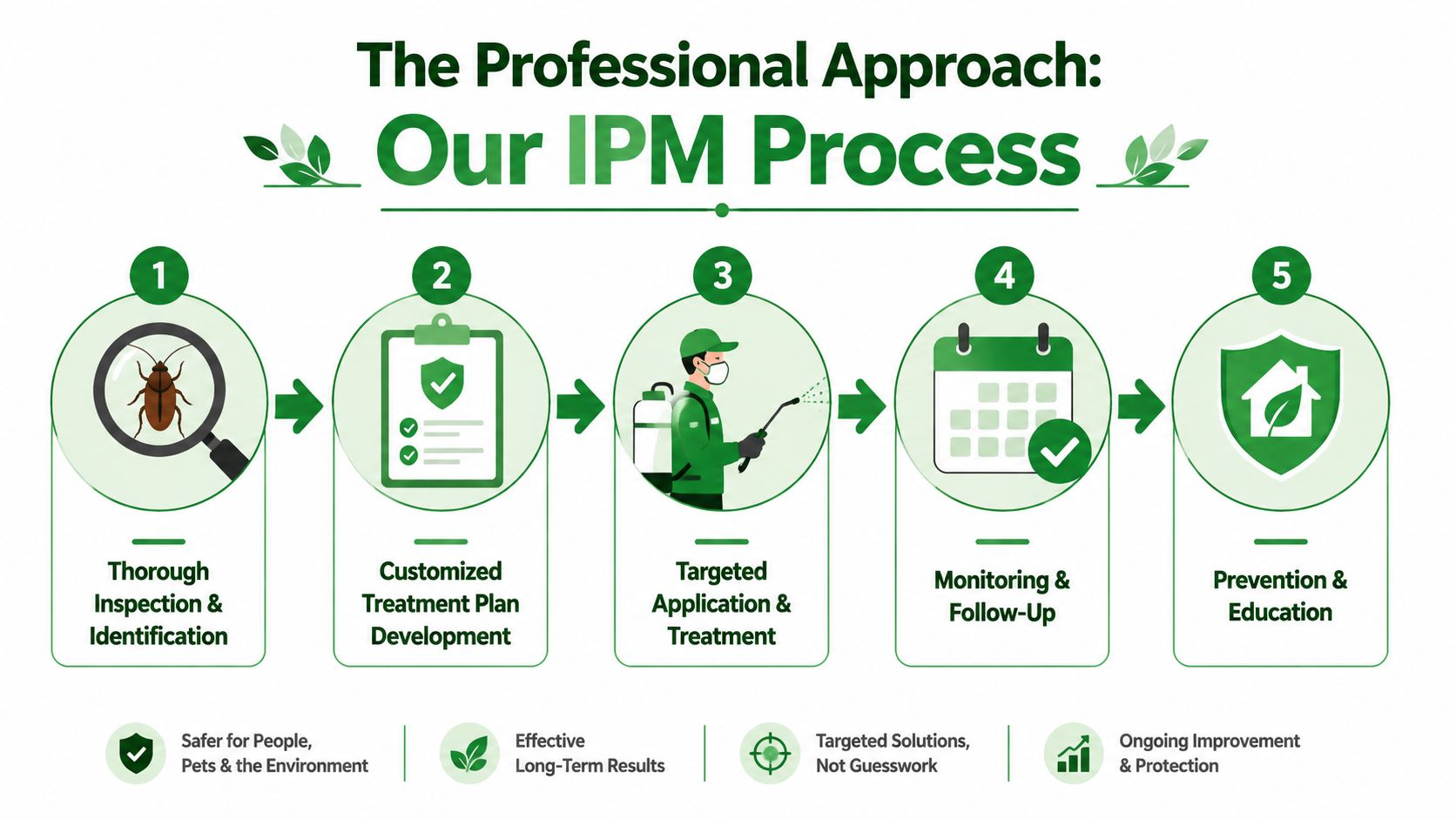
What an IPM service call should include
A serious service call has several parts, and each one affects the result.
Inspection and mapping
The first visit should identify where roaches are nesting, where they are feeding, and how they are travelling. In a downtown condo, that often means checking under sinks, behind the fridge and stove, inside cabinet voids, around dishwasher connections, and near entry points for plumbing and wiring. In a single-family home, the search often extends to the basement, utility room, laundry area, floor drains, and any damp storage spaces.
The technician should also decide whether the issue looks isolated or building-linked. That call matters because a one-time treatment can work in a contained home problem, while a condo unit with repeated migration often needs follow-up and coordination with management.
Targeted baiting and treatment
Good bait work is precise. Small placements go where roaches hide and travel, not in random visible spots. If the infestation is heavy, technicians may add flushing, vacuuming of active harbourages, insect growth regulators, or carefully selected crack-and-crevice products.
This approach takes patience. Residents sometimes expect a strong chemical smell or a quick spray around baseboards. In practice, the most effective work is often the least dramatic.
Exclusion and sanitation corrections
Treatment does not hold if the environment keeps feeding the infestation. Leaks under the sink, grease beside the stove, open dry goods, overflowing recycling, pet food left out overnight, and cardboard storage all give roaches what they need.
In houses, these corrections are often under one owner’s control. In condos and apartments, some of them are not. Garbage chute rooms, compactor areas, and neighbouring units can keep pressure alive. That is why building management involvement is sometimes part of the control plan, not an extra.
For residents who want to reduce the odds of reinfestation after treatment, this guide to protecting your home from a cockroach infestation covers the practical prevention steps that support professional work.
Monitoring and follow-up
Monitors show whether activity is dropping and where the remaining pressure sits. They also help reveal a common Toronto problem. The original hotspot may improve while fresh activity appears near a shared wall, riser, or hallway door.
That pattern usually points to migration, not treatment failure.
A one-time visit can be enough for a limited issue in a house or a newly introduced infestation caught early. Ongoing service makes more sense where the source is uncertain, neighbouring units are involved, food handling rules require tighter documentation, or the property has a history of repeat activity. In those cases, the better decision is not the cheapest first visit. It is the plan that keeps the problem from restarting.
The same logic shows up with other pests. Moisture, access points, and sanitation habits often matter as much as the treatment itself, which is why resources like the Reno homeowners’ guide to flies are useful for understanding how prevention supports control across the home.
What to Expect for Cockroach Control Costs and Timelines
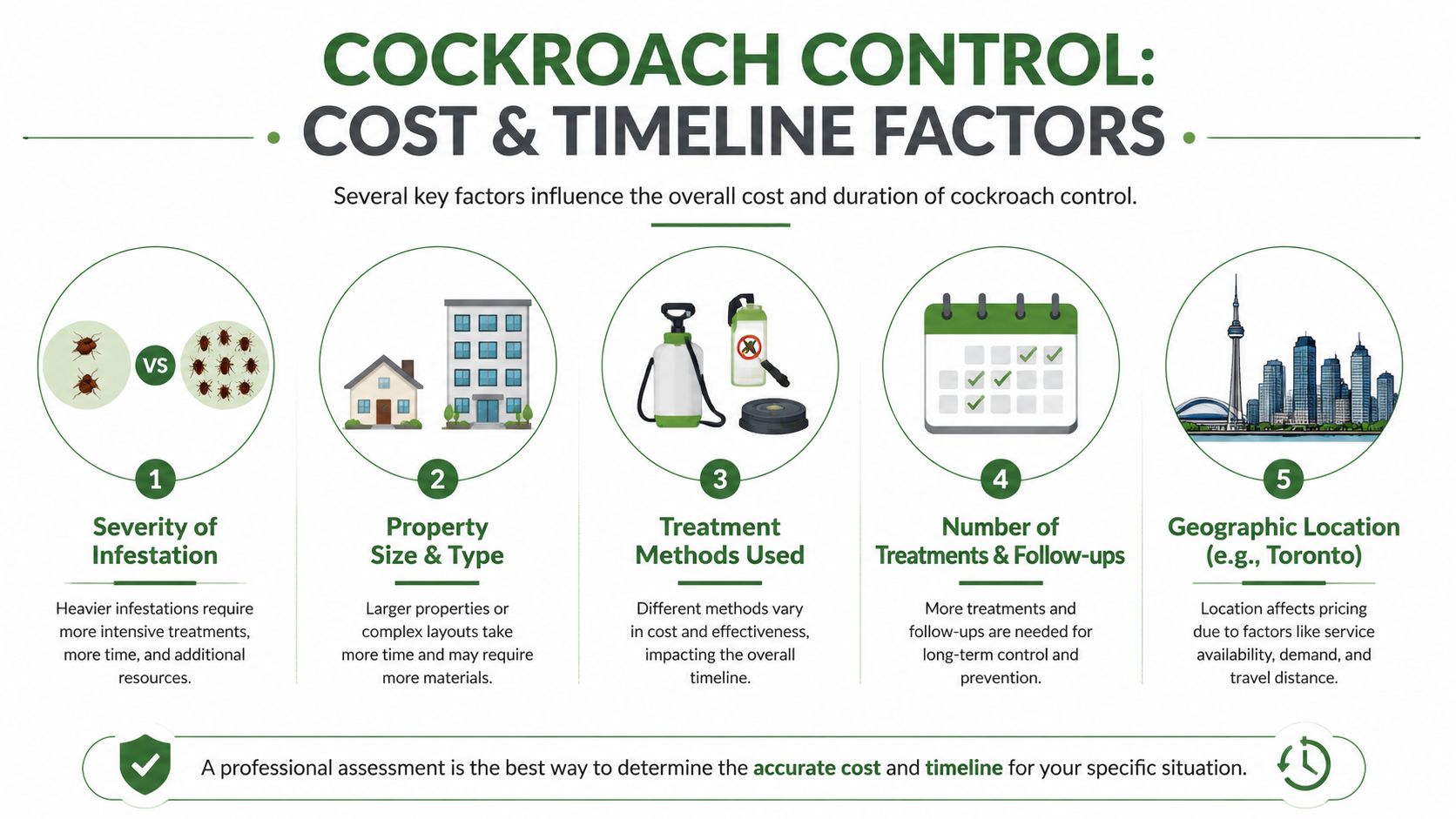
A Toronto condo owner sees roaches in the kitchen twice in one week and wants a straight answer before booking. How much will it cost, and how long will it take to get control? The answer depends on where the pressure is coming from. In a detached home, the source is often contained to that property. In a condo or apartment, the unit may be only one part of the problem.
When a one-time treatment makes sense
A one-time service fits a narrow set of conditions. The activity is recent, the affected area is limited, and there is no clear sign that roaches are travelling in from neighbouring units, shared plumbing lines, or garbage areas. I see this work best in single-family homes, or in condo units where the issue was caught early after a move-in, appliance delivery, or a specific sanitation lapse.
Pricing changes with access, size, severity, and how much follow-up is likely. For a clearer local breakdown, this guide on pest control cost for roaches explains what usually pushes the price up or keeps it more contained.
The trade-off is simple. A one-time visit costs less at the start, but it gives you less protection if the source has not been fully isolated.
When an ongoing plan is the better decision
Ongoing service is usually the better value in Toronto’s denser buildings. Roaches move through pipe penetrations, electrical openings, hallway gaps, and shared walls. A clean unit can still get fresh activity if the surrounding structure stays active.
That matters in condos, apartments, rooming houses, and food businesses.
Restaurants, cafés, and commercial kitchens also have another layer to consider. Timelines are shaped by inspection records, sanitation standards, staff habits, delivery volume, and the need to keep operating within food service rules. Product choice and cleaning practices need to work together. For businesses reviewing storage and sanitation protocols, this reference on cleaning chemicals NZ for hospitality is a useful example of how cleaning standards support pest prevention in food environments.
An ongoing plan gives the technician time to measure progress, adjust placements, and catch rebound activity before it turns back into a visible infestation. In multi-unit properties, that is often the difference between temporary relief and stable control.
What timelines usually look like
Cockroach control is rarely finished in one visit. You may see reduced activity quickly, then a slower cleanup phase as hidden pockets are exposed and younger stages come into contact with treatment. In a house with a limited introduction, control may come together faster. In a Toronto high-rise, the timeline is often longer because pressure can shift from one wall, riser, or adjoining unit to another.
Residents often expect a clean break after the first appointment. Realistically, the first service starts the reduction phase, and follow-up work confirms whether the problem is collapsing or just moving.
The right expectation is steady improvement, fewer sightings, and a plan matched to the building type. That is the practical standard.
How to Keep Roaches Out and Choose Your Toronto Expert
Long-term prevention comes down to three things. Remove food access, reduce water, and deny shelter. That sounds simple, but in Toronto properties the details matter.

Prevention that actually matters
The most effective prevention steps are the ones residents will keep doing:
- Seal what they can see. The Illinois guidance highlighted earlier recommends sealing cracks with caulk and using small, well-placed bait applications in harbourages rather than broad lines of product. In practical terms, that means treating gaps under sinks, around pipe penetrations, along cabinet joints, and around baseboard openings seriously.
- Tighten kitchen habits. Wipe grease, don’t leave pet food out overnight, and move stored food into sealed containers.
- Cut moisture fast. Repair drips, dry sink cabinets, and don’t ignore damp utility corners or basement seepage.
- Reduce clutter in hidden zones. Cardboard, paper bags, and overstuffed under-sink storage give cockroaches shelter close to food and water.
- Watch the small signs. Fresh droppings around hinges, behind the kettle area, or under the sink usually show where treatment and cleaning should focus first.
Toronto residents who want a broader home-prevention checklist can review this guide on how to protect a home from a cockroach infestation.
For households also trying to improve overall sanitation habits, this practical Reno homeowners’ guide to flies is a useful reminder that food residue, garbage handling, and moisture management affect more than one pest.
What to look for in a Toronto pest control provider
Not every provider handles roaches with the same discipline. Toronto residents should look for:
- Licensing and insurance that fit Ontario pest control work.
- A written treatment plan instead of vague promises.
- Evidence of inspection-led service rather than automatic spray-only recommendations.
- Experience with condos, rentals, and food premises because those environments behave differently.
- Clear follow-up expectations so the resident knows what happens if activity continues.
A good provider should also be willing to explain what the resident or property manager must fix between visits. If that conversation never happens, the treatment is missing a critical piece.
Frequently Asked Questions About Cockroach Control
How long does cockroach treatment usually take
It depends on the size of the infestation and whether the source is isolated or tied to a larger building issue. Some properties show a noticeable drop quickly, but full control often takes more than one visit when harbourages are deep or neighbouring units are involved.
Is professional treatment safe for families and pets
A proper service should come with clear preparation and post-treatment instructions. Targeted baiting and placement-focused work are different from broad, indiscriminate spraying. Residents should always follow the technician’s guidance on access, cleaning, and timing before re-entering treated areas.
What if the problem is in a condo and not just one unit
That’s common in Toronto. In multi-unit properties, the unit being treated may not be the only source. The resident often needs to notify property management, document sightings, and ask for coordinated building action where shared plumbing lines, garbage areas, or adjacent units may be involved.
For food-service operators reviewing sanitation products and protocols alongside pest control, this overview of cleaning chemicals NZ for hospitality offers a useful way to think about cleaning systems in kitchens and back-of-house spaces, even though local regulatory requirements should always guide actual product choices and procedures.
If cockroaches have shown up in a Toronto condo, house, rental unit, or commercial space, Vanish Pest Control Inc. can arrange an inspection and outline a practical treatment plan based on the property, the likely species, and whether the situation calls for a one-time service or ongoing prevention.




One Response