

When Giant Spiders Creep Into Your Ontario Home. Last spring, a Newmarket homeowner opened a basement door and froze at the sight of a fast, dark spider stretched across the concrete floor, almost as wide as a loonie with its legs spread. Panic set in fast. Was it dangerous, and was it a sign of a bigger pest problem?
Across Toronto homes, Newmarket basements, London garages, and Woodstock gardens, large spiders show up in exactly these moments. Most are startling, not harmful. This guide covers the seven biggest spiders in Ontario that residents are most likely to encounter, how to recognize them, why they appear around homes and businesses, what simple prevention steps work, and when it makes sense to contact Vanish Pest Control for same-day, humane removal.
Table of Contents
- 1. Wolf Spider (Lycosidae Family) – Identification, Size, Habitat & Control Guide for Ontario Homes
- 2. Fishing Spider (Dolomedes Species) – Size, Habitat Recognition & Safety Assessment for GTA Properties
- 3. Nursery Web Spider (Pisaurina mira) – Identification, Maternal Behavior & Non-Threatening Profile for Ontario Residents
- 4. Jumping Spider (Salticidae Family) – Small But Mighty Hunters with Minimal Risk for GTA Homes
- 5. Orb Weaver Spider (Araneidae Family) – Large Web Builders and Garden Allies for Ontario Properties
- 6. Funnel Weaver Spider (Agelenidae Family) – Ground-Dwelling Web Builders in Ontario Basements and Garages
- 7. Brown Recluse Look-Alikes and Regional Large Spiders – Proper Identification and Dispelling Ontario Myths
- Top 7 Ontario Spiders: Size, ID & Habitat
- Keep Ontario's Big Spiders at Bay
- FAQ
1. Wolf Spider (Lycosidae Family) – Identification, Size, Habitat & Control Guide for Ontario Homes
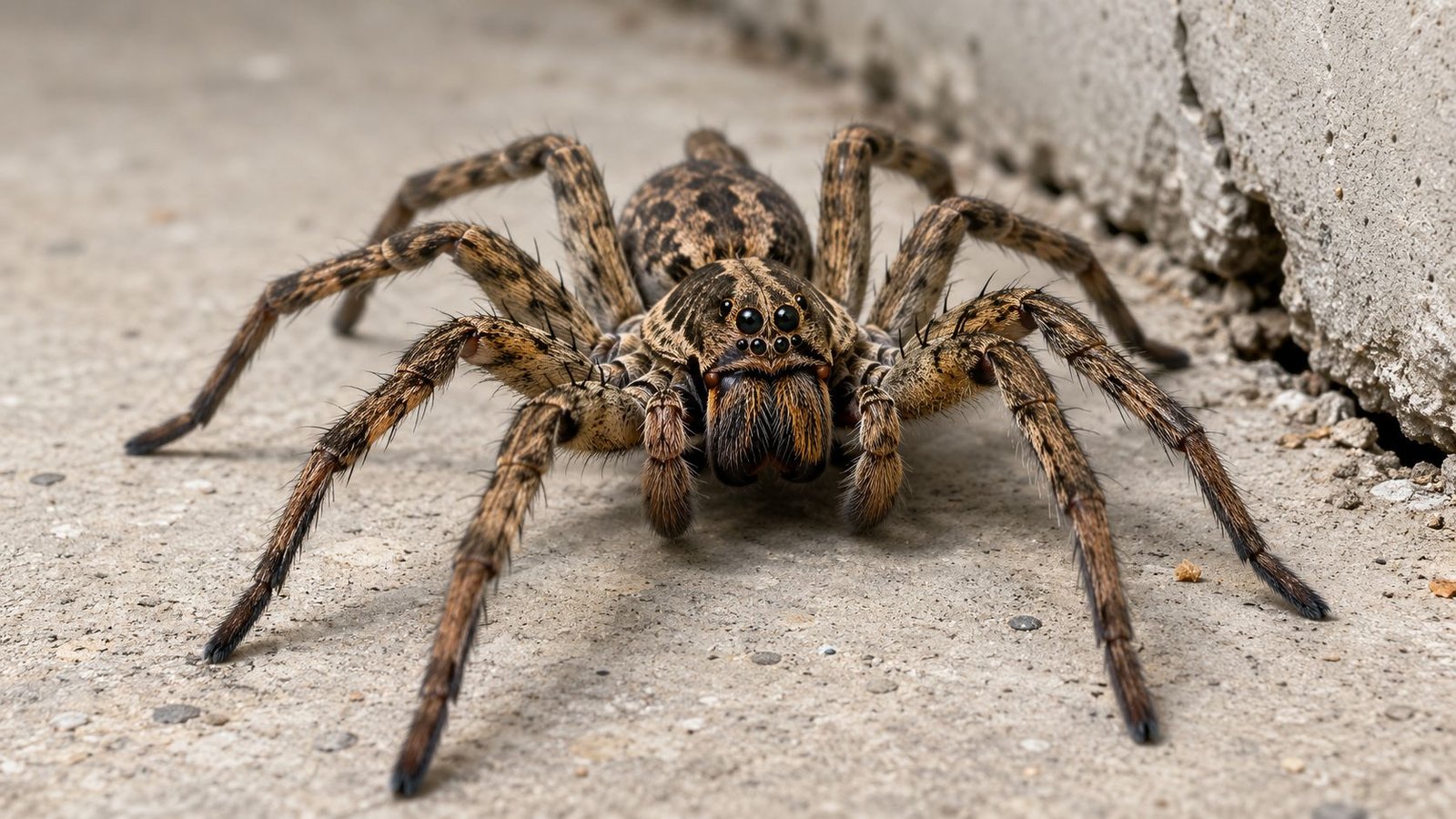
Wolf spiders are often the first species people think of when talking about the biggest spiders in Ontario. They don't sit in neat webs waiting for prey. They hunt on foot, which is why Newmarket residents often spot them racing across basement floors, garage walls, and storage corners.
That speed is what makes them feel threatening. In reality, they are usually passing through while chasing insects and other small arthropods. A wolf spider in a basement often points to another issue first, such as abundant prey, clutter, moisture, or gaps around a foundation window.
How Wolf Spiders Show Up in Newmarket Homes
A common Newmarket scenario starts in early fall. Storage bins are pulled aside, a concrete wall sweats from humidity, and a large brown spider darts under a shelf. In Toronto condo lower levels, they also turn up near basement windows where insects gather around light and moisture.
For homeowners, the best response is calm identification and simple exclusion work. If repeated sightings happen in living areas, it usually means the food supply inside the home is keeping them there.
Practical rule: If large spiders keep appearing indoors, focus on the insects they're hunting first. The spider is often the symptom, not the source.
- Seal entry gaps: Caulk cracks along the foundation, around utility lines, and near basement windows where insects enter and wolf spiders follow.
- Reduce clutter: Clear cardboard boxes, loose fabrics, and forgotten corners in basements and garages so spiders lose hiding spots.
- Change exterior lighting: Use yellow or amber bulbs near doors and garages to attract fewer insects at night.
- Protect upper floors: Install door sweeps on basement and ground-level doors to slow spider movement into main living spaces.
- Remove prey insects: Professional treatment aimed at insect activity can cut off the reason these hunters stay indoors.
Toronto and GTA property owners dealing with frequent sightings can review this Toronto and GTA spider control guide from Vanish Pest Control for practical next steps.
2. Fishing Spider (Dolomedes Species) – Size, Habitat Recognition & Safety Assessment for GTA Properties
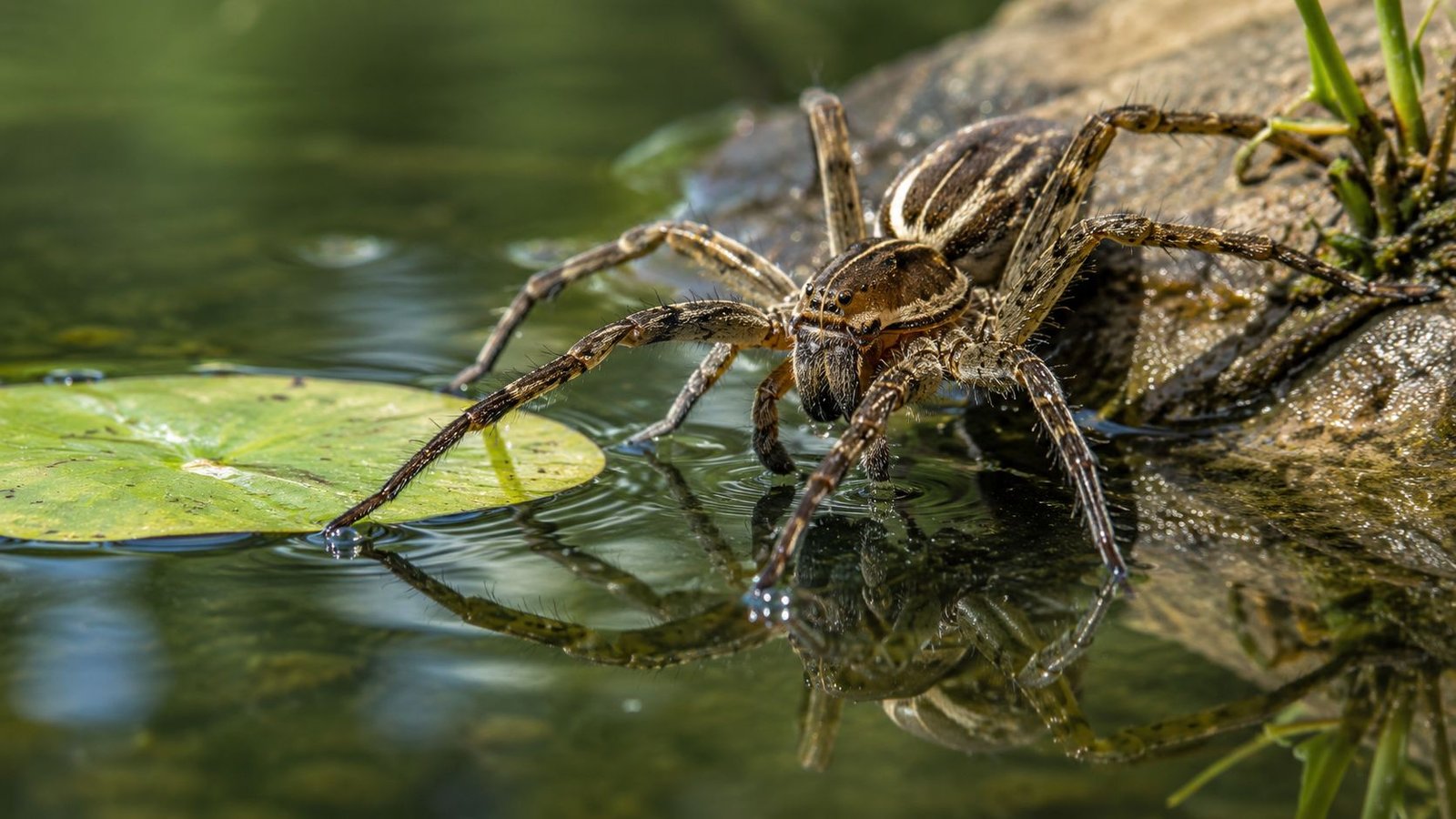
Fishing spiders create some of the biggest reactions because they look enormous against pool liners, dock boards, and patio stone. In Ontario, the most important fact for identification is that the largest spider species naturally occurring in the province is the Dark Fishing Spider, with females reaching a maximum body length of 26 mm, compared with the Cross Orbweaver at 20 mm and the Forest Wolf Spider at 18 mm.
For GTA properties with water nearby, that matters. A Toronto resident near the waterfront or a homeowner with a backyard pond may be looking at the actual largest native spider in the province, not an escaped exotic species.
Why Fishing Spiders Alarm Pool Owners
Mississauga pool owners sometimes find one resting under the lip of a deck box or sitting near a skimmer at dusk. Brampton residents with ornamental ponds may notice one spread across aquatic plants. The size is real, but the threat usually isn't.
The same Ontario source notes that these spiders pose no significant harm to humans and are non-venomous. For most homes, they are best treated as beneficial predators near water rather than urgent indoor pests.
Large fishing spiders around water features usually signal a strong insect food source nearby, not an aggressive spider problem.
- Keep pools covered: A fitted pool cover helps reduce insect activity when the pool isn't in use.
- Maintain water features: Clean filtration systems and remove stagnant water from planters, buckets, and neglected containers.
- Limit mosquito habitat: Empty bird baths and manage rain barrels so insects don't build up around the property.
- Avoid harsh DIY spraying: Chemical treatment around ponds or water features can disrupt the wider environment without solving the root cause.
- Get proper ID when needed: Concerned owners can compare sightings with this guide to the biggest spider in Ontario from Vanish Pest Control.
3. Nursery Web Spider (Pisaurina mira) – Identification, Maternal Behavior & Non-Threatening Profile for Ontario Residents
Nursery web spiders tend to surprise people in the garden rather than inside the house. A Toronto resident trimming shrubs may notice a long-legged spider holding an egg sac. A Woodstock homeowner may find a silken tent tucked into foundation plantings. That protective web structure is often the giveaway.
These spiders are active hunters, but they're also known for maternal care. Females guard their egg sacs and create nursery shelters for young spiderlings, which makes them one of the more fascinating large spiders on Ontario properties.
What Toronto Residents Notice in Shrubs and Gardens
The usual call starts with fear that a plant bed has become infested. In many cases, the spider is just doing what healthy garden predators do. It hunts among flowers, hedges, and tall grasses where flying and crawling insects are plentiful.
That makes nursery web spiders common in outdoor spaces around Toronto homes, Newmarket yards, and London residential gardens. They are not a structural threat, and they don't damage wood, insulation, wiring, or foundations.
- Leave nursery tents alone: If a female is guarding young, disturbing the shelter only spreads spiderlings and stresses the spider.
- Cut pesticide use in beds: Broad garden spraying can wipe out beneficial predators and the balance that keeps insects in check.
- Trim with visibility in mind: Prune dense plants near walkways and entry points so residents aren't brushing into hidden webs.
- Teach children what they're seeing: Kids often react better when adults explain that these spiders are insect hunters, not household invaders.
- Call for help when insect pressure rises: If gardens are overloaded with flying pests, professional control may be more useful than removing the spiders.
A well-kept garden in Toronto or Woodstock can still host large spiders. Their presence often says more about available insects than about any danger to the people using the space.
4. Jumping Spider (Salticidae Family) – Small But Mighty Hunters with Minimal Risk for GTA Homes
Jumping spiders don't belong on a list of the absolute largest species, but they still earn a place because some are noticeably chunky, easy to spot, and commonly found indoors. In Newmarket homes and Toronto condos, they often appear on sunny window ledges, curtain rods, or kitchen walls where flies drift in.
Their behaviour is what makes them memorable. They pause, turn, study movement, then pounce. Many residents are startled the first time one seems to watch them back.
Why They Turn Up on Windows and Kitchen Walls
Jumping spiders follow light and prey. A Mississauga homeowner with indoor plants may notice one stalking fungus gnats near a bright window. A London business may find them in break rooms or near back entrances where small flies enter.
They are among the least concerning spiders for households because they don't build messy, sprawling webs across corners and they usually hunt one insect at a time. If several appear at once, the bigger story is often a hidden insect problem.
For GTA homes that regularly see them indoors, Vanish offers a detailed jumping spiders in Ontario guide for Toronto and GTA homeowners.
Expert advice: A sudden cluster of harmless hunting spiders usually means the home is feeding them. Window flies, drain insects, pantry activity, and moisture pests all matter.
- Screen windows properly: Repair torn screens and check slider tracks where tiny insects enter.
- Clean hunting zones: Wipe window sills, baseboards, and corners where dead insects collect.
- Manage kitchen attractants: Store fruit, dry goods, and pet food carefully so small flies don't multiply indoors.
- Watch bathrooms and drains: Drain-associated insects often support spider activity in sinks and lower-level washrooms.
- Use sticky monitors discreetly: In kitchens, utility rooms, and under sinks, monitors can reveal where insects are active.
5. Orb Weaver Spider (Araneidae Family) – Large Web Builders and Garden Allies for Ontario Properties
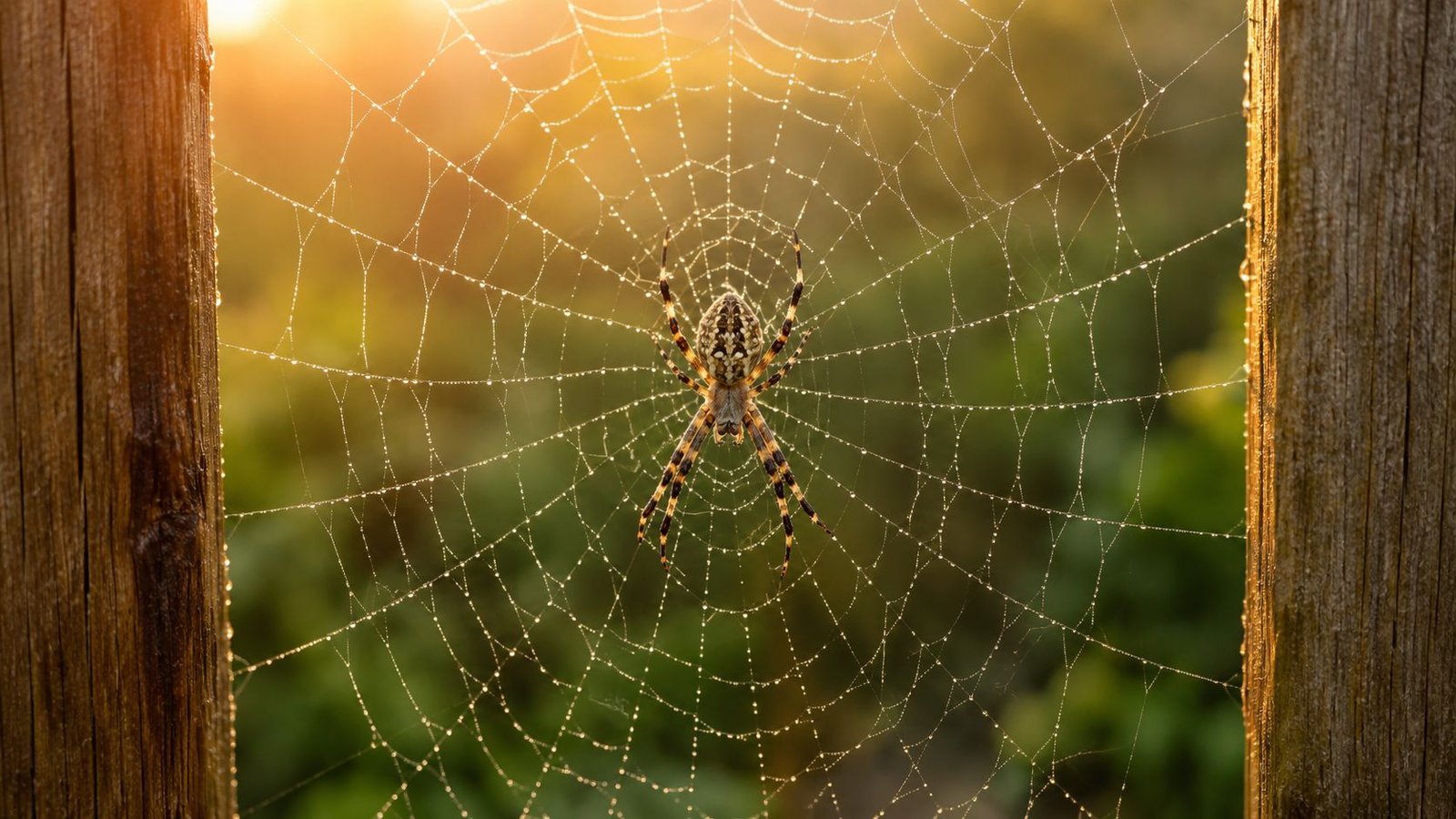
Orb weavers are the architects of Ontario yards. Their circular webs catch morning dew, stretch between deck posts, and appear overnight across pergolas, fences, shrubs, and garden paths. They look dramatic, which is why many homeowners assume the spider behind the web must be dangerous.
In reality, these are some of the most useful outdoor spiders on the property. They stay put, catch flying insects, and rarely become a true indoor issue unless they're building close to doors, patio furniture, or lit entrances.
Where Newmarket and London Homeowners Find Them
A Newmarket resident may wake to a web stretched from a cedar hedge to a porch rail. In London, property managers often find multiple webs around exterior lighting, loading doors, and courtyard landscaping. That placement isn't random. Lights attract insects, and insects attract orb weavers.
One related Ontario identification point matters here. As noted earlier, the Cross Orbweaver reaches a maximum body length of 20 mm in the province, which helps place it below the Dark Fishing Spider in size. That difference helps homeowners sort out what they're seeing without assuming every large web builder is the province's biggest spider.
- Move webs gently: Use a broom or soft brush to relocate webs from high-traffic areas instead of crushing the spider.
- Rethink lighting placement: Exterior lights near entry doors draw moths and flying insects, which support larger web activity.
- Use amber bulbs outside: This simple switch can reduce insect attraction around decks, patios, and garages.
- Inspect patio furniture often: Cushions, railings, and umbrella frames become convenient anchor points.
- Leave garden webs alone when possible: In flower beds and shrubs, orb weavers work as natural insect control.
Toronto homes with repeated web buildup around doors often benefit from a combined approach. Light management, insect reduction, and targeted exclusion usually work better than constant web removal alone.
6. Funnel Weaver Spider (Agelenidae Family) – Ground-Dwelling Web Builders in Ontario Basements and Garages
Funnel weavers don't usually run into the middle of a room. They stay low, tucked into corners, window wells, garage edges, and basement seams. Residents notice the web first. It looks like a sheet that narrows into a hidden tunnel where the spider waits.
Scarborough storage lockers, Toronto basements, and London crawl spaces are classic settings. These areas offer darkness, shelter, and steady insect traffic, especially where moisture or clutter is present.
Why Basement Corners Become Funnel Weaver Territory
A basement with cardboard boxes stacked against a wall gives these spiders everything they want. Quiet edges, small prey, and little disturbance. In Newmarket homes, webs often appear near sump areas, utility penetrations, and foundation windows.
That doesn't mean the spider population is the main issue. It often means the basement supports insects, and the web builders have moved in to take advantage of it.
A funnel web in a basement corner is often a maintenance clue. Check for damp air, gaps at windows, and insects gathering near stored items.
- Lower humidity: Run a dehumidifier in damp basements and crawl spaces.
- Organize storage: Keep bins raised and away from walls so corners stay visible and cleanable.
- Seal the shell: Close gaps around basement windows, vents, utility lines, and sill plates.
- Address water sources: Dry leaks, improve drainage, and eliminate standing water near mechanical rooms.
- Use relocation when practical: If a web is in a work area, gently move the spider outdoors instead of smashing it.
For Toronto homes and mixed-use properties, recurring funnel weaver activity in utility spaces can also point to broader pest problems, including insects and occasionally rodents. Mice and rats don't attract spiders directly, but the same cluttered, neglected conditions often support several pest issues at once.
7. Brown Recluse Look-Alikes and Regional Large Spiders – Proper Identification and Dispelling Ontario Myths
Panic usually peaks when a brown spider appears in a storage room or behind a kitchen bin. Someone searches online, and the words "brown recluse" start spreading through the household. In Ontario, that leap is usually wrong.
Ontario has a very scarce population of venomous spiders. The two primary species of concern are the Northern Black Widow and the Yellow Sac Spider, while the Brown Recluse does not naturally occur in the province and is only found if accidentally introduced from elsewhere, according to this Ontario poisonous spider overview.
Ontario Myths That Cause Unnecessary Panic
Toronto residents often mistake a brown wolf spider for a recluse because of its colour. Newmarket homeowners do the same with funnel weavers found in storage rooms. Scarborough condo residents may assume any larger tan spider is dangerous if it appears suddenly during a move or renovation.
The same Ontario source notes that venomous spider bites in the province are uncommon and are usually not life-threatening if treated promptly. It also identifies a risk hierarchy: bites from the Northern Black Widow and any accidentally introduced Brown Recluse are more serious and need immediate medical attention, while Yellow Sac Spider bites are typically mild and self-limiting.
That matters for proper response in Toronto homes and GTA businesses. Most of the large spiders found in basements, garages, gardens, and utility rooms are not medical emergencies. Accurate identification prevents unnecessary fear and unnecessary indoor spraying.
- Avoid internet guesswork: Colour alone is a poor way to identify a spider.
- Contain instead of crush: If a resident is worried, place a clear container over the spider for identification.
- Watch the location: Water-adjacent sightings may suggest fishing spiders, while fast floor runners often suggest wolf spiders.
- Call when uncertainty remains: Property managers, landlords, and homeowners can save time by getting a professional ID and inspection.
- Look beyond spiders: In restaurants, basements, and multi-unit buildings, repeated spider sightings may point to flies, ants, cockroaches, or other prey insects that need treatment.
Top 7 Ontario Spiders: Size, ID & Habitat
A Richmond Hill homeowner once spotted a large spider sprinting across the basement floor and assumed the worst. It turned out to be a wolf spider hunting the insects already living down there. A Mississauga family found another giant-looking spider stretched beside their backyard pond. That one was a fishing spider, more interested in water and prey than people. Those moments are common across Ontario, especially in homes with basements, garages, gardens, ponds, and shaded landscaping.
Here's a homeowner-friendly snapshot of the seven biggest spider groups Ontario residents ask about most, with the clues that matter on GTA properties and the moments when it makes sense to call Vanish Pest Control.
| Species | How Hard to Handle? | What You'll Need | What Usually Happens | Where You'll See It | Why It Matters |
|---|---|---|---|---|---|
| Wolf Spider (Lycosidae) | Fairly easy. Look for a large hairy spider that runs instead of sitting in a web, often on floors or near foundation walls | Seal gaps, reduce insects, vacuum corners, get a professional inspection if sightings keep happening | Risk to people is low. Indoor sightings usually drop after prey insects and entry points are addressed | Basements, garages, utility rooms, ground-level entries | Hunts crawling insects and often shows up where another pest issue is already feeding it |
| Fishing Spider (Dolomedes) | Easy if water is nearby. These are among the largest spiders Ontario residents notice around pools, ponds, docks, and wet landscaping | Reduce standing water near structures, check pool and pond edges, call for help if they keep entering indoors | Risk to people is low. They usually stay tied to damp areas and water-side prey | Pond edges, pool areas, boathouses, lakefront and ravine properties | Helps cut down aquatic insects, but repeated indoor sightings can alarm homeowners |
| Nursery Web Spider (Pisaurina mira) | Easy outdoors. Females are often noticed guarding egg sacs or nursery tents in shrubs and garden plants | Basic yard upkeep, gentle web removal from walkways, leave them alone in low-traffic areas | Risk is low. They usually remain outside and help with insect control in gardens | Hedges, tall grass, garden beds, shrubs | Known for unusual maternal behaviour, which often explains why one spider seems to stay in place |
| Jumping Spider (Salticidae) | Very easy. Small body, big forward-facing eyes, quick jumps, curious movements on walls and windowsills | Routine cleaning, insect reduction, simple capture and release if needed | Risk is extremely low. They often disappear once indoor insect activity drops | Window frames, siding, sunrooms, bright indoor spaces | Useful indoor hunters and one of the least threatening spiders residents encounter |
| Orb Weaver (Araneidae) | Easy. The web gives it away. Large circular webs often appear overnight near lights, gardens, and porches | Remove webs from doors and patios, trim vegetation, reduce lighting that attracts insects | Risk is low. Webs return if insect traffic stays high | Decks, pergolas, porch lights, gardens, fence lines | Excellent at catching flying insects, but their size and web placement can surprise people |
| Funnel Weaver (Agelenidae) | Moderate indoors. Look for sheet-like webs with a funnel retreat tucked into corners or cracks | Vacuum webs, lower moisture, clean storage areas, seal gaps, inspect if activity keeps building | Risk is low. Continued webbing usually points to shelter and steady insect prey | Basements, garages, storage rooms, window wells | Common in cluttered lower levels and a useful clue that another pest issue may be present |
| Brown Recluse Look-Alikes and Regional Large Spiders | Hard without expert help. Colour alone leads many Ontario residents in the wrong direction | Clear photos or a contained specimen, professional identification, targeted treatment only if needed | Correct ID prevents panic, unnecessary spraying, and missed pest issues elsewhere in the home | During moves, renovations, storage cleanouts, or any sighting of a tan spider indoors | Helps homeowners separate myths from true concerns and know when Vanish Pest Control should step in |
The pattern is simple in many Ontario homes. The largest spiders usually show up where prey, moisture, and shelter come together. In downtown Toronto that may mean an older basement with cracks and silverfish. In Oakville and Burlington, it may be a maintained backyard with lighting that pulls in moths all evening. In cottage country or pond-side properties, water draws the biggest species of all.
For homeowners, size alone should not drive the response. Location, behaviour, and repeat sightings matter more. One large orb weaver in the garden often means the yard is doing what yards do. Several large spiders appearing indoors each week, especially in a basement, garage, or ground-floor unit, usually means the property needs exclusion work and a closer look at the insects attracting them.
That is the point where Vanish Pest Control becomes useful. Call when a spider cannot be identified with confidence, when sightings keep repeating in living areas, or when large spiders are appearing alongside ants, flies, cockroaches, moisture issues, or heavy webbing in storage spaces.
Keep Ontario's Big Spiders at Bay
Ontario residents don't need to treat every large spider like a crisis. In many Toronto homes, the biggest spiders in Ontario show up because the property gives them three things: access, shelter, and food. A basement window with gaps, a garage light that attracts insects all night, a cluttered storage room, or a damp crawl space can turn an occasional spider sighting into a repeated nuisance.
The good news is that prevention is practical. Sealing cracks around foundations and utility lines reduces indoor access. Switching to yellow or amber outdoor bulbs can help limit insect traffic near doors and windows. Regular vacuuming in basements, garages, and storage rooms removes webs, egg sacs, and prey insects before populations build. Managing moisture matters just as much. Dehumidifiers, leak repairs, and better drainage make lower levels less appealing to both insects and the spiders that follow them.
For outdoor areas, the goal isn't to wipe out every spider. Orb weavers, nursery web spiders, and fishing spiders often help control insects in gardens, near ponds, and around landscaping. The better strategy is to keep them away from high-traffic entry points, patios, pool decks, and work areas while preserving the natural balance elsewhere on the property.
Professional help makes the biggest difference when sightings become frequent, when species can't be identified with confidence, or when spiders are showing up alongside other pest problems. In GTA properties, that often includes ants, carpenter ants, cockroaches, mice, rats, wasps, termites, or wildlife activity involving raccoons, squirrels, skunks, or bats. Spiders may be the visible concern, but the underlying issue may be a wider pest pattern that needs inspection.
Use these species profiles as a working reference. When populations rise beyond natural control, Vanish Pest Control can identify the spider, inspect the conditions drawing it in, and build a same-day plan that protects Toronto homes, condo units, restaurants, storage spaces, and commercial properties year-round.
FAQ
Are the biggest spiders in Ontario dangerous to people
Most large spiders commonly found in Ontario are not dangerous to people. The largest native spider is the Dark Fishing Spider, and the verified Ontario data cited earlier notes that it poses no significant harm to humans.
What is the largest spider naturally found in Ontario
The largest spider species naturally occurring in Ontario is the Dark Fishing Spider. Verified regional data states that females reach a maximum body length of 26 mm.
Why are large spiders showing up in Toronto homes and basements
Large spiders usually show up because insects are already present, and because the property offers easy entry through cracks, window gaps, doors, or damp lower-level spaces. Basements, garages, crawl spaces, and storage rooms are common hiding and hunting zones.
Should homeowners kill wolf spiders and other large spiders
In most cases, no. Relocation, exclusion work, and insect control are better long-term solutions. Killing one spider doesn't fix the food source or the entry point that brought it inside.
When should Toronto residents call Vanish Pest Control
It makes sense to call when large spiders appear repeatedly, when residents can't identify the species confidently, or when spiders are showing up with other pest problems such as ants, cockroaches, mice, rats, or wasps.
For fast, humane help with spider sightings in Toronto homes, Newmarket properties, condo buildings, restaurants, warehouses, and other GTA spaces, contact Vanish Pest Control Inc.. Vanish provides same-day inspections, targeted spider control, and broader pest solutions for insects, rodents, and wildlife, with practical prevention advice that helps keep properties protected after treatment.




