

The biggest spider in Ontario is generally considered to be the dark fishing spider (Dolomedes tenebrosus), with females measuring 19 to 28 mm in body length. Despite its size, it isn't considered a significant threat to people or pets, and in Toronto homes it's usually more startling than dangerous.
A Toronto homeowner walks into the basement to grab holiday bins, turns on the light, and sees a large spider stretched across the wall near the stairs. Another finds one beside a pool skimmer in the backyard. The reaction is usually the same. A quick step back, a racing heart, and one question: what on earth is that?
That fear is understandable. Large spiders trigger a very different response than the small house spiders most Toronto residents are used to seeing in corners, garages, or around window frames. Size changes everything. It makes people worry about bites, pets, children, and whether one sighting means a hidden infestation is already growing behind the walls.
In most Toronto homes, that giant spider is far more likely to be a native species than anything exotic or medically feared. The useful part is that size, location, and behaviour usually tell a clear story. Once those clues are read properly, the situation becomes much less alarming and much easier to manage.
Table of Contents
- That Giant Spider in Your Toronto Basement
- Identifying Ontario's Biggest Spider The Dark Fishing Spider
- Meet the Other Large Spiders of the GTA
- Are Big Ontario Spiders Dangerous to People and Pets
- Where You Will Find Big Spiders in and Around Your Home
- Your Guide to Preventing Spider Encounters in Toronto
- Frequently Asked Questions About Large Spiders
That Giant Spider in Your Toronto Basement
A common Toronto scenario starts in a finished basement, laundry room, crawl space entry, or storage area near a floor drain. The spider looks too big to belong indoors, which is exactly why people assume the worst. In older Toronto homes, especially those with moisture around foundation walls or cluttered storage corners, a large wandering spider can suddenly appear where it feels least welcome.
The first practical point is this. A single large spider indoors doesn't automatically mean a serious spider problem. In many cases, it means the home offers one or more of the things spiders look for: shelter, moisture, darkness, or insect prey. Toronto basements provide all four surprisingly often.
Why the sighting feels worse than it is
Large spiders move differently than web-building house spiders. They can cross a floor or wall fast enough to make the sighting feel aggressive, even when the spider is only trying to escape light or vibration. That movement, combined with long legs and a dark body, makes a native species look much more dangerous than it is.
Practical rule: A spider that shocks a homeowner by its size still has to be identified by habitat and body features, not fear.
For Toronto residents, the core question isn't just "What is it?" It's also "Why is it here?" That answer matters because prevention is rarely about the spider alone. It usually involves moisture control, sealing entry points, reducing insect activity, and changing the quiet hiding spots that let large spiders settle in.
What homeowners usually get wrong
The biggest mistake is treating every large spider as a medical emergency. The second mistake is the opposite. Ignoring repeated sightings in the basement, utility room, garage, or near patio doors can mean the home has an underlying attractant that also supports other pest problems.
Large spider sightings sometimes overlap with broader Toronto pest issues. Damp basements can support insects. Exterior lighting can pull in flying prey. Gaps around doors and utility lines can also admit ants, cockroaches, mice, and other pests. The spider may be the part you notice, but it often isn't the root issue.
Identifying Ontario's Biggest Spider The Dark Fishing Spider
In Toronto, this is the spider that sends people from curious to alarmed in seconds. We hear the same description all the time. A large, dark spider on a basement wall, near a floor drain, or by a patio door, moving fast enough that you assume it must be dangerous.
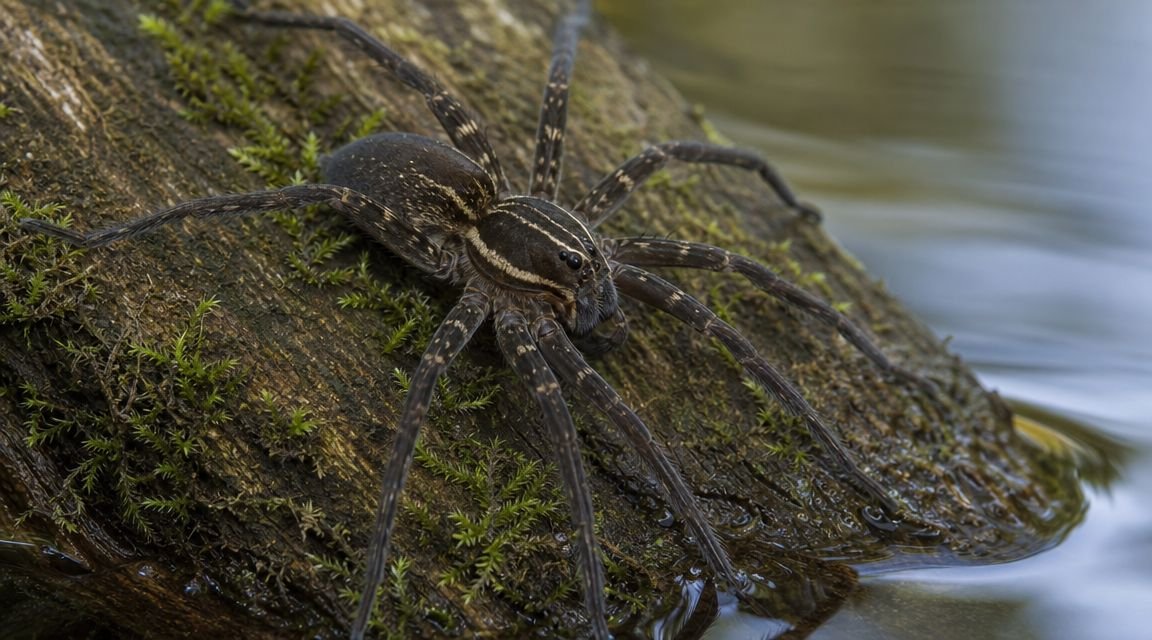
The species behind many of those sightings is the dark fishing spider. It is widely recognized as one of Ontario's largest spiders, and mature females can look especially imposing indoors because the leg span is what people notice first. The body itself is much smaller than the full silhouette, but in a dim basement or utility area, that distinction does not help much in the moment.
What size really looks like in a Toronto home
A dark fishing spider has a flattened, sturdy body and long legs built for roaming over rough surfaces. Its colouring usually blends into bark, stone, old wood, and concrete, which is why homeowners often miss it until it starts moving.
That movement matters.
A web-building house spider tends to stay put. A fishing spider often travels, hunts, and changes position quickly. In a Toronto basement, that makes it look far more threatening than a spider sitting in a corner web. We see that misread often during inspections.
How to tell it apart from a problem species
Good identification starts with context, not panic. If you found a large spider in a damp part of the home, near stored items, masonry, a sump area, or an exterior entry point, a native hunting spider is far more likely than an imported medical concern.
Use these clues together:
- Body shape: Dark fishing spiders look broad and muscular, not delicate.
- Surface and setting: They turn up on walls, wood, stone, and other rough surfaces, especially in humid or shaded areas.
- Hunting style: They do not depend on a classic capture web to sit and wait for prey.
- Camouflage: Their markings help them disappear against natural and unfinished materials.
Homeowners also confuse large fishing spiders with other active hunters, including smaller species covered in our guide to jumping spiders in Ontario for Toronto and GTA homeowners. The difference is scale, body build, and where you find them.
One practical point helps settle a lot of fear. A spider's size does not tell you whether it is medically significant. In our work across the GTA, the better question is why that spider had a reason to stay. Moisture, insect activity, cluttered edges, and easy entry points are usually part of the story.
If you can safely observe the spider, focus on the body shape, the room, nearby moisture, and whether there is a web. Those details give you a far more accurate ID than leg span alone.
Meet the Other Large Spiders of the GTA
In Toronto homes, the second-biggest mistake after panicking is assuming every large spider is the same. We see that a lot in basements, garages, porches, and garden edges, especially when a fast-moving spider shows up at night and all you catch is leg span.
Several species in the GTA can look large at first glance. According to the Ontario listings at Spider ID, that group includes the dark fishing spider, the cross orbweaver, and the forest wolf spider. There is also the nursery web spider, which homeowners often mistake for a fishing spider because of its overall shape and long legs.
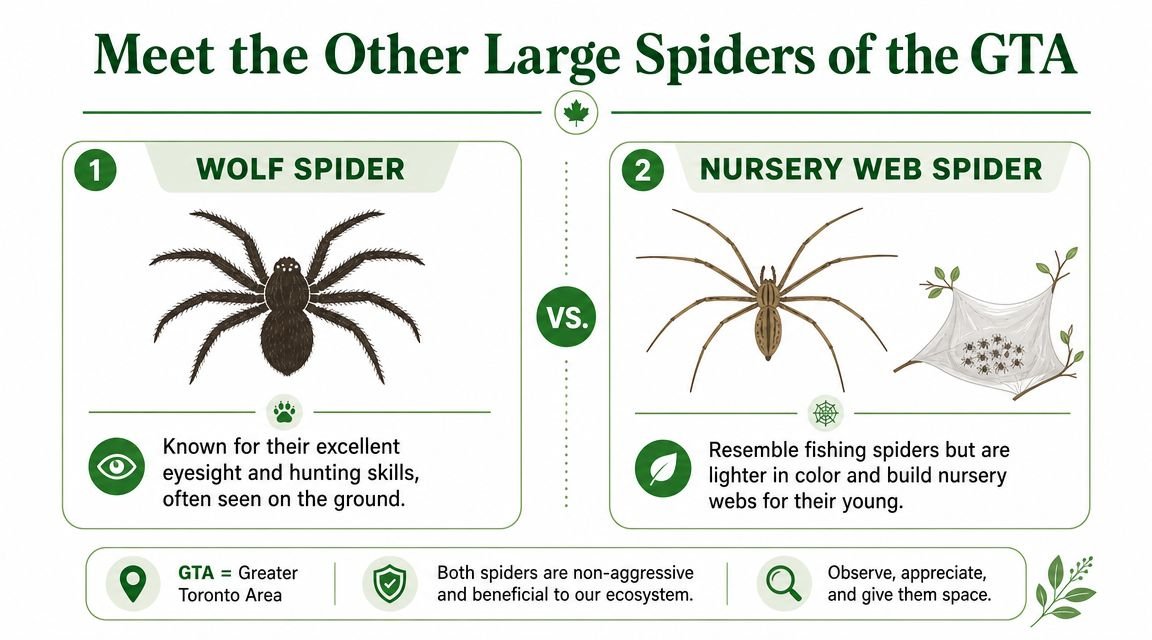
Large spider comparison for Toronto residents
| Spider Species | Typical Body Size (Female) | Appearance & Key Features | Web Type | Commonly Found |
|---|---|---|---|---|
| Dark Fishing Spider | Large | Long-legged, patterned for bark and stone camouflage | Doesn't rely on a capture web for hunting | Damp basements, near pools, shoreline properties, sheds |
| Cross Orbweaver | Medium to large | Rounded abdomen, classic orb-weaver look | Large circular orb web | Gardens, porches, shrubs, exterior lights |
| Forest Wolf Spider | Medium to large | Sturdy ground-hunting spider with a low profile | No capture web for hunting | Ground level, garages, basement edges, landscaping |
| Nursery Web Spider | Qualitatively large | Slender relative of fishing spiders, often lighter in build | Nursery web for young rather than prey-catching orb web | Gardens, tall vegetation, yard edges |
Why misidentification happens so often
A porch orbweaver can look enormous because the web frames it and exterior lighting makes every leg stand out. A wolf spider creates a different reaction. It runs low and fast, which many homeowners read as aggression. In practice, that speed usually means it is trying to get away and stay hidden.
Nursery web spiders cause another kind of confusion. From a few feet back, they can resemble fishing spiders, especially in yards with tall grass, dense plantings, or fence lines. The trade-off is that a quick photo from a distance may miss the details that separate them, but getting too close usually makes people more anxious and less accurate.
That is why we tell homeowners to focus on the setting first. A neat circular web near a window or porch light points one way. A roaming spider at floor level in a garage or along a basement wall points another way. The spider's location often gives you a better starting point than size alone.
If you are also trying to rule out smaller active hunters, our guide to jumping spiders in Ontario for Toronto and GTA homeowners helps you separate the tiny daytime spiders people see on walls and windows from the larger species that tend to trigger concern indoors.
Are Big Ontario Spiders Dangerous to People and Pets
Most large native spiders found in Toronto homes are more unsettling than dangerous. That distinction matters because panic often leads to poor decisions, including grabbing a bare hand, trying to crush the spider in a tight space, or using random indoor sprays that don't address why the spider showed up in the first place.
Venomous is not the same as dangerous
Nearly all spiders have venom because that's how they subdue prey. That doesn't mean they present meaningful danger to people or pets. For large native Ontario spiders, the practical risk is usually low, especially when the spider isn't trapped against skin or handled roughly.
A large spider may bite defensively if someone presses it, corners it, or tries to remove it carelessly. That possibility is real, but it isn't the same as an aggressive spider seeking people out. These spiders don't come into Toronto homes to attack residents. They come in because the environment suits them or because prey is available.
A frightening spider and a medically significant spider aren't the same thing.
What usually causes bites indoors
Bites usually happen when people force contact. A spider gets pinned in a towel, squeezed in a shoe, trapped behind a storage bin, or crushed against a wall with a bare hand. Pets are at similar risk only if they nose directly into the spider or try to paw at it repeatedly.
For most households, calm handling is enough:
- Use a container and stiff paper if safe removal is possible.
- Wear gloves when reaching into cluttered storage, sheds, or damp corners.
- Keep children away from the spider until it's identified or removed.
- Avoid panic spraying over floors and stored items, because that often misses the spider and leaves the underlying attractants untouched.
The more practical concern for Toronto homes is repeated sightings, not a single dramatic encounter. Repetition suggests a moisture or prey issue that deserves inspection.
Where You Will Find Big Spiders in and Around Your Home
The largest fishing spiders are tied closely to moisture. A Toronto sighting near a basement drain, pool equipment, retaining wall, or damp exterior stairwell usually isn't random. It fits the spider's natural habits.
The Ontario's largest spider coverage from blogTO describes dock spiders or fishing spiders in the genus Dolomedes as Ontario's largest native spiders, with a leg span reaching 9 cm. That same source notes that sightings in Toronto are most common around pools, shoreline properties, boathouses, and damp basements that mimic moist natural habitat.
Why Toronto basements attract sightings
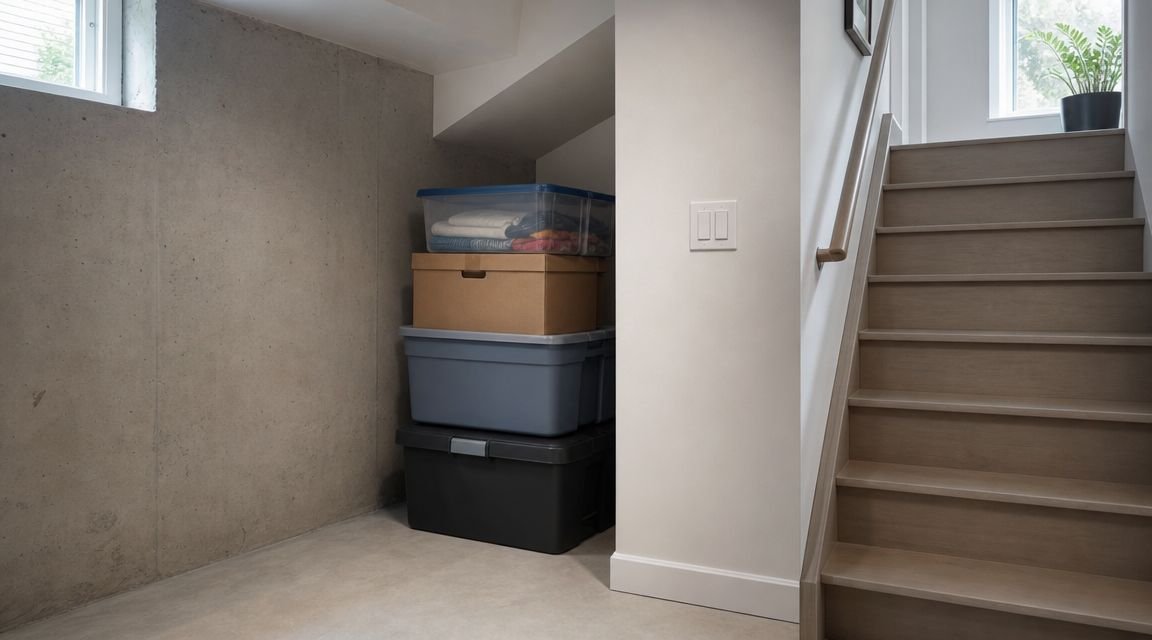
Basements create the right mix of darkness, cooler temperatures, and hidden edges. Add a minor leak, condensation, humid air, or a floor drain that keeps the area damp, and the space becomes much more attractive to both spiders and the insects they feed on.
Storage habits make this worse. Cardboard, stacked bins, and undisturbed corners create quiet travel routes along walls. Homeowners who want to understand why old webs keep showing up around these spaces often benefit from learning the differences between cobwebs and spider webs, because abandoned webbing and active webbing don't mean the same thing.
Outdoor areas that mimic natural habitat
Fishing spiders are especially likely around exterior areas that hold moisture or attract insects:
- Pool equipment zones with cover, shade, and damp surfaces
- Downspout discharge areas where water collects near the foundation
- Ravine-edge properties where vegetation, stone, and moisture stay consistent
- Lakefront and near-water homes where shoreline conditions overlap with natural hunting habitat
- Window wells and foundation edges that stay cool and undisturbed
In Toronto, homes near the waterfront, ravines, or backyards with significant planting often see more dramatic spider encounters for that reason. The spider may not be "living in the house" in the way people imagine. It may be moving through a favourable edge habitat that includes both the exterior and the lower level.
For homeowners dealing with recurring webbing, repeat basement sightings, or spiders appearing alongside other crawling pests, a detailed Toronto spider control guide for a web-free home can help connect sightings to targeted inspection points.
Your Guide to Preventing Spider Encounters in Toronto
Spider prevention works best when the home is made less inviting to both spiders and their food source. Quick fixes usually disappoint. A spray can knock down a visible spider, but if the structure still offers gaps, moisture, and insects, the sightings keep coming back.
The prevention work that matters most
The strongest results come from basic exclusion and habitat correction.
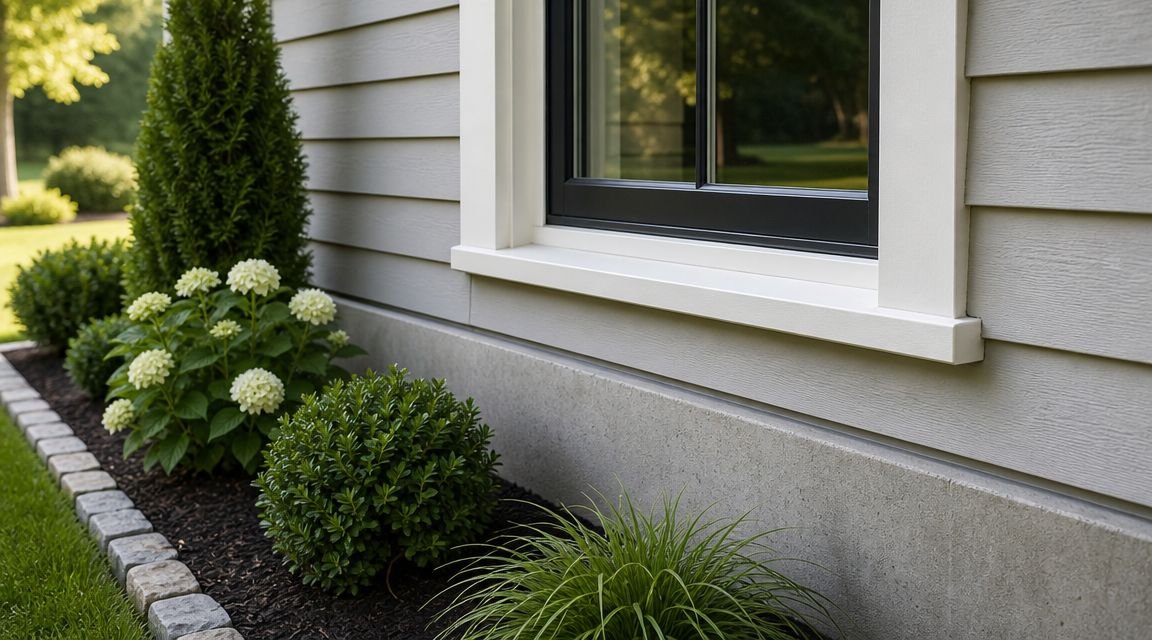
- Seal entry points. Check gaps around doors, basement windows, utility penetrations, siding joints, and foundation cracks.
- Control moisture. Fix leaks, improve drainage, and run a dehumidifier in damp basement areas.
- Reduce prey insects. Exterior lights near doors and windows often draw the insects spiders hunt.
- Use better storage. Plastic bins with tight lids work better than open cardboard in Toronto basements and garages.
Clean corners help, but dry corners matter more.
Outdoor maintenance also changes the odds. Trim vegetation away from the foundation, keep stored items off the ground, and avoid letting dense groundcover press directly against lower walls and window wells. These are the transition zones where many spider sightings begin.
What doesn't solve the problem
Some approaches feel productive but don't hold up.
A single vacuum pass around visible webs won't stop new spiders if insects remain active near lights and windows. Random indoor aerosol use often misses harbourage points and can push spiders deeper into clutter. Killing one large spider also doesn't address the path it used to enter.
For recurring spider problems in Toronto homes, some owners choose to combine do-it-yourself exclusion with a structured service such as professional spider spraying for houses. Where repeated sightings point to broader pest activity, Vanish Pest Control Inc. can also inspect for the moisture, entry, and prey conditions that keep spiders showing up.
Frequently Asked Questions About Large Spiders
Is the biggest spider in ontario common in Toronto homes
It can show up in Toronto, especially in damp basements, around pools, and in homes near water or ravine areas. It isn't usually a sign that the whole home is overrun.
Should pet owners worry about large spiders
Most native large spiders are low risk to pets. The main concern is direct contact if a pet paws at or mouths the spider.
Does one big spider mean an infestation
Not necessarily. One sighting may mean the spider wandered in or followed moisture and prey. Repeated sightings in the same area are more meaningful and usually point to conditions that need correction.
When should a homeowner call a pest control professional
Professional help makes sense when sightings keep happening, identification is unclear, webs and insect activity are increasing, or the spider is found in a sensitive area such as a child's room, a rental unit, or a commercial space.
Toronto homeowners don't need to guess when a large spider shows up in the basement, garage, or around the pool. Vanish Pest Control Inc. provides inspection, spider control, and prevention support for Toronto properties that need a clear plan, especially when repeated spider sightings may be tied to moisture issues, entry points, or other pest activity.

One Response