

A Toronto resident usually realises something is wrong in the least convenient moment. It might be an itchy row of bites after sleeping in a Liberty Village condo, a tiny insect on white sheets in a North York bedroom, or dark spotting near a bed frame in a downtown rental unit. That first discovery often triggers the same reaction. Stress, embarrassment, and a rush to search for a bed bug exterminator before the problem spreads.
That reaction is understandable, and it's not rare. As of 2025, the Greater Toronto Area and Southern Ontario collectively account for approximately 50% of all reported bed bug cases in Canada, which places this region at the centre of the national problem according to Toronto bed bug case data. In Toronto homes, condos, student rentals, shelters, hotels, and shared buildings, bed bugs move through furniture, hallways, laundry areas, and personal belongings with frustrating ease.
For many Toronto residents, the hardest part isn't finding information. It's sorting useful guidance from panic advice, DIY shortcuts, and vague promises. A proper response starts with confirming the signs, understanding how professionals treat the infestation, and preparing the unit so the treatment has a real chance of working. For readers still trying to identify what they're seeing on their skin, this guide on telling bed bug bites from allergies can help separate suspicion from evidence.
Table of Contents
- The Unwelcome Discovery in Your Toronto Home
- What a Professional Bed Bug Exterminator Actually Does
- Comparing Bed Bug Treatment Options for Toronto Homes
- How to Choose a Licensed and Eco-Conscious Exterminator
- Your Step-by-Step Guide to Preparing for Extermination
- After Treatment What to Expect and How to Prevent Re-infestation
- Toronto Bed Bug Exterminator FAQs
- Are professional bed bug treatments safe for children and pets
- Do bed bug bites prove there are bed bugs
- Does furniture always need to be thrown away
- Why do bed bugs keep coming back in condos
- What should Toronto residents do first after finding signs of bed bugs
- Are bed bugs connected to cleanliness
The Unwelcome Discovery in Your Toronto Home
A common Toronto scenario starts with uncertainty. A resident in a mid-rise condo notices bites after sleeping, strips the bed, and finds nothing obvious. Another family in a detached home sees a bug near a baseboard and hopes it's something harmless. Bed bugs are good at staying hidden, which is why people often feel they're losing control before they've even confirmed the problem.
What makes the situation harder in Toronto is density. In single-family houses, bed bugs can spread from one room to another through clothing, furniture, and storage. In condos and rental buildings, they can also move through shared walls, hallways, utility gaps, and neighbouring units. The issue doesn't always start with poor housekeeping. It often starts with one overlooked introduction point, such as luggage, second-hand furniture, or a guest's belongings.
Stress is normal, but speed matters
A rushed response can make things worse. People often throw out beds too early, overuse store-bought sprays, or move infested belongings from room to room. That doesn't solve the harbourage problem. It often widens it.
Practical rule: If there's suspected bed bug activity, limit movement of linens, clothes, bags, and soft items until the sleeping area has been inspected properly.
Toronto residents dealing with this problem need a clear path, not internet folklore. The right bed bug exterminator doesn't start with chemicals and hope. The process starts with confirming activity, locating the hiding places, and matching the treatment to the property type. That matters whether the infestation is in a family home in East York, a basement apartment in Scarborough, or a condo near the waterfront.
Toronto homes need a local response
In high-density neighbourhoods, bed bug work isn't only about killing visible insects. It's about containment, access, tenant cooperation, and follow-up. Condo boards, landlords, property managers, and residents all affect whether treatment succeeds. A one-room mindset often fails in a multi-unit environment.
That's why a calm, organised approach works better than a rushed one. A Toronto homeowner or condo resident doesn't need marketing language. They need to know what happens next, what preparation is useful, and which treatment method fits the structure they live in.
What a Professional Bed Bug Exterminator Actually Does
A professional bed bug call in Toronto usually starts with a unit that looks quiet on the surface and a resident who has already washed linens twice, checked the mattress, and still wakes up unsure. In a condo or apartment building, the job is rarely limited to what is visible in one bedroom. The technician has to confirm activity, map the hiding places, and judge whether the issue is isolated or affected by neighbouring units, shared walls, or common building conditions.
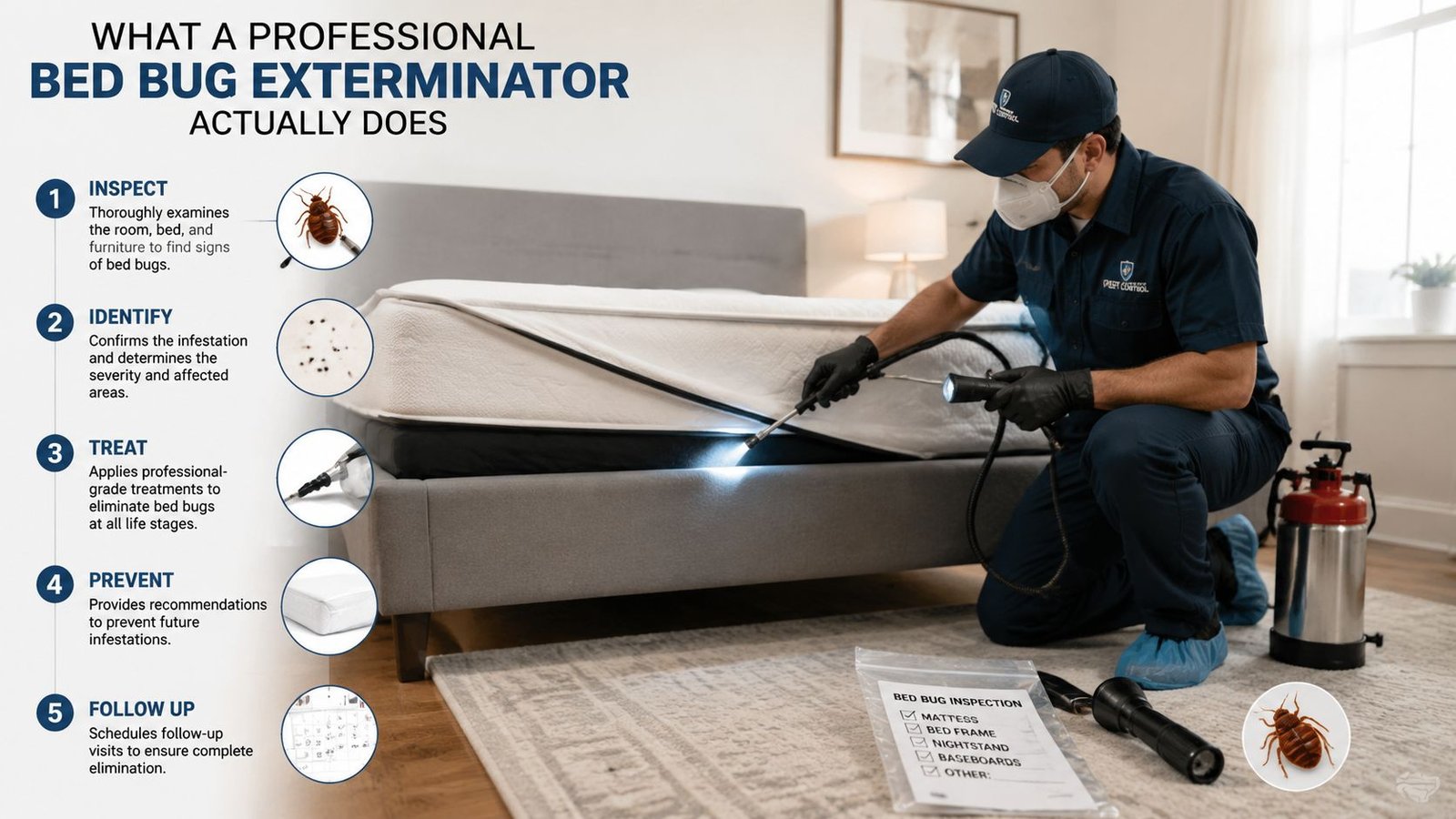
Professional work follows a staged process. The first step is identification. Bed bugs leave a pattern of evidence that includes live insects, cast skins, fecal spotting, eggs, and harbourage close to where people sleep or rest. A licensed exterminator is there to verify that pattern and decide what treatment can reach it.
Inspection comes first
Inspection is where good bed bug work is won or lost. The technician checks mattress piping, box spring interiors, bed frames, headboards, nightstands, upholstered furniture, baseboards, curtain folds, and cracks near the sleeping area. In Toronto condos, that inspection also needs to account for utility penetrations, adjoining walls, and furniture placed against shared boundaries.
That matters because treatment plans change based on how the infestation is behaving in the structure, not just how many bugs a resident has seen.
A proper inspection usually answers four practical questions:
- Are these bed bugs at all? Fleas, carpet beetles, and skin reactions are often misread.
- Where are they resting? Bed bugs stay tight to seams, joints, folds, screw holes, and sheltered edges.
- How far have they spread? One sleeping area is different from a unit-wide or multi-room issue.
- What limits access? Clutter, sealed platform beds, packed closets, and heavy furniture affect treatment reach.
Treatment is built around harbourage
Once activity is confirmed, the exterminator builds the treatment around the hiding places and the type of building. That is especially important in high-density Toronto housing, where a low-cost spray visit may reduce visible activity for a short time but fail to control bugs tucked into bed frames, sofas, wall voids, or adjacent rooms.
Professional treatment often combines several methods. Physical removal may include detailed vacuuming and steam in selected locations. Residual products may be applied to cracks, crevices, and structural joints where label directions allow. Mattress and box spring encasements may be recommended. In some units, heat is the better fit, especially when the space can be prepared well enough for full exposure. Homeowners comparing that option can review this guide to safe chemical-free bed bug heat treatment.
The trade-off is straightforward. Heat can reduce the timeline, but only if the unit is prepared properly and the technician can get lethal temperatures into the hard-to-reach spots. Targeted residual treatment can work well too, but it usually depends more heavily on follow-up visits, resident cooperation, and strict containment of belongings.
Why DIY Approaches Often Fail
Store-bought sprays usually reach the places residents are already looking. Bed bugs usually are not there.
They hide behind headboards, inside box spring cavities, under furniture webbing, along trim gaps, inside joints, and around bed hardware. In multi-unit buildings, they can also shift through small openings around pipes, conduits, and shared walls. A surface treatment around the mattress or baseboards may kill exposed insects and leave the harbourage untouched.
That is why trained exterminators approach bed bug work like a containment and access problem, not a quick cleaning job. Product choice matters, but inspection quality, application precision, and follow-up matter more. In some mixed-use buildings, residents also confuse janitorial steam cleaning with pest control work. Services such as deep cleaning for Toronto offices have a different purpose. Bed bug extermination requires pest-specific inspection, treatment placement, and a plan for reinspection.
A professional should also give the resident a clear protocol. Which items stay in the room. What gets bagged. Whether adjoining units need attention. When follow-up happens. In Toronto, that level of structure is often the difference between a unit that settles down after treatment and a unit that keeps cycling through the same problem.
Comparing Bed Bug Treatment Options for Toronto Homes
Toronto residents usually compare bed bug treatment options in one of three ways. They ask what works fastest, what works safest, and what gives the best chance of not dealing with the problem again. Those are fair questions. The answer depends on the property type, the level of spread, and how well the resident can prepare the space.
Heat treatment
Heat treatment is often the clearest option when a whole room or whole unit can be prepared properly. In the GTA, professional bed bug heat treatments require maintaining surface temperatures above 50°C for sustained durations to ensure lethal effect on all life stages, with typical commercial costs ranging from $1,200 to $2,800 per unit and often achieving eradication in a single visit followed by inspection, according to GTA bed bug heat treatment guidance.
That temperature threshold matters. If the structure doesn't reach lethal levels throughout the treated zone, especially in dense furniture, seams, and hidden edges, eggs and younger life stages may survive. Professional heat work isn't just about making the room warm. It's about even distribution, monitoring, and access.
For readers comparing methods in more depth, this resource on safe chemical-free bed bug heat treatment explains why preparation and temperature consistency matter so much.
Chemical application
Chemical treatment can still be appropriate, especially where heat isn't practical or where a staged response makes more sense. In many Toronto homes, a technician applies products to targeted cracks, crevices, bed frames, baseboards, and likely travel paths. It's not a blanket fogging strategy. It's precise work.
The trade-off is time. Chemical approaches often need follow-up because bed bug eggs can complicate complete elimination when treatment timing or contact isn't perfect. In cluttered rooms, or in units where preparation is partial, chemical treatment may help reduce activity without ending it quickly.
Integrated pest management
Integrated pest management combines inspection, targeted treatment, physical reduction, resident preparation, monitoring, and follow-up. In practice, this is often the most realistic framework for Toronto homes and condos because bed bug problems rarely exist in a vacuum. Building layout, clutter, neighbouring units, and occupant routines all influence the result.
For businesses, especially those dealing with upholstered seating, staff lockers, or waiting areas, cleaning coordination also matters. In office settings, selective steaming and sanitation may support the overall process, and some managers pair treatment planning with resources on deep cleaning for Toronto offices to handle fabrics and shared spaces responsibly after professional pest work.
Bed Bug Treatment Comparison for Toronto Properties
| Treatment Method | How It Works | Pros | Cons | Best For |
|---|---|---|---|---|
| Heat Treatment | Raises treated areas to lethal temperatures throughout surfaces and hiding zones | Reaches many life stages at once, often completed quickly, no reliance on chemical-only control | Higher upfront cost, strong preparation required, not every item tolerates heat | Condos, bedrooms, furnished units, residents wanting fast whole-space action |
| Chemical Application | Applies targeted materials to cracks, seams, travel routes, and harbourage areas | Useful in staged work, can fit tighter budgets, practical in some cluttered settings | May require repeat visits, depends heavily on precise placement and cooperation | Smaller infestations, selective room treatment, situations where heat isn't practical |
| Integrated Pest Management | Combines inspection, physical reduction, targeted treatment, monitoring, and follow-up | Flexible, practical for complex properties, addresses behaviour and structure together | Requires resident participation and careful coordination | Multi-room homes, condos, rentals, buildings with recurring activity |
The best method isn't the cheapest line item. It's the one that fits the building, the contents, and the level of cooperation available.
For Toronto homes, the wrong treatment is often the one chosen in isolation. A detached home with clear access may suit heat well. A cluttered unit with neighbouring concerns may need a broader IPM plan. A qualified bed bug exterminator should explain that difference plainly.
How to Choose a Licensed and Eco-Conscious Exterminator
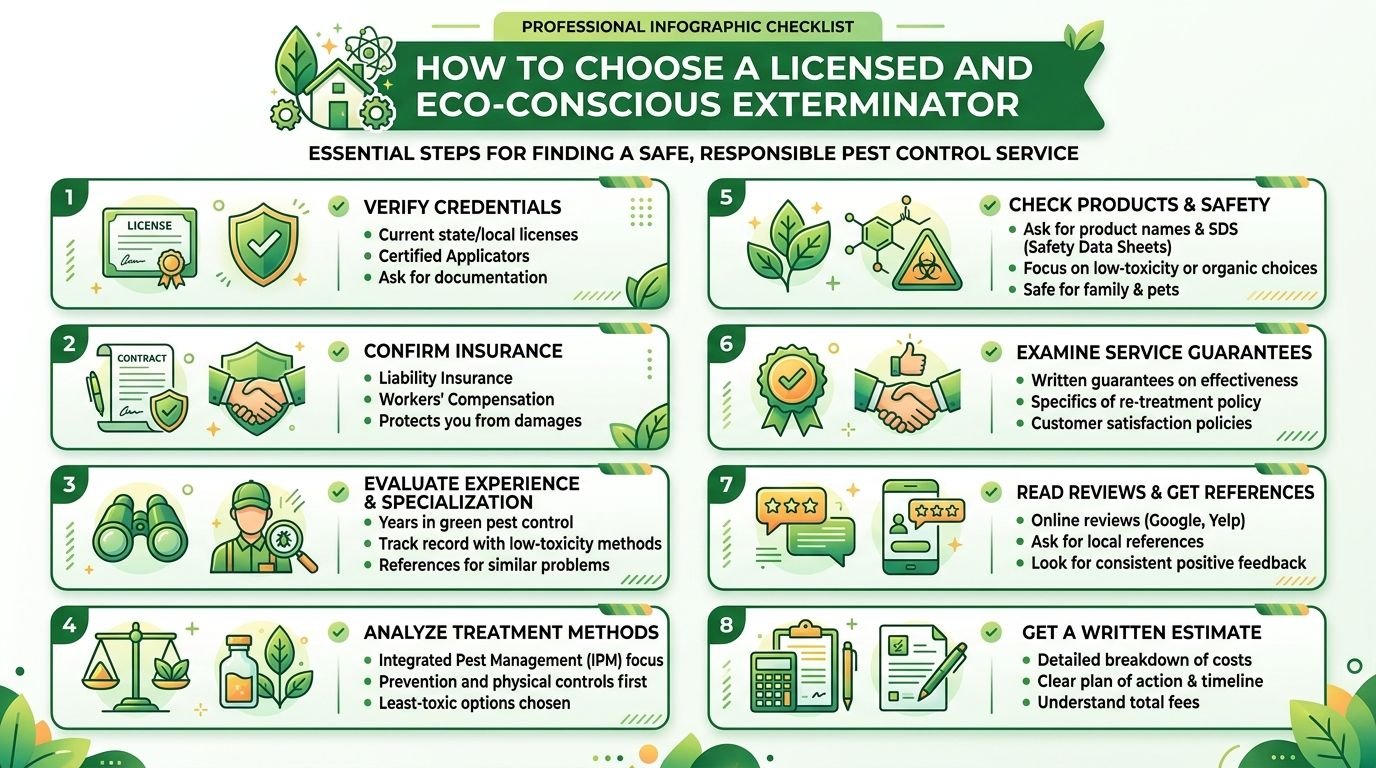
Choosing a bed bug exterminator in Toronto gets harder when every company seems to promise the same thing. Quick service, guaranteed results, safe products. Those claims don't mean much unless the resident asks specific questions about licensing, insurance, treatment scope, and building coordination.
One major gap in the market is pricing clarity and guarantee language. As noted in Toronto bed bug treatment pricing commentary, current content provides vague ranges ($350–$1,500 per cycle) but omits unit-specific pricing tiers for Toronto's condos vs. homes, and no local source clarifies whether money-back guarantees are enforceable under Ontario's pest control licensing laws. That means residents should read guarantee wording carefully instead of treating it as automatic protection.
Questions worth asking before booking
A serious provider should be willing to answer direct questions without dodging. Toronto residents don't need polished sales language. They need operational details.
Ask about these points:
- Licence and insurance: Is the company properly licensed for pest control work in Ontario, and is it insured for residential or multi-unit service calls?
- Bed bug-specific protocol: Does the technician explain inspection, harbourage mapping, treatment method, and follow-up in detail?
- Property type experience: Have they treated high-rise condos, rental towers, basement apartments, and older Toronto homes with complex trim and floor gaps?
- Preparation standards: What must the resident do before treatment, and what happens if that prep isn't completed?
- Guarantee wording: What exactly is covered, what voids it, and is the guarantee tied to inspection findings, cooperation, or follow-up access?
A provider that can't explain these basics usually isn't organised enough for bed bug work in dense urban housing.
Why condo coordination matters
Multi-unit buildings create a separate challenge. A resident may pay for one condo treatment, prepare carefully, and still see activity return if adjoining units remain untreated or uninspected. Bed bugs exploit building connections. In Toronto condos and apartment towers, a single-unit response can fail even when the in-unit work was done properly.
That's why coordination matters so much for landlords and property managers. The right provider should discuss adjacent-unit inspection, communication protocols, access timing, and what happens when one resident cooperates but another doesn't. Those aren't administrative details. They are part of treatment success.
A low price on one isolated unit can become the most expensive choice if the building response is fragmented.
Residents who want a lower-toxicity approach should also ask what “eco-conscious” means in practice. It should refer to targeted application, reduced unnecessary exposure, treatment matched to the infestation, and clear handling instructions for children, pets, and sensitive items. It shouldn't be vague branding.
For homeowners and condo residents reviewing that side of the decision, this page on eco pest control in Toronto shows the kind of information that should be available before anyone books. One Toronto-based option in this category is Vanish Pest Control Inc., which offers bed bug services and eco-conscious pest treatment as part of its service mix.
Your Step-by-Step Guide to Preparing for Extermination
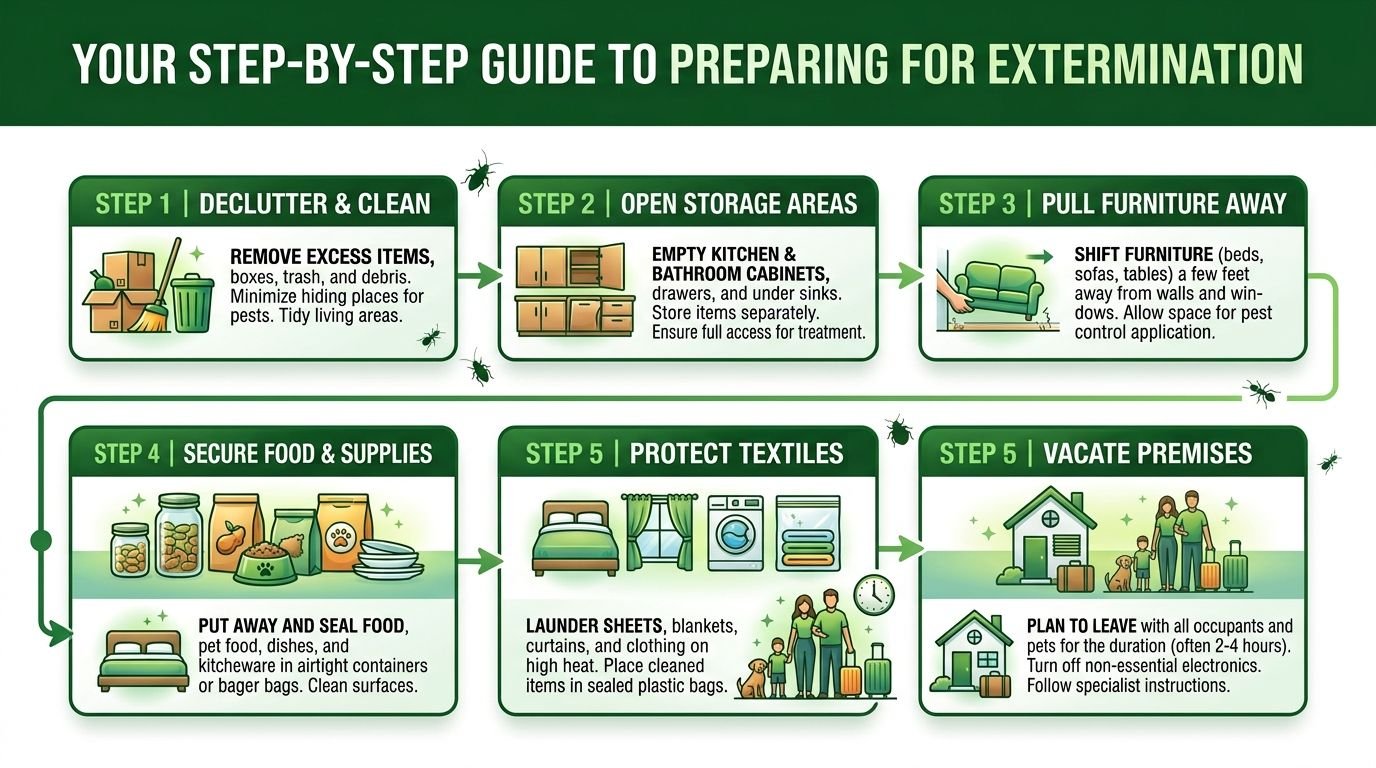
Preparation often decides whether treatment reaches the places bed bugs are using. Residents don't need to empty the whole home into the hallway, and that can create its own problems. They do need to make sleeping areas, furniture edges, baseboards, and likely harbourage points accessible.
Bedroom and bedding preparation
Start where people sleep. That's usually the centre of activity.
- Strip the bed carefully. Remove sheets, pillowcases, blankets, and mattress covers without shaking them around the room.
- Bag fabric items before moving them. This reduces the chance of dropping bed bugs in hallways, laundry rooms, or other bedrooms.
- Launder and dry thoroughly. Follow the instructions from the treating company for linens, clothing, and nearby washable fabrics.
- Leave the bed accessible. Don't remake it before treatment unless the technician instructs otherwise.
If the home has children's rooms, guest rooms, or sofa beds, those spaces should be prepared with the same care if they've been identified as risk areas. Bed bugs don't respect which room is “main” and which room is “spare.”
Clutter, furniture, and access
Clutter is one of the biggest obstacles in bed bug control because it creates extra hiding places and blocks treatment. The goal isn't to create a spotless showroom. The goal is access.
Use this checklist:
- Pull furniture away from walls: Beds, nightstands, dressers, and upholstered seating should usually be moved enough to expose baseboards and rear edges if the provider requests it.
- Empty selected drawers or storage areas: Only do this where instructed. Randomly spreading contents can move the problem.
- Clear floor zones: Remove loose items under beds, around bed legs, and beside baseboards.
- Protect important belongings: Keep cleaned items sealed and separated from untreated contents.
Residents who are overwhelmed by clutter often do better with a gradual sorting plan than with a panicked sweep. For households juggling a bed bug issue while preparing for a move or major reorganisation, this guide on how to simplify moving house offers practical decluttering ideas that can be adapted carefully without spreading infested contents.
Don't make these common mistakes
Some preparation mistakes are extremely common in Toronto homes:
- Throwing items into shared hallways: That can spread activity in condos and apartment buildings.
- Using aerosol sprays before service: These can scatter bed bugs deeper into walls, furniture joints, or adjoining rooms.
- Discarding furniture too early: A bed or sofa may be salvageable, and careless disposal can spread the problem.
- Skipping instructions for pets and heat-sensitive items: These details matter during treatment day.
Clean access helps. Random movement doesn't.
A good preparation plan should feel organised, not punishing. If instructions are so vague that the resident has to guess, the service provider hasn't done their job properly.
After Treatment What to Expect and How to Prevent Re-infestation
The first day after treatment often feels tense. Residents inspect every sheet, every seam, every small mark on the wall. That's normal. It also helps to know what a realistic post-treatment period looks like.
What the first days look like
After professional treatment, some signs may linger briefly depending on the method used and the condition of the home before service. What matters is the overall trend. Activity should stop, decline, or move toward the follow-up pattern your exterminator described. Residents should avoid introducing new clutter, moving untreated items into cleaned areas, or making major furniture changes without checking first.
Follow-up matters because bed bug work is measured by evidence, not hope. Residents should monitor sleeping areas, keep any encasements sealed if prescribed, and report suspicious activity with specifics. Dates, locations, and photos help.
Toronto's history with bed bugs shows why this vigilance matters. In 2003, pest control operators in Toronto documented treating bed bug infestations at 847 distinct locations, with 70% in single-family dwellings, 18% in apartments, and 8% in shelters, according to historic Toronto bed bug infestation data. That record is a reminder that this isn't only a condo problem. It affects detached houses, rental units, and shared housing across the city.
Prevention for Toronto homes and condos
Prevention starts with habits that block the most common reintroduction routes.
- Inspect second-hand items: Beds, sofas, chairs, nightstands, and upholstered pieces should be checked before entering the home.
- Travel carefully: After trips, inspect luggage and separate clothing before returning everything to bedrooms.
- Reduce hidden harbourage: Keep sleeping areas orderly enough that new activity is easier to spot.
- Use protective encasements where recommended: These help simplify monitoring and reduce hiding opportunities on mattresses and box springs.
Condo residents should also think beyond the unit door. If there's recurring activity in nearby suites, shared laundry, or common upholstered spaces, management involvement becomes important. Single-family homeowners usually focus more on travel, visitors, and second-hand furniture pathways.
Cleaning after treatment should also be done carefully. Hard surfaces and floors may need gentle handling depending on what method was used and what instructions the technician gave. For homeowners concerned about preserving wood flooring while cleaning responsibly, these tips for safely cleaning hardwood are a useful companion to post-treatment house care.
The goal after treatment isn't aggressive scrubbing everywhere. It's preserving the effectiveness of the service while keeping the home functional and calm.
Toronto Bed Bug Exterminator FAQs
Are professional bed bug treatments safe for children and pets
Yes, if a licensed technician chooses the right method for the home and the household follows all prep and re-entry instructions. In Toronto condos, that starts with full disclosure before treatment day. Mention pets, young children, pregnancy, asthma, respiratory concerns, fish tanks, and any sensitive materials so the treatment plan fits the unit.
Do bed bug bites prove there are bed bugs
No. Bites can point to several causes, and people react very differently. Some residents show obvious welts. Others show nothing at all. Confirmation comes from inspection findings such as live bugs, cast skins, fecal spotting, and harbourage around beds, sofas, baseboards, and nearby clutter.
Does furniture always need to be thrown away
No. Many beds, couches, and chairs can be treated if they are in decent condition and the hiding areas can be reached. Premature disposal creates extra cost and, in condo buildings, can spread bugs through hallways, elevators, loading areas, and curbside pickup zones. If an item does need to go, it should be bagged or wrapped and removed in a way that does not expose other residents.
Why do bed bugs keep coming back in condos
Reinfestation in multi-unit buildings often starts outside the unit that was treated. Bed bugs move through wall voids, hallways, shared laundry routes, and adjacent suites when building response is delayed or inconsistent. A good provider looks at the unit, the neighbouring risk, the building protocol, and the follow-up schedule. Price matters, but in condos the better question is whether the company has a clear inspection process, written preparation standards, and a service guarantee that explains what happens if activity continues.
What should Toronto residents do first after finding signs of bed bugs
Contain the problem first. Do not move bedding, laundry, or furniture from room to room, and do not spray store-bought products at random. Take clear photos if possible, keep the suspected area undisturbed, and book a professional inspection quickly. In a condo, notify property management early so nearby unit risk can be assessed before the problem spreads.
Are bed bugs connected to cleanliness
No. Bed bugs follow people, not dirt. Clutter can slow inspection and give them more places to hide, but even very clean homes, condos, and rental units can get bed bugs through travel, visitors, second-hand items, or migration from another suite.
If bed bugs are disrupting sleep, spreading through a condo, or creating tension with tenants or family members, Vanish Pest Control Inc. is one Toronto-based option for licensed bed bug treatment, inspections, and eco-conscious pest control support across the GTA. A direct inspection and a clear treatment plan can turn a stressful situation into a manageable one.




One Response