
A beetle on the kitchen floor usually doesn’t feel urgent at first. Then another shows up on the windowsill, one turns up near the pantry, and suddenly a Woodstock homeowner is checking every corner of the house with a knot in the stomach.
That reaction makes sense. Beetles inside the house can mean very different things depending on the species. Some are mostly a nuisance. Others point to hidden food contamination, fabric damage, or a breeding source tucked into places often overlooked. In Woodstock, seasonal shifts matter too. Cold-weather sheltering, spring activity around windows, and older home gaps all change where beetles show up and when control works best.
Table of Contents
- That Little Black Bug in Your Kitchen Might Be a Bigger Problem
- Identifying Common Beetles in Woodstock Homes
- A Room-by-Room Guide to Finding Beetle Hotspots
- Your Action Plan for Safe DIY Beetle Removal
- Long-Term Prevention to Keep Your Home Beetle-Free
- When a Beetle Problem Requires Professional Help
- Frequently Asked Questions About Indoor Beetles
That Little Black Bug in Your Kitchen Might Be a Bigger Problem
In many Woodstock homes, the first sighting happens in a bright, easy-to-clean space. A small dark beetle crosses tile near the baseboard, and it’s easy to assume it wandered in by accident. That’s possible. It’s also possible the insect is the visible part of a larger issue hidden in stored food, under appliances, inside upholstery, or along a wall void.
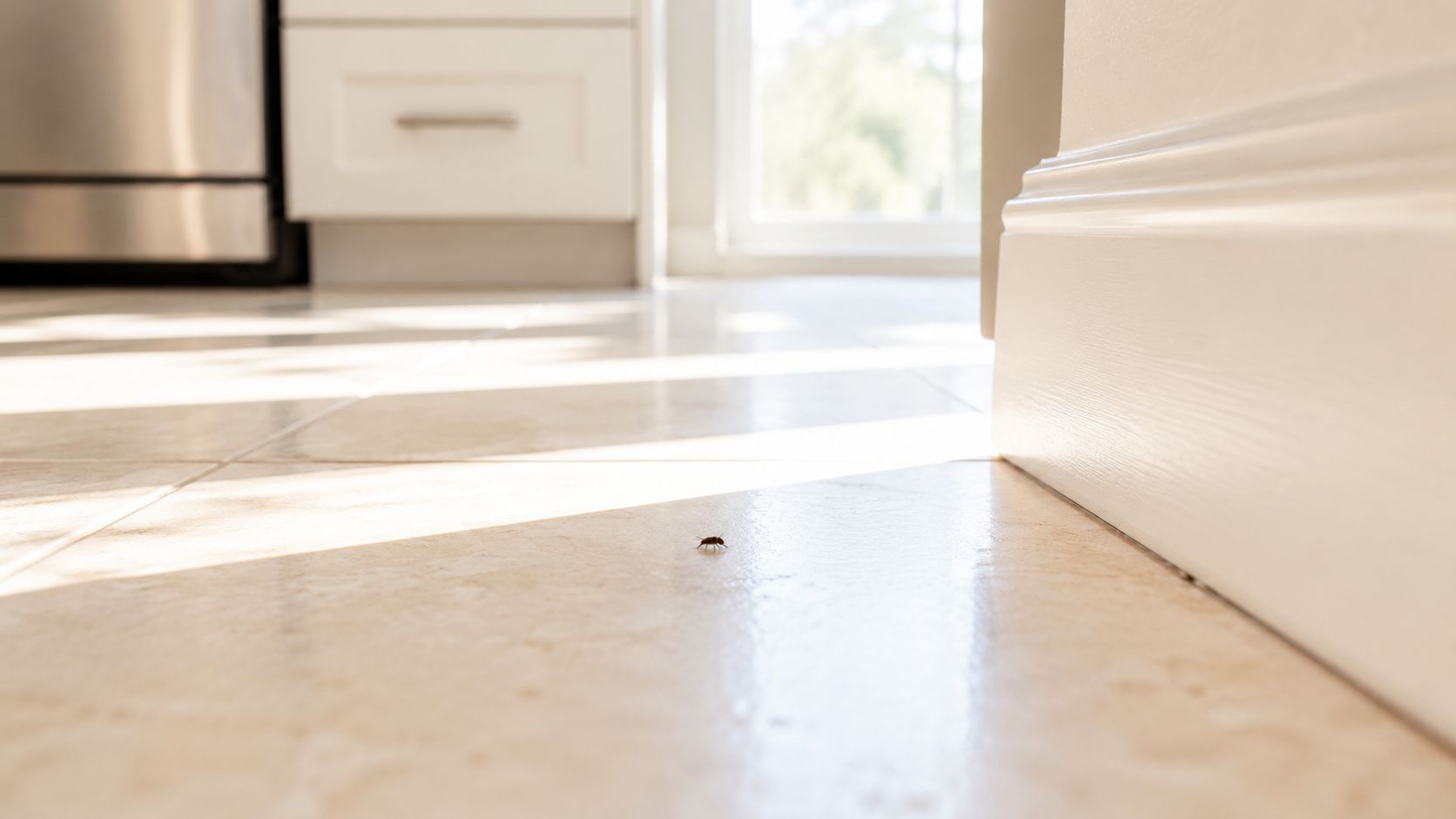
What makes indoor beetles frustrating is how often they stay out of sight until activity builds. Adults may appear at windows, on counters, or near light, while feeding is happening elsewhere. That’s why random spraying rarely solves the problem. The beetles a homeowner sees are often not the part doing the damage.
Practical rule: If beetles are appearing in more than one room, the right response is inspection first, treatment second.
Woodstock residents also deal with a mix of home styles that changes pest behaviour. Older homes can have foundation gaps, aging trim, and settled frames that make entry easier. Newer builds often stay tighter, but storage-heavy basements, finished rec rooms, and attic spaces still create ideal hiding areas if debris, lint, spilled food, or seasonal entry points are left unchecked.
Concern is justified, but panic usually leads to the wrong fix. The best results come from three steps done in order:
- Identify the beetle type so the source makes sense.
- Inspect the room pattern to find where feeding or sheltering is happening.
- Use removal and exclusion together so the problem doesn’t restart a few weeks later.
A single beetle might be nothing. Repeated sightings usually aren’t. The good news is that most indoor beetle problems become much more manageable once the species and the seasonal pattern are clear.
Identifying Common Beetles in Woodstock Homes
Correct ID saves time. It also prevents the two mistakes I see most often in Woodstock homes: treating the wrong room and treating at the wrong time of year.
A beetle found on a windowsill in October usually points to a different problem than one turning up in cereal, pet food, or a bedroom closet in March. Woodstock’s seasonal swings matter here. Warm, humid summers support hidden feeding in fabrics and stored foods. Cooling fall weather pushes outdoor beetles toward sunny siding, soffits, window trim, and attic edges. Winter heating then brings some of that activity into view indoors.
The beetles Woodstock homeowners confuse most often
Carpet beetles are easy to miss because the adults often show up away from their source. The damaging stage is the larva, which feeds on natural fibres, lint, pet hair, feathers, and dust-packed debris in quiet areas. Watch for irregular thinning in rugs, damage in closet items, and shed larval skins along baseboards, under furniture, or inside floor vents. Spring is usually when homeowners start noticing the adults at windows, even though feeding may have been building for weeks in darker rooms. If that pattern sounds familiar, this guide to carpet beetle infestations in Ontario helps narrow down what to check first.
Asian lady beetles are seasonal invaders. They do not feed on carpet or stored food. In Woodstock, they commonly build up on sun-facing exterior walls in late summer and fall, then slip through gaps around window frames, door trim, soffits, and siding joints as temperatures drop. Once inside, they gather near light-coloured walls, upper-floor windows, and warm ceiling lines. The problem is nuisance entry, not indoor breeding.
Pantry beetles stay tied to a food source. Adults may wander, but the infestation usually starts in dry goods such as flour, cereal, rice, spices, bird seed, or pet food. In my experience, Woodstock homes often see an uptick in pantry pests during warmer months, especially when bulk goods sit through summer in garages, mudrooms, or basement storage that runs warm and humid. Webbing, clumped product, live beetles inside packaging, and activity in multiple food items all point in this direction.
Wood-boring beetles need a more careful response. Fine powder near wood, tiny exit holes, or repeat sightings near exposed framing, stored lumber, old furniture, or unfinished basement areas can signal a wood-infesting species. Some cases involve old, inactive damage. Some do not. That trade-off matters, because cosmetic cleanup and active wood treatment are not the same job.
Common Indoor Beetles in Woodstock, ON
| Beetle Type | Appearance | Common Location | Primary Damage |
|---|---|---|---|
| Carpet Beetle | Small adults, with larvae more often noticed than adults | Rugs, closets, upholstery, vents, under furniture | Damage to natural-fibre materials and debris-fed larval activity |
| Pantry Beetle | Small beetles found near dry goods or inside packages | Kitchens, pantries, food cupboards, utility storage | Contamination of stored food |
| Wood-Boring Beetle | Small beetles associated with wood, with powder or holes as clues | Basements, attics, stored lumber, trim, wood fixtures | Possible damage to wood materials |
| Asian Lady Beetle | Rounder beetle, often found near windows and sunny wall areas | Window frames, upper walls, south-facing sides of the home | Nuisance indoor invasion |
Season helps sort out the suspect list fast. Fall clusters near upper windows usually do not call for pantry work. Spring adults at bright windows can still trace back to carpet beetle larvae under furniture or inside vents. Mid-summer beetles in a cupboard often justify opening every package in that food zone, including pet food and bird seed stored outside the kitchen.
Why identification changes the treatment plan
Each beetle type calls for a different fix. Carpet beetle control works best when cleaning, fabric inspection, and crack-and-void treatment are aimed at larval harbourage. Pantry beetle work succeeds when infested goods are removed and the shelf source is cleared completely. Asian lady beetle control depends more on exterior exclusion and timing than on indoor spray alone. Wood-boring beetles may require inspection of the wood itself before any treatment choice makes sense.
Good beetle control starts with the source, the season, and the species.
That is why random indoor spraying disappoints so many homeowners. It may kill the insects that are visible today, while leaving the food source, entry gap, or hidden larval zone untouched. In Woodstock, the cleanest long-term results usually come from matching the treatment window to the season: pantry cleanup in warm-weather storage periods, carpet beetle work before spring adult emergence builds, and exterior sealing before fall invaders start pressing against the house.
A Room-by-Room Guide to Finding Beetle Hotspots
A Woodstock homeowner often finds the first beetle in the wrong room. One shows up on a kitchen counter, but the actual source is a forgotten bag of pet food in the mudroom. Another lands at a sunny bedroom window in April, while the larvae are feeding under a wool rug in a quiet back room. Good inspections follow the conditions beetles use, not the spot where one adult happened to wander.
Kitchen and pantry trouble spots
Start with rooms that stay warm and hold dry goods for weeks or months. In Woodstock, summer humidity can turn a small food spill or a poorly sealed package into a steady beetle food source. Check upper cupboards with flour and baking supplies, lower cabinets with cereal and rice, pantry shelves with snack boxes, and any spot where pet food sits open between uses.
Pull everything out. Inspect package seams, shelf corners, screw holes, and the dust line behind stored items. Beetles often build unobtrusively in the places homeowners clean around, not through.
Do not stop at the kitchen itself. Mudrooms, basement shelving, and attached garages often hold bird seed, bulk dry goods, and backup pet food. Those areas matter more in late spring and summer, when warmer conditions speed up activity and hidden infestations spread into the main living space.
Living areas, closets, and soft furnishings
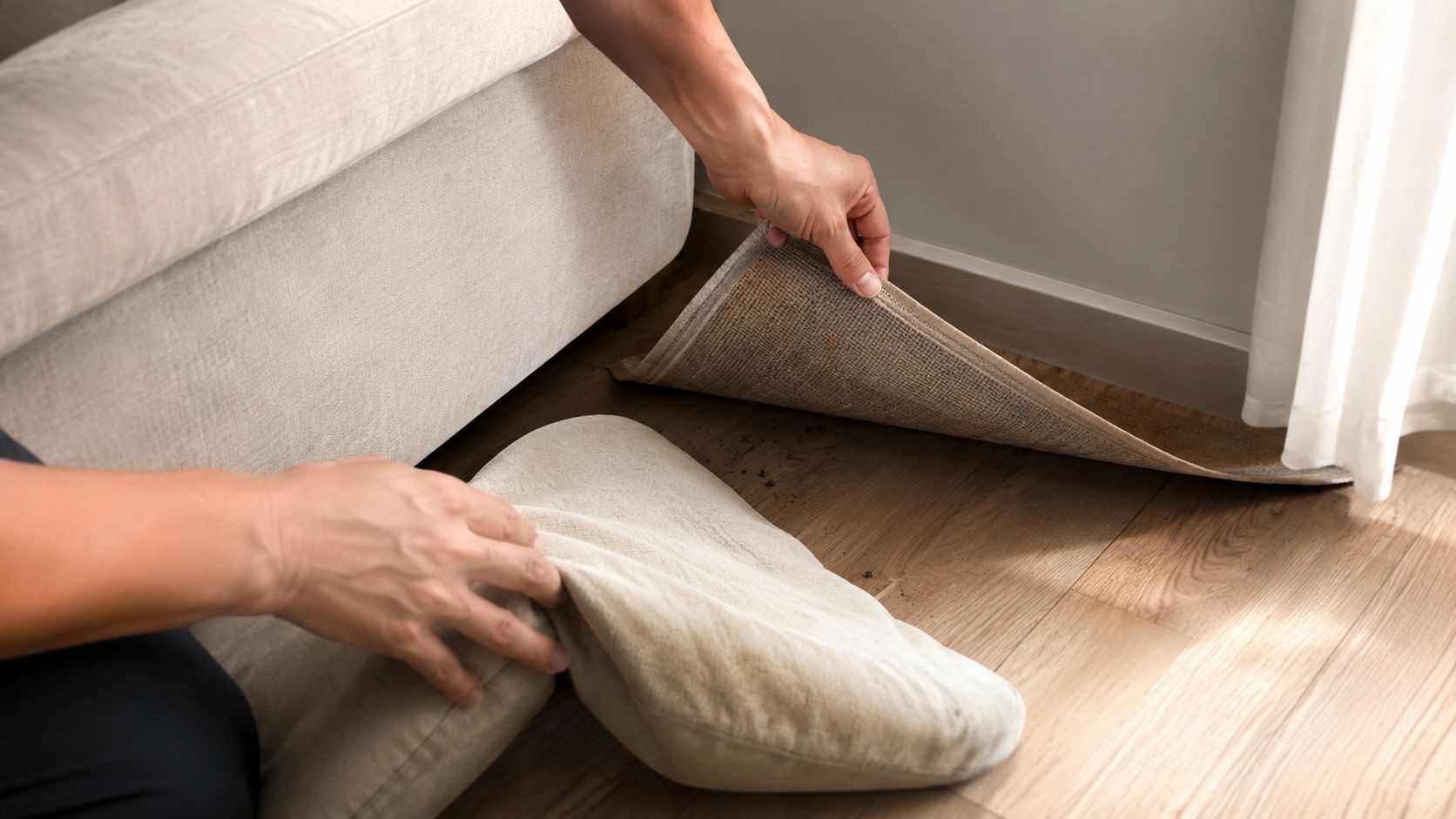
Carpet beetle work is usually won in the rooms people inspect last. Bedrooms, living rooms, linen closets, and under-furniture edges are common larval zones because lint, hair, dead insects, and natural fibres collect there undisturbed. In Woodstock homes, I pay close attention to south-facing rooms in early spring. Adult beetles are drawn to light, so window sightings there often send homeowners in the wrong direction.
Check under area rugs, beneath cushions, along baseboards, inside floor vent edges, behind headboards, and in closet corners. Look for shed skins, damaged natural-fibre items, thinning patches in stored fabrics, and debris that has built up where the vacuum rarely reaches.
If adults are gathering at a window, inspect the room behind you before you inspect the glass.
That pattern is common after winter. Heated indoor air keeps development going, then longer spring daylight makes adults more visible near windows and patio doors.
Basements, attics, and hidden voids
These spaces often explain why a beetle issue keeps returning after surface cleaning. Basements and attics in Woodstock tend to collect the exact materials beetles use well: seasonal décor, stored blankets, old pet bedding, luggage, cardboard boxes, and years of settled dust. Cooler temperatures can slow activity there, which means infestations stay hidden longer and appear to come out of nowhere once the house warms up.
Inspect these areas with a flashlight and enough time to move stored items:
- Basement wall edges behind totes, shelving, and rarely moved boxes
- Attic margins near insulation edges, roof vents, and access hatches
- Laundry and utility areas where lint and fabric debris collect
- Window wells, sill voids, and light fixtures where dead insects accumulate
Older Woodstock homes need extra attention around gaps, trim voids, and foundation transitions. Those spaces can act as both entry points for seasonal invaders and shelter for beetles feeding on organic debris. The practical trade-off is simple. A quick visual check may find the obvious adults, but a slower inspection of stored materials, dust pockets, and hidden edges is what finds the source and stops repeat activity.
Your Action Plan for Safe DIY Beetle Removal
In Woodstock homes, DIY beetle control works best when the cleanup matches the season. Spring and fall often bring the highest indoor sightings, but the right response depends on whether beetles are wandering in from exterior shelter sites or feeding and breeding indoors. That distinction saves time, money, and a lot of repeat cleanup.
Start with removal, not spray
Physical removal is the safest first step in almost every house I would inspect. Use a vacuum with good suction and work slowly along baseboards, under furniture, around vents, inside pantry corners, at carpet edges, and around window trim. In cooler months, spend extra time near sunny windows, upper wall corners, and light fixtures where overwintering beetles often collect. In summer, focus more on food storage areas, pet food zones, closets, and fabric storage where active infestations are more likely to keep developing.
For nuisance beetles gathering indoors, vacuuming does two jobs at once. It removes visible adults and the hidden material they leave behind, including shed skins, food dust, and dead insects that can keep attracting more pests. Empty the canister or bag into a sealed garbage bag right away and take it outside.
If beetles are showing up around windows and doors during seasonal transition periods, adding magnetic insect screens can reduce new entry while you clean out the interior source. That will not solve a breeding infestation on its own, but it helps cut down the daily influx.
Remove whatever is feeding them
The next step depends on what the beetles are using.
- Pantry beetles: Throw out infested dry goods in sealed bags. Check flour, cereal, rice, spices, pet food, bird seed, and any open package with fine dust or clumping.
- Carpet or fabric beetles: Launder washable fabrics and vacuum rugs, closet edges, upholstered furniture, and pet resting areas in detail.
- Utility or storage area activity: Reduce cardboard, lint, old fabric, and undisturbed clutter that can hold organic debris.
Homeowners usually face a trade-off. Keeping questionable items to avoid waste often leads to a longer infestation. If a package or fabric item shows clear signs of beetle activity, disposal is usually faster and cheaper than trying to save it.
Clean and reset the space
After source material is removed, wipe shelves, shelf pins, corners, and cracks where dust collects. Hard-sided bins help more than folded bags or thin cardboard, especially during Woodstock’s humid summer stretch when food storage problems can spread faster. For broader prevention steps after cleanup, use this guide on protecting your home from future pest infestations in the GTA.
Hold off on sealing until the active material is gone. If beetles are still inside stored goods, closet debris, or wall-adjacent dust pockets, caulking the area just traps the problem nearby instead of ending it.
Skip the shortcuts that fail
Foggers and broad indoor sprays are usually the wrong first move for beetles inside a house. They rarely reach inside food packages, fabric seams, under baseboards, or deep storage voids where larvae stay protected. They also add pesticide exposure without fixing the source.
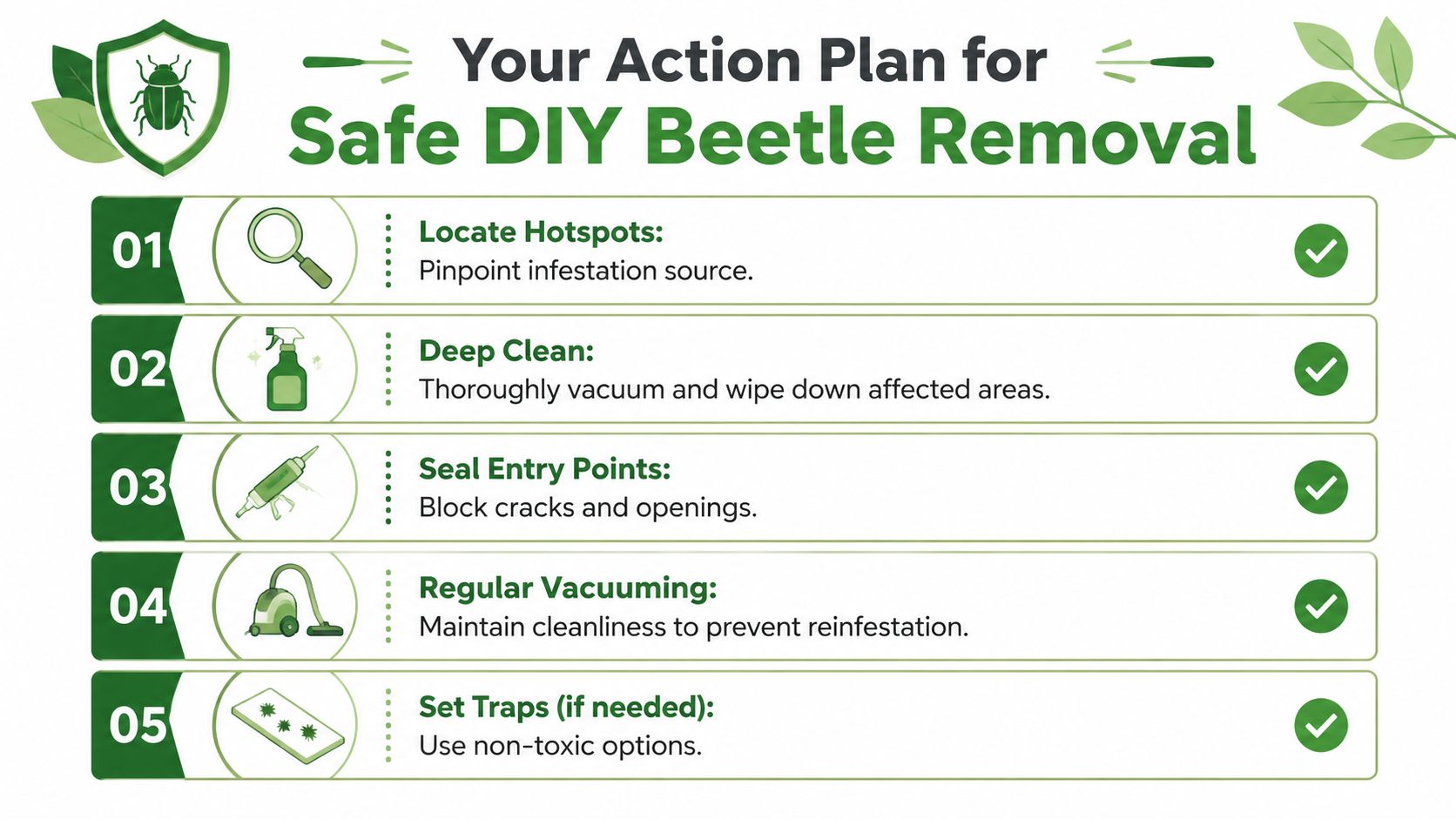
A practical DIY sequence looks like this:
- Confirm the activity zone so treatment stays focused.
- Vacuum slowly and thoroughly in cracks, edges, and hidden margins.
- Discard or launder infested material based on whether the source is food, fabric, or debris.
- Wipe shelves and re-store items in sealed containers.
- Watch for new activity for 2 to 3 weeks in the same spots.
Judge progress by fresh sightings, not by how many beetles were picked up on the first day. In Woodstock, that matters most during spring warmups and early fall cool-downs, when outside movement can briefly make a solved problem look active again.
Long-Term Prevention to Keep Your Home Beetle-Free
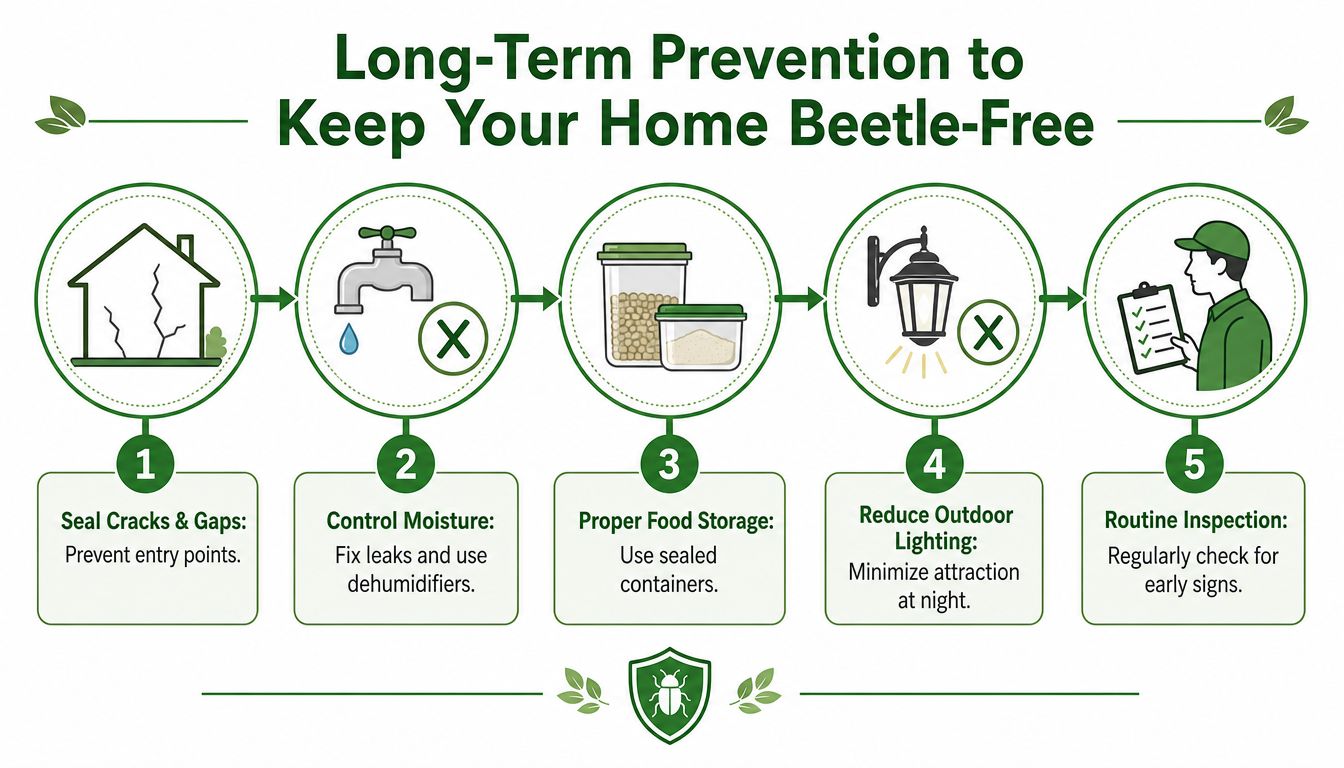
A Woodstock home can stay quiet all summer, then show beetles at the windows the first warm spell in September or the first cold snap in October. That pattern is common here. The pressure changes with the season, and prevention works best when the house is prepared before beetles start shifting indoors.
Why Woodstock timing matters
In Woodstock, beetle prevention is less about one-time spraying and more about reading the house through the year. Spring brings window use, stored items coming back out, and more plant material moving indoors. Late summer and early fall bring a different problem. Outdoor beetles start testing sunny walls, trim gaps, attic edges, and utility penetrations as they look for sheltered overwintering space.
Asian lady beetles are a good example. Ontario guidance on multicoloured Asian lady beetles notes that they commonly gather on sunny south-facing walls before entering homes to overwinter, which is why sealing needs to happen before that migration starts, according to Ontario guidance on multicoloured Asian lady beetles.
That same timing issue applies to other indoor beetle complaints. If cracks, screen gaps, and loose weatherstripping are still open by early fall, homeowners often end up reacting after beetles are already inside wall edges and window channels.
A prevention calendar that fits local beetle pressure
Early spring
- Inspect stored wool, blankets, seasonal clothing, and quiet storage rooms before the house opens up for warmer weather.
- Check cut flowers, potted plants, and garage-stored décor before carrying them into finished rooms.
- Repair torn window and soffit screens while access is easy.
Late spring into summer
- Move dry goods and pet food into sealed containers once humidity rises and pantry activity becomes easier to miss.
- Clean lint, pet hair, and dead insect debris from under furniture, basement shelving, and appliance edges.
- Watch for beetles collecting at one window or one room. That pattern often points to the nearest entry gap or hidden indoor food source.
Late summer into early fall
- Seal trim gaps, foundation cracks, siding joints, and cable or pipe penetrations before cooler nights start pushing insects inward.
- Put extra attention on south and west exposures, where afternoon sun warms wall surfaces and increases beetle activity.
- Upgrade weak window coverage with tighter barriers, including magnetic insect screens where seasonal removal and a better fit help cut down on entry.
Fall into winter
- Check attic hatches, basement rim joists, garage-to-house transitions, and door sweeps after the first temperature drop.
- Reduce clutter in utility rooms and storage zones so new activity is easier to spot early.
- Keep monitoring shared entry points used by other overwintering pests. Homes that admit beetles often have the same gaps mice and stinging insects use.
The trade-off is simple. Sealing and upkeep take a little planning each season, but that work is far easier than repeated cleanouts, ruined stored goods, and ongoing stress over whether the problem is starting again.
For a broader house-wide exclusion plan, review these long-term home pest prevention steps for GTA properties.
When a Beetle Problem Requires Professional Help
DIY work is often enough when the source is small, accessible, and caught early. It stops being enough when the infestation keeps returning after a careful cleanout or when the suspected source is buried in structural voids, attic edges, or inaccessible wall spaces.
Signs the problem is deeper than it looks
A few situations should move the problem out of the DIY category:
- Beetles keep reappearing in multiple rooms after vacuuming, disposal, and sanitation
- Adults are visible, but no obvious source can be found
- Fine wood dust or exit holes are showing up around wood materials
- The issue has spread across floors, not just one contained area
For hidden carpet beetle populations, inaccessible voids can be a major reason home treatment stalls. In a California structural pest context, vacant attics and wall voids are noted as harbouring carpet beetle larvae that feed on lint, dead insects, and animal hair, and treatment in those inaccessible zones may require insecticidal dusts such as silica aerogel. That same guidance notes a 90 percent success rate when applied before larvae mature, along with inhalation risk that requires respiratory protection for technicians, according to this integrated pest management reference. The practical takeaway for Woodstock residents is simple. Some infestations sit in spaces homeowners shouldn’t treat on their own.
Why recurring activity needs a different approach
Professional help also makes sense when the beetle issue overlaps with other pest problems common in Woodstock homes, such as mice in basements, ants along foundations, or wasps around attic lines. Those conditions often share the same access points and housekeeping blind spots.
When beetle sightings are persistent, widespread, or connected to possible structural wood damage, fast action matters more than repeated DIY cycles. In urgent situations, homeowners dealing with active indoor pest escalation can look into emergency pest control support rather than waiting for the problem to spread.
Frequently Asked Questions About Indoor Beetles
Are beetles inside the house dangerous
Most indoor beetles found in Woodstock homes are more of a nuisance or contamination issue than a direct safety threat. The bigger concern is what they’re feeding on, how long they’ve been inside, and whether they’re damaging stored food, fabrics, or wood.
Why are beetles showing up near windows
Windows often act like a signal point. Adult beetles move toward light, so homeowners spot them there even when the source is elsewhere. With carpet beetles, adults near windows can indicate hidden eggs or larvae inside the home, as noted earlier.
Will one spray solve the problem
Usually not. Beetle problems often continue because the spray hits visible adults and misses larvae, food material, or hidden harbourage. Cleaning, inspection, and exclusion are usually what determines whether the issue ends.
Can beetles mean other pest issues are present
They can. Homes with entry gaps, moisture trouble, cluttered storage, or debris build-up may also attract ants, mice, rats, cockroaches, bed bugs, wasps, termites, or wildlife such as raccoons, squirrels, skunks, and bats, depending on the area and construction type.
If beetles keep turning up in a Woodstock home, Vanish Pest Control Inc. can inspect the property, identify the source, and build a treatment plan that deals with the infestation and the entry conditions behind it. That helps homeowners move past temporary fixes and get their home back to normal.