

Toronto residents don't need to wonder whether bed bugs are a rare problem anymore. As of 2025, Southern Ontario accounts for approximately 50% of all bed bug infestation cases reported across Canada, and 15 of the top 25 most infested cities are in this region according to Pestline's Toronto bed bug overview. Toronto has also been identified as the most infested city in Canada for multiple consecutive years, including topping Orkin Canada's list in 2024 and 2025.
That changes the conversation. A bed bug issue in a Toronto condo, apartment, basement suite, or detached home isn't unusual, and it isn't a sign that a resident did something wrong. It's a citywide pest problem tied to density, travel, turnover, and the way these insects move through shared walls, furniture, and personal belongings.
The hard part is emotional. Bed bugs make people feel exposed in the one place that's supposed to feel safe. Sleep drops off. Laundry piles up. People stop inviting guests over. Some start throwing out furniture too early, while others wait too long and give the infestation more time to spread. What helps is a clear plan, not panic.
Table of Contents
- Toronto's Bed Bug Crisis A Reality Check for Residents
- Identifying a Bed Bug Infestation in Your Toronto Home
- Professional Bed Bug Removal Methods A Comparison
- Your Rights and Responsibilities A Guide for Toronto Landlords and Tenants
- The Vanish Control Process Your Step-by-Step Treatment Plan
- After The Treatment How to Keep Your Toronto Home Bed Bug Free
- Toronto Bed Bug Removal FAQs
Toronto's Bed Bug Crisis A Reality Check for Residents
Bed bugs spread fast in shared housing. In Toronto, that matters because so many residents live in apartments, condos, basement units, and older multi-unit homes where pests can move through walls, hallways, utility openings, and shared laundry routes.
A familiar call starts with uncertainty. A resident notices itchy marks, strips the bed, checks the mattress for a minute, and finds nothing obvious. A few days later, there are more bites, a few dark spots along a seam, and a hard question: is this limited to one bed, or has it already reached the frame, sofa, or the unit next door?
That stress is real. So is the risk of spread in dense buildings. In Toronto, one untreated unit can create problems for adjacent units, which is why many residents begin looking for bed bug removal Toronto as soon as they suspect activity. In rental housing, speed also matters for another reason. Tenants need to report the issue promptly, and landlords are expected to address pest problems in a livable unit. Delays create bigger infestations and bigger disputes.
Why Toronto keeps seeing repeat infestations
The city gives bed bugs plenty of opportunities to move and hide. High-rise living increases contact points between units. Frequent travel, rideshare use, transit, and second-hand furniture create repeated chances for bed bugs to hitchhike indoors. Older buildings add cracks, gaps, and layered hiding spots that make light activity harder to catch early.
Turnover also plays a part. Move-ins, move-outs, discarded furniture in hallways, and short preparation windows between occupants can leave bed bugs behind if no one confirms the unit is clear.
Residents who need a broader local starting point before booking a bed bug-specific visit can review Toronto pest control services for urban infestations.
What stressed residents need to hear first
Bed bugs are not a cleanliness problem. They are a transport problem.
What makes an infestation worse is panic. People carry bedding through the unit unbagged, start sleeping on the couch, move items into another room, or empty a can of store-bought spray into every crack they can find. I see this often, and it creates two trade-offs residents do not expect. First, scattered activity becomes harder to trace and treat. Second, improper spray use can push bed bugs deeper into walls, furniture joints, and baseboards.
The right response is controlled and practical. Keep sleeping in the usual room unless a technician tells you otherwise. Bag washable fabrics before moving them. Avoid moving furniture from room to room. Report the issue quickly if you rent. In a detached home, book an inspection before trying random products. In a condo or apartment, ask building management what reporting process they require and whether nearby units will need inspection too.
A bed bug problem feels personal, but the solution is procedural. Clear reporting, careful containment, and a professional treatment plan give Toronto residents the best chance of stopping the infestation before it spreads.
Identifying a Bed Bug Infestation in Your Toronto Home
The first useful question isn't “Are these bites from bed bugs?” It's “Are there physical signs where bed bugs live?” Bites alone can mislead. Inspection tells the full story.
What bed bugs look like at different stages
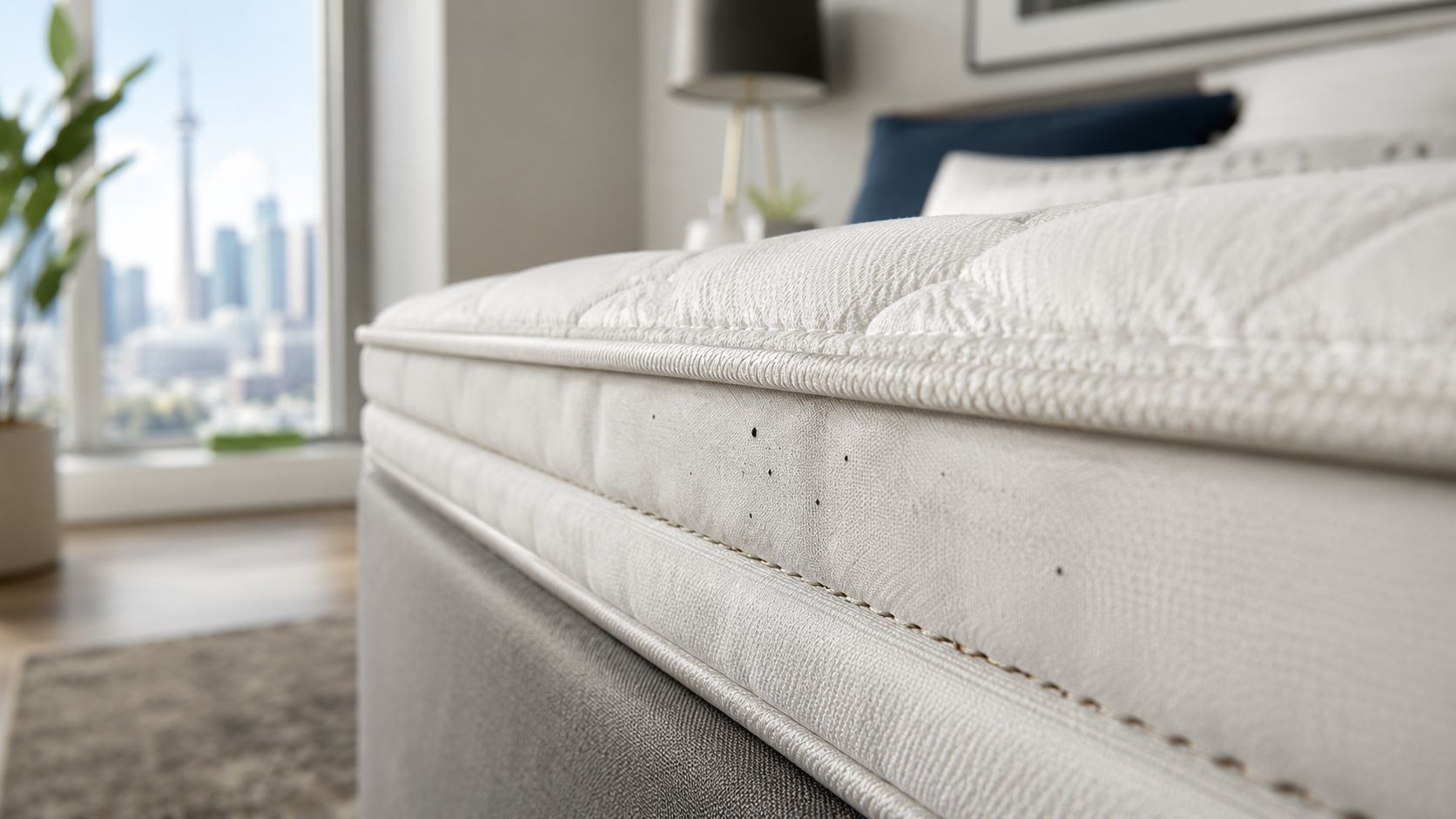
Adults are typically reddish-brown, flat, and oval until they've recently fed. Younger bed bugs are smaller and lighter in colour. Eggs are much harder to spot because they're tiny and often tucked into seams, cracks, and protected edges.
Reproduction is one reason infestations can get out of hand quickly. Toronto Life's reporting on Toronto's bed bug crisis notes that a single female bed bug can lay roughly five eggs per day and up to 500 eggs over her lifetime, which can range from five months to over a year. That's why a light infestation in a bedroom can become a whole-unit problem if it goes untreated.
For residents trying to separate skin reactions from confirmed pest activity, this guide on telling bed bug bites from allergies can help with the symptom side, but it shouldn't replace a physical inspection.
Where Toronto residents should inspect first
In a typical Toronto condo or house, bed bugs usually settle close to where people sleep or rest. The first inspection points should be:
- Mattress seams and labels: Look along stitching, piping, and corner folds.
- Box spring edges and bed frames: Check screw holes, joints, slats, and headboard attachments.
- Nightstands and upholstered furniture: Pull drawers out and inspect underneath.
- Baseboards near the bed: Especially in older Toronto homes and apartments with cracks or lifted trim.
- Sofas and reading chairs: Important in homes where people nap or spend long evenings.
A flashlight and a slow inspection beat a quick glance every time.
Signs beyond bites
A real infestation often leaves secondary clues before a resident ever sees a live bug moving.
- Dark spotting: Small rust-coloured or black marks on sheets, mattress edges, or nearby surfaces.
- Shed skins: Pale casings left behind as bed bugs grow.
- Tiny blood smears: Sometimes visible on pillowcases or bedding.
- Musty odour: More likely when the population has grown significantly.
Practical rule: If a Toronto resident finds multiple signs in the sleeping area, it's time to treat the situation as confirmed until a professional inspection says otherwise.
Professional Bed Bug Removal Methods A Comparison
Toronto residents usually ask the same question next. What works, and what's likely to drag the problem out?
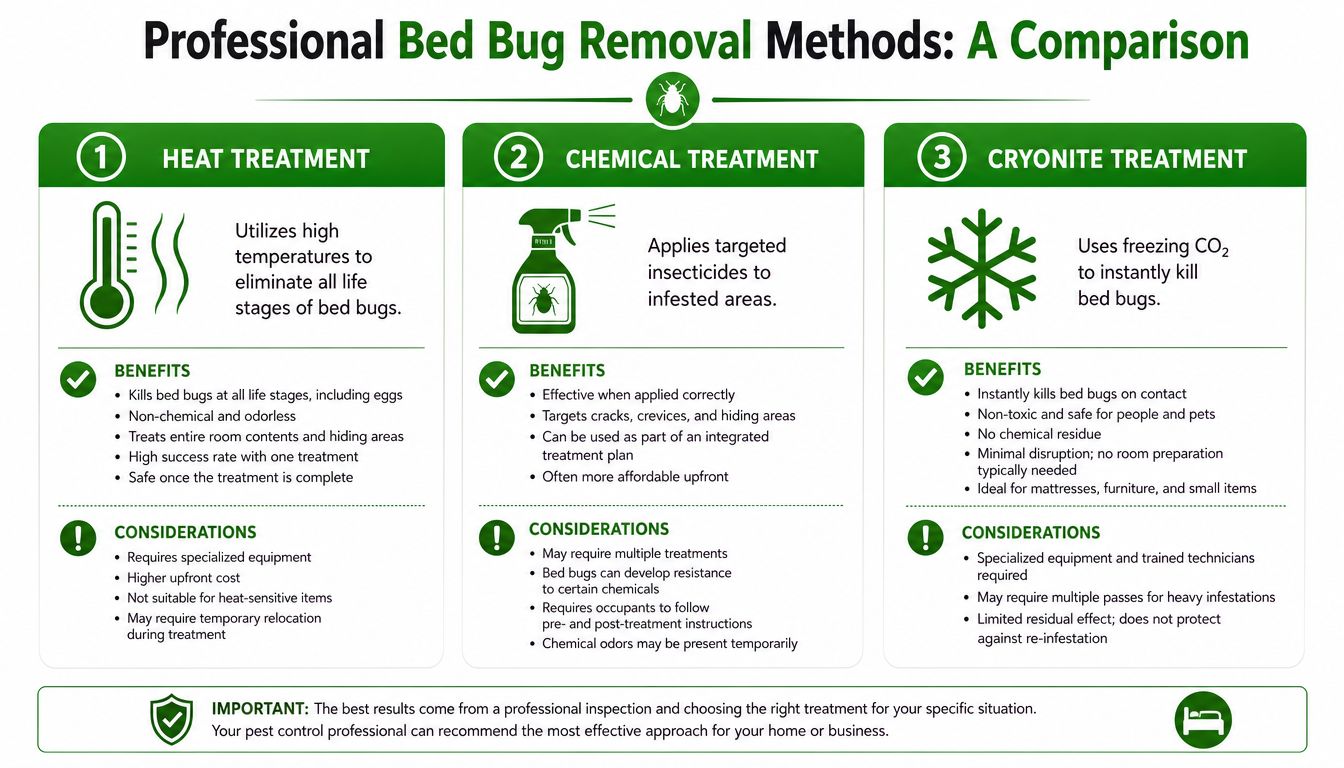
The answer depends on the size of the infestation, the layout of the property, the sensitivity of the occupants, and whether adjacent units or shared walls are part of the risk. Professional treatment usually falls into three categories people hear about most often: heat, chemical applications, and cold-based spot methods such as Cryonite. Each has a place, but they don't all solve the same problem in the same way.
Heat treatment and why it matters
Heat treatment is often the clearest option when full-room penetration is needed. Bugs Terminator's Toronto treatment guide states that bed bug heat removal requires raising ambient temperatures to 120 to 140°F (49 to 60°C) to kill all life stages, including eggs, and that technicians use calibrated thermal sensors to monitor heat distribution in real time.
That matters because bed bugs don't stay on the mattress. They slip into furniture seams, wall voids, under flooring edges, and behind trim. If heat reaches those hiding zones evenly, it can eliminate adults, nymphs, and eggs in one treatment cycle. If the room is only partially heated, survivors can remain in cooler pockets and start the infestation again.
A company such as Vanish Pest Control Inc.’s bed bug heat treatment service is built around that chemical-free approach, which is often useful in occupied Toronto homes where residents want to limit pesticide exposure.
Chemical treatment and where it fits
Chemical treatment still has a role, but it needs realistic expectations. It can be useful for targeted residual control, follow-up work, and integrated plans where technicians are treating cracks, crevices, and travel routes after inspection. It is not a magic shortcut.
Government guidance is clear that pesticides alone don't solve every bed bug problem, and Toronto's broader resurgence has been linked in part to resistance to common pesticides in the local discussion of the issue. Chemical work also creates occupancy considerations. For treatments involving chemicals, Manitoba's bed bug treatment guide states that pets must be moved out for a minimum of 12 hours post-treatment, and occupants with breathing problems, pregnant individuals, or babies under 18 months old must also stay away for at least 12 hours, while others must stay away for at least 4 hours.
How to choose the right approach
A simple comparison helps:
| Method | Where it works well | Main trade-off |
|---|---|---|
| Heat treatment | Whole-room infestations, eggs, sensitive settings, fast knockdown | Requires careful preparation and skilled monitoring |
| Chemical treatment | Targeted residual applications and integrated plans | May need repeated visits and temporary vacancy rules |
| Cryonite treatment | Localised visible activity and specific spot work | Limited reach if bugs are hidden deep in voids |
Toronto residents who are also dealing with contaminated belongings, bodily fluids, or post-incident cleanup issues often benefit from reading 360 Hazardous Cleanup's expert advice on choosing specialist cleanup help. It's useful when a pest problem overlaps with sanitation concerns that go beyond standard extermination.
Heat is powerful, but it only works properly when the whole treatment envelope is controlled.
Your Rights and Responsibilities A Guide for Toronto Landlords and Tenants
Bed bugs create panic fast, but the legal side often creates the second problem. In Toronto rental housing, confusion about who pays, who can enter, and who has to prepare the unit can delay treatment and make the infestation worse.
What landlords must do
In Ontario, bed bug infestations are treated as a maintenance issue. Reznik Law's summary of Ontario bed bug responsibility states that landlords are required to take reasonable, timely steps to treat the infestation and pay the actual costs of extermination. The same source notes that tenants are typically responsible for disposing of or replacing their own damaged belongings unless the landlord acted negligently.
There's also an entry requirement. The Ontario landlord and tenant case discussion linked here states that landlords in Toronto and surrounding Ontario municipalities must provide 24-hour written notice before entering a tenant's unit to inspect for bed bugs. Once an infestation is confirmed, the landlord is legally expected to schedule professional treatment right away and can't require the tenant to pay for that service.
What tenants must do
Tenants also have obligations, even when they aren't paying for extermination.
- Report quickly: Delayed reporting can allow the infestation to spread into neighbouring units.
- Co-operate with access: Once proper written notice is given, inspection and treatment access matters.
- Follow preparation instructions: Laundry handling, bagging, decluttering, and furniture access aren't optional steps.
- Avoid DIY choices that spread activity: Moving infested items through hallways or to storage can create a bigger building problem.
For a broader rental context, VerticalRent's overview of who handles pests in rental properties is a helpful companion read because it frames the typical landlord-tenant split in practical terms.
Where disputes usually start
Most disputes don't begin with the insect. They begin with delay.
A tenant may worry about blame and wait too long to report. A landlord may try to “monitor first” instead of booking treatment. A superintendent may ask to enter without proper notice. In multi-unit Toronto buildings, those delays matter because bed bugs don't respect lease paperwork.
The legal goal is simple. Report early, document clearly, and get professional treatment scheduled without argument.
The Vanish Control Process Your Step-by-Step Treatment Plan
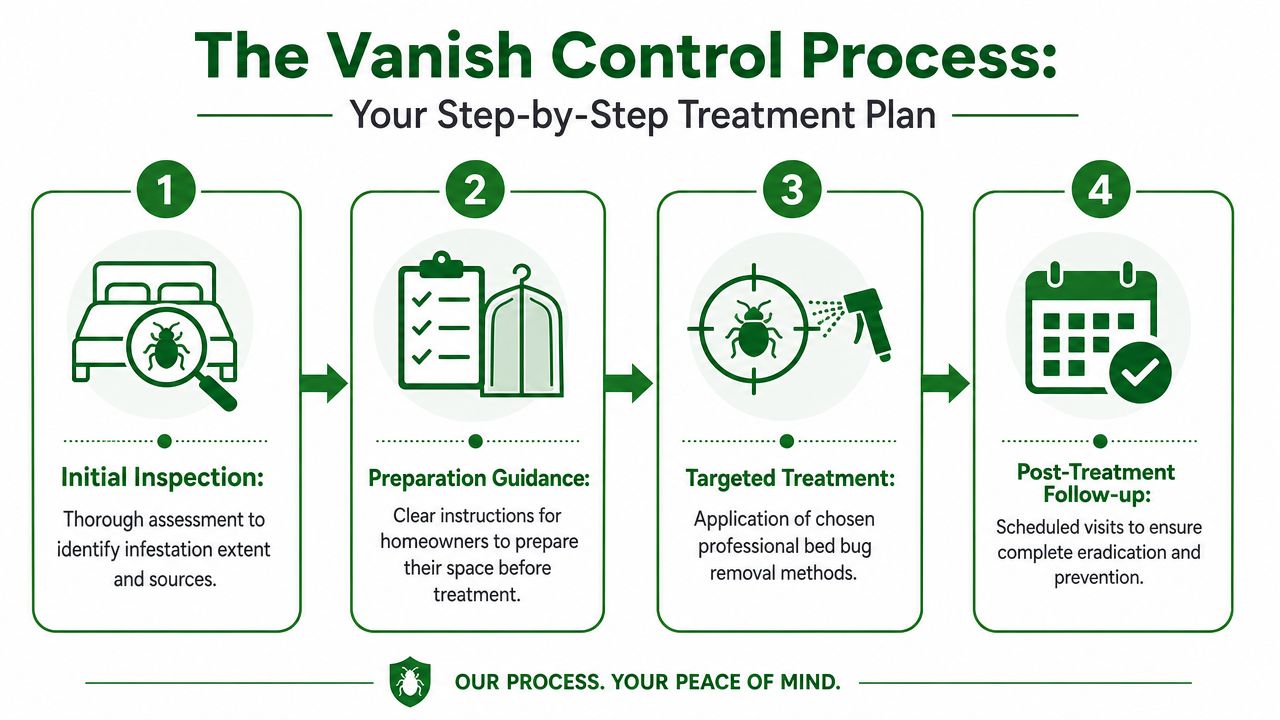
People calm down when they know what happens next. A structured treatment plan removes guesswork and keeps everyone focused on the same objective: eliminate active bed bugs, reduce the chance of spread, and confirm the unit is clear.
Step one inspection and treatment planning
The first visit should determine more than “yes or no.” A proper inspection looks at sleeping areas, adjacent furniture, likely harbourage points, clutter levels, and whether the activity appears isolated or spread through multiple rooms.
In Toronto homes, layout matters. A studio condo with one upholstered bed frame needs a different plan than a detached house with multiple bedrooms, a basement sitting room, and stored textiles. Property managers may also need neighbouring unit checks when the infestation pattern suggests migration.
A treatment plan should answer three questions:
- Where is the activity concentrated
- What method fits the space
- What preparation is required before technicians arrive
Step two preparation before treatment day
Preparation is where many bed bug removal jobs succeed or stall. Residents need direct instructions, not vague advice.
That usually includes bagging washable items, clearing floor clutter, opening access to bed frames and baseboards, and reducing hidden storage around sleeping areas. Mattresses and furniture shouldn't be dragged through the home unless a technician specifically says they must be removed. In most cases, spreading the problem is worse than keeping the item in place for treatment.
A clean preparation checklist often covers:
- Laundry containment: Seal affected fabrics before moving them.
- Furniture access: Pull beds and nightstands away from walls if instructed.
- Clutter reduction: Clear under-bed storage, loose papers, and crowded closet floors.
- Occupancy planning: Arrange where people and pets will be during and after treatment if a chemical component is used.
Step three treatment and follow-up
Treatment day should be methodical. If heat is being used, technicians raise the target areas to lethal temperatures and monitor for cold spots. If chemicals are part of the plan, applications focus on harbourage areas and travel paths, not random over-spraying.
Follow-up matters because bed bug work is not just about the first knockdown. Technicians may need to verify that the initial activity is gone, inspect interceptors or indicators, and check whether the source was fully addressed. In apartment buildings and condos, a resident may also need communication with management if surrounding units remain a concern.
Good bed bug removal in Toronto is a process, not a one-visit mystery.
Residents should expect written preparation guidance, clear re-entry instructions if chemicals are used, and a defined follow-up path. That structure protects homes, businesses, and rental units from the two biggest risks after treatment: incomplete elimination and accidental reintroduction.
After The Treatment How to Keep Your Toronto Home Bed Bug Free
A successful treatment solves the immediate infestation. It doesn't remove the citywide risk of reintroduction. In Toronto homes, long-term control comes from changing the conditions that let bed bugs stay hidden or hitchhike back in.

Daily habits that reduce the chance of return
Health Canada's bed bug removal guidance states that pesticide application alone is insufficient and that successful removal requires an integrated pest management approach combining vacuuming, steam cleaning, washing belongings in hot water, and sealing gaps where bed bugs hide.
That's the standard Toronto residents should follow after treatment too.
- Use encasements: Mattress and box spring encasements make inspection easier and remove easy harbourage points.
- Vacuum with purpose: Focus on bed edges, baseboards, nearby furniture, and floor transitions.
- Seal cracks and gaps: Especially around trim, wall edges, and older flooring details.
- Reduce clutter: Piles of clothes, stacked boxes, and crowded under-bed storage create hiding zones.
Travel and second-hand furniture risks
Many bed bug problems start outside the home.
After travel, inspect luggage before bringing it deep into the unit. Keep suitcases off beds while unpacking. Launder travel clothing promptly. In condos and apartment buildings, avoid leaving soft items in shared areas where pickup or exchange is informal.
Second-hand furniture needs the same caution. Upholstered chairs, bed frames, headboards, and mattresses deserve close inspection before entry. A bargain that brings bed bugs into a Toronto home usually becomes an expensive mistake.
The other key point is behavioural. Residents shouldn't stop paying attention after the bites stop. Bed bug prevention works best when it becomes part of regular housekeeping, not a temporary response.
Toronto Bed Bug Removal FAQs
How much does bed bug removal cost in Toronto
The cost depends on the size of the unit, the level of infestation, the treatment method, and whether follow-up visits or neighbouring unit checks are needed. A small condo with activity isolated to one sleeping area is very different from a multi-room home or a rental building with shared-wall spread. Any company giving a fixed price before inspection is leaving out important variables.
Can bed bugs come back after treatment
Yes, they can return if part of the infestation survived, if adjacent units remain active, or if the home is reintroduced through luggage, furniture, or untreated belongings. That doesn't always mean the first treatment failed. Sometimes it means a hidden source remained in the environment or outside the unit.
Are bed bug treatments safe for children and pets
Treatment safety depends on the method used and whether chemical products are involved. Heat treatment is often chosen when residents want a chemical-free option. If chemical treatment is used, the re-entry and vacancy instructions need to be followed exactly.
Are bed bugs a health hazard
The City of Toronto's bed bug guidance says bed bugs are not considered a direct health hazard, but they can contribute to skin infections, allergic reactions from bites, and significant stress or anxiety. That emotional toll is real, and it's one reason quick action matters.
Should furniture be thrown out
Not automatically. Throwing items out too early can spread bed bugs through hallways, elevators, and other rooms. Many items can be treated if they're structurally sound. If clutter is making inspection and treatment harder, these practical decluttering methods can help residents clear space without creating more chaos.
What should a tenant do first after finding signs
Report the issue to the landlord promptly, keep evidence such as photos of spotting or live bugs, avoid moving items into other rooms, and follow any preparation instructions once treatment is arranged. Delay is what turns a contained bedroom issue into a wider unit problem.
Toronto bed bugs rarely improve with guesswork. A proper inspection, a realistic treatment plan, and disciplined follow-through are what restore control. For residents, landlords, and property managers who need professional help with bed bug removal in Toronto, Vanish Pest Control Inc. provides licensed pest control and treatment support across the GTA.




2 Responses