
A Toronto resident usually doesn't start the day expecting to find ant trails along the kitchen counter, scratching in the walls after midnight, or a wasp nest forming under the soffit. But that's often how pest problems begin. Subtly at first, then fully apparent. In condos, older semis, ravine-adjacent homes, restaurants, and basement apartments, the first sign is often small. The stress that follows is not.
That stress is understandable. Pest activity inside a home changes how people sleep, cook, store food, and use their own space. Toronto residents also face a uniquely urban version of the problem. Dense buildings, shared walls, older infrastructure, laneways, green bins, and nearby ravines all create ideal pressure points. A good response needs more than a spray and a quick visit. It needs correct identification, the right treatment method, realistic timing, and a prevention plan that fits Toronto homes.
Table of Contents
- Protecting Your Toronto Home from Unwanted Pests
- Identifying Common Pest Problems in Toronto Properties
- Choosing the Right Pest Treatment Method for Your Situation
- Understanding Pest Control Costs in Toronto
- What to Expect from a Top-Tier Service Provider
- Your Proactive Pest Prevention Plan for Toronto Homes
- Frequently Asked Questions About Toronto Pest Control
Protecting Your Toronto Home from Unwanted Pests
A common Toronto call starts with a small detail. Ants near the sink. Droppings under the basement stairs. A tenant hearing movement above the ceiling at dawn. By the time the homeowner reaches out, the problem has usually been active longer than expected.
Toronto creates the right conditions for that kind of hidden build-up. Toronto's proximity to Lake Ontario and its network of forested ravines creates a welcoming environment for a wide array of pests, including stinging insects, cockroaches, bedbugs, termites, ants, mice, and rats, making urban pest issues a common reality in the Greater Toronto Area according to Abell Pest Control's Toronto location overview.

That local mix matters. Ravine-side houses often see more wildlife pressure around roofs, soffits, decks, and sheds. Older Toronto homes can have foundation gaps, aging brick joints, and unsealed utility penetrations that mice and rats exploit. Condo residents face a different challenge. Pests can migrate through pipe chases, shared walls, garbage areas, and neighbouring units, which means the source isn't always inside the unit where the activity appears.
Practical rule: The first pest seen is rarely the full story. The real job is finding how it entered, what's sustaining it, and whether the pressure is isolated or shared.
The Toronto market is also crowded. Local data identifies 347 pest control businesses within the city, with over 80% maintaining a website, which gives residents plenty of options but also makes decision-making harder when time matters and the issue feels urgent. That's why a homeowner's action plan needs to be simple. Identify the pest correctly. Match the treatment to the biology of the pest. Ask direct questions about follow-up, exclusion, and guarantees. Then fix the conditions that allowed the infestation in the first place.
When seeking pest control services in Toronto, that framework matters more than promises. Even severe infestations are manageable when the response is methodical and the expectations are honest.
Identifying Common Pest Problems in Toronto Properties
The wrong treatment often starts with the wrong diagnosis. A homeowner may think the problem is ants when the specific issue is carpenter ants in damp wood. A condo resident may hear scratching and assume squirrels, when the activity is mice moving through a wall void. Correct identification shortens the process and avoids wasted visits.
Recognising rodent activity in basements walls and attics
Mice and rats usually leave evidence before residents ever see them. In Toronto basements, common signs include droppings along baseboards, rub marks near utility lines, gnawing on food packaging, and scratching that peaks late at night. In attics, insulation disturbance and concentrated activity near soffits or roof edges often point to movement routes rather than a random visit.
Rats create a different pattern from mice. Their pressure is often linked to exterior vulnerabilities, waste storage, drain areas, and long-standing structural gaps. In documented Toronto cases, The Exterminators note that rat infestations are rarely accidental or short-term and typically develop unnoticed long before activity appears indoors due to structural vulnerabilities and external environmental pressure.
A useful homeowner distinction is this:
- Mice activity inside kitchens and utility rooms usually points to small entry gaps and nearby food access.
- Rat activity around basements, crawl spaces, and exterior foundations often suggests a larger exterior problem that won't be solved by traps alone.
- Recurring noise without visible pests often means the nest site is hidden and the travel route is still open.
Spotting insect pressure in kitchens bedrooms and structural wood
Cockroaches, ants, carpenter ants, bed bugs, and termites all behave differently. The signs matter.
In kitchens and restaurants, cockroach activity often shows up as sightings near sinks, fridge motors, dishwashers, and cabinet hinges. They favour warmth, moisture, and tight harbourage. Ants create visible trails, especially where sugary residue or water is available. Carpenter ants are more concerning because they don't just forage. They often indicate damp or damaged wood nearby.
Bed bugs behave differently from food pests. They cluster around sleeping areas, bed frames, upholstered furniture, and adjacent cracks. Residents often focus on the mattress, but professionals check the surrounding room because bed bugs hide close to the host, not just on the bed itself.
Termites deserve a careful response because cosmetic repairs can hide an active problem without solving it. For readers who want a general primer on treatment logic and wood-destroying pest response, how to treat termites in Cumming, GA is a useful outside example of why identification and treatment planning have to work together, even though Toronto properties need local inspection and local treatment decisions.
A pest problem should be identified by evidence, not by guesswork. Sightings matter, but droppings, damage, odours, nesting signs, and location patterns matter more.
Understanding wildlife issues around roofs decks and sheds
Wildlife calls in Toronto usually involve raccoons, squirrels, skunks, or bats. The location of the problem often tells the story. Raccoons commonly target roof intersections, attic vents, and weak soffits. Squirrels exploit roof edges and small construction gaps. Skunks usually den under decks, sheds, porches, or additions. Bats enter through very small architectural openings near rooflines and masonry transitions.
The risk isn't only noise. Wildlife can damage insulation, create contamination in attics and crawl spaces, and keep re-entering if the opening remains available. Humane removal only works when removal and exclusion are paired. Without proofing, the same property often gets repeat activity.
Choosing the Right Pest Treatment Method for Your Situation
Hearing scratching in the attic at 2 a.m. or finding fresh droppings under the kitchen sink can make any Toronto homeowner want the fastest treatment available. Speed matters, but the right result comes from matching the method to the pest, the building, and the conditions that allowed the activity to start.
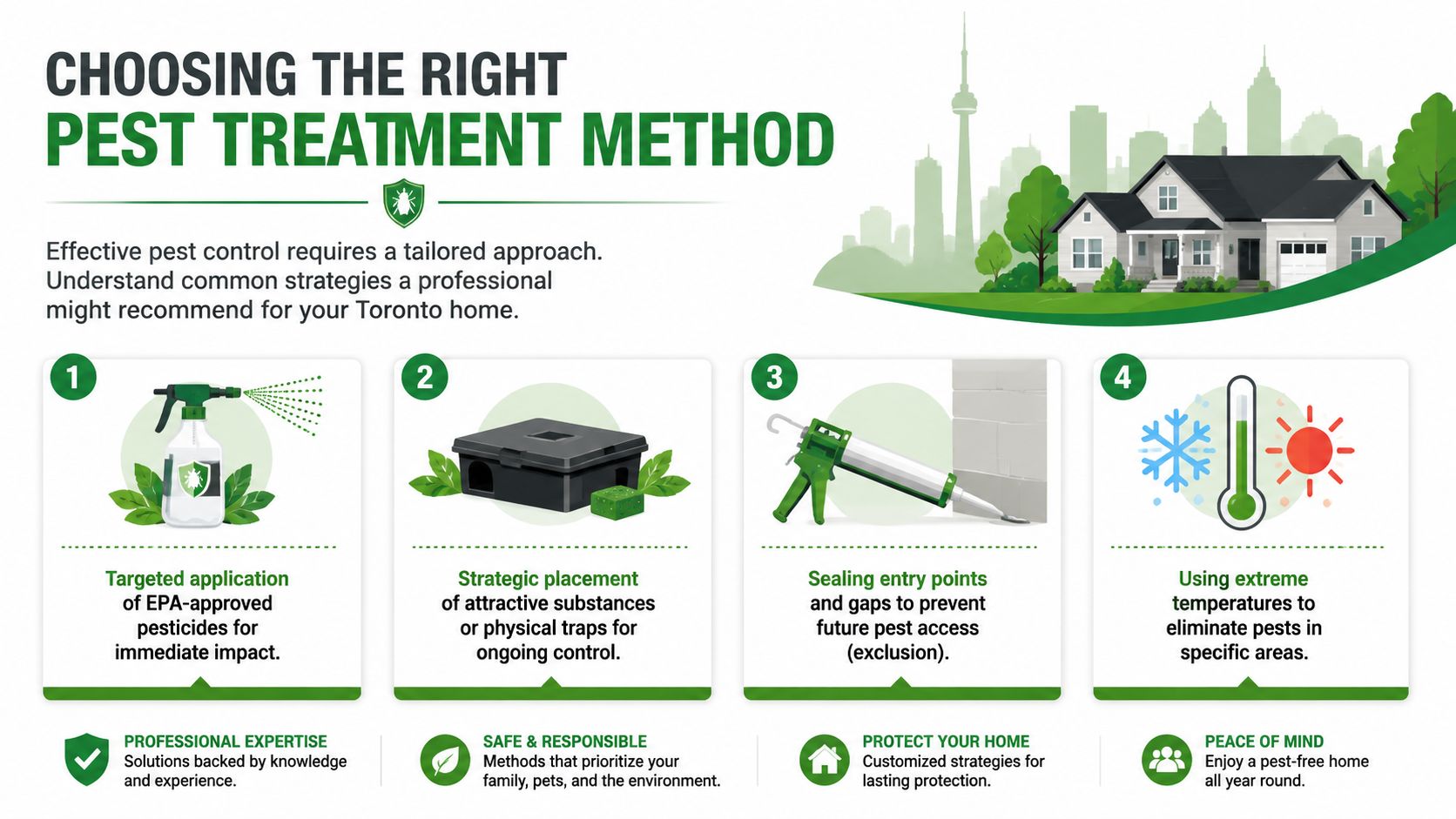
In Toronto, that decision is rarely simple. Condo units share walls and pipe chases. Older homes often have hidden gaps around foundations, soffits, and utility lines. Properties near ravines, parks, and wooded pockets deal with more wildlife pressure. A treatment plan has to account for those local realities or the problem returns.
When heat treatment makes sense
Heat treatment is usually considered for bed bugs, especially in bedrooms, multi-room infestations, or situations where residents want to avoid a residual product approach. Properly applied heat can reach harbourages that are hard to treat with surface products alone.
The trade-off is preparation. Rooms need to be set up correctly, clutter has to be reduced, sensitive items must be removed, and follow-up inspection still matters. Heat can solve the active infestation, but poor prep or untreated reintroduction risks can undo a good job.
For Toronto condo owners, this method also needs careful planning around adjacent units and building rules. Bed bug work in dense housing is rarely just about one room.
When targeted applications and baiting work better
Cockroaches, ants, and many stored-product or occasional invader issues respond better to precise treatment in the areas where the pests live and travel. That usually means crack-and-crevice work, void dusting where appropriate, and bait placements that fit the species and the site.
Broad spray treatments often miss the critical pressure points. German cockroaches stay tight to harbourages near heat, moisture, and appliances. Ants may be trailing into the kitchen while the colony sits in a wall void, under a slab, or outside along the foundation. If the treatment does not match that behaviour, activity drops for a short time and then returns.
A practical action plan looks like this:
- Bed bugs: inspection, room-specific treatment selection, preparation guidance, and follow-up verification.
- Cockroaches: harbourage treatment, baiting, sanitation correction, and moisture control.
- Ants: species identification, trail mapping, nest-location assessment, and targeted treatment indoors or outdoors.
- Mice and rats: population reduction, entry-point identification, and sealing work.
- Wildlife: humane removal, entry-point security, and post-removal confirmation.
Homeowners should ask what is included before approving the work. A lower quote that skips follow-up, monitoring, or exclusion can cost more once the issue rebounds. For a local price breakdown by service type, this Toronto pest control pricing guide for 2026 helps show what should be part of the scope.
Why exclusion is often the permanent fix
For rodents and wildlife, removal is only one part of the job. The longer-term result comes from closing the access point and correcting the weak area that allowed entry in the first place.
That is especially true in Toronto's older housing stock. I often see mice entering through utility penetrations in basements, squirrels tearing into softened roof edges, and raccoons exploiting roof intersections or damaged soffits. Traps can reduce current activity. They do not repair the structure.
Chemical-free or low-chemical approaches also come with a real trade-off. They often require more than one visit, more inspection time, and better proofing work to hold. A homeowner dealing with squirrels in the attic may expect one appointment and immediate silence, but a proper humane response usually includes inspection, removal strategy, entry-point sealing, and a return check to confirm the space is clear and secure.
The best treatment method is the one that fits the pest's behaviour, the construction of the home, and the level of follow-up needed to keep the problem from coming back.
For stressed homeowners, that is the key decision-making framework. Identify the pest accurately. Choose the method that fits how it lives. Make sure the plan includes correction of the conditions that allowed it in. That is how even a heavy infestation becomes manageable.
Understanding Pest Control Costs in Toronto
Price matters, but context matters more. The cheapest quote can leave out follow-up, preparation guidance, warranty details, exclusion work, or the actual treatment depth needed for the property. In Toronto, pricing changes based on pest type, severity, access, and whether the work involves a single treatment or a more intensive multi-step response.
What usually affects the final quote
A standard insect treatment in a Toronto home is different from a severe bed bug issue affecting multiple rooms. A simple ant problem in a kitchen may need targeted treatment and prevention guidance. A cockroach infestation in a multi-unit building may require more time, deeper harbourage work, and tighter follow-up planning.
Property type also changes pricing. A detached house with attic wildlife access points, basement utility penetrations, and exterior proofing needs a different scope than a condo unit with isolated bedroom activity. Homeowners should also pay attention to whether a quote includes inspection, treatment, monitoring, and any return visit.
For a broader local pricing breakdown, this detailed Toronto pest control cost guide helps residents compare common service categories and understand what should be included in the fee.
Example pest control service costs in Toronto 2026
According to IBISWorld's pest control industry overview for Canada, the average price for a single standard pest-control treatment in the Greater Toronto Area ranges from $200 to $450 CAD. The same source notes that chemical treatments for cockroaches can cost $300 to $900, while whole-home heat treatments for bed bugs range from $1,000 to $3,000.
| Service Type | Estimated Cost Range (CAD) |
|---|---|
| Standard single pest-control treatment | $200 to $450 |
| Cockroach chemical treatment | $300 to $900 |
| Whole-home bed bug heat treatment | $1,000 to $3,000 |
Those ranges are useful for screening quotes. If a number looks unusually low, residents should ask what has been removed from the scope. If a number looks high, they should ask whether the job includes monitoring, follow-up, exclusion, or whole-home treatment conditions that justify the cost.
A trustworthy quote usually answers four questions clearly. What pest is being treated. What method is being used. Whether follow-up is included. What the client needs to do before and after service.
What to Expect from a Top-Tier Service Provider
Toronto residents have options. Local market data identifies 347 pest control businesses in the city, with over 80% having a website. It also reports that the average small-to-medium business in the sector generates about $378,800 in revenue and that 79.1% are profitable, which reflects strong demand for quality service in the city, according to Nua's Toronto exterminator market data.
That competition is good for homeowners if they know what to look for.
What professional service should look like on day one
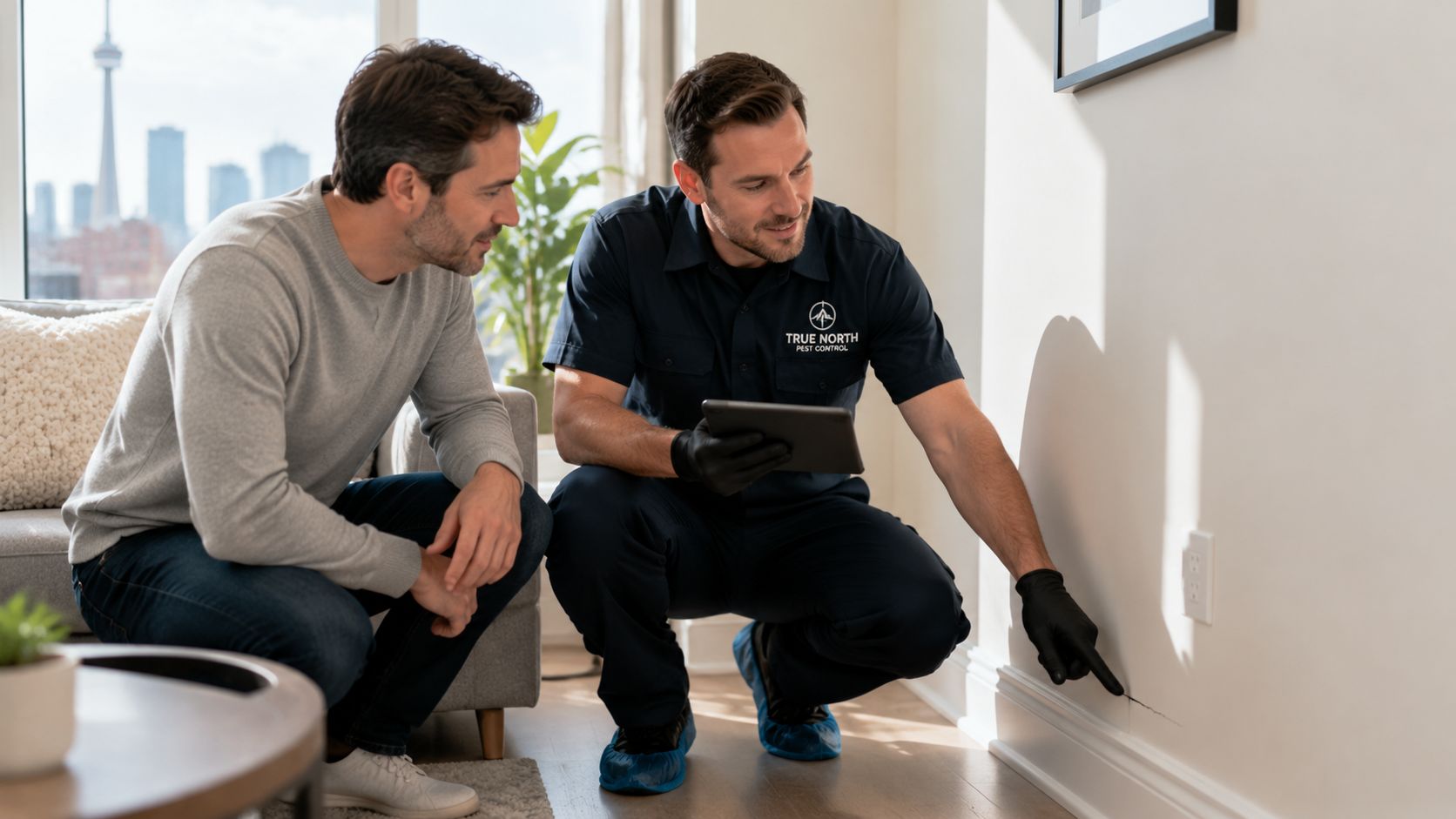
The first visit should never feel rushed or vague. A proper provider identifies the pest, inspects likely harbourage or entry points, explains why the infestation developed, and outlines what the treatment can and cannot do on the first round.
Residents should expect clear preparation instructions where needed. Bed bug jobs may require laundering, bagging, and furniture access. Rodent and wildlife work may require exterior inspection and proofing approval. Cockroach treatments often depend on sanitation and clutter reduction to expose hidden harbourage.
A good quality checklist includes:
- Licensed and insured technicians: Residents need proof that the work is being done by trained professionals.
- Clear treatment scope: The quote should state what's included, what isn't, and whether follow-up is part of the service.
- Safety instructions: Homes with children, pets, tenants, or food handling areas need plain-language guidance before and after treatment.
- Practical recommendations: The technician should identify moisture, storage, waste, or structural issues that are feeding the problem.
The standards Toronto residents should expect
Guarantees matter, but only when they are explained properly. Homeowners should ask what triggers a return visit, what conditions must be met to keep the guarantee valid, and whether unresolved structural issues are excluded. “Guaranteed” without detail is not enough.
Response speed also matters. A wasp issue near a front entry, cockroaches in a restaurant kitchen, or bed bugs in a rental turnover situation can't wait long. Fast scheduling is part of professional service, but speed should not replace inspection quality.
For a more detailed breakdown of service standards, this guide on what to look for in a Toronto pest control company gives homeowners a practical screening framework.
The right provider doesn't just remove pests. The right provider explains the cause, the timeline, the risks of recurrence, and the exact steps needed to keep the property stable after treatment.
Your Proactive Pest Prevention Plan for Toronto Homes
If you have heard scratching in a wall at 2 a.m., found ant trails in the kitchen after a rainfall, or noticed droppings near a condo utility closet, the problem feels personal fast. Toronto homes deal with constant pest pressure because density, aging building stock, shared walls, and ravine corridors give pests plenty of ways in. The good news is that prevention works when it follows a clear order.
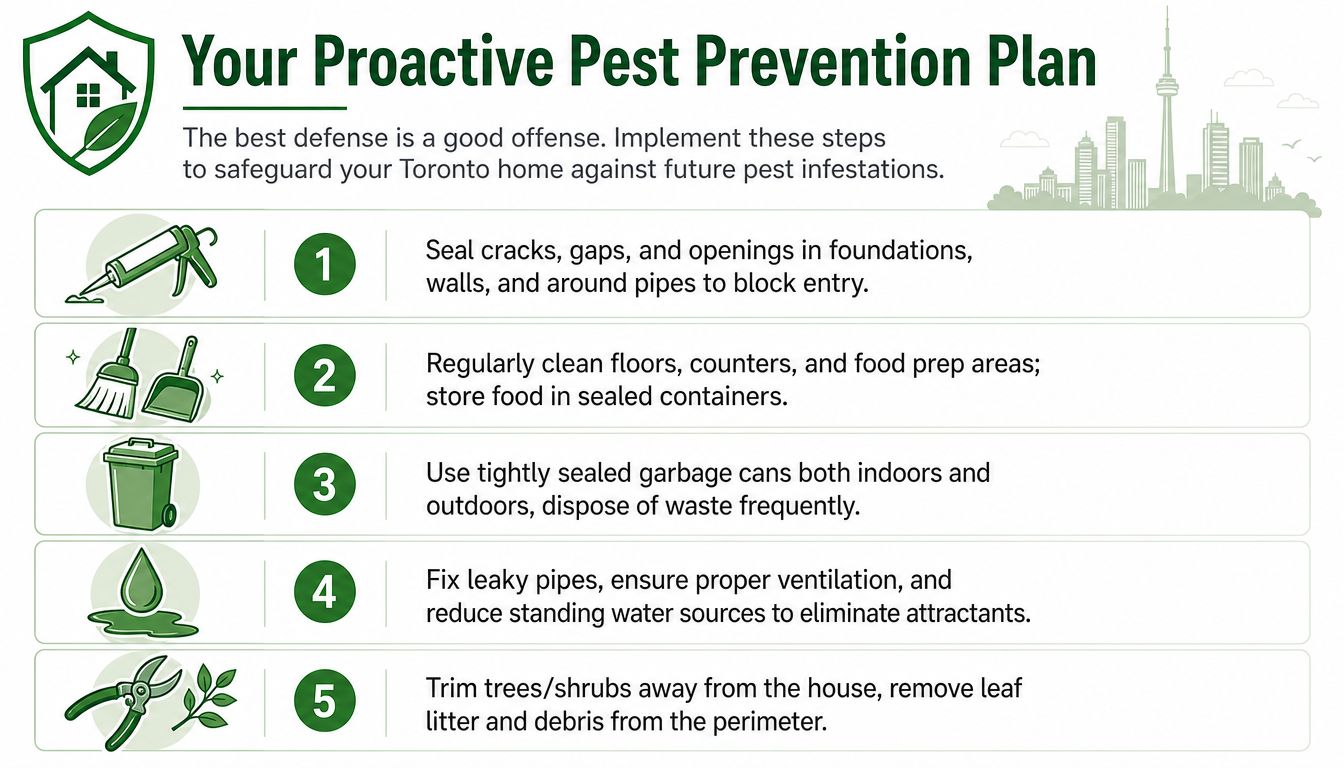
Start with entry points. Then remove food and water sources. Then reduce the exterior conditions that keep pressure on the property.
The home maintenance habits that matter most
In Toronto, I tell homeowners to focus first on the parts of the house pests use every day, not the parts people notice first. A tiny gap around an AC line, worn weatherstripping at a side door, or an unsealed pipe chase in an older brick home matters more than a spotless front hallway.
A practical prevention plan includes:
- Seal structural gaps: Inspect pipe entries, cable penetrations, sill plates, vents, door sweeps, garage corners, and foundation cracks. For homeowners reviewing sealant options around mouse entry points, Airtight Spray Foam Insulation's guide gives useful context on where foam is used and where proper exclusion details matter more.
- Control food sources: Store dry goods in sealed containers, clean grease and crumbs from under appliances, and pick up pet food before night.
- Reduce moisture: Repair sink leaks, dry out basement utility areas, improve airflow, and deal with condensation near laundry rooms and furnace spaces.
- Lower exterior pressure: Keep green bins shut, rinse recycling, trim branches away from the roofline, and avoid storing bags or boxes against the house.
- Remove shelter near the foundation: Firewood, dense vegetation, debris, and neglected sheds give rodents and insects protected staging areas close to the structure.
Older homes in East York, Riverdale, Parkdale, and similar neighbourhoods need extra attention. Settlement cracks, aging mortar, and patched renovation openings often create repeat access points that look minor but stay active for months.
What condo residents should do differently
Condo prevention has to account for the whole building. A clean unit can still get cockroaches, pharaoh ants, or mice if activity is moving through pipe chases, garbage rooms, locker areas, or adjoining suites.
That is why single-visit expectations often create frustration. In dense buildings, rodent and insect control usually takes coordinated follow-up, building cooperation, and time for pressure to drop across shared spaces. One treatment inside one unit may reduce activity, but it does not correct migration routes elsewhere in the structure.
A sound condo action plan looks like this:
- Report the first signs early: Delayed reporting gives pests more time to spread through neighbouring units and service areas.
- Track where activity shows up: Droppings under the sink, noises behind the dishwasher, or sightings near baseboard heaters help identify the travel path.
- Make treatment areas accessible: Clear under sinks, around appliances, inside utility closets, and along affected baseboards.
- Push for building-level follow-through: Management should assess common areas and adjoining units when patterns suggest shared-wall movement.
- Stay consistent with follow-up visits: Ongoing activity after the first service does not mean the plan failed. It often means the building pressure is still being worked down.
Homeowners and condo residents who want a longer checklist can review this guide on protecting GTA homes from future pest infestations.
In Toronto homes, prevention is a maintenance plan. Seal entry points, control moisture, manage waste properly, and act on the first sign before a small problem turns into a building-wide one.
Frequently Asked Questions About Toronto Pest Control
How should a home be prepared before treatment
Preparation depends on the pest. For ant, cockroach, and rodent jobs, residents should usually clear access to baseboards, under sinks, behind appliances, and around utility areas. For bed bugs, preparation is more involved and may include laundering fabrics, bagging items, reducing clutter, and giving technicians full access to sleeping and seating areas. The service provider should give written instructions before arrival.
Are pest control treatments safe for children and pets
Professional treatment plans should come with clear safety instructions based on the product or method being used. In many cases, technicians use targeted applications rather than broad exposure. The important part isn't just whether a treatment is labelled safe. It's whether the household follows the pre-treatment and re-entry guidance exactly.
What does a money-back guarantee actually cover
A guarantee should define the covered pest, the covered area, the time period, and the client responsibilities needed to keep it valid. Residents should ask whether missed preparation, untreated adjoining units, unresolved structural openings, or sanitation issues affect eligibility. A real guarantee is specific, not vague.
How long does pest control take to work
That depends on the pest and the method. Some insect issues improve quickly after treatment. Rodents and wildlife often take longer because activity changes only after entry points are controlled and the existing population is reduced. Condo residents should be especially careful not to judge rodent work too early if the problem involves migration through shared spaces.
Can a tenant or condo owner book service without involving management
Sometimes yes, but not always effectively. If the pest pressure comes from common areas, adjacent units, exterior garbage storage, or structural voids, management involvement improves the chance of a lasting result. In rental and condo settings, communication is often part of the treatment plan.
Is one visit enough
Sometimes. Often not. A single isolated ant issue may be handled quickly. Bed bugs, rodents, cockroaches, termites, and wildlife often require follow-up, monitoring, proofing, or verification. Homeowners should ask whether the proposed service is designed as a one-time treatment or as part of a complete control program.
If pest activity has started to affect sleep, food storage, tenants, or day-to-day comfort, Vanish Pest Control Inc. is one Toronto option for licensed pest control and humane wildlife removal across the GTA. A proper inspection can identify the pest, explain the treatment path, and map out the prevention steps needed to restore the home to normal.
One Response