

Scratching in the ceiling at night. Droppings behind the toaster. A sudden smell in the basement storage room. Most Toronto homeowners and condo residents start searching for Rodent removal services near me when the problem has already become impossible to ignore.
That urgency is real, but speed alone doesn't solve a rodent issue in Toronto. In dense neighbourhoods, older housing stock, semi-detached homes, laneway properties, condos, restaurants, and mixed-use buildings, rodents don't just appear and disappear. They move through wall voids, utility lines, shared foundations, garbage areas, crawl spaces, and roofline gaps. A service that only removes the rodents you can hear today often leaves the actual cause untouched.
A proper solution needs four parts working together: inspect, remove, exclude, and sanitize. That's the difference between a short-term reduction and a long-term fix that gives people their kitchen, basement, pantry, or business back with confidence.
Table of Contents
- Why Quick Trapping Is Not Enough for Toronto Homes
- Our Complete Rodent Removal and Proofing Process
- Understanding Rodent Control Costs in Toronto
- Our Same-Day Response and Service Guarantee
- Keeping Rodents Out A Prevention Guide for Toronto Residents
- Frequently Asked Questions About Rodent Removal
Why Quick Trapping Is Not Enough for Toronto Homes
A trap can catch a mouse. It can't seal a pipe gap under a sink, close a broken vent opening, or correct a garbage storage problem behind a building. That's why quick trapping often feels effective for a few days, then fails.
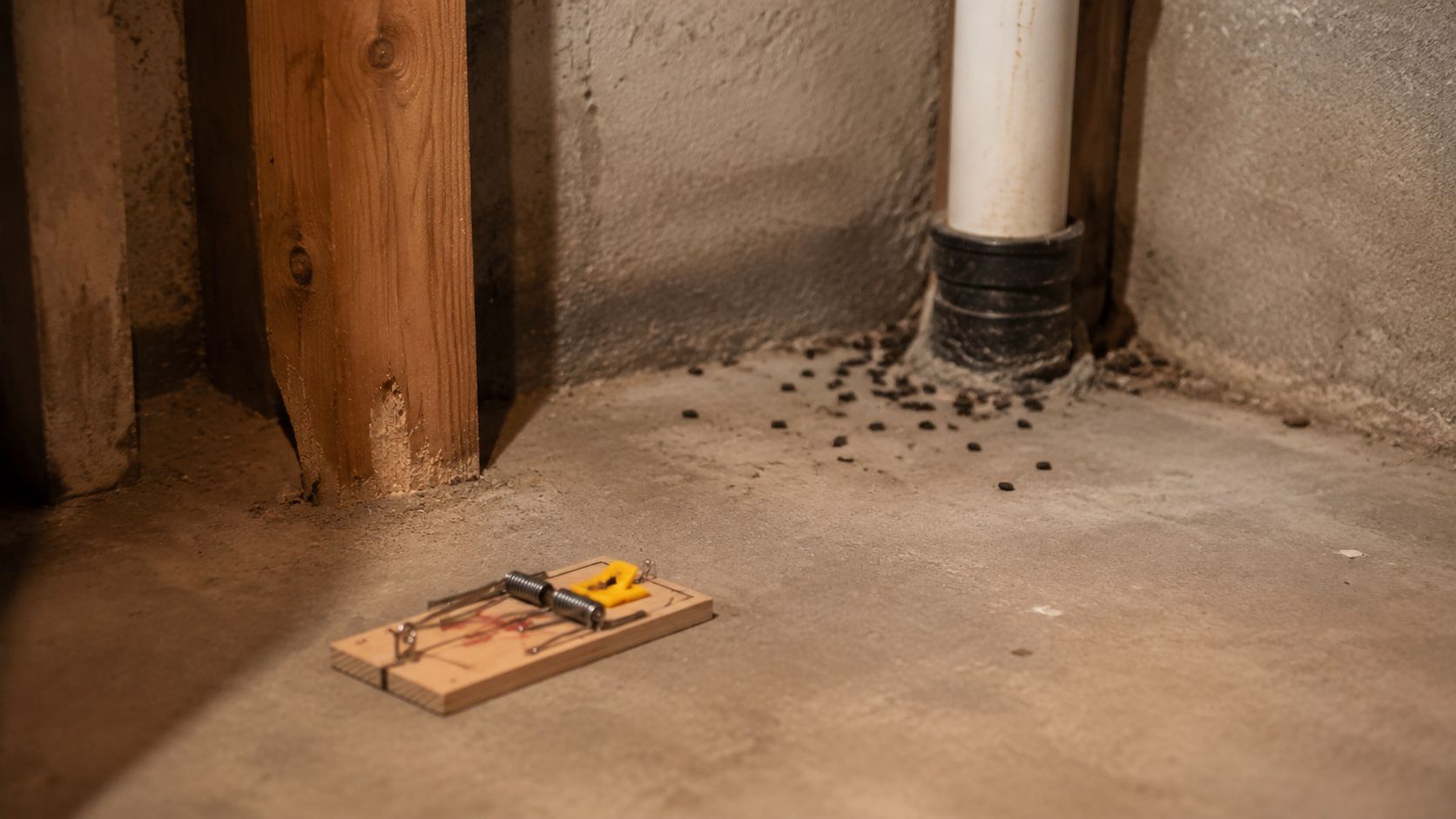
Toronto homes create ideal conditions for repeat intrusions. Older brick foundations settle. Utility penetrations widen. Roof edges age. Semi-detached houses share structural pathways. Condo and apartment buildings add another challenge because activity in one unit can spread through common routes. Public health guidance for Toronto stresses that rodents are drawn to food, shelter, and water, and that prevention depends on sealing entry points and proper waste handling, especially in multi-unit settings where a single untreated access point can keep the issue alive across units.
What trapping does well
Trapping has a clear role. It reduces active population pressure inside a unit or structure. It helps confirm where rodents are travelling. It can also show whether the activity involves mice or rats, which changes placement strategy and follow-up work.
But trapping is only one layer.
What trapping misses
A removal-only job usually leaves behind the conditions that invited the infestation in the first place:
- Open access points around plumbing, conduit, vents, doors, and foundation joints
- Hidden nesting sites in insulation, storage clutter, wall voids, and unfinished basements
- Food access from pet food, pantry spills, compost, unsecured bins, and commercial waste areas
- Contaminated zones where droppings and urine continue to attract activity
Practical rule: If rodents can still enter, they can still return.
This is also why household shortcuts tend to disappoint. Scent-based products, loose DIY patching, and folklore fixes rarely solve a structural infestation. Homeowners who are considering repellents often benefit from reading a practical breakdown of whether mothballs repel mice before relying on them.
For Toronto homes, the answer isn't more traps. It's a complete plan that removes the current activity, closes the entry routes, and addresses the sanitation issues that keep rodents comfortable indoors.
Our Complete Rodent Removal and Proofing Process
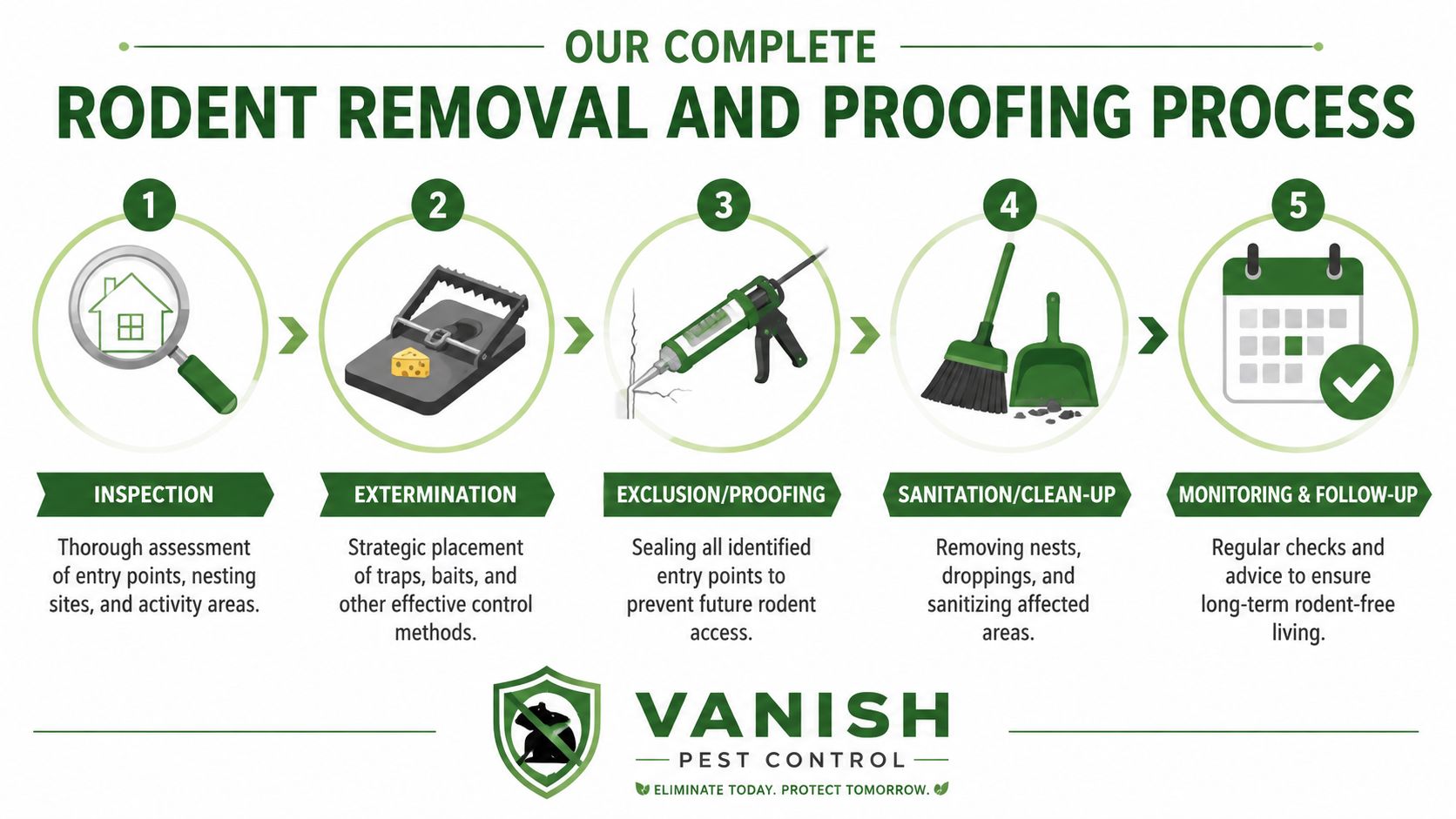
The most reliable workflow in rodent control is exclusion first in mindset, removal in strategy, and follow-up in practice. Guidance used across the trade treats inspection, species identification, sealing entry points, and monitoring as the core of effective control because rodents re-enter if structural gaps remain, which is especially important in Toronto properties with shared walls and utility penetrations.
A complete service should feel organised from the first visit. Each stage has a job. Each stage supports the next.
Thorough Inspection and Identification
Inspection starts with evidence, not assumptions. Technicians check droppings, rub marks, gnawing, tracks, nesting material, odours, grease trails, and likely travel lines. They also look at the structure itself because the building usually explains the infestation.
In Toronto homes, common problem areas include:
- Basements and utility rooms where pipes and cables enter
- Kitchens and pantries with hidden gaps behind appliances and cabinets
- Attics and roof transitions where soffits, vents, or roofline joints weaken
- Condo mechanical penetrations around dishwashers, sinks, laundry connections, and risers
Species identification matters because mice and rats behave differently. Travel routes, feeding habits, nesting preferences, and trap placement all change depending on what's present. A proper inspection also distinguishes between isolated interior activity and ongoing exterior pressure.
For readers dealing with repeat activity, this detailed mice control checklist for Toronto and the GTA offers a useful starting point for understanding what technicians look for.
Strategic Trapping and Humane Removal
Once activity zones are mapped, removal begins with targeted placement. Random trap placement wastes time. Good placement follows rodent behaviour. Along walls. Near runways. Close to nesting zones. Away from disturbance.
This stage may include snap traps, tamper-resistant stations, and other targeted control methods suited to the site. In homes with children or pets, placement and containment matter as much as the device itself. In commercial settings, discretion and food-safe positioning matter just as much.
Rodent control works better when every trap has a reason for being where it is.
The goal here isn't theatrical. It's controlled reduction. Technicians want to interrupt movement, remove active animals, and verify where the pressure is highest.
Expert Rodent-Proofing and Exclusion
Exclusion is how long-term value is created. It means sealing the openings rodents use to enter and move within the structure. In practice, that can involve gaps around pipes, damaged sweeps, foundation cracks, unprotected vent openings, siding transitions, roofline defects, and penetrations around cables or utility lines.
Not all sealing work is equal. Soft materials fail fast if rodents can chew through them. Durable proofing uses materials appropriate to the location and the type of pressure at that point. The repair also has to match the building. A detached home in East York won't present the same pattern as a downtown condo unit or a restaurant near a laneway bin area.
Vanish Pest Control Inc. provides rodent-proofing as part of this broader process for Toronto and the GTA, along with inspection, treatment planning, and follow-up support.
Professional Cleaning and Disinfection
Once the rodents are removed and access points are addressed, the contaminated areas still need attention. Droppings in a pantry corner, nesting debris in insulation, and soiled storage areas don't belong in a finished home or an active business.
Cleaning and disinfection typically focus on:
- Removing contaminated nesting material from accessible areas
- Cleaning droppings and debris using methods that reduce unnecessary disturbance
- Disinfecting affected surfaces in kitchens, storage rooms, basements, and utility areas
- Advising on replacement or repair when insulation, packaging, or stored goods are no longer suitable to keep
People often think the job is done when the noise stops. In reality, the space isn't fully restored until the contamination is handled properly and the entry routes are closed.
Understanding Rodent Control Costs in Toronto
Pricing causes confusion because many people compare unlike services. A low quote may cover trap placement only. A higher quote may include inspection, active removal, proofing recommendations, exclusion work, sanitation steps, and follow-up. Those are different jobs.
For Toronto residents searching Rodent removal services near me, the better question isn't “What's the cheapest visit?” It's “What scope of work is included?”
What Changes the Price
Several factors shape the final cost.
- Rodent type affects complexity. Mice in a condo kitchen often require a different approach than rats in a basement, crawl space, or rear yard access point.
- Property layout matters. A compact apartment is different from a semi-detached house with an attic, garage, and unfinished lower level.
- Extent of activity changes labour needs. A recent issue is simpler than a long-standing infestation with heavy contamination and multiple entry routes.
- Exclusion work can be minor or extensive depending on how many openings need to be sealed and how accessible they are.
- Follow-up requirements increase when the building has shared walls, commercial waste exposure, or recurring pressure.
A transparent provider should explain what's included before the work begins. Homeowners comparing estimates can also review this page on rat pest control costs to understand how scope affects pricing.
Sample Rodent Removal Pricing Scenarios in Toronto
The examples below are qualitative because pricing varies by structure, access, and repair needs. They are meant to show how costs are built, not promise a flat rate.
| Scenario | Property Type | Typical Service Scope | Estimated Cost Range |
|---|---|---|---|
| Recent mouse activity in one area | Condo apartment | Inspection, targeted trapping, limited exclusion recommendations, basic follow-up | Lower end |
| Ongoing mouse issue across kitchen and basement | Semi-detached home | Full inspection, multiple trap points, proofing of common gaps, sanitation advice, follow-up visit | Moderate |
| Rat activity with exterior and interior access | Detached Toronto home | Inspection of basement and perimeter, targeted control, more extensive exclusion, contaminated area cleaning | Moderate to higher |
| Repeat rodent reports in a shared building | Multi-unit property | Unit inspection, common-area assessment, coordinated proofing plan, monitoring, staged follow-up | Higher due to complexity |
| Restaurant or food-service rodent issue | Commercial property | Urgent inspection, treatment plan, sanitation-focused recommendations, proofing priorities, monitoring | Higher based on risk and urgency |
Cheap rodent work usually becomes expensive when the same openings are left unsealed and the same service has to be repeated.
Our Same-Day Response and Service Guarantee
When rodents are active, delay works in their favour. They keep nesting, contaminating storage areas, chewing wiring, and finding new voids to occupy. Response time isn't a convenience feature. It changes the size of the cleanup and the amount of damage a property owner has to manage.
Why Speed Matters
Operational response time is a key differentiator in rodent control because infestation growth is nonlinear. Providers commonly advertise same-day or next-day inspections, and some promote emergency response windows, because delays give rodents more time to spread contamination and gnaw damage. For Toronto residents, faster dispatch reduces health risks and property damage (response time in rodent control).
That matters in real settings across the city:
- Homes need quick action when activity reaches kitchens, children's rooms, or food storage.
- Landlords and property managers need documented inspection findings fast when multiple units may be affected.
- Restaurants and cafés can't afford extended downtime around prep areas, dry storage, or waste zones.
- Warehouses and offices need quick containment before inventory or work areas are affected.
What a Service Guarantee Should Mean
A guarantee should be practical, not vague. It should define what follow-up support looks like, when technicians return, and what happens if activity persists because the original problem wasn't fully resolved. It should also make clear where customer cooperation matters, such as granting access, correcting sanitation issues, or approving recommended exclusion work.
People feel more at ease when the service has a clear process and clear accountability. Fast response reduces immediate stress. A defined guarantee reduces uncertainty after the first visit.
Keeping Rodents Out A Prevention Guide for Toronto Residents
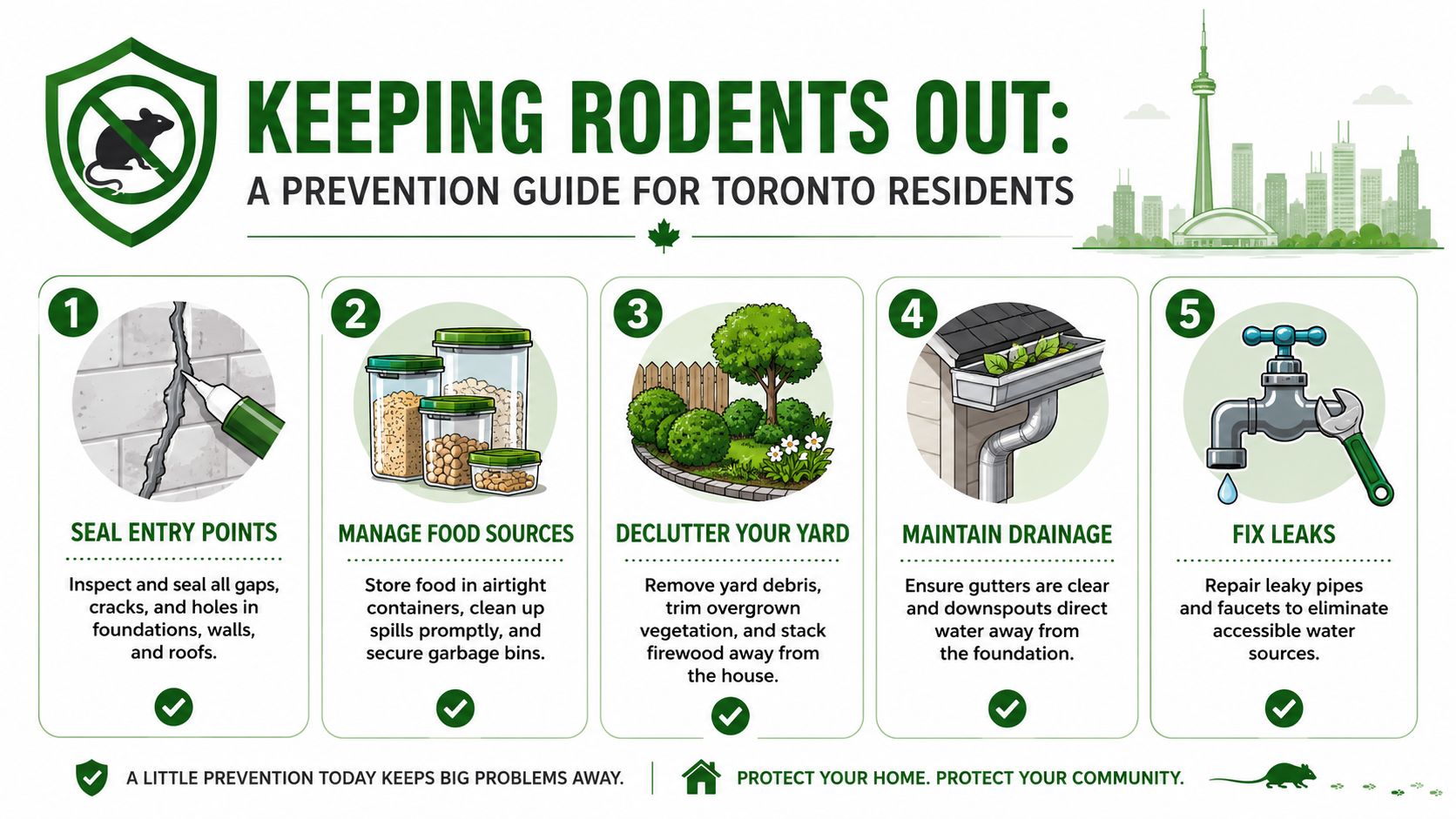
Long-term rodent prevention depends on making the property harder to enter and less rewarding to stay in. Urban rodent control frameworks place the emphasis on eliminating garbage access, sealing foundation and doorway gaps, and trimming vegetation because those conditions actively support infestations rather than merely accompany them (urban rodent prevention measures).
For Toronto homes, that means prevention has to include both the building and the habits around it.
The Trouble Spots to Check First
Start with the places rodents use without being seen.
- Foundation edges and service entries around hydro, gas, AC lines, and plumbing
- Door bottoms and garage perimeters where worn sweeps leave open space
- Rear yards and laneways with bins, debris, dense growth, or stacked materials
- Under sinks and behind appliances where small openings connect directly into wall voids
- Attic and roofline transitions where damaged vents or soffits create sheltered access
Small openings become big problems when they connect directly to warmth, food, and cover.
For food-service operators, sanitation inside the building matters as much as exclusion outside it. Restaurant owners reviewing kitchen hygiene standards may find Arelli restaurant cleaning useful as a reference for keeping prep and waste areas consistently cleaner between pest-control visits.
Daily Habits That Lower Rodent Pressure
Prevention works best when routine habits support the structural work.
- Secure food properly by using sealed containers for pantry goods, pet food, and bulk dry products
- Control waste by keeping garbage lids shut, cleaning bin areas, and avoiding overflow around compost or recycling
- Reduce shelter outdoors by trimming heavy vegetation, removing yard clutter, and storing firewood away from the house
- Manage moisture by fixing leaks, keeping drains functional, and preventing standing water near the foundation
- Watch for early signs such as new droppings, scratching, gnawing, or grease marks along lower walls
Toronto residents often focus on what's happening inside the kitchen because that's where activity is most obvious. The better approach is to treat the property as one system. The yard, the bins, the basement, the utility penetrations, the shared wall, and the pantry all connect.
Frequently Asked Questions About Rodent Removal
Rodent issues usually come with the same worries. Is the treatment safe. Will the mice come back. Is this a one-visit problem or something bigger. Clear answers help property owners make decisions faster and avoid half-measures.
Are treatments safe for children and pets
Safety depends on product choice, placement, containment, and site conditions. In homes with children and pets, technicians should use methods and placement strategies that account for access, behaviour, and room use. Homeowners should also follow post-service instructions closely, especially around kitchens, pet feeding zones, and storage spaces.
How long does rodent-proofing last
Proofing lasts when the repair is durable and the surrounding conditions stay under control. If a building shifts, a door sweep wears out, or new contractor work opens fresh gaps, rodents can use those new routes. That's why periodic inspection matters, particularly in older Toronto homes and shared buildings.
What if noises come back after service
The first step is to note where and when the sound occurs. Ceiling at night, wall beside the kitchen, basement utility room, and garage rafters can point to different patterns. A technician can then decide whether the issue is lingering rodent activity, a new entry point, or something unrelated.
If a previous infestation left visible damage, property owners sometimes need minor repair work after exclusion is finished. For simple cosmetic patching, this guide to fixing holes in walls can help with the finishing side once pest-related access points have been professionally addressed.
Do rodent issues get worse at certain times of year
Yes. A key challenge in the GTA is seasonality. Public guidance notes that activity peaks when outdoor food sources diminish, which is why proactive inspection and proofing before peak intrusion periods helps Toronto property owners avoid recurring problems (seasonal rodent pressure in the GTA).
The best time to seal entry points is before rodents start using them heavily.
Do you handle restaurants offices and rental properties
Yes, rodent work often extends well beyond single-family homes. Restaurants, offices, warehouses, rental units, and mixed-use properties all need different inspection priorities and documentation standards. Commercial spaces usually need faster coordination around operations, while multi-unit buildings need attention to common routes and responsibility between units and shared areas.
For Toronto residents who want a durable fix instead of another temporary cleanup, Vanish Pest Control Inc. provides licensed pest control and rodent-proofing support across the GTA. A proper service starts with inspection, identifies the actual access points, removes active rodents, addresses contamination, and closes the routes that let the problem continue.




