

A Toronto homeowner often notices silverfish the same way. The bathroom light goes on late at night, something silvery flashes across the tile, and then it disappears under a baseboard or behind the vanity. In a condo, it might happen near the tub. In an older Toronto home, it might be in the upstairs washroom, the basement laundry area, or a pantry wall that always seems a little damp.
That first sighting is unsettling, but it usually points to a manageable nuisance, not a dangerous emergency. Silverfish don't create the kind of immediate health concerns that people associate with mice, rats, cockroaches, bed bugs, or wasps. What they do signal is that part of the home is offering the exact conditions they need to stay active.
In Toronto homes, that usually comes back to moisture. Humid summer air, condo bathrooms with weak ventilation, damp storage lockers, leaky plumbing, and older basements all create the kind of indoor environment silverfish like. Effective pest control for silverfish starts with that reality. Killing the visible insects matters, but lasting control comes from changing the conditions that let them hide and return.
Table of Contents
- That Glimmer of Silver in Your Bathroom What Are You Dealing With
- Identifying Silverfish and Signs of Infestation
- Why Silverfish Love Toronto Homes The Science of Moisture
- The Limits of DIY Silverfish Remedies
- Our Professional Silverfish Extermination Process
- Preparing for Treatment What Toronto Residents Can Expect
- Long-Term Silverfish Prevention A Proactive Homeowners Checklist
- Frequently Asked Questions About Silverfish Control
That Glimmer of Silver in Your Bathroom What Are You Dealing With
Silverfish sightings in Toronto homes often follow a pattern. A resident in a downtown condo starts seeing one near the sink every few nights. A family in an older detached home notices them in the basement bathroom and then finds one in a linen closet upstairs. A landlord gets a message from a tenant who keeps spotting them around the kitchen kick plates after dark.
In most cases, the insect itself looks alarming because it moves quickly and appears where people expect a clean, dry room. That's why the reaction is often stronger than the pest warrants. Silverfish are mainly a nuisance pest, but they're a useful warning sign that a bathroom, pantry, closet, or basement is staying too damp for too long.
Practical rule: If silverfish keep showing up in the same room, the room has a moisture problem until proven otherwise.
Toronto residents deal with a mix of housing styles that make this common. High-rise bathrooms can trap humidity after showers. Older homes can have hidden seepage, aging caulking, or cool basement walls that collect condensation. Even tidy homes can support silverfish if the environment stays humid and undisturbed.
That's the key point. A silverfish problem usually isn't about poor housekeeping alone. It's about hidden conditions. Once those conditions are identified, pest control for silverfish becomes much more straightforward and much more effective.
Identifying Silverfish and Signs of Infestation
A homeowner shouldn't have to guess whether the insect on the wall is a silverfish, a young cockroach, or another fabric-damaging pest. Correct identification shapes the entire treatment plan.
What silverfish look like
Silverfish have a tapered, carrot-shaped body with a silvery sheen. They're wingless, flattened, and quick. Their antennae are long, and their movement has a wriggling quality that explains the name.
They don't move like ants. They don't have the broad body shape of cockroaches. They also don't sit out in the open for long. In Toronto homes, they're most often noticed when a light turns on suddenly in a bathroom, basement, laundry room, or pantry.
How they behave indoors
Silverfish prefer dark, quiet areas where people don't disturb storage, trim lines, or plumbing spaces very often. They tend to stay close to edges. That means baseboards, cupboard corners, shelving joints, under-sink voids, and the gaps around pipes are all common travel routes.
They're also good at staying hidden during the day. One visible silverfish doesn't always mean a severe infestation, but repeated sightings in the same area usually mean there's an established harbourage nearby.
What evidence they leave behind
The insect itself is only one clue. Homeowners should also look for signs such as:
- Irregular surface damage: Small chewed areas on paper, cardboard, wallpaper, book bindings, or stored fabrics.
- Yellowish marking: Faint stains on paper goods, textiles, or wall coverings.
- Tiny dark droppings: Speck-like debris that can resemble pepper.
- Shed material: Fine scales or cast skins in quiet storage areas.
Some Toronto residents first suspect a textile pest when they notice damage in closets or on rugs. In those cases, it helps to compare the pattern with other fabric pests. This guide to carpet beetle infestations in Ontario is useful when the damage source isn't obvious.
A practical inspection starts with the rooms where humidity stays highest. Bathrooms, kitchen sink cabinets, laundry spaces, basement storage, and paper-heavy closets are usually the first places worth checking.
Why Silverfish Love Toronto Homes The Science of Moisture
The primary battleground in pest control for silverfish isn't the trap. It's the indoor environment.
Humidity drives the problem
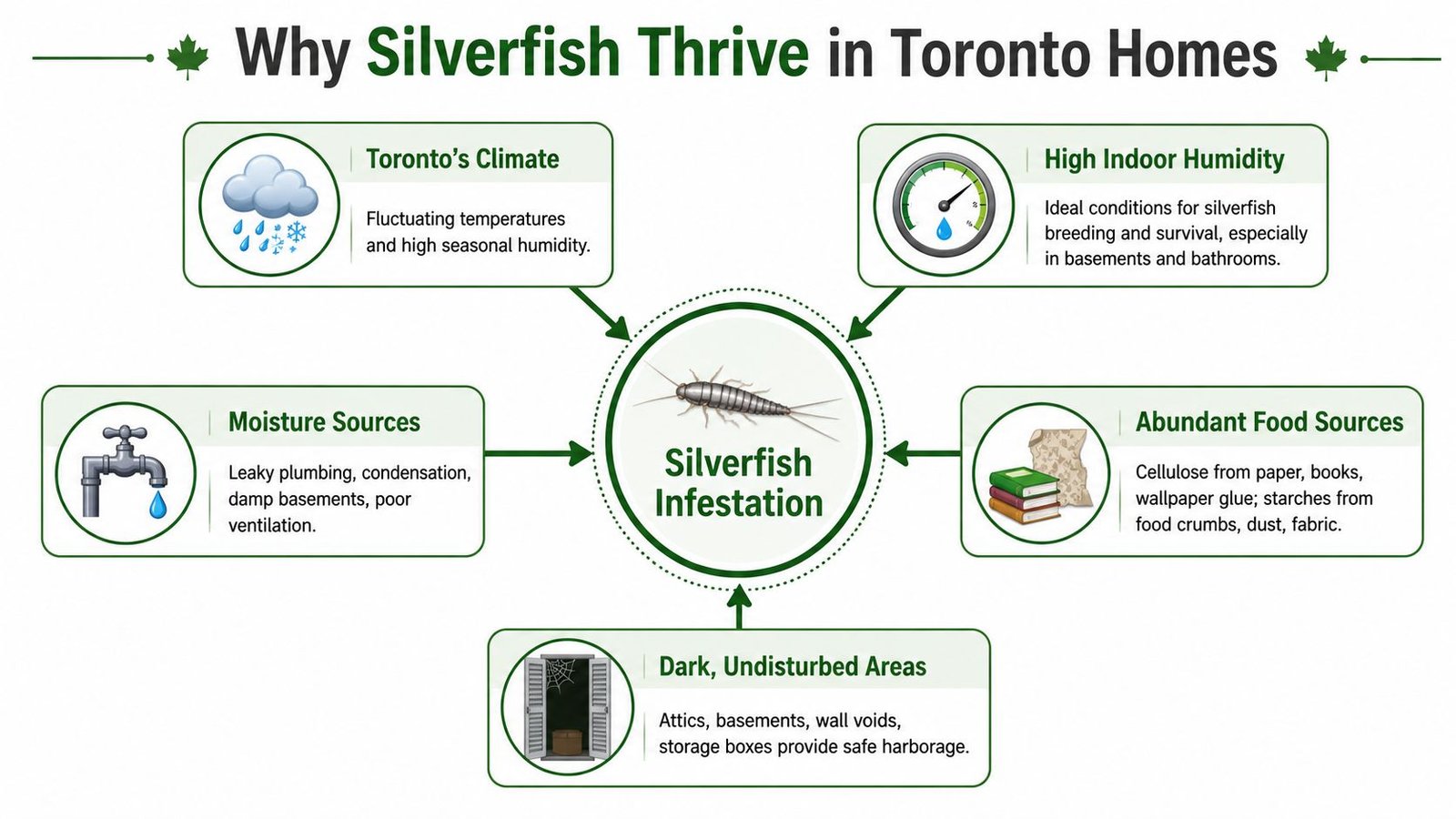
Silverfish need moisture to stay active. In Ontario's humid zones, control depends on reducing indoor humidity because silverfish require moisture levels above 60% and management relies on bringing ambient humidity below 50% RH according to this silverfish control guidance.
That matters because a homeowner can kill visible insects and still keep the infestation alive if the room stays damp. Bathrooms with poor fan use, basement corners with stale air, and closets against cool exterior walls can all hold enough moisture to keep harbourages viable.
Why Toronto homes are especially vulnerable
Toronto's climate creates the perfect setup for recurring silverfish issues. Summer air can be muggy, especially in buildings that don't vent bathrooms well. Condo residents often deal with steam-heavy washrooms and shared plumbing chases. In older Toronto homes, basements and crawl-adjacent spaces can stay cool and damp long after a rainstorm.
Winter brings a different version of the same problem. Some indoor spaces collect condensation where warm air meets cold surfaces. That's why the moisture issue isn't limited to July and August. It can continue year-round in the right pocket of the home.
Moisture problems often overlap with mould-prone spaces. Where there's repeated condensation, poor airflow, or attic moisture migration, the conditions that support one building issue often support another. Homeowners dealing with those broader conditions can see how they connect in this article on attic mold remediation in Toronto and the GTA.
Food and shelter complete the setup
Moisture is the first requirement, but it isn't the only one. Silverfish also do well in homes that give them:
- Cellulose-rich materials: Paper, cardboard, books, wallpaper backing, and stored documents.
- Quiet shelter: Closets, storage bins, behind baseboards, wall voids, and utility penetrations.
- Low disturbance: Guest bathrooms, linen cabinets, underused basements, and storage rooms.
When silverfish keep showing up in a clean condo bathroom, the problem usually isn't visible dirt. It's humidity, harborage, and access behind finished surfaces.
That's why a moisture-first strategy works better than a bug-first strategy. It deals with the reason the infestation is surviving.
The Limits of DIY Silverfish Remedies
A Toronto homeowner usually tries the obvious fixes first. A few traps under the vanity, a can of spray along the baseboard, maybe a dust from the hardware store. That can lower the number of silverfish you see. It rarely changes the damp conditions that let the infestation hold inside the unit.
That distinction matters in condos and older homes. If humidity stays high behind a bathroom cabinet, around a plumbing chase, or inside a laundry closet, silverfish keep breeding out of sight while surface treatments deal with stragglers.
What common DIY methods can do
Some DIY tools are useful when they're used for the right job.
Sticky traps help confirm where activity is concentrated. They're a monitoring tool, not a stand-alone treatment. A trap near the toilet or linen closet can tell you where movement is happening, but it won't touch the insects living behind trim or inside wall gaps.
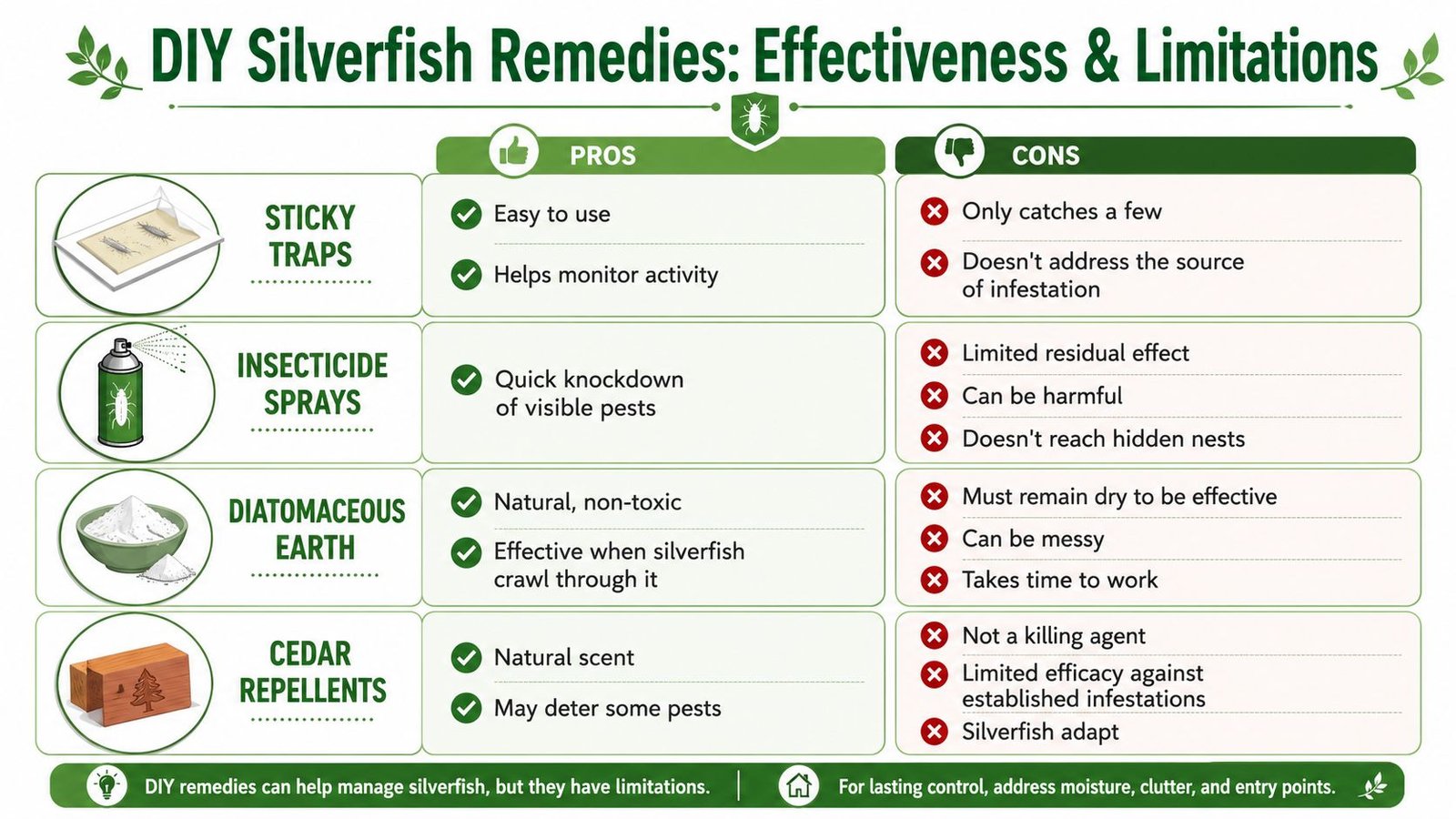
Diatomaceous earth and boric acid dust also have a place, but only in dry, protected voids. In the field, that usually means areas that stay undisturbed and do not collect condensation. Health Canada notes in its silverfish and firebrat guidance that homeowners should follow labelled directions carefully and use approved products only where they are intended to go. In a humid bathroom, an exposed dust treatment often cakes up, gets cleaned away, or ends up placed where it does little good.
Aerosol sprays are the same story. They can kill silverfish that are directly hit. They do not reach the protected harbourages where the population is established.
Where DIY usually falls short
The main limit is not effort. It's access and moisture control.
Silverfish spend most of their time in cracks, voids, under floor edges, behind baseboards, and around plumbing penetrations. In Toronto condos, I often find the surviving population tied to a damp micro-environment, not the open floor where the insects were noticed. Homeowners treat the symptom they can see. The infestation survives in the area they cannot open.
Humidity makes that gap worse. If the bathroom fan is weak, towels dry slowly, or condensation forms around cold plumbing lines, silverfish keep getting the conditions they need. That is why a good-looking DIY cleanup can still fail within a few weeks.
This is also the trade-off with store-bought products. The safer and easier a product is for general household use, the less likely it is to solve a hidden infestation by itself. Professional work focuses on placement, inspection, and environmental correction, which is why many homeowners eventually turn to professional pest control services for hidden infestations.
A simple comparison helps:
| DIY method | Where it helps | Main limitation |
|---|---|---|
| Sticky traps | Tracking activity levels | Does not reach harbourages |
| Surface spray | Killing exposed insects | Little effect on hidden populations |
| Dry dust application | Protected, dry voids | Fails in damp or exposed areas |
| Repellents | Short-term deterrence | Does not correct the moisture source |
What to check before using any dust or pesticide
Before applying any product, check whether the problem area is dry enough for that product to work. That step gets skipped all the time.
Use this checklist:
- Check the label: Confirm the product is approved for silverfish or firebrats and has a valid PCP number.
- Check the environment: Do not place dusts on wet surfaces, around active condensation, or in areas that get regular wiping or mopping.
- Use small, targeted amounts: Overapplying creates mess and can reduce performance.
- Watch the pattern of sightings: If activity keeps returning after cleaning and spraying, the underlying issue is usually moisture inside a hidden area.
- Be realistic about scope: DIY can reduce visible activity. It often does not remove the source population.
Our Professional Silverfish Extermination Process
A silverfish service call usually starts with a familiar Toronto pattern. The insects show up in the bathroom at night, under the kitchen sink, or in a condo laundry closet, but the underlying problem sits behind the wall or under a cabinet where moisture stays trapped.
That is why our process starts with conditions, not just sightings. Silverfish control works best when treatment is built around humidity, condensation, and sheltered harbourage areas.
Inspection starts with moisture mapping
We inspect the places where Toronto homes hold damp air and slow drying. That includes bathroom vanities, tub panels, toilet seals, kitchen kick plates, laundry connections, utility penetrations, storage closets on exterior walls, and basement edges where cooler surfaces collect humidity.
In condos, shared plumbing walls are a frequent pressure point. In older houses, the pattern often splits between an upper bathroom and a basement utility area. Silverfish travel between those zones more easily than many homeowners expect, especially when humid summer air and routine indoor moisture give them stable hiding conditions.
The goal is to identify three things at the same time. Where they are breeding, how they are moving, and what is keeping that area suitable for them.
Targeted treatment in protected harbourages
After inspection, treatment goes into the hidden areas where silverfish rest and travel. We apply products into cracks, crevices, voids, plumbing openings, and other protected spaces that stay relatively undisturbed. Surface spraying alone rarely solves a settled infestation because the visible insect is usually the edge of a larger population.
Product choice depends on the site. Dry voids may be suited to dust application. Travel routes and sheltered junctions may call for a residual material placed with precision. Wet or frequently cleaned areas need a different plan, because product performance drops fast when the environment is wrong.
Placement matters more than volume.
Homeowners who want a clearer sense of why inspection and precise application make the difference can review why professional pest control services matter for hidden infestations.
Environmental correction is part of the treatment
A good silverfish program does not stop with insecticide. We also look at why the space keeps supporting them.
In Toronto, that often means addressing bathroom fan use, condensation on plumbing, slow leaks under sinks, damp cardboard or paper storage, and indoor humidity that stays high through summer. In condo units, we may find persistent activity around pipe chases and shared wet walls even when the suite looks clean. In houses, one floor can stay active because moisture from below or above keeps feeding the same harbourage line.
Sealing gaps can help, but sealing alone does not solve a moisture-driven infestation. If the void remains damp, silverfish usually keep using it.
Follow-up recommendations are practical, not generic
Once treatment is complete, we give site-specific recommendations based on what we found. That may include lowering humidity, improving air movement in enclosed bathrooms, reducing dense paper storage near affected areas, correcting minor plumbing issues, or changing how items are stored in linen closets and under sinks.
The result is a control plan built for the way silverfish survive in Toronto homes. It reduces current activity and makes the unit or house less suitable for them to rebound.
Preparing for Treatment What Toronto Residents Can Expect
A smooth service call starts with access. Silverfish don't stay in open areas, so technicians need room to reach the edges, voids, and hidden corners where activity is concentrated.
What to do before the appointment
Most preparation is simple and practical. The goal is to expose likely harbourage areas without turning the home upside down.
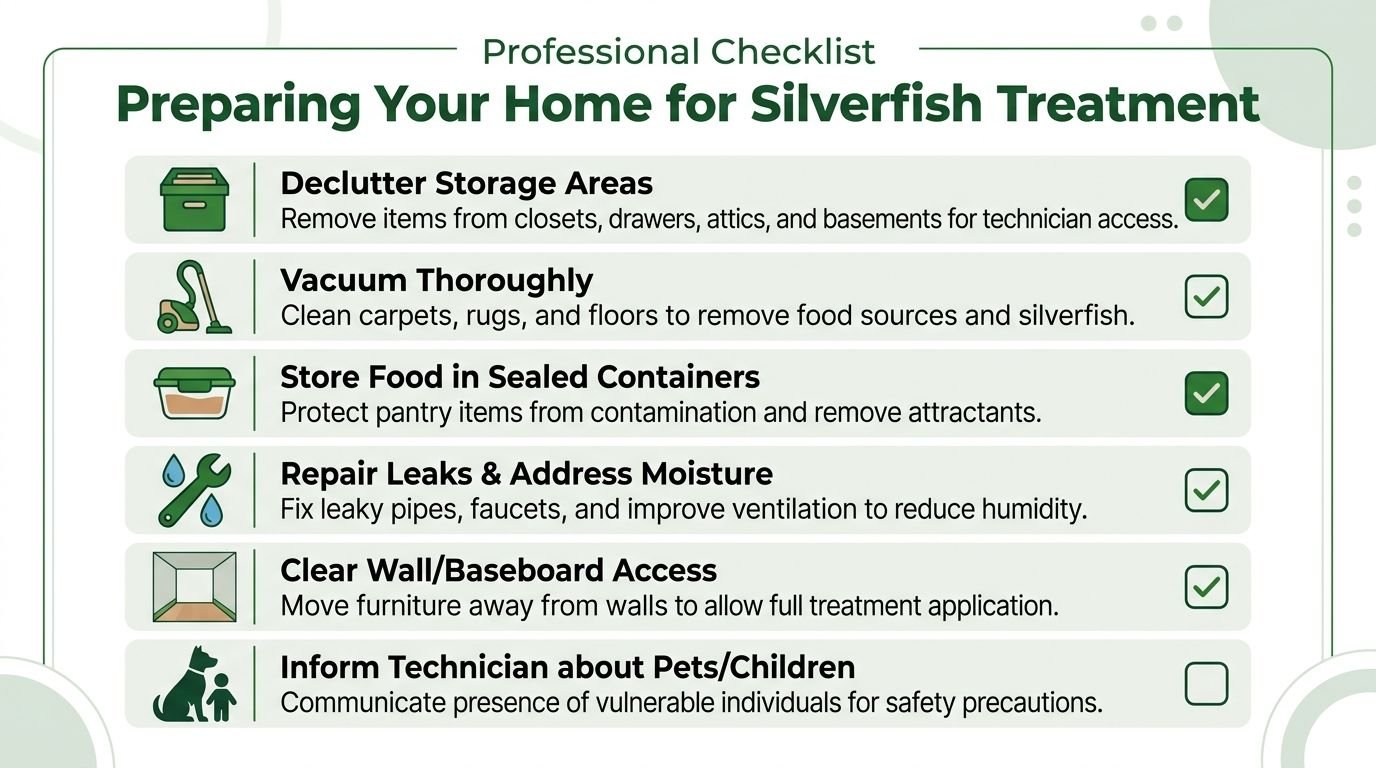
A useful pre-service checklist includes:
- Clear under-sink areas: Empty bathroom and kitchen cabinets where plumbing enters the wall.
- Open up closet edges: Move boxes, paper goods, and stored linens away from baseboards.
- Pull furniture slightly forward: Beds, shelving, and dressers against affected walls may need a bit of space behind them.
- Vacuum accessible floors: This removes debris and helps expose activity zones.
- Flag leak concerns: Show the technician any drip, condensation, or musty area that seems connected.
What happens during and after service
During treatment, residents can expect a focused inspection followed by precise application in problem areas. The visit is usually more detailed than people expect because silverfish control depends on where products are placed, not on how much is used.
After service, some activity may still be seen for a period as silverfish contact treated areas or are displaced from harbourages. That doesn't mean the treatment failed. It often means hidden insects are being pushed into view.
For households with children or pets, the technician should explain any room-specific precautions clearly. That includes where products were placed, which areas should remain undisturbed, and when normal use can resume.
Typical service pricing in Toronto
Pricing depends on layout, severity, and whether the issue is isolated to one bathroom or spread through multiple rooms or units. In Toronto, residential silverfish treatments are usually quoted after inspection because condo bathrooms, basements, older detached homes, and multi-room infestations all require different levels of labour and material.
A homeowner should expect transparent pricing, written scope, and clear notes on follow-up recommendations. If a quote seems vague about moisture, void treatment, or access preparation, it usually isn't addressing the core of the problem.
Long-Term Silverfish Prevention A Proactive Homeowners Checklist
Long-term control comes from making Toronto homes less comfortable for silverfish month after month. The best prevention plan is practical, not complicated.
Moisture control habits that matter
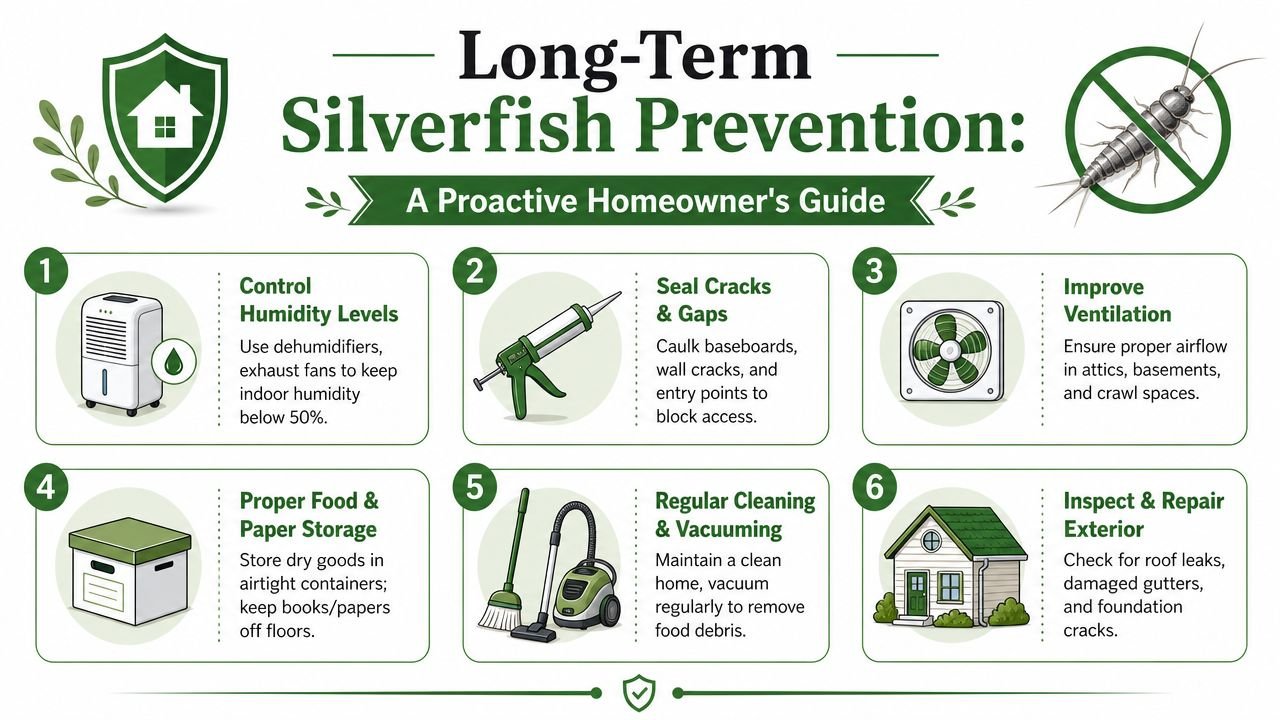
The most effective change is consistent humidity management. Exhaust fans should run during and after showers. Basements that feel damp need dehumidification. Leaks under sinks, around toilets, or behind laundry machines should be fixed promptly instead of watched for later.
Bathrooms deserve extra attention because even a clean room can remain attractive to silverfish if moisture keeps collecting around tile edges, vanity joints, and wall-floor transitions. Homeowners dealing with recurring wet-area issues may find Western Bathroom Renovations' waterproofing tips useful for understanding where moisture can persist behind finished surfaces.
Storage and housekeeping changes that help
Silverfish like quiet places with paper, cardboard, textiles, and dust. Prevention improves when those conditions are reduced.
- Use sealed storage: Plastic bins protect books, documents, seasonal clothing, and linens better than cardboard.
- Keep items off basement floors: Shelving reduces contact with cooler surfaces and minor moisture.
- Vacuum overlooked edges: Pantry corners, closet floors, and baseboard lines are more important than open floor space.
- Reduce paper buildup: Old magazines, boxes, and stacked packaging create both food and shelter.
The cleaner strategy isn't just “clean more.” It's “store smarter and keep vulnerable materials dry.”
Building maintenance that keeps them out
Sealing gaps still matters. Caulk around baseboards, plumbing penetrations, and small wall-floor cracks where feasible. Improve airflow in tight closets and utility spaces. Check damaged grout, failed caulking, and recurring condensation around windows or exterior-adjacent walls.
This broader prevention mindset also helps limit other Toronto pest problems. Damp, cluttered, undisturbed spaces don't just favour silverfish. They can support cockroaches, ants, and even conditions that make mice or rats harder to detect early.
Frequently Asked Questions About Silverfish Control
Are silverfish harmful to people or pets
Silverfish are mostly a nuisance pest. They don't bite, and they aren't known for the same public health concerns that homeowners associate with cockroaches, mice, rats, or bed bugs. Their main impact is damage to paper goods, fabrics, and stored items. Sensitive people can also be bothered by shed material in infested areas.
How do silverfish get into a Toronto condo
In many condo buildings, they move through wall voids, pipe openings, shared service penetrations, and gaps around trim. That's why a very clean unit can still see activity. Shared plumbing walls and humid bathrooms are common pathways.
How long does professional treatment last
That depends on the treatment plan, the layout, and whether moisture corrections are made. Some professional dust applications can remain active in protected voids for a long period when the area stays dry and undisturbed, but prevention work is what keeps the home from becoming suitable again.
Should a landlord or property manager treat only one unit
Not always. In multi-unit buildings, repeated silverfish activity may involve adjacent voids, shared plumbing routes, or common moisture conditions. If multiple units report similar sightings, a building-wide inspection approach is often more effective than treating one suite in isolation.
If silverfish keep appearing in a bathroom, basement, pantry, or condo closet, the issue usually won't disappear on its own. Vanish Pest Control Inc. provides professional, eco-conscious pest control across Toronto and the GTA, with targeted inspections, treatment plans, and practical prevention guidance that helps residents take back their space with confidence.
