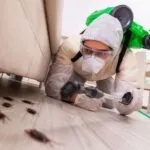
A homeowner in London hears scratching behind the basement wall after midnight. The next morning, there are dark droppings beside the furnace, a chewed food packet in the garage, or a faint musky smell near the kitchen cabinets. The natural reaction is to set a trap in the room where the mouse was seen, but that often treats the visible symptom rather than the route bringing mice inside.
A mice infestation in London, Ontario homes needs a more complete response. The practical sequence is inspection, safe cleanup, exclusion, targeted trapping, and monitoring. The useful measure of success isn't how many mice were caught. It's zero fresh evidence over a defined monitoring period, with entry points closed and no new captures or droppings.
Table of Contents
- Why London Homes Keep Drawing Mice
- Reading the Signs Before You Touch Anything
- Cleaning Up Droppings Without Making It Worse
- Trapping the Right Way in the Right Places
- Sealing London Homes So They Stay Sealed
- Why Loose Poison Usually Isn't the Answer
- Costs, Timelines, and When to Call a Pro
Why London Homes Keep Drawing Mice
A mouse problem in London often follows the shape of the property. Older homes in Wortley Village and downtown heritage streets may have settled foundations, ageing door thresholds, wall cavities, and additions built at different times. These conditions do not indicate poor maintenance. They create more junctions for a technician to inspect and more possible routes between the exterior and interior.
Post-war subdivisions such as Pond Mills and White Oaks present a different pattern. Attached garages, utility penetrations, basement finishing, and shared walls can conceal movement from the outside into living areas. Newer communities, including Masonville and Hyde Park, are not automatically protected. Settling around construction, open vents, landscaping, and garage interfaces can create access points after occupancy.
London's housing mix commonly brings house mice into residential buildings, while homes near agricultural fields, woodlots, and natural areas may also sit closer to deer-mouse habitat. That urban-fringe interface matters in parts of Lambeth and in northern and eastern suburban development. It changes where an inspection begins, especially around the foundation, garage, vents, soffits, and stored materials.
The urban edge changes the inspection
A home backing onto open land may have outdoor habitat close to its foundation. That does not prove mice are indoors, but it makes the foundation line and nearby storage areas worth examining carefully. Outdoor conditions can explain pressure on the building without identifying the actual entry point.
Older semi-detached homes require a similarly broad view. A gap beside one unit's pipe entry may connect with a shared wall or service space, allowing activity to continue after one room has been cleaned. In a condo or rental, the relevant inspection area may extend beyond one suite, particularly where utility spaces or shared walls connect units.
Practical rule: Treat a mouse sighting as a prompt to inspect the building. It is not proof that one trap will solve the problem.
The housing age and urban-fringe geography make recurring activity a predictable property-management issue. It is not a moral failing or proof that a homeowner has been careless. The practical response is to identify the route, remove attractants, and monitor until zero fresh evidence over a defined monitoring window has been recorded.
Pet odours are a separate cleaning issue. For that concern, see how to stop cat spraying.
Reading the Signs Before You Touch Anything
Health Canada lists scratching or scampering sounds in walls at night, gnaw marks, damaged food packaging, droppings, tracks, and holes or burrows around foundation walls as standard indicators of mouse activity. A homeowner can use that list to inspect methodically instead of moving furniture at random. The full indicator guidance is available from Health Canada's rat and mouse control advice.
Start outside and work inward. Along the foundation, look for holes, cracks, disturbed soil, and openings where older masonry meets newer construction. Check around exterior doors, garage thresholds, dryer vents, bathroom exhausts, soffits, and utility entries. A loose vent screen or a gap around a cable can matter as much as an obvious foundation crack.
Inside the basement, inspect the perimeter, sump area, furnace room, stored materials, and the ceiling beneath the main floor. In the garage, examine corners, door seals, shelving, cardboard, and the interface between the garage and the house. In the kitchen, check pantry packaging, the space beneath the sink, pipe penetrations, and areas behind appliances.
What to record during the walk-through
- Fresh droppings: Note where they appear and whether they're concentrated along walls, behind objects, or near food and water.
- Gnawing: Look at food packaging, insulation, stored materials, and electrical wiring. Chewed wiring needs prompt attention because it can create a property hazard.
- Movement sounds: Scratching in a wall, ceiling, or attic at night suggests a concealed route rather than activity limited to the room where the sound is heard.
- Tracks and odour: Dusty footprints, urine odour, and nesting material can reveal travel routes that a quick visual search misses.
- Structural access: Record gaps around pipes, gas lines, electrical penetrations, attic hatches, chimney areas, vents, and door thresholds.
A single sighting should be treated as supporting evidence, not an isolated event. Mice can stay inside wall voids, basement ceilings, attics, garages, and utility chases while travelling to food or water. Near London's urban fringe, the setting may also raise the possibility of deer mouse activity. Larger ears, a more distinct white underside, and proximity to fields or woodlots can be useful clues, but species identification shouldn't rely on a quick glance alone.

Fresh droppings, recurring scratching, or active gnaw marks on wiring and packaging indicate an active problem. Those findings justify prompt action before the evidence spreads into insulation, cupboards, or concealed building spaces.
Cleaning Up Droppings Without Making It Worse
Dry mouse droppings should never be swept or vacuumed. The Public Health Agency of Canada warns that contaminated particles can become airborne, and recommends ventilation, gloves, wet disinfection, and respiratory protection in confined spaces. Its hantavirus prevention guidance explains the safe sequence.
Open windows and doors for 30 minutes before and after cleaning, where the space allows it. Keep children and pets out. Wear rubber or plastic gloves, wet the droppings and nearby contaminated material, and avoid creating dust as the material is removed.
Ontario guidance specifies a bleach dilution of 15 millilitres of bleach in one litre of water for dousing dead rodents, used traps, and nests. Health Canada also describes a 1:9 bleach solution or an approved disinfectant, with the surface left wet for 10 minutes before removal. The product label and public-health directions should control the final choice, particularly on surfaces that could be damaged by bleach.

Treat contaminated rooms as work areas
In a confined room, heavy contamination, or a space with suspected deer mouse droppings, an N95-level respirator is appropriate. Gloves should remain on during collection, and waste should be bagged and sealed rather than carried loose through the home.
Mouse allergen exposure can aggravate asthma and allergies, even when there's no confirmed disease transmission. That makes cleanup especially important around sleeping areas, children's rooms, food-storage spaces, and HVAC-adjacent locations. It also means sweeping a basement quickly and reopening it to the family isn't a sound shortcut.
A widespread mess, enclosed space, damaged insulation, or suspected deer mouse contamination calls for professional assessment. Homeowners who want broader background on contaminated-material handling can consult this biohazard remediation guide for homeowners, while keeping Canadian public-health and product directions as the controlling guidance.
Trapping the Right Way in the Right Places
Trapping works best when it follows the evidence found during inspection. Health Canada recommends approximately one trap per metre along walls, or 5–10 traps per visible mouse hole, with traps placed perpendicular to the wall and the baited end closest to it. A 3–4-day prebaiting period, with bait placed but traps left unset, can reduce avoidance. The benchmark and placement details appear in Health Canada's rodent control publication.
Snap traps are usually the most direct option for a house. They can be placed along baseboards, behind stored objects, in dark corners, and beside fresh evidence. Glue boards are less suitable where dust, pets, children, or animal-welfare concerns are factors. Live traps and multi-catch devices may suit some residents, but they need close monitoring and still leave the entry point unresolved.
A common London failure pattern is putting two traps in the kitchen because that's where the mouse was seen. The actual route may be behind the basement ceiling, through the attached garage, beside a utility chase, or inside a wall. If the travel route remains untreated, an empty kitchen trap doesn't prove that the activity has stopped.
Trap placement at a glance for London homes
| Situation | Where to place | Approximate count |
|---|---|---|
| Activity along a basement wall | Perpendicular to the wall, with the baited end closest to the baseboard | About one trap per metre |
| A visible hole with fresh evidence | Beside the hole and along the nearest travel route | 5–10 traps per visible mouse hole |
| Garage or utility-chase activity | Along wall edges, behind objects, and near the connecting threshold | Based on the active route |
| A room with no evidence | Avoid open floor placement unless inspection identifies a route | No automatic trap placement |
Check traps daily. Remove captures safely, disinfect used equipment as directed, and keep traps away from children and pets. Trapping is a control step, not a substitute for sealing the building.
Sealing London Homes So They Stay Sealed
Exclusion is the part that prevents the next mouse from using the same route. Traps remove animals already moving through the structure, but they can't stop new entry through a foundation crack, garage threshold, vent, or pipe penetration.
A technician starts at ground level and follows the building envelope upward. The inspection includes the joint between the sill plate and masonry, foundation cracks, pipe and gas-line entries, electrical service points, dryer and bathroom vents, kitchen exhaust terminations, soffit vents, and the garage-to-house interface. Exterior doors deserve close attention because a small gap under a basement or garage door can remain active even when the rest of the foundation is intact.
Use durable materials matched to the opening. Metal weather-stripping belongs at doors. Fine galvanized metal mesh can protect vents and larger openings. Steel wool backed by caulk can fill small irregular gaps, while concrete or masonry repair is more suitable for foundation defects. Expanding foam alone isn't a durable mouse barrier. It can be chewed, damaged by weather, or left incomplete around the actual opening.

Match the work to the property
A 1920s semi-detached home in Wortley Village may need attention at old masonry joints, shared walls, basement windows, and later additions. A 1990s two-storey in Hyde Park may instead present problems around service entries, garage construction, vent screens, and settling at doors or foundation transitions. A property beside a farm edge needs especially careful examination of the foundation line, garage, sheds, stored wood, and vegetation.
Ontario recommends sealing ground-level holes and cracks, repairing poorly fitting doors, keeping garage doors closed, reducing shelter such as tall grass, brush, woodpiles, and rock piles, and blocking denning areas beneath decks or inside sheds. Homeowners considering foam products should understand that a spray foam pest barrier from Airtight must still be selected and installed as part of a complete exclusion plan, not used as a blanket substitute for metal or masonry repairs.
Do not seal an active route without confirming whether mice remain inside. Closing an occupied cavity can trap animals in walls or force them into a different part of the home. A property owner looking at service options can also review this rodent-control visual resource, but the inspection should determine the materials and sequence.
Why Loose Poison Usually Isn't the Answer
Loose poison looks simple because it appears to remove the need for detailed inspection. In a London home, that simplicity is often misleading. Poison doesn't close a foundation gap, protect wiring, remove contaminated nesting material, or explain why mice are travelling through a shared wall.
Health Canada states that, since January 1, 2013, bait for several commercial-class rodenticides used against house mice and rats must be placed in tamper-resistant bait stations or locations inaccessible to children, pets, livestock, and non-target wildlife. Certain residential and outdoor uses of active ingredients and concentrated products are prohibited. The federal requirements are outlined in Health Canada's rodent-control guidance.
The building still needs to be fixed
A poisoned mouse may die inside a wall, ceiling, attic, or other inaccessible void, creating an odour problem that's difficult to locate. Bait also introduces risk where children play in basements, pets roam through garages and yards, or wildlife can reach an exterior placement. A dead mouse can still leave droppings and nesting material behind, so poison doesn't remove the cleanup task.
Professional bait stations can have a role in some commercial or agricultural settings where placement, access, and monitoring are controlled. For most households, targeted trapping combined with exclusion and sanitation gives the property owner better control over both the animal and the cause of entry.
Loose bait should never be treated as a casual substitute for reading the Canadian label. If children, pets, livestock, or non-target wildlife could reach it, the placement isn't acceptable. Homeowners reviewing broader pest-control information should keep the same safety standard used for cockroach extermination information, while recognising that each pest requires its own control plan.
Costs, Timelines, and When to Call a Pro
A disciplined do-it-yourself response usually involves several days of active trapping, a focused sealing project, and a monitoring period lasting 2–4 weeks. That doesn't mean every home follows the same schedule. An accessible detached house may be straightforward, while a finished basement, attached garage, shared wall, or enclosed attic can make the work more involved.
The success measure should be operational: zero fresh droppings, no new captures, and closed entry points over the monitoring interval. The number of mice caught is useful information, but it isn't a completion certificate. A single capture followed by fresh droppings means the building still needs attention.
Multi-unit buildings require a wider response. Shared basements, service chases, garbage rooms, utility penetrations, and adjacent suites can sustain reinvasion even when one resident cleans thoroughly. Tenants should involve the landlord or property manager, and owners should avoid sealing shared systems without coordinating access and responsibility.
Professional help becomes sensible when evidence continues after a disciplined DIY effort, entry points are unsafe or inaccessible, contamination is concentrated in an enclosed area, or the property's design makes the source difficult to isolate. Vanish Pest Control Inc. offers London rodent inspections, trapping, entry-point sealing, preventative rodent-proofing, and follow-up monitoring. Service details and consultation options are available through Vanish Pest Control Inc..
For a mice infestation in London, Ontario homes, Vanish Pest Control Inc. can inspect the full structure, identify travel routes, coordinate safe control measures, and monitor for fresh evidence rather than stopping after a single treatment. Homeowners, landlords, and property managers can visit Vanish Pest Control Inc. to request a London-area consultation and discuss a practical exclusion and trapping plan.