

Toronto's rat problem isn't abstract anymore. Toronto was officially named Canada's rattiest city for 2025, and that ranking reflects a 186% increase in rat populations over the last ten years according to reporting on the 2025 designation. For homeowners, condo residents, landlords, and restaurant operators, that changes the question from “Could this be rats?” to “How quickly can this get under control?”
In Toronto, rat infestations rarely stay small. A few droppings behind a stove can turn into activity in wall voids, basements, crawl spaces, garbage areas, and shared service chases. The stress is real because rats don't only contaminate food areas. They chew building materials, travel between units, and exploit every maintenance gap a property leaves open.
Hiring exterminators for rats should never mean paying for a few traps and hoping the noise stops. In Toronto, effective control depends on inspection, removal, exclusion, sanitation, and, in many multi-unit buildings, clear responsibility between tenants, landlords, and property management.
Table of Contents
- Signs of Rats and Why Toronto Homes Are at Risk
- DIY Rat Control vs Professional Extermination
- The Professional Rat Extermination Process Explained
- Understanding Rat Extermination Costs in Toronto
- How to Choose the Right Exterminator in the GTA
- Why Toronto Residents Trust Vanish for Rat Control
- Frequently Asked Questions about Rat Control
Signs of Rats and Why Toronto Homes Are at Risk
Toronto's ranking as the country's most rat-infested urban area lands differently when a resident hears scratching behind the kitchen wall at 2 a.m. or finds droppings under the basement stairs. In many Toronto homes, the first sign isn't a live sighting. It's a pattern of small, unsettling clues that build over a few days.
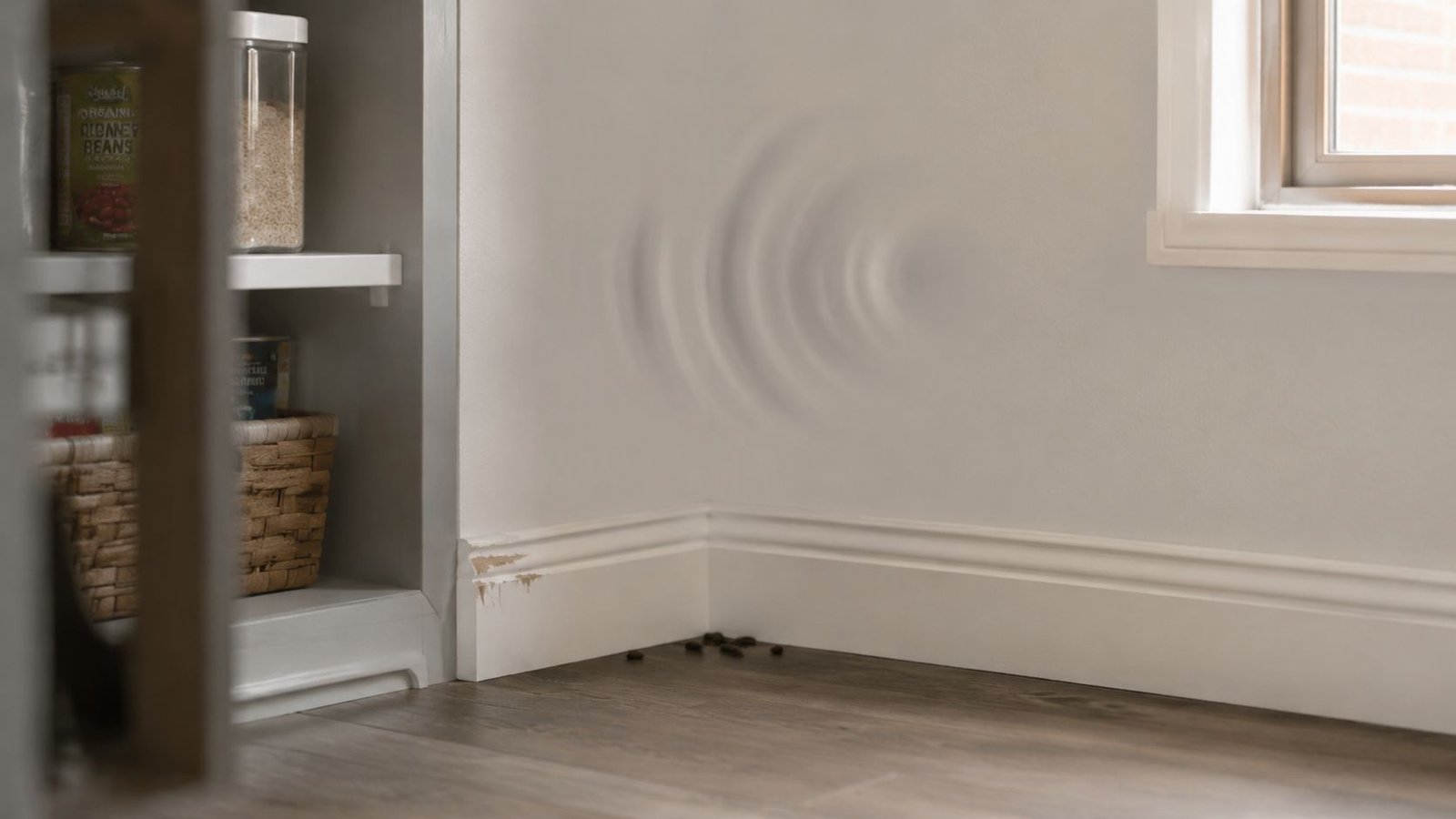
What homeowners usually notice first
Rats leave evidence even when they stay out of sight. Common warning signs include:
- Droppings near food and water: under sinks, behind fridges, beside stoves, in pantries, and along basement walls.
- Scratching and movement sounds: usually at night inside walls, ceilings, or under floorboards.
- Gnaw marks: on baseboards, stored goods, wiring covers, cardboard, and soft building materials.
- Grease rubs and runway marks: rats often travel the same edges and leave dark smudging along walls.
- Foul odours in enclosed areas: especially in utility rooms, crawl spaces, and neglected storage corners.
A single rat sighting in daylight often means the property already has pressure points. In a dense city, rodents don't wander into finished space by accident. They usually follow food access, warmth, or a protected travel route.
Practical rule: If the sound is repeating in the same wall, ceiling, or cabinet zone, the issue is usually larger than one stray intruder.
Why Toronto properties create easy rat habitat
Toronto homes give rats exactly what they need. Older brick foundations develop gaps around utility lines. Laneway bins overflow. Garden sheds back onto alleyways. Shared fences and decks create cover. In semi-detached and row housing, one weak point on a neighbouring property can affect several homes at once.
Basements are a frequent problem area. So are kitchens, especially where plumbing penetrations were never sealed properly. Restaurants, cafés, and small retail food spaces face added pressure because grease, organic waste, and rear-lane loading areas create dependable feeding conditions.
For buyers, this is one reason rodent evidence matters during preparing for your home inspection. A visible gap, droppings in insulation, or gnawing in a storage area can signal that the property needs more than a cosmetic cleanup.
Toronto residents also misidentify the pest more often than expected. This presents a challenge, as mice and rats behave differently, leave different sign, and require different control strategy. A useful starting point is this guide to mice vs rats in Ontario.
What tenants and condo residents need to know
Multi-unit properties create a separate layer of stress because the person finding the problem often isn't the person authorized to fix the building envelope. Toronto's bylaw guidance states that tenants must first contact the landlord or building owner for rodent issues in multi-residential buildings, and the city doesn't handle infestations on private property. Residents should contact 311 only if the issue has been “left unaddressed” by the landlord, according to the City of Toronto rodent control page.
That distinction matters. A tenant might set a trap in the kitchen and catch one rat, but if the actual access point is a garbage chute room, shared plumbing chase, basement service corridor, or structural gap in the exterior wall, the infestation won't end at the unit line.
For condo residents, the practical response is documentation. Keep dated photos of droppings, written reports to management, notes on odours or sounds, and records of where activity appears. In real service situations, that record often determines how quickly a board, landlord, or property manager treats the problem as a building issue instead of an isolated suite complaint.
DIY Rat Control vs Professional Extermination
DIY rat control has a place, but only in a narrow set of conditions. If a Toronto homeowner sees one rat in a garage and finds a door sweep hanging open, a careful trap-and-seal response might solve it. Most city infestations aren't that simple.
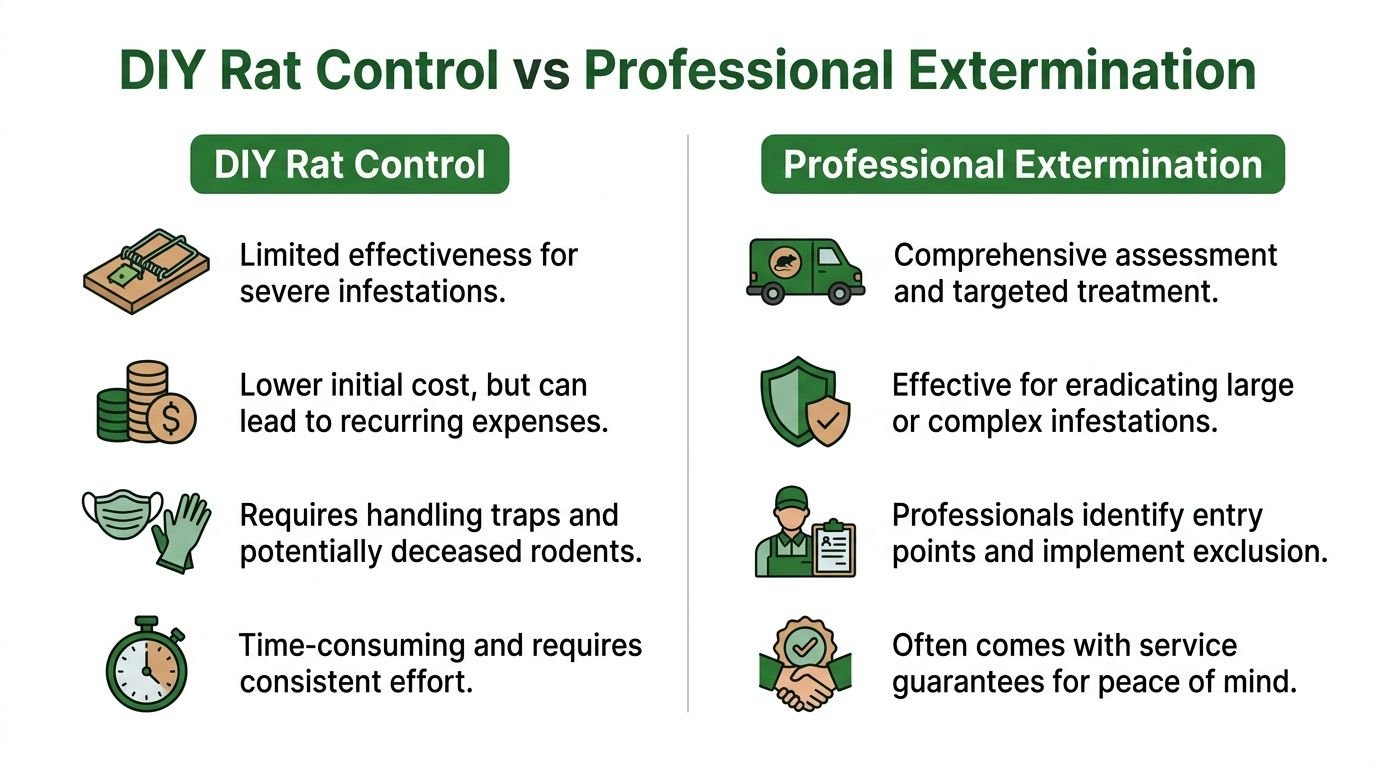
Where DIY can help
DIY measures can be useful when the activity is clearly limited and the entry issue is obvious. Basic steps include tightening garbage storage, removing accessible food sources, reducing clutter in basements, and using traps in controlled locations.
Useful home prevention habits include:
- Store dry goods properly: move pantry items and pet food into sealed containers.
- Clean hidden food zones: crumbs behind appliances matter more than spotless countertops.
- Reduce shelter: stacked cardboard and unused fabric in basements create nesting cover.
- Check exterior gaps: especially around pipes, vents, and damaged weather stripping.
For broader prevention after treatment, this guide on how to control rodent activity at home and prevent future infestations covers the property habits that help keep pressure down.
Why established infestations beat store bought methods
Store-bought traps often catch the most visible animal, not the full population. They also don't answer the bigger questions. Where are the rats entering. Where are they nesting. Are they travelling through wall voids, attic insulation, crawl spaces, or shared building systems.
Poison also creates avoidable risk when it's used carelessly around children, pets, or inaccessible building cavities. A poorly placed product can shift the problem instead of solving it, especially if dead rodents end up inside walls or under subfloors.
A trap catches movement. A professional plan targets the source, the route, and the reason the rats stayed.
Side by side comparison
| Factor | DIY rat control | Professional extermination |
|---|---|---|
| Best use case | One suspected intruder with a known access point | Ongoing activity, wall noise, repeat sightings, multi-area contamination |
| Up-front cost | Lower at first | Higher at first |
| Time required | Homeowner monitors traps, checks signs, adjusts repeatedly | Technician handles inspection, treatment strategy, and follow-up |
| Safety management | Homeowner handles traps and rodent remains | Safer placement, controlled methods, and structured cleanup planning |
| Long-term success | Often limited if entry points remain | Stronger when treatment and proofing are combined |
The key trade-off is simple. DIY is a tool. It isn't a full rat control system. Once rats are using the structure, exterminators for rats become necessary because the problem shifts from pest removal to building defence.
The Professional Rat Extermination Process Explained
In Toronto, rat jobs fail for one reason more than any other. Part of the problem gets handled, and the building never gets fully secured. A proper extermination program follows the full cycle from inspection to control, exclusion, cleanup, and follow-up. Skip one stage, and activity often returns through the same wall void, drain line, soffit gap, or shared utility run.
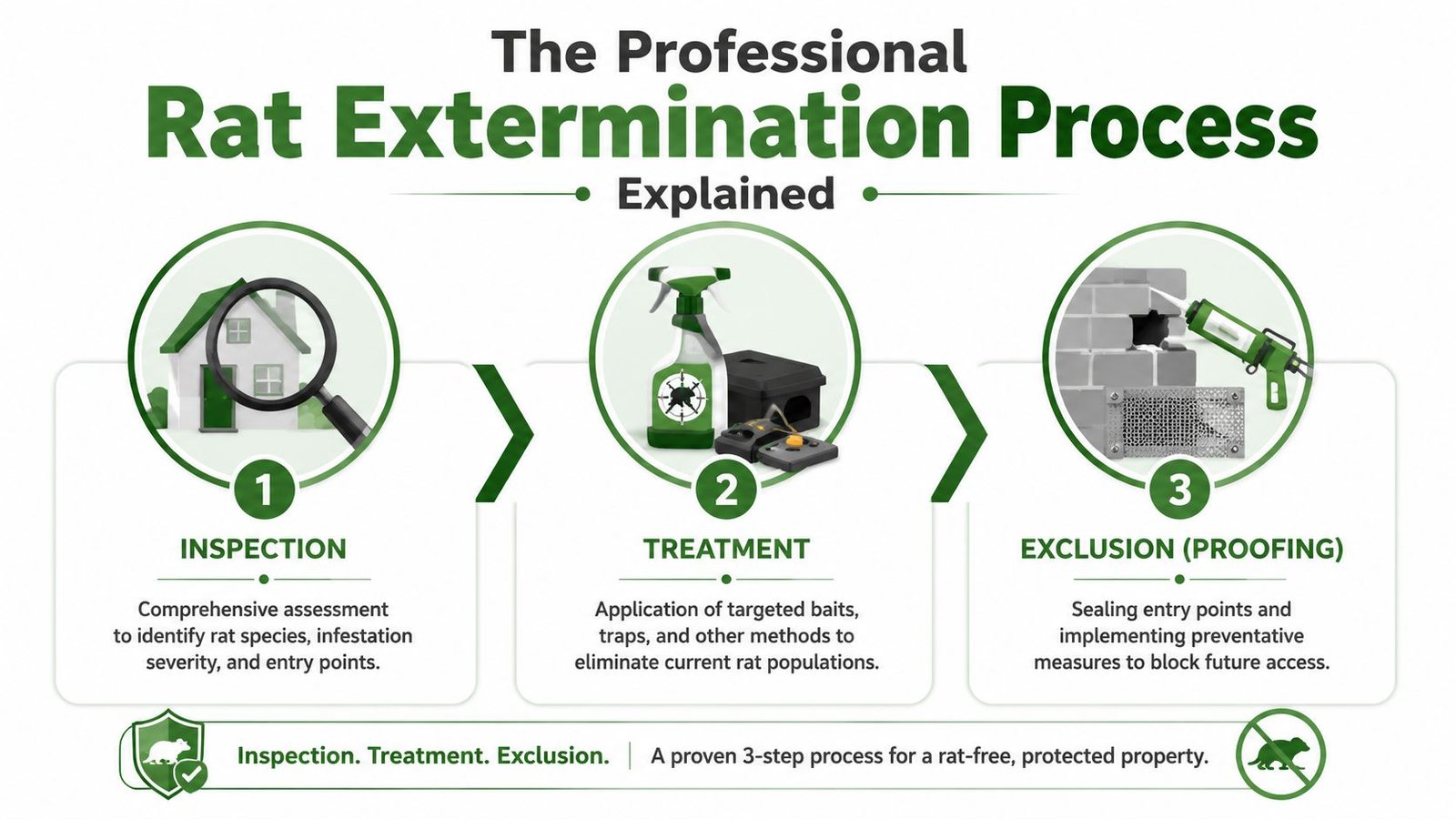
Inspection identifies entry, nesting, and liability
A real inspection does more than confirm that rats are present. It maps how they are using the structure. In Toronto homes, I expect to check the foundation line, pipe penetrations, garage corners, attic edges, deck voids, rear laneways, and waste storage areas. Inside, the pattern usually shows up through droppings, grease rubs, gnawing, insulation disturbance, and noise at predictable hours.
Multi-unit properties add another layer. If rats are moving through shared walls, boiler rooms, garbage areas, or service chases, one unit rarely solves the problem alone. Landlords and property managers have a duty to address building-wide conditions, not just the tenant who made the complaint. That is one of the biggest differences between a quick service call and actual control.
Openings larger than about 1.5 cm can be enough for rats to enter. If the technician does not inspect and document those gaps, the treatment plan is incomplete before it starts.
Treatment reduces the active population
Treatment should match the structure and the risk on site. A detached house with basement activity gets a different setup than a row house with rear-yard pressure or an apartment building with recurring garbage room sightings. The goal is controlled reduction of the active population with trap placement, secured baiting where appropriate, and scheduled follow-up based on what the inspection found.
This part requires judgment. In homes with children or pets, placement discipline matters as much as product choice. In finished basements or wall-void jobs, careless baiting can leave dead rodents in inaccessible spaces and create a second problem with odour and flies. Good technicians work to reduce rat pressure without creating new sanitation issues.
Homeowners also need realistic expectations. Some sites quiet down fast. Others stay active for several weeks because rats are established in more than one area, or because the building envelope is still open.
Exclusion is where long-term control is won or lost
Exclusion is the building repair side of rat control. It includes sealing accessible entry points, screening vents, protecting utility penetrations, repairing damaged sweeps, and addressing the exterior conditions that let rats stay close to the structure. In Toronto, that often means rear-yard fencing lines, compost and bin storage, shed foundations, and aging brick or concrete around service entries.
This is also where warranty misunderstandings happen. Many homeowners hear "covered under warranty" and assume every future rat issue is included. Often, the service warranty applies to the treatment program, not to hidden structural defects, inaccessible voids, drainage corrections, or major proofing carpentry. Those are separate cost drivers, and they matter. A cheaper job that leaves three active entry points in place usually costs more once the infestation returns.
Homeowners who want a clearer sense of what treatment and exclusion can add up to can review this breakdown of rat pest control pricing in Toronto.
Cleanup, sanitation, and monitoring close the loop
Once activity is under control, the site still needs cleanup planning. Rats contaminate storage, insulation, shelving, and lower-level utility spaces with droppings and urine. In heavier infestations, especially in commercial settings, move-outs, and serious basement contamination, coordinated professional sanitizing in GTA may be appropriate after the rodent activity is stabilized.
A full job often includes these corrections:
- Seal exterior and grade-level gaps: around pipes, vents, foundations, and door thresholds.
- Correct waste handling issues: open bins, loose lids, food residue, and overflow near walls.
- Remove harbourage: stacked clutter, soft nesting material, and neglected storage zones.
- Monitor after treatment: check for fresh droppings, trap activity, new gnawing, and missed access points.
The hard truth is simple. Extermination removes the rats that are there now. Proofing, sanitation, and follow-up determine whether the same property stays clear through the next season.
Understanding Rat Extermination Costs in Toronto
Toronto rat jobs often become expensive for one reason. The first service controls activity, but the entry points stay open.
That is the cost problem homeowners and landlords run into again and again. A low initial price can look reasonable until rats reappear behind a finished basement wall, under a porch addition, or in a shared ceiling between units. In Toronto, older housing stock, tight lot lines, laneways, rear garbage areas, and freeze-thaw damage all add pressure on the building envelope. If exclusion is partial, the bill usually comes back a second time.
What a homeowner usually pays
In the GTA, a straightforward residential rat service is usually priced in two parts: active control and building correction. The first part covers inspection, trap or bait placement, and follow-up based on the level of activity. The second part covers proofing work such as sealing gaps around pipes, vents, doors, foundations, and utility penetrations.
For many homeowners, the true question is not the first invoice. It is whether the quote addresses the conditions that allowed rats in. This page on rat pest control cost in Toronto gives a useful breakdown of how those charges are usually structured.
A basic treatment-only job can be enough for a minor issue caught early. A heavier infestation, or a house with multiple entry points, usually costs more because the technician is dealing with both rodent pressure and construction defects.
Why quotes rise on some properties
Price changes are usually tied to labour, access, and scope.
Common examples include:
- Hard-to-reach areas: crawl spaces, low rooflines, finished basements, detached garages, and deck voids.
- Larger proofing scope: several active gaps instead of one obvious hole.
- Contamination spread: droppings, nesting, odour, or damaged insulation in more than one area.
- Repeat entry pressure: rear laneways, overloaded waste storage, or neighboring properties with ongoing activity.
- Shared structures: semis, duplexes, triplexes, and mixed-use buildings where rats travel between units.
I tell clients the same thing on site. If rats are entering through three separate defects and only one gets sealed, the property is still vulnerable. That is why some cheap warranties disappoint people. They may cover a return visit for activity, but not the carpentry, vent replacement, door correction, or foundation sealing required to stop the problem at the source.
Multi-unit and commercial costs work differently
Multi-unit buildings are a different class of job because the infestation rarely belongs to one suite. Rats move through pipe chases, wall voids, service rooms, loading areas, storage lockers, and garbage zones. In those properties, the cost is tied to coordination as much as treatment. Inspection takes longer, follow-up has to be documented, and proofing may involve several parties.
For landlords in Toronto, there is also a legal and operational reality. Rat control in a multi-residential building is not just a tenant convenience issue. It becomes a property maintenance issue, and delaying action can increase cleanup costs, tenant complaints, unit turnover friction, and repair scope. A proper quote should state what is included in treatment, what proofing is excluded, who is responsible for repairs, and whether common areas and adjoining units need inspection.
That last point matters. Incomplete proofing is where budgets get blown. A service call may solve the active infestation in one unit, but if the wall void remains open behind a plumbing chase or a damaged exterior vent is left in place, the building keeps paying for the same rat problem in installments.
How to Choose the Right Exterminator in the GTA
A rat problem can grow fast. Young rats reach breeding age in a matter of weeks, according to university extension guidance on rodent biology, so hiring the wrong company can turn one missed entry point into a larger and more expensive building issue before the first warranty period is over.

In Toronto, good rat control starts with how the company inspects the structure. I would expect a serious provider to check more than the obvious kitchen or basement signs. The job should include exterior grading lines, foundation gaps, utility entries, garage corners, soffits, rear yard conditions, and the interior travel routes rats use once they get in. In older semis and multi-unit buildings, that also means looking at shared walls, pipe chases, storage areas, and garbage zones.
Questions that expose weak service
Ask direct questions and listen for direct answers:
- What exactly will be inspected: exterior only, or attic, basement, crawl space, garage, utility penetrations, and waste areas too.
- What's included in proofing: temporary stuffing, or proper sealing with durable materials.
- How will follow-up work: fixed revisit plan, as-needed billing, or no return unless the customer calls.
- What documentation is provided: especially for landlords, condo boards, restaurants, or insurance-related files.
Weak service often shows up in vague wording. If the company cannot explain where rats are entering, what materials will be used, and who handles repair items outside pest control, the scope is probably too loose.
Warranty language deserves close reading
This is where homeowners and landlords get caught. A 6-month service warranty may cover renewed activity at the treated site, but not the structural correction that would have prevented re-entry in the first place.
That distinction matters in Toronto properties. A missed gap under a side door, a broken vent cover, or an open plumbing chase can keep the infestation active even if the trapping program was done properly. In apartment buildings and duplexes, the problem may also extend beyond one unit, which means a warranty on a single suite does not always solve the source.
Ask this question plainly: If rats return through an opening that was missed, excluded from the quote, or left for another contractor to repair, what happens next and what will it cost?
A reliable answer should separate treatment from proofing, identify excluded repairs, and state whether adjoining units or common areas need inspection. That is especially important for landlords, because rat control in a multi-residential property quickly becomes a maintenance and documentation issue, not just a pest visit.
A practical hiring checklist
Use this checklist before you approve the work:
- Verify licensing and insurance: Ontario credentials should be current and easy to confirm.
- Look for Toronto building experience: old brick foundations, laneway access, shared walls, and mixed residential-commercial properties create different rat entry patterns than newer detached homes.
- Request a written scope: treatment, exclusion, follow-up, sanitation advice, and repair exclusions should be listed separately.
- Ask how safety is handled: especially around children, pets, food prep areas, and shared tenant spaces.
- Confirm who is responsible for proofing repairs: pest technician, handyman, property manager, or outside contractor.
- Read the guarantee carefully: check whether it covers original activity only, scheduled follow-ups only, or re-entry after missed openings are found.
The right hire is usually the company with the clearest scope and the fewest unanswered questions. Low first-visit pricing can look attractive, but incomplete inspection and partial proofing are what drive repeat calls, tenant complaints, and higher total cost later.
Why Toronto Residents Trust Vanish for Rat Control
Toronto residents usually trust a rat service for one reason. The company treats the infestation as both a pest issue and a property issue. That means the work doesn't stop at visible rodent activity.
What matters most in a Toronto rat service
For homeowners and property managers, the strongest service features are straightforward:
- Fast response: because active infestations don't wait for a convenient booking window.
- Clear site assessment: so the resident understands where rats are feeding, nesting, and entering.
- Proofing support: because control without exclusion rarely lasts.
- Cleaning coordination: especially after contamination in kitchens, basements, commercial units, or move-out situations.
One local option is Vanish Pest Control Inc., a Toronto-based licensed pest control company that provides rodent extermination, preventative rodent-proofing, same-day service in many cases, and coordinated cleaning and disinfecting before or after treatment. For residents in Toronto, Newmarket, Woodstock, and London, that combination can matter more than a low-cost first visit because the primary objective is stable control, not a temporary drop in sightings.
The right service should leave the resident with three things. Fewer rats, fewer entry points, and a clear plan for keeping the property from becoming active again.
Frequently Asked Questions about Rat Control
Are rat treatments safe for children and pets
They can be, but only if the job is set up properly.
Safe rat control depends on three things: the right material for the site, tamper-resistant placement, and clear instructions for the people living there. In a house with toddlers or pets, I would expect bait to be secured where it cannot be reached, or I would shift the plan toward trapping and exclusion where that makes more sense. The answer should never be vague. Homeowners and tenants should be told exactly what is being used, where it is going, and whether any area needs to stay off-limits for a period of time.
In multi-unit buildings, safety also ties into legal responsibility. Landlords and property managers are expected to address pest activity without creating new hazards for residents.
How long does rat extermination take
A true rat job usually takes more than one visit.
The first appointment handles inspection, placement, and a map of entry points. After that, the timeline depends on pressure from the surrounding area, the condition of the building, and whether proofing gets done quickly or left half-finished. In Toronto, that last point matters a lot. Older housing stock, rear laneways, shared walls, basement utility lines, and heavy garbage exposure give rats repeated opportunities to re-enter.
A small, isolated problem may settle down quickly. A row house, restaurant, or apartment building with active movement through wall voids and service chases can take weeks of follow-up. Standard service warranties also have limits many owners do not notice until later. Control visits may be covered, while masonry repair, drain work, door sweeps, and larger exclusion repairs are often separate costs.
Will neighbours know an exterminator visited
Usually, no.
In a detached home, the visit is often as discreet as any other service call. In condos, co-ops, and rental buildings, management may need to send notices if access is required to adjacent units, garbage rooms, pipe chases, or shared mechanical spaces. That is not about embarrassment. It is about stopping rats from shifting one unit over and returning after treatment.
Can one missed hole really bring rats back
Yes. One overlooked gap can keep the infestation active.
I see this regularly around plumbing penetrations, damaged vents, garage door corners, uncapped sump lines, and gaps hidden behind stored items in basements. Residents sometimes pay for treatment, see a short drop in activity, and assume the problem is solved. Then the scratching starts again because the building was never closed properly. That is the hidden cost of incomplete proofing. You spend money on control, but the structure still allows entry.
If rats are active in a Toronto home, condo, restaurant, basement, or multi-unit building, the next step is a proper inspection, not guesswork. Vanish Pest Control Inc. helps Ontario property owners identify entry points, control active infestations, and build a prevention plan that fits the structure. Book an inspection to get clear answers and a practical path forward.




