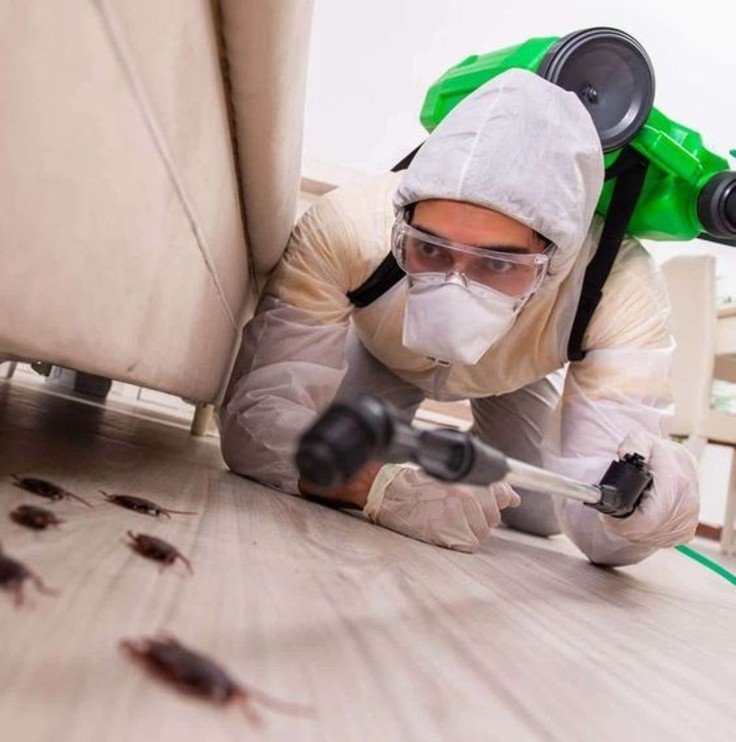
You've found droppings behind the refrigerator, heard scratching in a wall, or noticed bites after staying in your own bedroom. In a North York condo or rental building, the next step isn't always spraying the room where the evidence appeared. Shared walls, service spaces, garbage rooms, and neighbouring suites can keep supplying the infestation unless the source and access routes are addressed together.
A reliable exterminator in North York should therefore do more than identify a pest and apply a product. The work should include inspection, communication, preparation, targeted treatment, structural correction, and follow-up. That approach matters for detached homes, but it's especially important in multi-unit properties where one resident's pest issue can involve the building's wider maintenance system.
Table of Contents
- Understanding North York Pest Pressures
- Condo and Rental Escalation Protocols
- Executing Multi-Stage Bed Bug Treatments
- Commercial Kitchen Compliance Standards
- Navigating Pesticide Safety and Notifications
- Humane Wildlife Exclusion and Property Repair
Understanding North York Pest Pressures
North York's housing pattern helps explain why local pest work often requires coordination. A City of Toronto census profile recorded a 2011 population of 667,840 in North York. It also recorded 41.0% of residents living in apartment buildings of five or more storeys, 15.6% in apartment buildings under five storeys, 5.8% in row or townhouse units, and 37.6% in houses. The profile is historical, not a current census count, but it provides a useful baseline for understanding the area's substantial multi-residential housing stock. The City of Toronto census profile documents that housing mix.
Why one suite may not be the whole problem
Cockroaches and mice can use gaps around pipes, electrical services, baseboards, and shared walls. Bed bugs can move through connected units, corridors, furniture, and building contents. A treatment limited to one room may reduce visible activity without correcting the route that allowed the pest to arrive.
Technicians should inspect more than the obvious sighting. In a condo or rental building, that can mean reviewing utility penetrations, door sweeps, laundry areas, garbage rooms, storage spaces, and adjacent suites where access is available. Residents also need clear preparation instructions and a way to report new evidence after treatment.
Practical rule: A good inspection identifies both the pest and the condition allowing it to remain.
Property managers may also need organised scheduling and resident communication. Operational resources about how to book pest control jobs automatically can help service teams manage appointments, but scheduling software can't replace a building-wide inspection plan or proper records.
For a North York homeowner or manager evaluating Vanish Pest Control Inc., the key question is whether the proposed service connects treatment with prevention. A local provider should explain what will be inspected, which occupants must prepare, whether adjacent areas need attention, and what follow-up evidence will determine the next step.
Condo and Rental Escalation Protocols
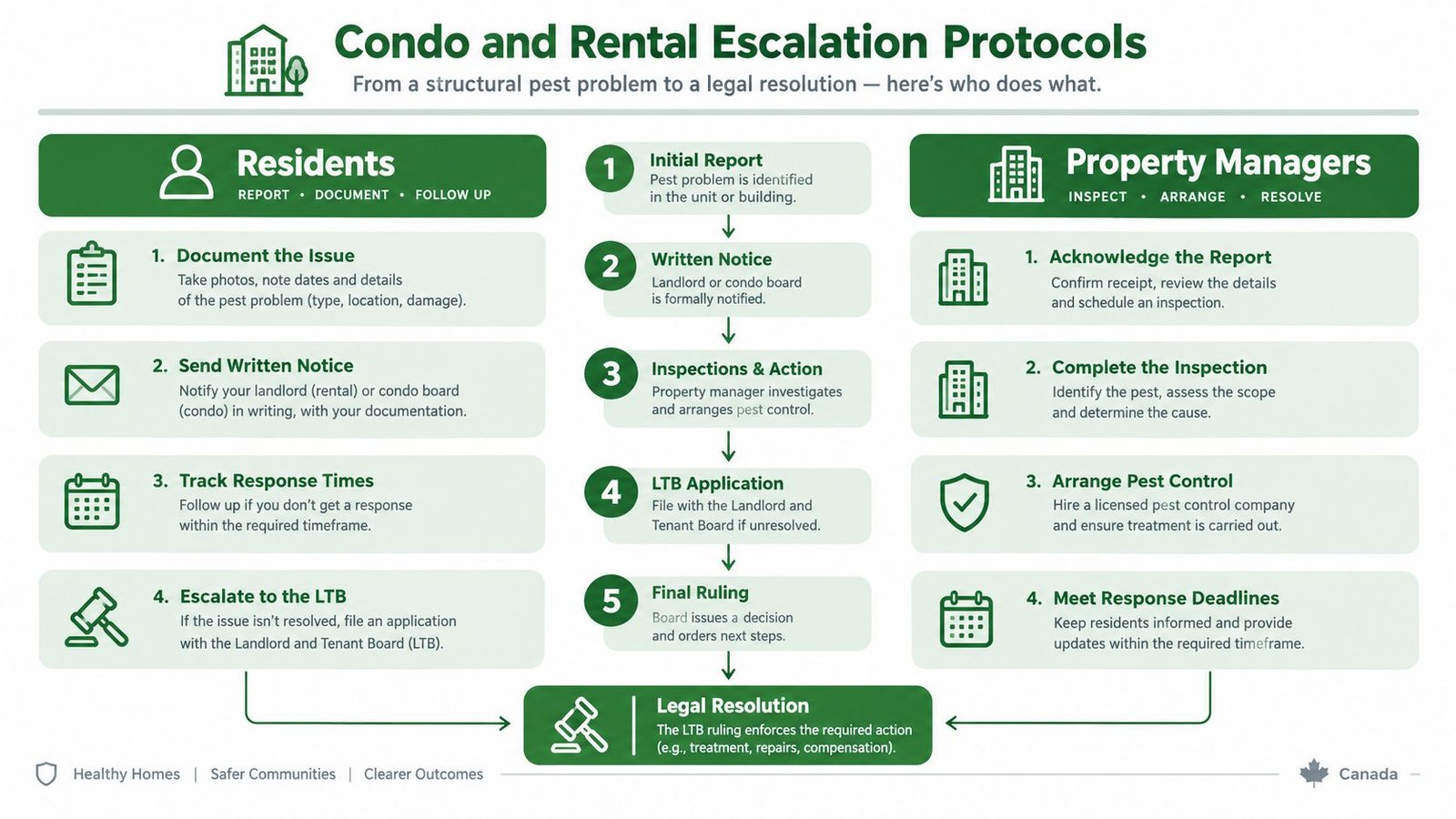
Residents shouldn't have to guess whether a pest problem is their responsibility or the building owner's. Toronto's RentSafeTO requirements place important duties on building owners, including keeping properties free of pests, inspecting common areas at least every 30 days, inspecting affected areas within 72 hours of receiving a pest report, preventing spread, maintaining pest-management records, and using a Ministry of Environment licensed pest-control company when required. These requirements are set out in Toronto's RentSafeTO building-owner requirements.
What residents should document
A written evidence trail makes the issue easier to manage and harder to dismiss. Residents should:
- Report in writing: Send the date, location, pest description, and any preparation or access concerns to the landlord, superintendent, property manager, or condo board.
- Keep visual evidence: Save clear photos of droppings, insects, cast skins, damage, or entry points, and record when each image was taken.
- Request the plan: Ask what areas will be inspected, whether adjoining units and common spaces will be checked, and what treatment notice and preparation instructions apply.
- Track access and treatment: Keep appointment dates, missed visits, notices, technician observations, and signs of continuing activity.
Tenants must permit treatment and follow reasonable preparation instructions. That duty to cooperate doesn't automatically make the tenant responsible for the infestation, particularly when the source involves building conditions or shared spaces.
When escalation becomes appropriate
If management doesn't respond, doesn't inspect affected areas, or repeatedly treats only one suite while activity continues, residents can contact 311 for information and enforcement direction. Property managers should treat the same process as an operational checklist, not as a threat. Clear notices, coordinated access, inspection findings, and follow-up records protect residents and help demonstrate that the building is addressing the problem.
Property owners and managers can also consult practical guidance on handling pests in rental properties when building procedures need to be clarified. The central issue remains straightforward: the person who controls the building's shared spaces must help address conditions that allow pests to spread.
Executing Multi-Stage Bed Bug Treatments
Bed bug work often fails when residents expect a single spray visit to solve a hidden breeding population. Toronto Public Health defines an infestation as a breeding population showing at least two life stages, such as eggs, nymphs, or adults, together with cast skins and faecal spotting. Toronto Public Health's bed bug information explains why identification and inspection matter before treatment begins.
What the inspection should establish
A technician should examine mattress seams, bed frames, upholstered furniture, baseboards, cracks, electrical-adjacent voids, and nearby storage. The inspection should document evidence rather than relying only on a resident's description of bites, since bites alone don't identify the source.
In a North York apartment, the scope may also include connected units or shared areas. If the neighbouring suite or a common corridor provides harbourage, treating one bedroom can leave the pathway intact.
Preparation is part of the treatment
Residents may need to remove clutter, vacuum carefully, launder bedding and clothing, and use the highest appropriate heat settings for drying. Items should be handled in a way that doesn't spread insects to clean rooms or other suites. Furniture shouldn't be discarded casually, because moving infested items through a hallway can create a building-wide problem.
Treatment works best when inspection, preparation, application, and monitoring are treated as one process.
Established infestations may require several licensed-pesticide treatments over multiple weeks because eggs and concealed harbourage can survive the first intervention. Heat-based treatment can be useful when the method reaches the relevant harbourage, but it still requires preparation, inspection, and follow-up. No responsible technician should promise a universal visit count or guaranteed result without assessing the property.
Ontario's bed bug initiative also frames control around identifying insects, inspecting properly, preparing living areas, carrying out treatment, and educating residents, landlords, and facility managers. That sequence is particularly important in high-density housing, where cooperation and timely reporting affect every unit connected to the original infestation.
Commercial Kitchen Compliance Standards
A restaurant or commercial kitchen can't manage pests like a private bedroom. Residential work may focus on protecting one household, while a food premise must demonstrate an ongoing system that prevents entry, removes harbourage, monitors activity, and documents corrective action.
Ontario Regulation 493/17 requires every food premise to prevent pest entry, eliminate conditions that harbour or breed pests, and retain pest-control records for at least one year. Ontario Regulation 493/17 sets out those obligations.
Reactive treatment versus documented prevention
Reactive pesticide application addresses visible activity. It doesn't, by itself, seal a gap around a pipe, remove cardboard accumulation, correct a leaking fixture, or show whether activity is declining. A commercial program should connect each service visit to site conditions and assigned corrections.
| Residential response | Commercial kitchen response |
|---|---|
| Treat the affected living area after inspection | Inspect food, storage, waste, delivery, and service areas |
| Provide resident preparation instructions | Record sanitation and structural corrections |
| Monitor signs in the home | Map traps or bait stations and review activity trends |
| Coordinate with a landlord or manager when needed | Maintain service records for regulatory review |
Toronto Public Health recommends identifying food and shelter sources, sealing cracks and openings around pipes, cupboards, walls, ceilings, and floors, storing food in tight-fitting containers, removing cardboard and other harbourage materials, and placing traps where droppings or travel routes are observed. These measures turn pest control into a measurable management system.
What a useful service record contains
A practical file should include a written site map, inspection findings, service dates, trap or bait-station locations, corrective-action responsibilities, and verification of unresolved activity. A manager should be able to see what the technician found, what staff must change, and whether the next visit confirms improvement.
A visual reference such as the Vanish cockroach extermination image can support staff training, but photographs don't replace records or corrective work. In North York food businesses, sanitation, exclusion, monitoring, and documentation must operate together.
Navigating Pesticide Safety and Notifications
“Eco-friendly” isn't a complete safety assessment. Heat, bait, exclusion, sanitation, and pesticide applications involve different exposure pathways and different limitations. A homeowner should ask for product-specific information and preparation instructions, not rely on a broad marketing label.
Ontario Regulation 63/09 requires written notice to occupants of properties abutting a residential pesticide application area at least 24 hours and no more than seven days before certain extermination applications, with prescribed information in the notice. Ontario Regulation 63/09 explains the notification requirement.
Questions to ask before treatment
The service provider should explain:
- The product or method: Ask what will be used and why it matches the pest and harbourage.
- Neighbour notification: Confirm whether the application triggers notice to occupants of abutting properties.
- Re-entry guidance: Ask when children, pets, and other occupants can return.
- Ventilation and preparation: Clarify what must be removed, covered, isolated, or ventilated.
- Vulnerable occupants: Raise asthma concerns, pregnancy concerns, pets, aquariums, and other household circumstances before application.
- Follow-up requirements: Ask what signs should be reported and how unresolved activity will be assessed.
Targeted work is more defensible
Indiscriminate spraying can leave residents with more disruption while failing to address cracks, moisture, waste, or adjoining harbourage. A targeted plan places treatment where evidence supports it and pairs application with exclusion, sanitation, monitoring, and building cooperation.
Toronto's property-maintenance rules also place responsibility on owners to remove pests and conditions that encourage infestation. That means repeating applications without correcting a damaged exterior, an open service penetration, or an unmanaged waste area is rarely a durable strategy.
For residents comparing service options, the Vanish pest-control services image may illustrate the type of work being discussed, but the important decision remains the written plan. Product disclosure, legal notice, re-entry instructions, and corrective actions should be clear before anyone begins.
Humane Wildlife Exclusion and Property Repair
Raccoons and squirrels usually return because a property still offers access, shelter, or food. Trapping an animal without correcting the opening may create a temporary change while leaving the building ready for the next animal. Humane wildlife work focuses on identifying the route, checking whether young animals may be present, and closing access only when doing so is safe and legally appropriate.
Inspect the entry route first
Common access points include damaged soffits, loose siding, roofline gaps, open vents, uncapped chimneys, and spaces beneath decks or porches. Toronto recommends securing openings, blocking holes with galvanized sheet metal, repairing siding, covering open-air vents with heavy rustproof screening, capping chimneys, and trimming overhanging branches. Those measures are described in Toronto's wildlife assistance guidance.
A proper inspection should distinguish an active den from an abandoned entry point. Sealing too early can trap an animal inside, while leaving the opening exposed allows repeat denning. The repair must also withstand chewing, weather, and the animal's effort to regain access.
Follow municipal rules
Residents shouldn't approach or touch a raccoon, even when it appears tame, sick, or injured. City parks rules also restrict feeding, killing, injuring, trapping, or disturbing wildlife without a permit. Sick, injured, or very young raccoons should be reported to 311 rather than handled by residents.
Dead-animal removal depends on the animal and location. The City can assist with large dead animals, including raccoons and skunks, on private property through 311. Small dead animals, such as squirrels, mice, rats, and small birds, aren't picked up by the City and are directed into regular garbage procedures with safe handling.
For a North York property, the lasting repair may involve screening vents, capping a chimney, repairing siding, securing waste, and checking the roofline after work is complete. Wildlife control succeeds when the access route is corrected, not when the property only receives another temporary deterrent.
Vanish Pest Control Inc. provides North York residential and commercial inspections, targeted pest treatments, prevention planning, and humane raccoon and squirrel exclusion. Property owners and managers can visit Vanish Pest Control Inc. to request help assessing shared-building pathways, bed bug treatment requirements, commercial compliance needs, or wildlife entry points.