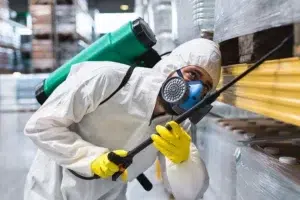
Professional inspection and targeted treatment are required for effective pest removal, especially where pests move through shared walls, utility openings, garbage rooms, and other connected spaces. In Toronto's 2024 housing data, cockroaches represented 37% and bed bugs 35% of reported pest-management issues, while Etobicoke/York had the city's highest reported level of poor building pest control at 35%.
The problem often begins without warning. A resident notices a roach near the kitchen sink, a mouse dropping behind a basement appliance, or a small insect on a mattress. In an Etobicoke condo, townhouse, apartment, or older detached home, that first sighting may be connected to neighbouring units, wall voids, shared plumbing, roofline gaps, or an unmanaged garbage area. Spraying the visible pest can provide temporary relief, but it doesn't explain how the pest entered or whether others are still hidden.
A legitimate exterminator in Etobicoke should inspect before recommending treatment, explain the risks, confirm the responsible party in a multi-unit building, and work within Ontario's licensing and safety requirements. Vanish Pest Control Inc. supports residential, commercial, and industrial properties across the GTA with inspections, targeted pest control, rodent-proofing, bed bug heat treatments, and wildlife exclusion. Residents can review the company's service information at Vanish Pest Control Inc..
Table of Contents
- Finding a Reliable Exterminator in Etobicoke
- Why Professional Pest Control Is Essential
- The Vanish Inspection and Treatment Process
- Common Pests Treated in Etobicoke Homes
- Safety, Guarantees, and Peace of Mind
- Contact Vanish for Expert Pest Control
Finding a Reliable Exterminator in Etobicoke
An Etobicoke homeowner may call after finding a cockroach under a dishwasher. A condo resident may wake up with unexplained marks and discover a bed bug near the headboard. A landlord may receive a complaint about mice in one unit while noticing droppings in a shared laundry room. These situations look different, but they demand the same first response: identify the pest, locate the source, and assess whether the building is involved.
Toronto Public Health data show why local context matters. Thirty-five percent of Etobicoke/York residents rated building pest control as poor or very poor, compared with 17% in North York and 19% in Scarborough. The assessment provides an independent regional indicator that residents viewed building pest control less favourably in Etobicoke/York, not a performance claim about any individual service company. Toronto Public Health's assessment is particularly relevant to apartment buildings, where pests can travel through shared infrastructure.
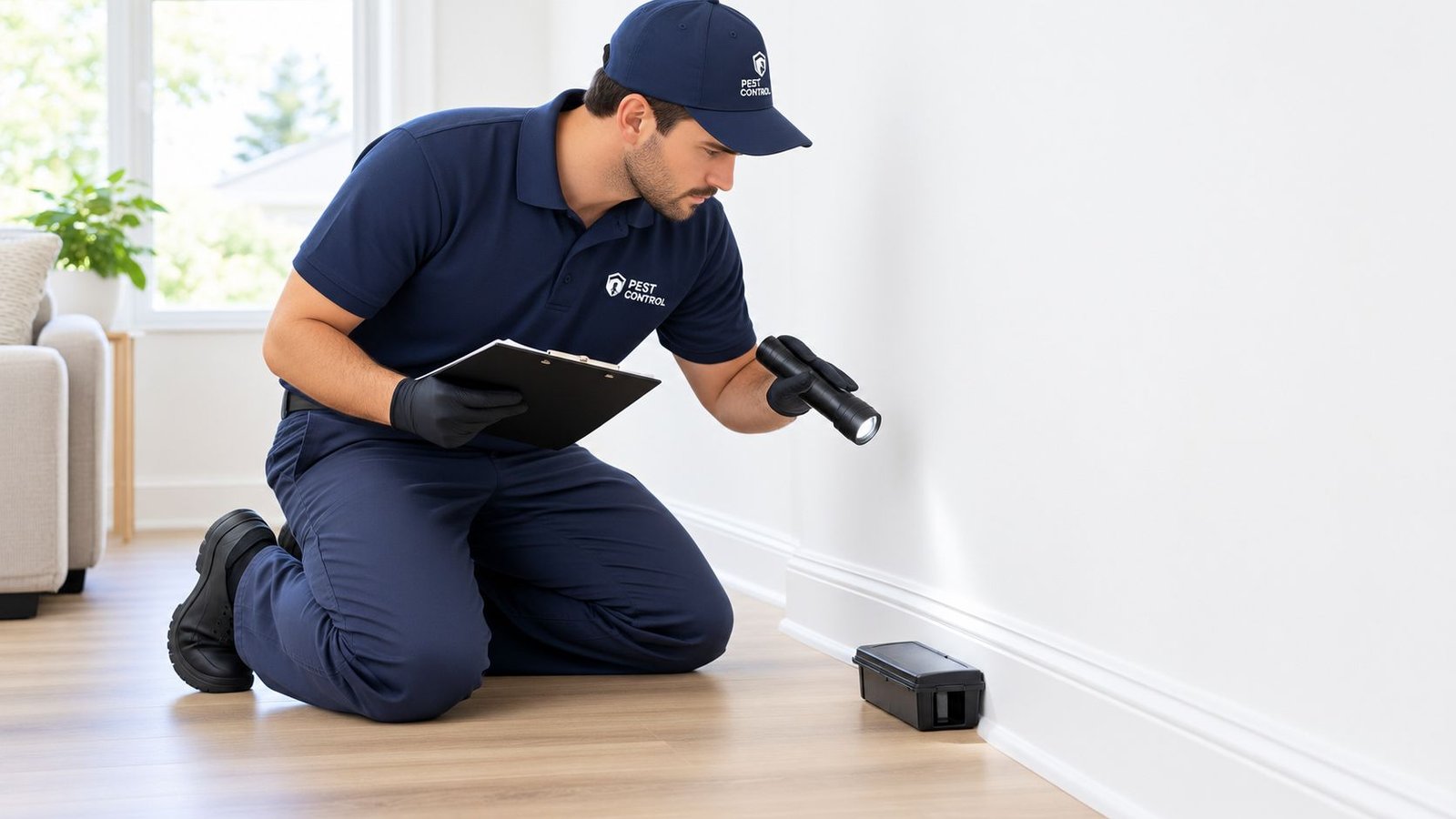
What reliable service looks like
A trustworthy provider doesn't lead with a product or promise certainty before seeing the property. The technician should ask where the pest was seen, when activity began, whether nearby units have reported problems, and what previous treatments were attempted. The inspection should cover practical harbourage areas, including plumbing penetrations, cabinet voids, baseboards, storage rooms, exterior openings, and food or waste areas.
For landlords and property managers, the scope should extend beyond the complaining unit when the pest or building layout makes spread possible. Treating one condo suite while ignoring the corridor, garbage room, adjacent units, or shared wall can leave the source untouched.
Practical rule: A quick appointment is useful only when it leads to the right diagnosis and a treatment plan that matches the building.
Vanish's service area includes Etobicoke and the wider Toronto/GTA market, but the selection standard remains the same whether the property is a home, restaurant, office, or multi-unit building. The customer should receive clear preparation instructions, treatment details, safety information, and follow-up expectations. A professional service is not judged by how much product is applied. It's judged by whether the pest, entry route, and conditions supporting the infestation are properly addressed.
Why Professional Pest Control Is Essential
DIY products can make sense for limited prevention, such as improving sanitation, sealing a small gap, or reducing clutter. They become far less reliable when the pest is hidden, reproducing, entering from another unit, or travelling through a building's shared structure. A homeowner may kill an exposed insect while leaving eggs, harbourage, entry points, or a larger population untouched.
Professional treatment is also regulated. Under the Ontario pesticide licensing requirements, structural extermination is a regulated activity, and businesses providing it must operate under the appropriate provincial licence. Structural extermination includes pest control affecting a building, its contents, or occupants, including termite control. The rules exist because pesticide selection, application, site restrictions, and re-entry instructions must be managed carefully.
DIY and professional work solve different problems
| DIY response | Professional response |
|---|---|
| Treats the visible area | Investigates the pest and its source |
| Often relies on a general product | Selects a method for the pest, property, and occupants |
| May overlook adjacent rooms or units | Considers connected spaces and building spread |
| Can lack documentation | Provides treatment details and follow-up guidance |
| May repeat without diagnosis | Uses inspection findings to direct the work |
A resident who wants additional prevention guidance can also review practical information on how to keep bugs out, particularly around exclusion, housekeeping, and conditions that make a property attractive to pests. Prevention helps, but it isn't a substitute for professional assessment when activity is established.
Qualified technicians also understand that safety isn't limited to the product label. They need to consider children, pets, residents with access needs, food preparation, ventilation, aquariums, and the possibility that tenants may re-enter too soon. The right question isn't whether a treatment sounds powerful. It's whether the operator is licensed, the method fits the pest, and the customer receives usable instructions.
The Vanish Inspection and Treatment Process
A professional visit should feel organised rather than mysterious. The technician begins by gathering information, then tests the most likely explanations before recommending work. For an Etobicoke property, that may mean checking both the living space and exterior envelope, especially where rodents, wildlife, or moisture-related pest activity is involved.
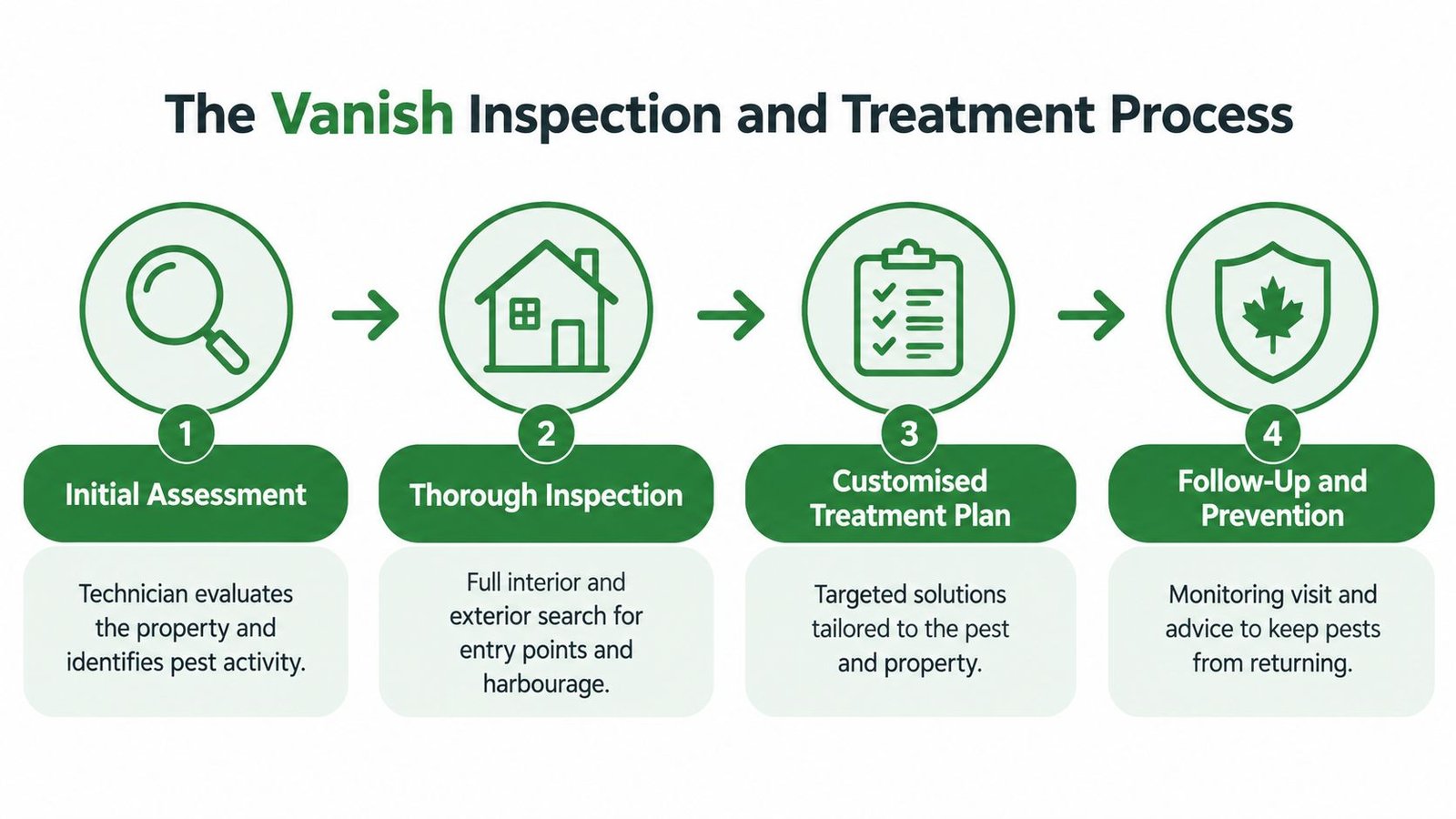
Four stages of a sound visit
Initial assessment. The technician records the pest sightings, affected rooms, dates, previous attempts, and building conditions. Photographs, captured specimens, droppings, shed skins, and damage can help establish the specific pest present.
Thorough inspection. Interior and exterior areas are checked for entry points, harbourage, nesting material, food sources, moisture, and movement routes. A rodent inspection may include foundation gaps, garage doors, vents, roofline transitions, and utility penetrations. A bed bug inspection focuses on sleeping and resting areas, furniture joints, baseboards, and nearby belongings.
Customised treatment plan. The chosen method should reflect the pest and the property. Options may include targeted applications, monitoring devices, exclusion work, sanitation changes, heat treatment, or coordinated building treatment. The plan should identify preparation duties and any areas that must remain clear.
Follow-up and prevention. Monitoring confirms whether activity is declining and whether conditions remain that could support recurrence. Follow-up may involve checking stations, reviewing evidence, inspecting treated areas, or correcting an entry point that was missed during the first visit.
The Vanish pest control service information reflects this broader approach, with services covering common household pests, rodents, bed bugs, and wildlife concerns. The practical distinction is important: treatment is an action, while pest management is a process of diagnosis, control, verification, and prevention.
Residents should prepare carefully. They should identify where activity was seen, avoid moving suspected bed bug items between rooms, clear access to inspection areas, and tell the technician about children, pets, renovation work, or previous pesticide use. Good preparation improves the quality of the inspection and reduces avoidable delays.
Common Pests Treated in Etobicoke Homes
Etobicoke contains a mix of detached homes, older low-rise properties, condominium buildings, rental housing, commercial kitchens, and industrial spaces. Each setting creates different routes for pests. Cockroaches favour protected, warm areas around food, water, appliances, and plumbing. Bed bugs move with people and belongings, while rodents use gaps around foundations, doors, rooflines, pipes, and service penetrations.
Toronto Community Housing Corporation's 2024 report recorded 38,241 pest-management work orders. Cockroaches accounted for 37%, bed bugs for 35%, mice for 23%, and other pest categories for 5%. The report also noted that more than 7,100 units were within the scope of a related initiative, with 93% accessed and treated. These figures cover Toronto rather than Etobicoke alone, but they show the scale of pest-management demand in the same dense urban housing environment. The annual pest-management report also identifies the core categories residents and property managers commonly need to address.
Cockroaches
Cockroach control usually fails when residents treat only the insect they can see. Technicians look for moisture, food residue, appliance voids, cabinet gaps, pipe penetrations, and movement between rooms or units. Fogging or indiscriminate spraying can push activity deeper into inaccessible spaces, while a targeted plan combines inspection, sanitation, exclusion, monitoring, and appropriate treatment.
A cockroach extermination resource from Vanish can help residents understand why kitchens and utility areas require close attention. In a multi-unit building, management may also need access to adjacent suites and common areas.
Bed bugs
Bed bugs hide in seams, cracks, furniture joints, baseboards, and belongings. Bites aren't a dependable detection method because some people don't react, and bites can take up to 14 days to appear. Toronto Public Health states that bed bugs generally aren't considered a health hazard and aren't reportable except in rare circumstances involving extreme active infestations, vulnerable clients, and health impacts.
Heat treatment can be useful when the required temperatures reach all relevant locations, but “chemical-free” does not mean risk-free or one-and-done. Untreated belongings, neighbouring units, or items brought back into the room can lead to recurrence. Preparation, access, laundering, bagging, decluttering, and monitoring remain important regardless of the chosen method.
Mice and wildlife
Rodent work requires more than placing bait. The technician must identify access points, food sources, nesting areas, and conditions that allow continued movement. Raccoon activity requires a different response, often centred on humane exclusion. Toronto recommends securing openings, repairing siding and holes, screening vents with heavy rustproof material, and capping chimneys. Residents should never feed, approach, or disturb raccoons, and should contact 311 for sick, injured, very young, or abnormally behaving animals. Toronto's raccoon guidance explains these precautions.
Safety, Guarantees, and Peace of Mind
Safety begins before the technician opens a treatment container. The provider should explain the method, application areas, preparation requirements, ventilation or re-entry instructions, and what residents should do with food, toys, pet items, and personal belongings. A customer shouldn't have to guess whether a room is ready to use.
Ontario's rules also provide a clear standard for commercial operators. Extermination businesses must carry liability insurance covering death, injury, or property damage arising from the business or its employees, as set out in the provincial regulation on extermination businesses. Property managers should ask for confirmation of licensing and insurance before approving work, particularly in occupied buildings or where rodenticides are involved.
Rodenticide work needs controlled placement
Certain rodenticides containing 4-amino-pyridine, strychnine, or zinc phosphide must be placed where people and non-target animals can't access them. The exterminator must also remove the pesticide from every placement location once the extermination is complete. That means a professional rodent plan should account for children, pets, tenants, wildlife, and the possibility that bait stations could be moved or disturbed.
For a condo or rental property, the file should identify:
- Placement areas: Where stations or products were positioned and why those locations were selected.
- Access controls: Which areas need to remain closed or undisturbed during treatment.
- Removal procedures: What happens to remaining bait after the active work is complete.
- Building conditions: Which gaps, doors, vents, or utility routes still require correction.
A written treatment record is valuable because it gives residents and managers a reference point. It should describe the pest, areas inspected, work performed, preparation requirements, and follow-up plan. For covered apartment buildings, Toronto's RentSafeTO framework requires owners to inspect common areas at least every 30 days, investigate pest complaints within 72 hours, use a licensed pest-management operator, prevent spread, and retain treatment records. The framework doesn't cover condo buildings, townhomes, or private basement apartments, so residents should first identify who controls the affected space.
Guarantees should be understood clearly
A money-back guarantee can provide reassurance, but customers should read the conditions. The guarantee may depend on access, preparation, follow-up appointments, neighbouring-unit cooperation, and the absence of reinfestation from untreated areas. The same applies to repeat-service plans and referral savings. They should support a documented treatment process, not replace one.
Vanish Pest Control Inc. offers licensed pest control, wildlife exclusion, chemical-free bed bug heat treatments, and prevention-oriented services across residential and commercial properties. The practical value lies in matching the method to the pest, documenting the work, and explaining what the occupants must do after treatment.
Contact Vanish for Expert Pest Control
Etobicoke pest problems are easier to control when residents act on evidence rather than panic. A single insect may require identification, while repeated sightings, droppings, bites, damaged food packaging, nesting material, or activity in shared areas justify a professional inspection. Multi-unit properties should notify the responsible landlord, property manager, or condo corporation in writing and ask whether adjacent units and common areas will be assessed.
The right exterminator should explain what was found, what remains uncertain, which treatment is appropriate, and how the property will be monitored. Licensing, insurance, preparation instructions, targeted application, and follow-up are practical markers of responsible service. Early action also gives the technician a better chance to address entry points and building conditions before the problem spreads.
Vanish Pest Control Inc. provides inspections, targeted extermination, rodent-proofing, bed bug heat treatments, and humane wildlife exclusion for Etobicoke homes, condos, rental buildings, and businesses. Visit Vanish Pest Control Inc. to request an assessment and discuss a treatment plan suited to the pest and property.