

Eight Pests That Move In When London Heats Up
Summer in London brings a predictable set of pests, and most show up in the same few places: a damp corner of the backyard, a gap under the eaves, the basement floor drain, and the patio table where dinner runs late. This roundup covers eight of the most common summer pests in London Ontario. Each entry explains what to look for, when activity increases, what risks matter, what homeowners can do themselves, and when a professional inspection makes more sense. Vanish Pest Control serves London, so the advice also identifies where a DIY fix usually stops working. For broader garden pest control services information, homeowners should still focus on solutions suited to Ontario properties and local conditions.
Table of Contents
- 1. Mosquitoes in London Ontario
- 2. Ticks in London Ontario
- 3. Wasps and Hornets in London Ontario
- 4. Carpenter Ants in London Ontario
- 5. Spiders in London Ontario
- 6. Fruit Flies and Drain Flies in London Ontario
- 7. German Cockroaches in London Ontario
- 8. Raccoons in London Ontario
- 8 Common Summer Pests in London, ON, Comparison
- Deciding Between a DIY Fix and a Professional Visit
1. Mosquitoes in London Ontario
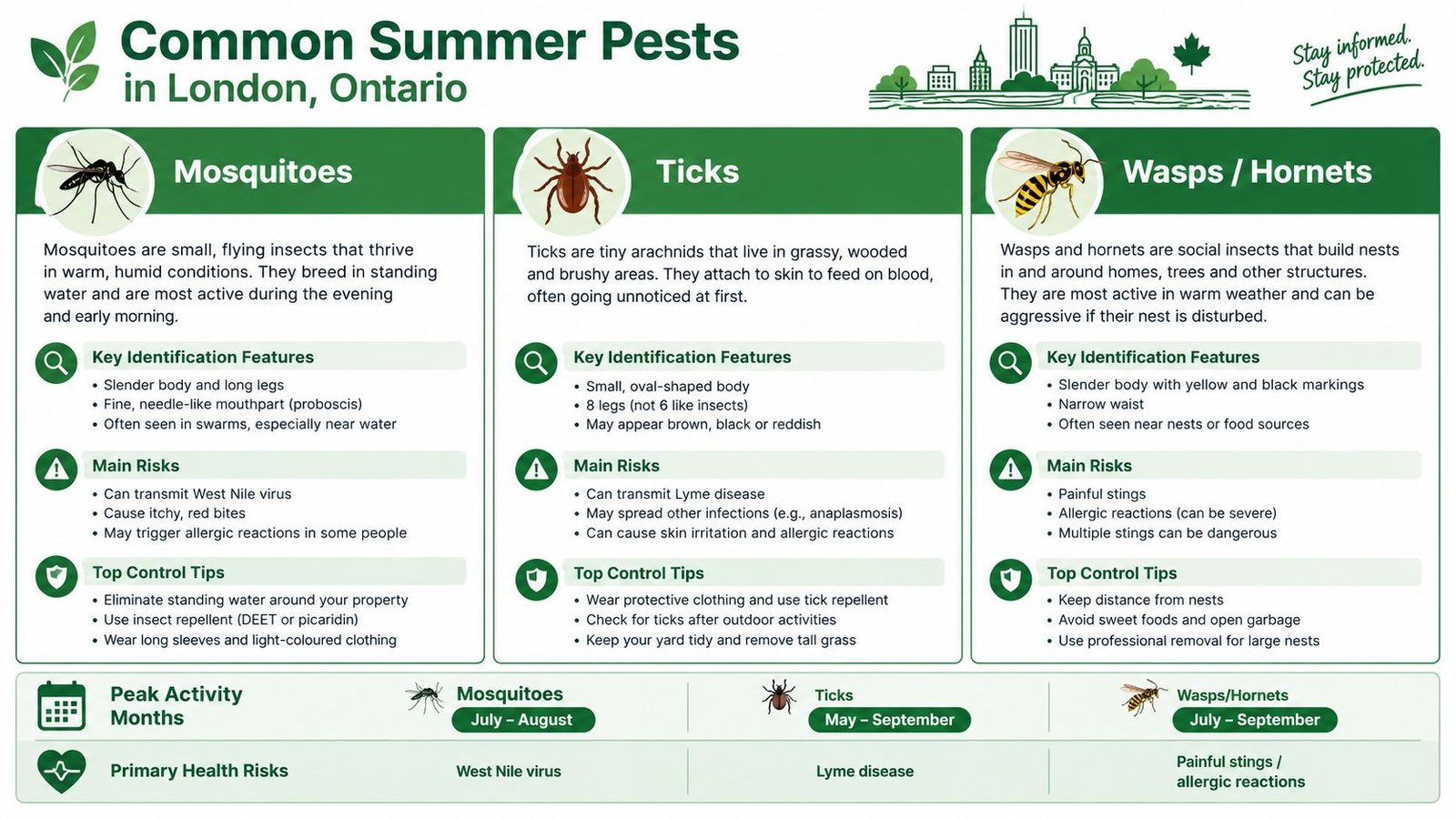
Mosquitoes usually become obvious after rain, humid weather, and warm evenings. The first inspection point is rarely the lawn itself. It's the water sitting in a blocked eavestrough, planter, children's toy, rain barrel, birdbath, or low section of the yard.
London's mosquito issue is part of a wider public-health program. The Middlesex-London Health Unit monitors mosquitoes weekly from early May through September at 23 trapping sites and treats surface-water habitats through more than 800 larvicidal treatments at 185 public-property sites. A west-end London trap tested positive for West Nile virus in 2026, reinforcing the need to reduce stagnant water and outdoor exposure. Residents can follow local mosquito and public-health updates when seasonal activity rises.
What homeowners can do
Empty and scrub water-holding containers at least weekly. Clean eavestroughs in late spring and again in midsummer, cover rain barrels with fine mesh, repair screens, and use Health Canada-registered repellents such as DEET or icaridin exactly as directed.
Practical rule: Removing breeding water is more reliable than spraying adult mosquitoes after they've already spread through the yard.
A low-lying property, drainage defect, or neighbouring water source can keep the problem going. Vanish Pest Control can assess persistent mosquito activity and help determine whether the source is on the property or beyond a simple container cleanup.
2. Ticks in London Ontario
Blacklegged ticks, also called deer ticks, are most concerning around wooded edges, tall grass, leaf litter, ravines, trails, and unmanaged vegetation. They often wait where a maintained lawn meets a more natural boundary, so a clean-looking yard can still have a higher-exposure edge.
Middlesex-London is an established blacklegged-tick risk area. The local health unit combines public submissions with active tick-dragging surveillance, particularly in spring and fall. Public Health Ontario's 2025 tool added a map showing the expansion of blacklegged-tick populations since 2015 and identified 13 newly identified risk areas across six Ontario public-health units. That doesn't mean every London lawn carries the same risk, but it does make property edges worth managing.
Reduce exposure after yard time
Wear light-coloured clothing, long sleeves, closed shoes, and pants tucked into socks in tall grass. Keep grass short, clear leaf litter from play areas, and trim brush along paths. Check children, pets, and clothing after outdoor activity.
Remove an attached tick with fine-tipped tweezers by grasping it close to the skin and pulling straight out. Wash the area and hands afterward. A rash, fever, or flu-like illness after a bite warrants medical advice.
3. Wasps and Hornets in London Ontario
A wasp around a patio isn't automatically a nest problem. Trouble increases as colonies mature, especially from late July through September, when workers are drawn to sugary drinks, ripe fruit, meat, and barbecue residue. Look beneath eaves, inside soffits, around sheds, under decks, and in wall voids.
Wasps can be useful predators earlier in the season, but a nest beside a doorway or children's play area creates a practical safety issue. People with allergies should discuss emergency planning and prescribed medication with a doctor.
Start with food and location control
Keep drinks and food covered outdoors. Clean spills promptly, rinse recycling containers, and use bins with tight-fitting lids. If a ground nest is spotted, avoid mowing or walking over the area. Mark its location from a safe distance instead of disturbing it.
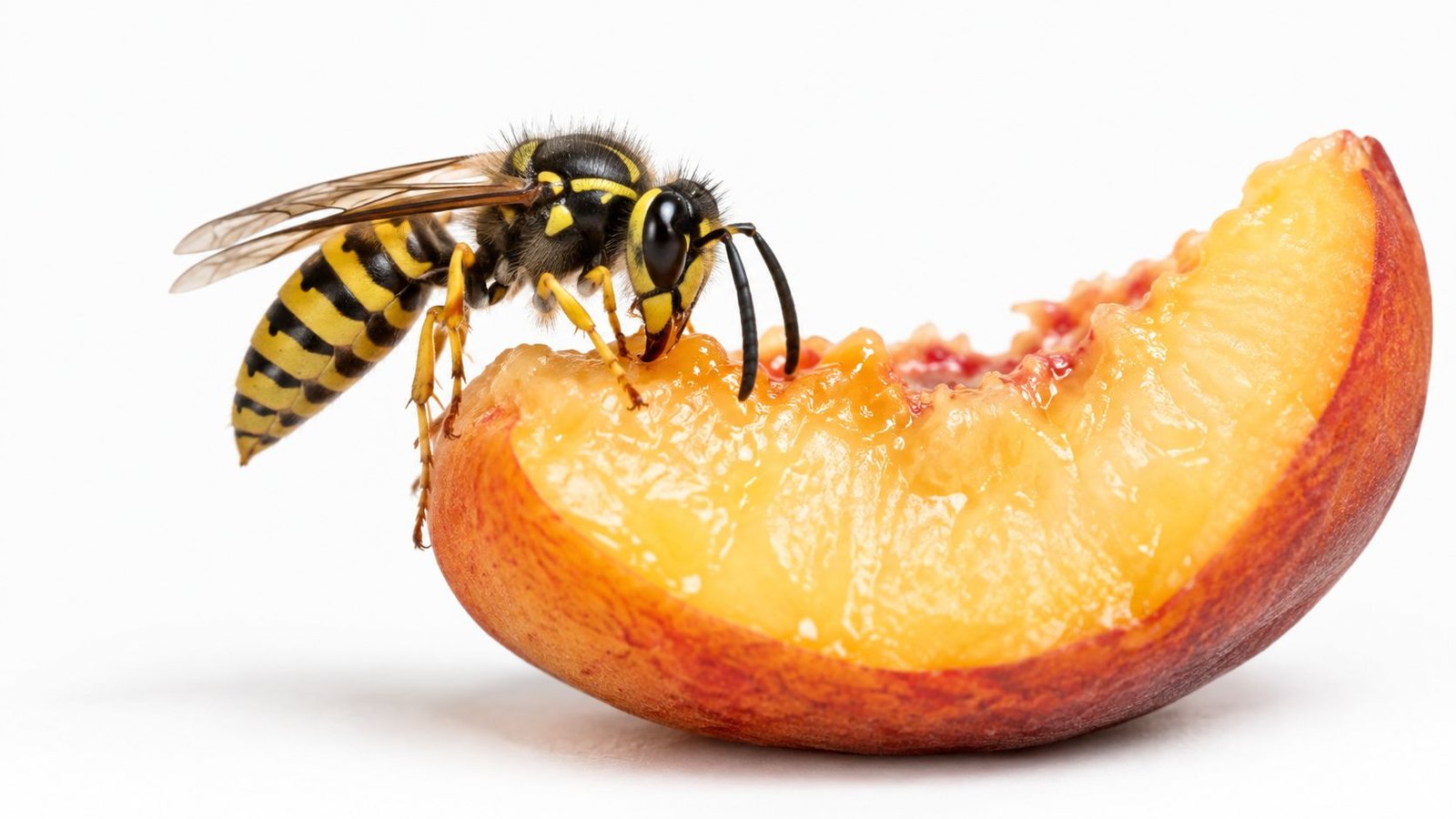
A single wasp can often be managed by removing attractants. Repeated activity from one opening, visible nest traffic, or a nest near a door calls for professional treatment. Nest removal inside walls, under eaves, or near high-traffic areas shouldn't be attempted with a ladder and household spray.
4. Carpenter Ants in London Ontario
Carpenter ants don't eat wood like termites. They excavate galleries in damp, soft, or previously damaged timber. London homes with roof leaks, wet window frames, compromised decks, plumbing leaks, or damp attic sheathing offer the conditions these ants need.
Winged ants appearing after warm spring rain can be the first obvious sign. Other clues include coarse frass, faint rustling in walls, and workers emerging near windows, rooflines, plumbing penetrations, or deck connections. The location of the ants matters more than the number seen in one room.
Fix moisture before chasing ants
Repair roof, gutter, and plumbing leaks promptly. Keep firewood, lumber, and mulch away from the foundation, trim branches that touch the house, and seal gaps around windows, pipes, and utility openings.
A spray at the kitchen baseboard won't correct wet wood behind a wall.
Homeowners can remove accessible moisture sources and record where ants appear. Frass, hollow-sounding wood, recurring winged ants, or activity in more than one area justify an inspection. A technician needs to locate the nest and identify the moisture condition supporting it, rather than treating only the visible trail.
5. Spiders in London Ontario
A webbed basement window, a garage corner, or sheltered siding can signal a spider problem before anyone sees the spiders themselves. Activity often increases in late summer and early fall, when spiders follow insect prey or search for mates. Basements, garages, storage rooms, window corners, and exterior walls provide shelter.
Most household spiders are harmless. A heavy presence usually points to conditions that support insects: bright lights near doors, clutter, gaps beneath doors, or cracks around the foundation. Addressing those conditions reduces the food supply and entry routes.
DIY steps for spider-prone areas
Move outdoor lights away from entrances, or use warm or yellow bulbs. Fit door sweeps, seal gaps around window frames and foundation cracks, and vacuum webs and egg sacs regularly. Reduce cardboard and stored clutter in garages, basements, and storage areas.
Place sticky traps along walls and near windows to locate concentrated activity. They help monitor the problem, but removing individual spiders will not stop new ones if insects remain plentiful.
When to call a professional
Persistent activity across several rooms, repeated webs after cleaning, or abundant insect prey warrants a professional inspection. Vanish Pest Control provides spider control services around London properties. Seek medical advice if a bite becomes painful, redness spreads, or unusual symptoms develop.
6. Fruit Flies and Drain Flies in London Ontario
Fruit flies and drain flies are small, but they point to different breeding conditions. Fruit flies gather around ripe produce, compost, recycling residue, open drinks, and fermenting food. Drain flies rest near sinks and floor drains because their larvae develop in the organic film lining a damp drain.
Restaurants, cafés, and commercial kitchens need faster source control because recurring flies can create food-safety and inspection concerns. Spraying the adults may reduce what's visible for a short time, but it won't remove the breeding film or food residue producing the next generation.
Clean the source, then monitor
Store ripe fruit in the refrigerator, remove compost and food-area bins daily, rinse recycling, and keep lids closed. Clean drains regularly with an enzyme-based cleaner, fix slow drains and leaking pipes, and use traps near suspected breeding sites to confirm where activity starts.
Commercial operators should keep cleaning and pest-check records available for inspectors. If flies continue after sanitation work, a professional can inspect drains, voids, floor sinks, plumbing leaks, and overlooked organic buildup. The correct treatment depends on whether the property has fruit flies, drain flies, or another small fly species.
7. German Cockroaches in London Ontario
German cockroaches are especially common in apartments, restaurants, and other multi-unit properties. They live indoors throughout the year, while summer heat and humidity can make activity more noticeable. Shared walls, pipe chases, garbage rooms, deliveries, and neighbouring units give them routes between spaces.
A sighting during daylight can indicate pressure in the surrounding area, although one sighting alone doesn't reveal the full extent. Look under sinks, behind refrigerators and stoves, inside cabinet hinges, around pipe openings, and near warm appliances.
Sanitation helps, coordination finishes the job
Store food in sealed containers, wipe surfaces after cooking, repair leaking taps, remove grease behind appliances, and reduce cardboard and clutter. Report sightings early in rental and condo buildings instead of waiting for activity to spread.
In a shared building, treating one unit without coordinating access and follow-up can leave the source untouched.
Professional control usually requires inspection, targeted treatment, monitoring, and cooperation between residents, property managers, and technicians. Cleaning schedules must also be planned around any chemical application. Repeated activity, droppings, egg cases, or sightings in several rooms call for a structured inspection rather than repeated household aerosol use.
8. Raccoons in London Ontario
Raccoons are active year-round, but summer brings more visible activity around bins, gardens, decks, attics, chimneys, sheds, and roof openings. Mothers may den in a structure, while juveniles begin exploring later in the season. Common signs include tipped bins, torn soffits, displaced vent covers, noises overhead, and digging for grubs.
Raccoons can carry rabies and raccoon roundworm. Residents shouldn't approach, feed, or handle one, particularly if it appears sick, unusually aggressive, or disoriented.
Secure attractants and protect entry points
Use bins with locking lids or secure them with bungee cords. Bring pet food and bird feeders indoors at night, install chimney caps, and cover roof vents, deck gaps, and other openings with sturdy hardware cloth.
Never seal an opening until a professional has confirmed that no animal or young is inside. Humane exclusion is generally preferred, and wildlife relocation is restricted in Ontario. A wildlife technician can inspect entry points, confirm occupancy, and plan exclusion without trapping a mother away from dependent young.

8 Common Summer Pests in London, ON, Comparison
| Pest | Typical ID & Peak Activity | Primary Risks | Control Complexity | Resource Requirements | Expected Outcome / Ideal Use Cases & Key Advantages |
|---|---|---|---|---|---|
| Mosquitoes | Slender 3–6 mm adults; Culex (dusk/night) and Aedes (day); breed in standing water; peak July–August | West Nile virus, itchy welts, outdoor nuisance | Moderate, ongoing source reduction needed across season | Weekly water removal, screens, repellents (DEET/icaridin), possible professional drainage | Reduced bites and disease risk with sustained effort; ideal for households near wet areas or outdoor living spaces |
| Ticks | Blacklegged ticks; nymphs tiny (poppy-seed); active May–September in tall grass, leaf litter, edges | Lyme disease, anaplasmosis, unnoticed bites | Moderate–High, landscape change plus personal protection and monitoring | Yard maintenance, permethrin-treated clothing, daily body checks, possible professional landscaping | Lowered bite/disease risk when combined measures used; best for properties adjacent to woodlots or fields |
| Wasps & Hornets | Yellowjackets, paper wasps, bald-faced hornets; colonies peak July–September | Painful stings, anaphylaxis, repeated stings near nests | High, nest removal risky for DIY; often requires pros | Professional nest removal, protective gear, sanitation to reduce attractants | Nest removal greatly reduces sting incidents; ideal near high-traffic areas, patios, or for allergy-prone people |
| Carpenter Ants | Large workers (6–13 mm), swarmers late spring; nest in damp or damaged wood | Structural wood damage over time, indoor trails | High, nests often hidden inside structures | Moisture repair, sealing, professional inspection and colony treatment | Stops further structural damage if nest located and repairs made; suited to homes with leaks or rotting wood |
| Spiders | Cellar, giant house, wolf spiders; more indoors late summer–fall | Bites uncommon; homeowner distress and webs | Low, sanitation and exclusion effective | Seal gaps, adjust lighting, vacuuming, sticky traps | Fewer sightings and webs; ideal for indoor nuisance control and improving cleanliness |
| Fruit Flies & Drain Flies | Fruit flies 2–4 mm (red eyes); drain flies fuzzy moth-like; peak late summer | Food contamination concerns; inspection/food-safety issues | Low–Moderate, source-focused but persistent if biofilm present | Rigorous sanitation, drain enzyme cleaners, traps, records for commercial kitchens | Elimination likely if breeding sources removed; essential for kitchens, cafés, restaurants |
| German Cockroaches | 1.1–1.5 cm, light brown with two dark stripes; active year-round indoors | Food contamination, allergens, rapid multi-unit spread | High, persistent, hidden harborage; needs coordinated action | Professional pest control, intensive sanitation, building-wide coordination | Possible eradication with coordinated treatments; critical in multi-unit and food-service settings |
| Raccoons | Grey-brown with mask and ringed tail; nocturnal; denning in attics/chimneys in summer | Rabies, raccoon roundworm, structural damage, injuries | High, exclusion is timing-sensitive and regulated | Secure bins, chimney caps, hardware cloth, licensed wildlife/exclusion professionals | Humane exclusion prevents denning and property damage if done correctly; ideal where raccoons den or raid bins |
Deciding Between a DIY Fix and a Professional Visit
Many prevention steps cost little and can be completed in an afternoon. Clear eavestroughs, drain standing water, secure garbage bins, check basement drains, trim vegetation, clean food residue, and seal gaps around doors and windows. These actions work best when they remove the condition attracting or supporting the pest.
DIY control becomes less reliable when the source is hidden. Carpenter ants may be nesting in damp structural wood. German cockroaches may be moving through shared walls. Drain flies may be breeding inside plumbing film. Wasps may be entering a wall void, and raccoons may be using an attic or chimney as a den.
A professional visit makes sense when the pest keeps returning after cleanup, when activity comes from a wall or roofline, or when a nest sits near an entrance, play area, or high-traffic path. Wildlife problems require additional care because sealing an occupied opening can trap animals or separate young from a mother.
Homeowners should record where pests appear, when activity is highest, and what conditions are present. Photos can help, but they don't replace an inspection when identification is uncertain. Property managers should coordinate access across affected units, while food-service operators should document cleaning and pest checks. Residents comparing service arrangements can review guidance on comparing flat-rate and hourly quotes, then ask what the inspection includes and how follow-up will be handled.
To discuss activity at a London property, visit Vanish Pest Control and ask about an inspection. The company provides pest control and humane wildlife exclusion for residential, commercial, and multi-unit properties, with treatment planning based on the pest, source, and structure.
Vanish Pest Control Inc. can inspect and treat recurring mosquitoes, ants, wasps, spiders, cockroaches, flies, and nuisance wildlife at London properties. Visit Vanish Pest Control Inc. to arrange an inspection and get practical next steps for the specific summer pest problem affecting the home or business.


