A homeowner in East Gwillimbury often notices the problem before seeing the pest. There may be scratching behind a basement wall after dark, fine droppings beside the garage freezer, ants following the kitchen backsplash, or a wasp nest tucked beneath the eaves. In this municipality, those signs aren't random. New subdivisions, older village properties, rural lots, farmland, and conservation areas create several routes into and around a home.
Table of Contents
- Why East Gwillimbury Homes Face Unique Pest Challenges
- Identifying the Most Common Household Pests in Your Home
- Seasonal Pest Patterns and Local Geographic Factors
- DIY Prevention Steps That Actually Work for East Gwillimbury Homes
- When to Call a Professional for Bed Bugs, Rodents, and Wildlife
- Building Your East Gwillimbury Home Pest-Prevention Plan
Why East Gwillimbury Homes Face Unique Pest Challenges
A modern home in Holland Landing or Sharon may have fresh construction, but it still has utility penetrations, garage-door gaps, soffits, and soil around the foundation that is part of the property's grounds. An older property in Queensville or Mount Albert may add aging weatherstripping, foundation cracks, outbuildings, mature trees, and attic spaces that offer more concealed harbourage. A home near agricultural land or the Holland Landing conservation areas can also sit closer to field edges, wetlands, and wildlife corridors than a typical urban property.

That combination explains why the common pests in East Gwillimbury homes include both structural-entry pests, such as mice and rats, and seasonal insects, such as ants and wasps. Statistics Canada identifies insects, rodents, termites, birds, other nuisance organisms, disinfection, and fumigation within the Canadian pest-control sector, which reinforces that rodents and insects are foundational household pest categories, not secondary concerns limited to rural buildings. The municipality's communities sit near agricultural and conservation areas, so pest prevention must account for both the structure and its surroundings. Statistics Canada's pest-control classification provides that broader Canadian context.
A line of ants along a kitchen wall may point to disturbed soil, a wall void, or moisture damage. Droppings in a basement may connect to a foundation opening, a garage route, or food stored in an outbuilding. The visible pest is often only the last part of the problem.
Practical rule: Treat recurring pest activity as a property-maintenance issue. Inspection and exclusion usually matter more than reacting to the one insect or rodent seen that morning.
Identifying the Most Common Household Pests in Your Home
A scratching sound above a Holland Landing ceiling, ants crossing a kitchen wall, or wasps entering beneath a soffit each points to a different inspection path. In East Gwillimbury, detached homes near farmland and conservation areas can support several pest types at once. Identify the animal or insect, then trace its evidence, location, food source, moisture, and likely entry route.
What to check room by room
Start with kitchens, basements, garages, attics, crawl spaces, exterior foundation walls, and outbuildings. Health Canada lists scratching or scampering sounds at night, gnaw marks, damaged food packages, droppings, urine, burrows or holes around foundations, and dusty tracks as useful rodent indicators. Deer mice are also identified as the most common carrier of hantavirus, so contaminated areas require careful handling and safe cleaning. Health Canada's rodent guidance describes the signs used during an assessment.
Mice can enter through a gap of approximately 6 mm. Check utility penetrations, garage corners, foundation cracks, vents, and worn door seals. Rats may leave larger droppings and heavier damage, but the inspection still has to answer three practical questions: where are they entering, where are they feeding, and where are they nesting?
For bed bugs, inspect mattress seams, bed frames, furniture joints, baseboards, and wall crevices for live insects, cast skins, eggs, and faecal spotting. Bites alone aren't a reliable diagnosis. York Region Public Health recommends confirming the insect before choosing a response. Its guidance also supports an identification-first, integrated-management approach.
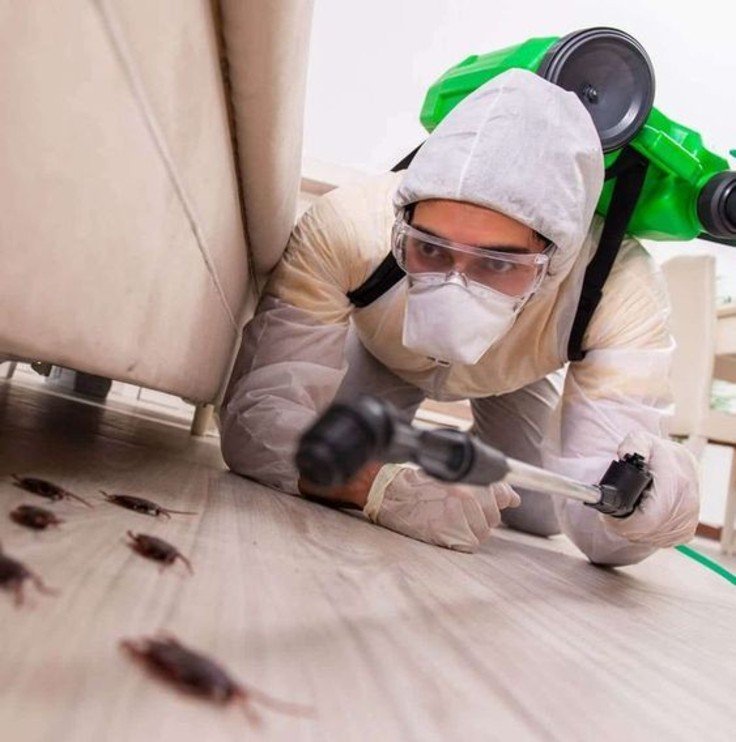
Cockroach evidence often appears in kitchens, especially around appliances, plumbing penetrations, cabinet voids, and warm, damp areas. Look for droppings, shed skins, egg cases, live insects, and a stale odour. A useful reference image is a technician treating a kitchen for cockroaches, but photographs should support an inspection rather than replace one.
| Pest | Where signs appear | Key identification markers | What it indicates |
|---|---|---|---|
| Mice | Kitchens, garages, basements, attics, wall voids | Droppings, gnaw marks, scratching, urine, tracks | An entry route and access to food, water, or shelter |
| Rats | Foundation edges, garages, utility spaces, sheds | Larger gnawing damage, burrows, droppings, contaminated food | A structural and sanitation issue requiring prompt inspection |
| Bed bugs | Mattress seams, bed frames, baseboards, furniture joints | Live insects, cast skins, eggs, faecal spotting | Concealed harbourages near sleeping areas |
| Ants | Kitchen edges, wall voids, disturbed soil, damp areas | Trails, workers, entry gaps, nesting activity | A nearby colony or an accessible food and moisture source |
| Wasps | Eaves, soffits, rooflines, wall voids, soil | Repeated flight paths, nest material, concentrated activity | A nest or entry point requiring careful evaluation |
| Spiders | Basements, garages, foundation edges, storage spaces | Wandering spiders, webs, insect activity | Outdoor entry, clutter, moisture, or another insect source |
Rats and mice can also affect the building itself. York Region warns that gnawing electrical wires can create fire risks, while damage to insulation, siding, and drywall can weaken the structure. York Region's rodent prevention information distinguishes these documented risks from the misconception that rats and mice have caused human rabies in North America.
Photograph the location and retain a specimen when it can be collected safely. Crushing the pest or cleaning away every trace may remove useful clues. Record when the sign appeared, which room was affected, and whether similar evidence is present in the attic, basement, garage, or exterior.
Seasonal Pest Patterns and Local Geographic Factors
East Gwillimbury's pest calendar follows both weather and land use. Spring brings thawed soil, surface ant activity, and early wasp movement around rooflines and wall voids. Summer increases mosquito exposure around low-lying ground, field pools, ditches, and standing water, while wooded and field-edge properties may also see more tick encounters.
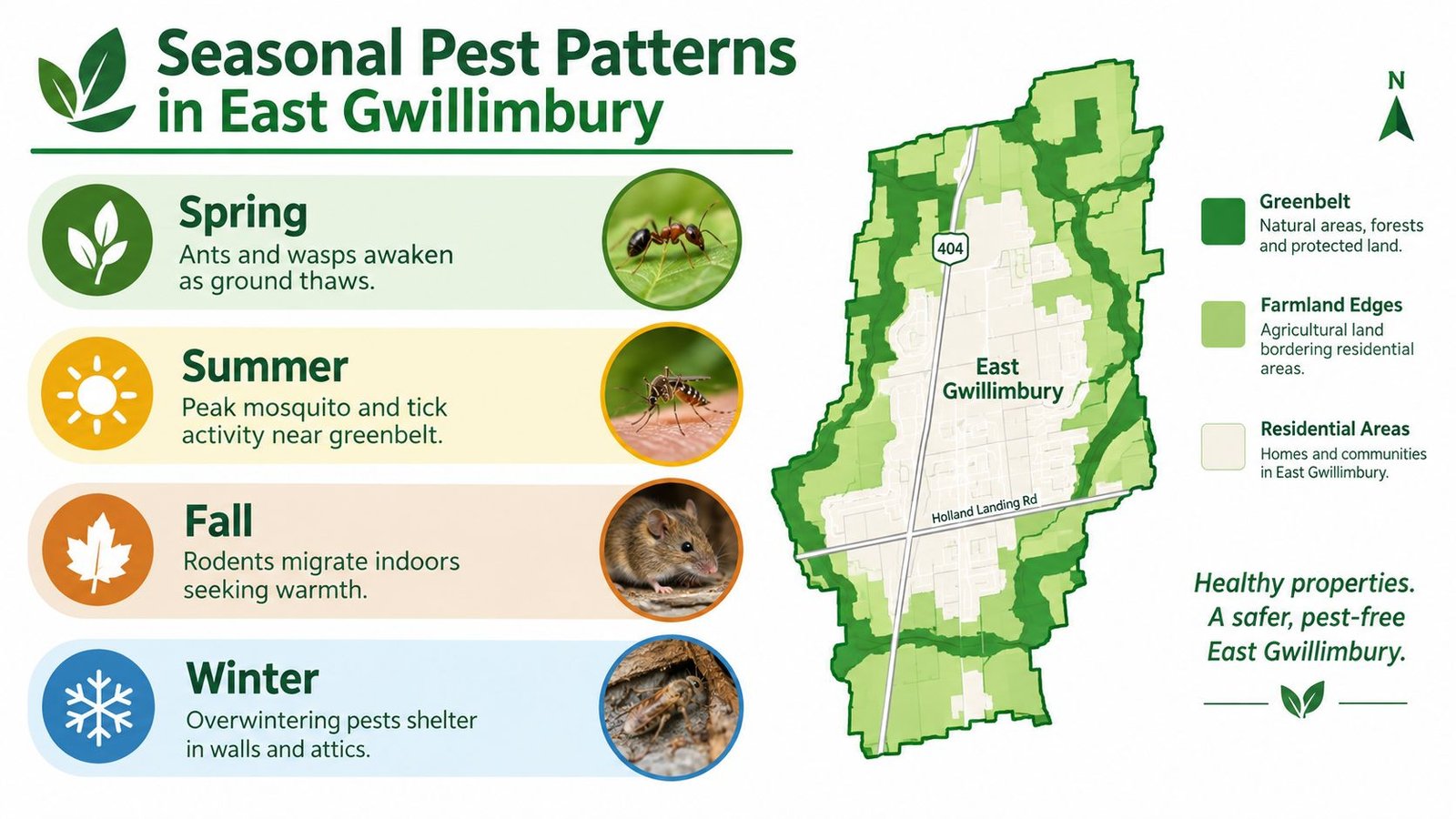
The town reports a 75% reduction in biting activity and 100% larval reduction in treated ponds through its mosquito-control program. Those figures apply to the town's treated ponds, not every private yard, container, ditch, eavestrough, or drainage problem. Residents still need to empty containers, correct pooling water, maintain eavestroughs, and document persistent hotspots. East Gwillimbury's mosquito-control program explains the distinction between municipal treatment and homeowner action.
By fall, mice begin seeking warmth, shelter, and food inside buildings. Canadian public-health guidance identifies fall and winter as the period when house mice seek entry through gaps around doors, walls, and foundations. An opening of approximately 6 mm can be enough, so sealing must include soffit-to-fascia transitions, garage-door corners, vents, and utility lines, not just obvious foundation cracks. Canadian house-mouse guidance supports this seasonal exclusion approach.
Public Health Ontario launched a vector-borne disease surveillance tool in June 2025, with weekly mosquito and human-disease updates during the May to October season. The tool tracks mosquito species, testing, and illnesses separately, so reducing mosquitoes isn't identical to eliminating disease risk. The Ontario vector-borne disease surveillance tool helps residents and property managers follow changing local information.
DIY Prevention Steps That Actually Work for East Gwillimbury Homes
The most reliable homeowner work is simple, physical, and consistent. Rodent management should begin with exclusion and sanitation, not poison alone. Seal gaps around doors, vents, pipes, and utility lines with durable metal mesh backed by compatible sealant. Foam alone is easy for rodents to defeat.
Start outside the structure
Remove fallen fruit, pet food, birdseed, and other outdoor food. Store grass seed, pet food, and hay in hard-walled containers. Keep composters covered and protected from the soil, repair door sweeps, and reduce clutter near foundations, garages, sheds, and outbuildings. Government rodent-management guidance supports combining these steps rather than relying on a single control measure.
Work through the interior
In kitchens, inspect wall-floor junctions, cabinet voids, appliance spaces, and pipe penetrations. Move dry goods into sealed containers, discard food in damaged packaging, and clean affected surfaces safely. The Canadian Food Inspection Agency's pest-control guidance explains why insects, rodents, and birds can contaminate food.
In basements and garages, reduce cardboard and unused storage, repair leaks, and keep access routes visible. Around porches and doors, sound screening can reduce insect entry while preserving ventilation. Homeowners comparing materials may find guidance on picking the right porch screen useful when replacing damaged screening.
For mosquitoes, empty buckets, planters, toys, and other containers after rain. Correct drainage around downspouts and low spots, and keep eavestroughs clear. These actions are worthwhile even when a property is near a treated pond because private breeding sites sit outside municipal treatment areas.
DIY work has limits. Homeowners can seal accessible gaps, improve storage, remove attractants, and monitor evidence. Bed bug heat treatment, concealed rodent routes, and attic wildlife exclusion require equipment, species knowledge, and follow-up planning.
When to Call a Professional for Bed Bugs, Rodents, and Wildlife
A mouse in the kitchen or one ant near a window does not automatically require treatment. Repeated signs, hidden harbourage, building damage, or activity in a shared-wall property changes the decision. East Gwillimbury's detached homes, rural-urban fringe, nearby farmland, and Holland Landing conservation areas can also expose properties to different pest pressures than a tightly built suburban neighbourhood.
Bed bugs need prompt assessment when bites, spotting, shed skins, or live insects appear. They stay in protected cracks during daylight and become active around sleeping occupants at night. Treating only visible insects or exposed mattress surfaces leaves concealed harbourage behind. An integrated response may include insect identification, laundering or heat-based reduction, physical removal, encasements, clutter reduction, and carefully selected products. Treating one room or relying on a single spray often misses the source.
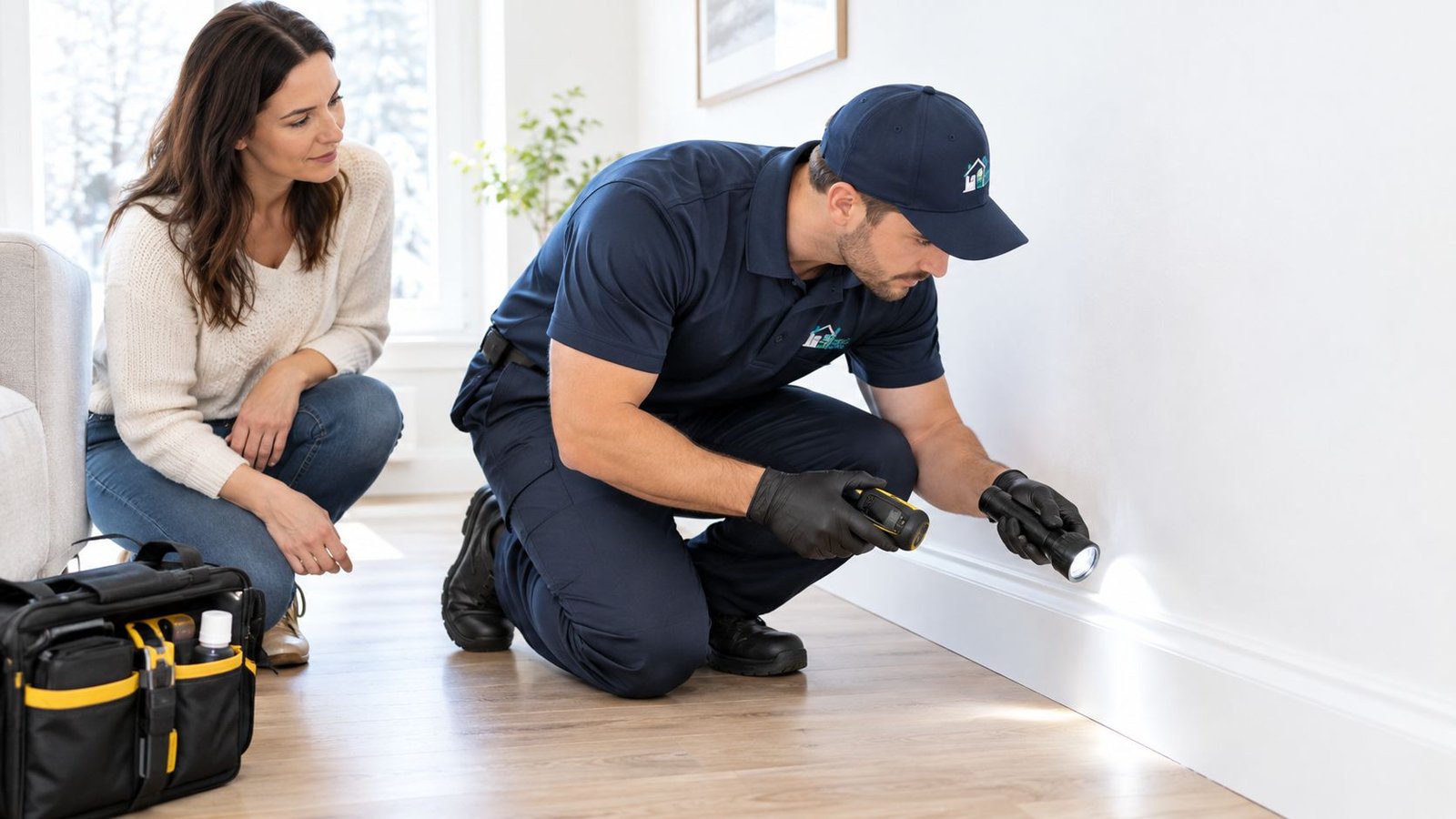
Professional assessment becomes especially useful when:
- Bed bug evidence is uncertain: A carpet beetle or another insect can be mistaken for a bed bug. Moving potentially infested furniture between rooms may spread the problem.
- Rodent evidence keeps returning: Traps can remove an animal without correcting the entry route. Repeated droppings, chewing, or noises call for inspection of connected spaces and an exclusion plan.
- Wildlife occupies an attic: Raccoons, squirrels, and bats require species-specific, humane entry-point management. Sealing an opening before confirming the animal's status can trap wildlife inside.
- A household includes shared walls: Adjacent-unit inspection may be needed when bed bugs, mice, cockroaches, or other pests move through service routes.
Vanish Pest Control Inc. provides detailed inspections, chemical-free bed bug heat treatments, termite inspections with reports, and humane wildlife exclusion across Newmarket, York Region, Scarborough, Toronto and the GTA, Woodstock, Oxford County, and London, Ontario. Its service information also covers follow-up planning, pricing, a money-back guarantee, and the Vanish Royalty Plan. Cleaning supports treatment preparation but does not replace pest control. The Dublin bed bug cleaning experts resource explains that distinction clearly.
Building Your East Gwillimbury Home Pest-Prevention Plan
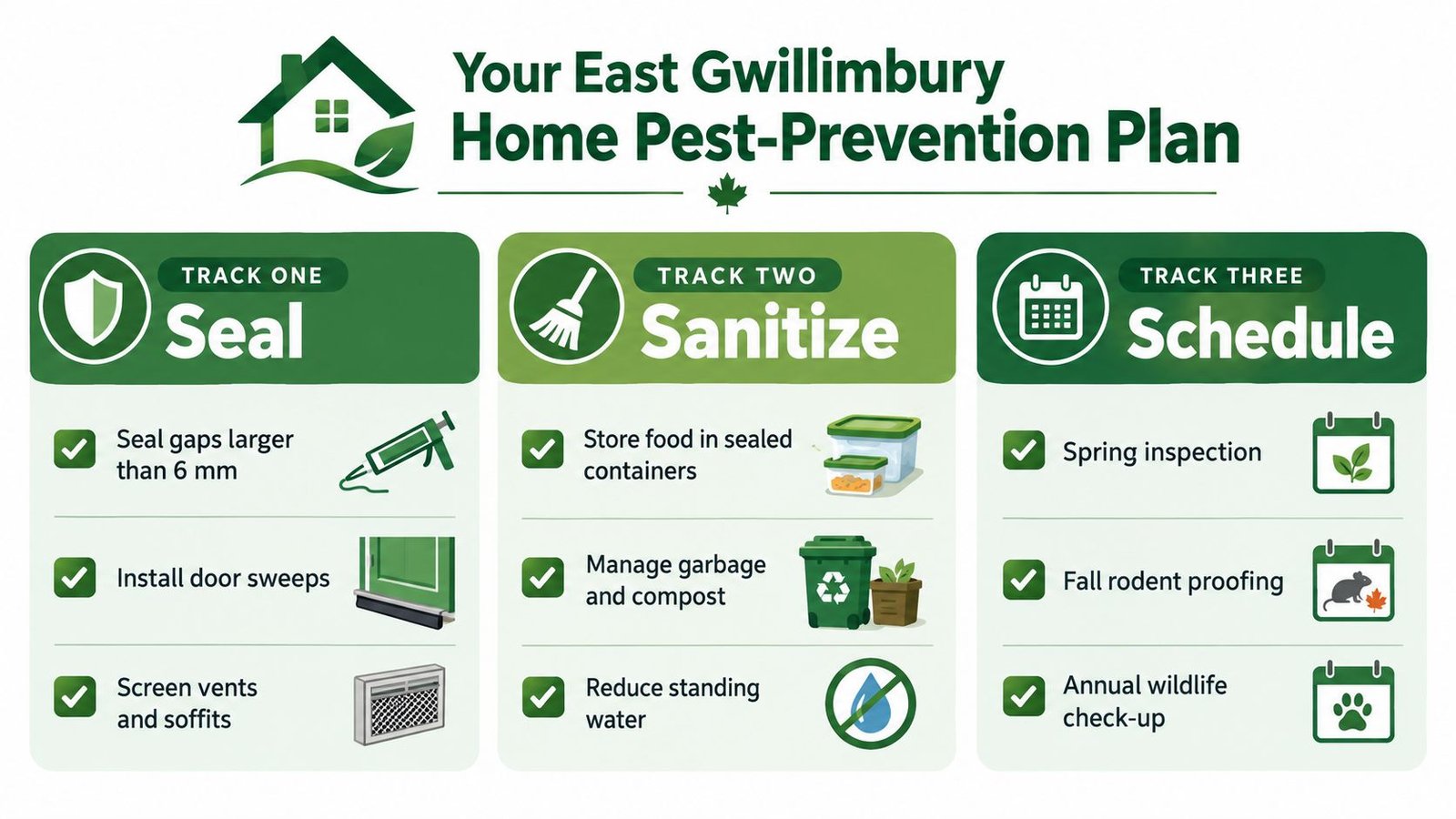
A useful plan has three tracks. Seal the building, sanitize the areas that provide food and water, and schedule inspections around seasonal risk. This framework works for detached homes, older village properties, townhouses, and condominiums, although shared buildings require coordinated access and communication.
Three tracks for the year
Seal includes foundation openings, utility penetrations, door sweeps, vents, soffits, garage corners, and accessible roofline gaps. A mouse can use a gap of approximately 6 mm, so visual repairs need to be precise rather than cosmetic.
Sanitize means sealed food storage, covered garbage and compost, reduced clutter, repaired leaks, and less standing water. Rodent signs near food should be treated as a contamination-control issue, not just a cleaning inconvenience.
Schedule means checking the property before spring insect activity, preparing for fall rodent movement, and arranging professional assessment when evidence returns. Property upkeep also benefits from broader property maintenance best practices for 2026, particularly around moisture, exterior surfaces, drainage, and access points.
Match the sign to the response
| What the homeowner finds | Appropriate next action |
|---|---|
| Droppings in a garage | Photograph the evidence, inspect food and storage, check nearby entry points, and arrange an assessment if signs continue |
| Cast skin or spotting near a bed | Avoid moving furniture, isolate items where possible, and confirm the insect professionally |
| Wasp activity beneath eaves | Keep distance, observe the flight path, and arrange an evaluation before disturbing the nest |
| A tick after backyard play | Remove it promptly, monitor the exposure, and use public-health guidance for health questions |
| Scratching in a wall or attic | Check for openings and damage, but use species-specific wildlife or rodent expertise before sealing an occupied entry |
York Region notes that rats and mice can carry disease, transport fleas or ticks, contaminate food with hair, droppings, and urine, and damage buildings. Detached homes, garages, outbuildings, and rural or semi-rural surroundings create more potential nesting and entry areas, so droppings shouldn't be treated as an isolated housekeeping problem. Inspect utility penetrations, foundation openings, wall voids, garages, and attics, while remembering that York Region also notes rats and mice aren't known to have caused human rabies in North America.
Don't rely on foam alone, move potentially infested furniture between rooms, attempt raccoon exclusion without species knowledge, or assume municipal mosquito treatment eliminates private-yard risk. East Gwillimbury's suburban-to-rural edge rewards homeowners who act before a seasonal problem becomes a structural one. The Vanish Pest Control Inc. team can assess the source, recommend targeted control, and plan follow-up work where inspection shows that prevention alone won't resolve the activity.
Vanish Pest Control Inc. provides detailed pest inspections, rodent-proofing, bed bug heat treatment, and humane wildlife exclusion for East Gwillimbury homes and properties across York Region and the GTA. Visit Vanish Pest Control Inc. to arrange an assessment focused on the entry points, evidence, and seasonal risks affecting the property.