
A lot of Newmarket homeowners first notice fleas at the wrong time. The house seems calm, the dog won't stop scratching, and then someone spots tiny dark specks on the pet bed or along the edge of a couch cushion. That moment usually brings the same reaction. Concern about the pet, discomfort about the home, and a sinking feeling that the problem might spread fast.
It can feel overwhelming, especially when online advice jumps straight to sprays, bombs, and shortcuts. Flea treatment for home works better when the problem is handled as a full system. The pet, the floors, the soft furniture, the bedding, and sometimes even the building or yard all play a role.
For Newmarket families, that matters in real homes with finished basements, carpeted stairs, pet sleeping corners, mudrooms, and shared-wall living situations. Fleas don't stay neatly in one room, and they rarely disappear because one product was used once. A clear plan is what gets control back.
Homeowners looking for local help with a broader pest issue can also review pest control services near Newmarket while dealing with an active infestation.
Table of Contents
- Your Guide to Reclaiming Your Newmarket Home from Fleas
- Confirming and Assessing Your Flea Infestation
- The Critical Preparation Phase for Effective Treatment
- Executing Your Integrated Home Flea Control Plan
- Treating Pets and Managing Outdoor Sources
- When to Call a Professional for Flea Problems
- Frequently Asked Questions About Home Flea Treatment
Your Guide to Reclaiming Your Newmarket Home from Fleas
A common Newmarket scenario starts with a family noticing that the dog is restless at night. The scratching gets worse. Then small black specks appear on the blanket near the crate, and someone starts checking ankles after walking across the basement carpet. Fleas create stress quickly because the problem feels personal. They're in the places where people relax, sleep, and spend time with pets.
The good news is that a flea problem is solvable. The bad news is that partial treatment usually drags it out. A single spray, a single bath, or one deep clean won't usually finish the job. Fleas persist because different life stages end up in different places, and sheltered areas inside the home protect them from rushed treatment.
Practical rule: Flea treatment for home works when the house and the host are treated together, and when cleaning is repeated with discipline.
In Newmarket homes, the trouble spots are often predictable. Pet beds in family rooms. Upholstered furniture. Basement rugs. Cracks along baseboards. Gaps under shelving in storage rooms. Any place where pets rest or where dust and fibres collect can become part of the cycle.
A solid response has four parts:
- Confirm the pest properly: Jumping insects alone can lead to wrong assumptions.
- Prepare the home thoroughly: Clutter and blocked floor edges reduce treatment reach.
- Attack the environment: Vacuuming, laundering, and steam work matter more than commonly realized.
- Treat the source: If a pet carries fleas, the home won't stay clear unless the pet is treated too.
That integrated approach gives worried homeowners something better than guesswork. It gives them a sequence. Once the sequence is followed, the problem becomes manageable instead of chaotic.
Confirming and Assessing Your Flea Infestation
Before any treatment starts, the pest has to be identified correctly. Newmarket residents sometimes confuse fleas with springtails, booklice, or tiny flies around windows and sinks. Misidentification wastes time and puts effort into the wrong treatment plan.

What fleas usually look like in a lived-in home
Adult fleas are small, fast, and hard to catch by hand. Homeowners often don't get a clear look because fleas move suddenly through pet fur, carpet fibres, or sock cuffs. The more reliable sign is often flea dirt, which looks like black pepper or fine dark grit.
On pet bedding, flea dirt usually appears in clusters where the animal sleeps most often. On a damp paper towel, those black specks may smear into a rusty red-brown stain because they contain digested blood. Regular dust doesn't do that. Crumbs don't do that either.
Human signs can help, but they aren't enough on their own. Itchy bites near ankles or lower legs can point toward fleas, but skin reactions vary from person to person.
Simple checks that give better answers
A few straightforward checks can help assess the situation before any product is used:
- Use a flea comb on the pet: Focus on the neck, lower back, and base of the tail. These areas often show activity first.
- Inspect pet sleeping areas: Pull back blankets and check seams, edges, and the floor immediately beside the bed.
- Try the white sock test: Walk slowly through carpeted rooms, especially where pets rest. Fleas are easier to spot against white fabric.
- Check quiet zones: Under sofas, along baseboards, behind bedroom doors, and near heat sources are all worth inspecting.
- Use a simple sticky monitor: Near pet resting areas, this can help confirm whether activity is ongoing.
A correct ID saves more time than any spray ever will.
Severity matters too. If activity is limited to one sleeping area, the infestation may still be localised. If fleas are showing up in multiple rooms, on more than one person, or in a finished basement and upstairs bedrooms, the problem is already established.
Homeowners who aren't sure whether they're dealing with fleas or another jumping household pest can compare the signs in this guide on flies versus fleas in the home.
The Critical Preparation Phase for Effective Treatment
Poor preparation is one of the main reasons flea treatment for home disappoints people. The treatment itself may be fine, but the environment wasn't ready for it. In practical terms, that means fleas stayed protected under clutter, deep in fabric piles, behind furniture, and in untouched floor edges.

Why preparation determines the result
Preparation exposes the places fleas use to survive. Eggs, larvae, and pupae settle into sheltered spots, especially where dust, pet hair, and fibres build up. If those areas stay covered, treatment can't reach them properly.
That's why prep isn't housekeeping for appearances. It's part of the control work itself.
A properly prepared Newmarket home gives treatment access to:
- Floor edges and baseboards: Important in bedrooms, hallways, and basements.
- Under-bed and under-sofa zones: Common reservoirs in family homes.
- Closet floors and corners: Often overlooked because they aren't walked daily.
- Pet resting areas: Crates, cushions, throw blankets, and nearby flooring.
- Furniture seams and lower upholstery: Especially where pets climb or nap.
A practical room-by-room prep checklist
Start with laundry because soft items are the easiest flea harbourage to reduce quickly. Strip beds, collect pet bedding, and gather washable throws, cushion covers, and blankets from any room where the pet rests. Bag them before carrying them through the house so debris doesn't shake loose along the way.
Next, clear the floors. Shoes, storage bins, toys, laundry piles, and loose pet items should come off the ground. Closets need attention too, especially if they have carpet or fabric storage baskets on the floor.
Then create access around furniture:
- Pull furniture away from walls: Even a small gap helps expose baseboards and cracks.
- Lift skirts and dust ruffles: Fleas hide in dark fabric edges close to the floor.
- Open low-access spaces: Beneath beds, sectionals, and storage benches matters.
- Protect sensitive items: Cover or remove exposed food, dishes, and vulnerable electronics from active treatment areas.
- Plan for pets during treatment: They may need to be relocated temporarily depending on the product used.
Aquariums need special attention. If a home has one, it should be covered and managed according to label directions for any treatment being used in the room.
Preparation should feel inconvenient. If it doesn't, important hiding spots were probably missed.
A final walkthrough helps. If a technician or homeowner can easily reach carpet edges, upholstered seating, pet zones, and the perimeter of each room, the home is ready. If the floor still looks crowded, the treatment phase will be weaker than it should be.
Executing Your Integrated Home Flea Control Plan
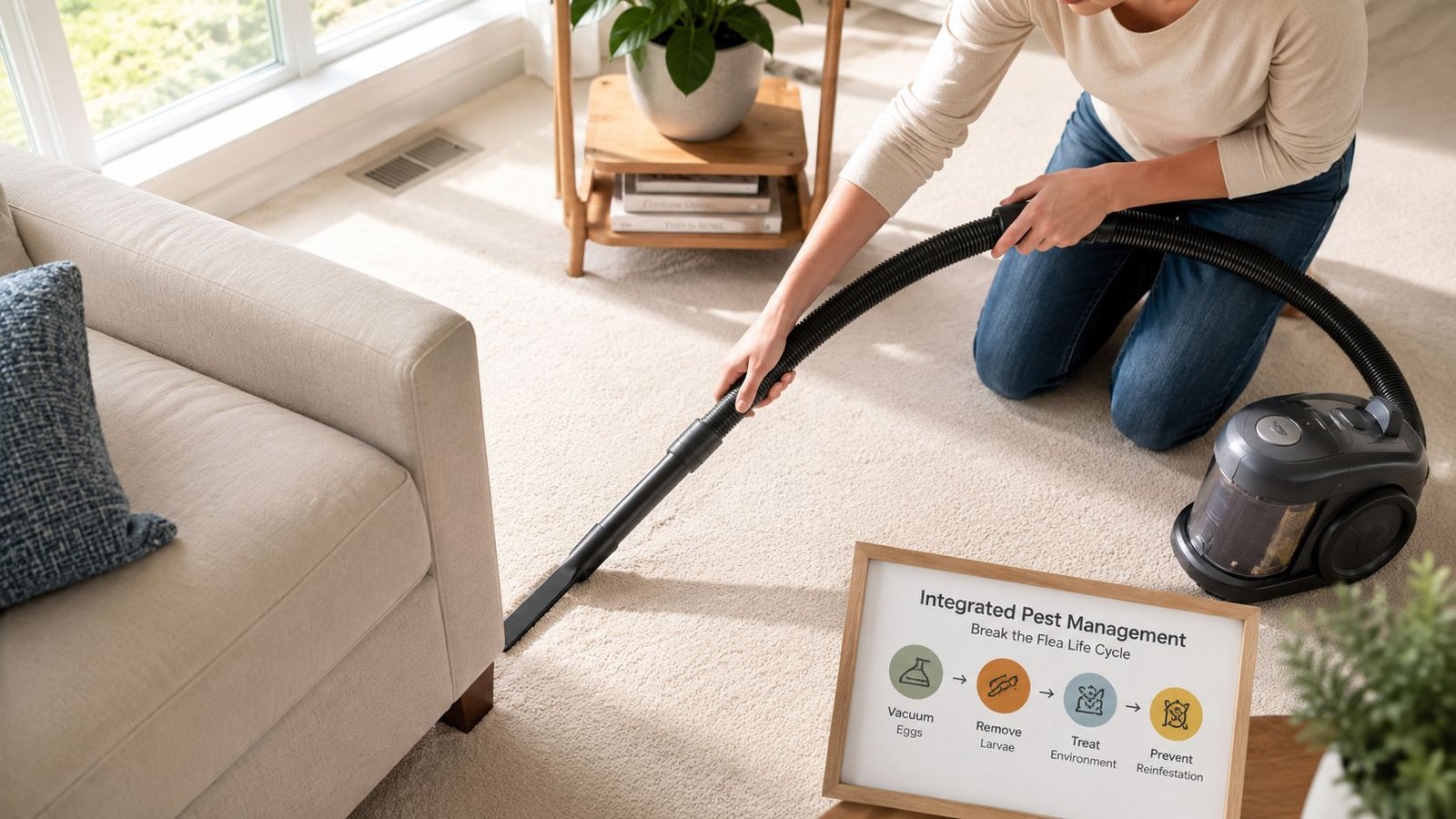
This is the part many people rush, but it needs order. Flea treatment for home works best when the home is handled as an environment, not just as a place to spray. Public health guidance emphasises attacking every life stage at once. The U.S. EPA notes that daily vacuuming is the best method for initial control, recommends vacuuming carpets, cushioned furniture, cracks and crevices, baseboards, and basements, and also recommends steam cleaning carpets because hot steam and soap can kill fleas in all stages of the life cycle. The same guidance recommends washing pet bedding and family bedding in hot, soapy water every two to three weeks because sprays often miss eggs, larvae, and pupae hidden in sheltered areas, so repeated cleaning is needed for lasting elimination, as explained in the EPA guidance on controlling fleas around your home.
Start with the mechanical removal work
Vacuuming isn't the side task. It's the backbone of indoor flea control. In Newmarket homes, that means more than running a vacuum down the middle of the room.
The key targets are:
- Carpets and area rugs: Slow passes matter more than speed.
- Upholstered furniture: Seat seams, under cushions, and lower edges.
- Floor-wall junctions: Baseboards, corners, and trim lines.
- Cracks and crevices: Especially in older flooring and stair edges.
- Basements: Fleas often persist in low-traffic lower levels where pets nap.
Vacuum contents should be removed from the home right away after each session. Leaving debris inside the machine or canister indoors defeats part of the purpose.
Laundering comes next. Anything washable from sleeping areas, pet rest zones, and frequently used soft surfaces should go through a hot, soapy cycle. Bedding isn't optional here. It's one of the most common places where the infestation keeps feeding itself.
Steam cleaning adds a different advantage. Heat reaches into carpet fibres and upholstery in a way quick surface spraying often doesn't. For homeowners trying to avoid overreliance on chemical products, steam is one of the strongest tools available.
Flea control improves when each cleaning pass removes what the last pass exposed.
Use products carefully and with a purpose
There's a big difference between strategic product use and panic spraying. Randomly applying multiple over-the-counter products can create odour, residue, and frustration without solving the actual problem. Products meant for premises should be selected carefully and used exactly as directed on the label.
For long-term control, many professionals favour a premise spray that includes an insect growth regulator, often called an IGR. The reason is practical. Adult flea kill matters, but stopping immature stages from developing is what helps break the cycle rather than chase it room to room.
A useful outside perspective on product selection and household application mistakes appears in these El Paso groomer's home flea spray insights, especially for homeowners trying to understand why one spray alone often disappoints.
A structured indoor plan usually looks like this:
| Area | Best immediate action | Why it matters |
|---|---|---|
| Pet bedding zone | Wash and dry thoroughly | Reduces active debris where fleas gather |
| Carpeted living spaces | Vacuum slowly and repeatedly | Pulls up adults and hidden material |
| Upholstered seating | Vacuum seams and creases | Pets often seed these areas |
| Basement edges | Vacuum and inspect closely | Activity often lingers here |
| Heavier textile areas | Steam clean where suitable | Heat helps reach multiple life stages |
If the home is treated chemically, people and pets need to follow all label instructions before re-entry. More product doesn't mean more control. Better coverage, better prep, and better timing are what usually change the result.
Treating Pets and Managing Outdoor Sources
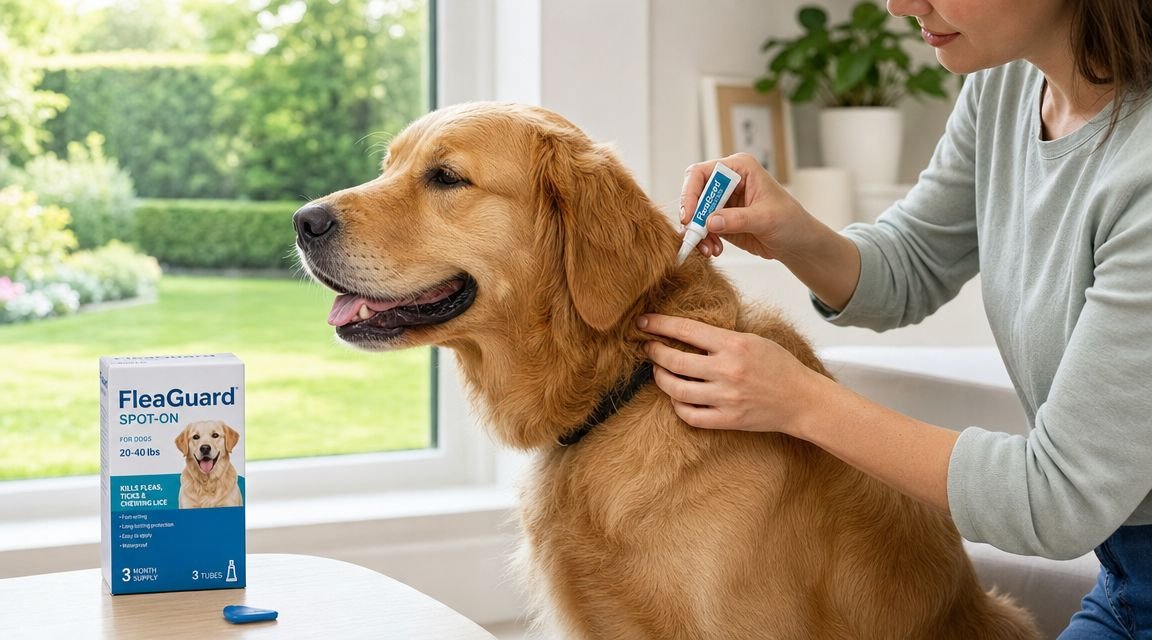
A house can be cleaned thoroughly and still fail to clear if the host animal keeps carrying fleas back into the environment. That's why any serious flea treatment for home has to include the pet at the same time.
Why the pet must be treated at the same time
Scientific evidence strongly supports concurrent pet treatment. A review in PMC reports that three monthly topical applications of fipronil or imidacloprid reduced fleas on animals by 96.5% and 99.5%, respectively, while the number of fleas trapped within homes fell by 98.6% for both treatments. The same review also cites a study where imidacloprid reduced fleas on pets by 98.8% and reduced fleas trapped in homes by 99.9%, which is detailed in this PMC review on flea control and household reduction.
That finding lines up with what technicians see in the field. If the animal remains untreated, the home keeps getting reseeded. Floors and sofas then become symptoms, not the source.
Veterinary guidance matters here because not every product is right for every animal. Age, species, weight, health status, and whether there are cats and dogs in the same home all affect safe selection. Cat owners who want a general overview can review this resource on flea tick prevention for cats before speaking with their veterinarian.
How Newmarket yards and wildlife keep the cycle going
Outdoor pressure is often underestimated in Newmarket homes, especially where backyards back onto green space, ravines, decks, sheds, or frequent wildlife routes. Raccoons, squirrels, and other visiting animals can contribute to recurring flea issues around entry points and pet travel paths.
The outdoor goal isn't to treat every square foot of the property. It's to reduce harborage and cut down attractive conditions.
Useful steps include:
- Keep grass and edges maintained: Overgrown margins create shelter.
- Remove leaf litter and clutter: Organic debris gives pests protected spots.
- Clean around decks and sheds: These are common quiet zones.
- Secure garbage and food sources: Wildlife traffic increases pest transfer risk.
- Watch pet routes: Repeated paths to fences, porches, and side yards deserve inspection.
Where wildlife activity is part of the problem, homeowners may also need broader exclusion work. In those cases, this guide to humane raccoon removal in Toronto and the GTA can help explain how source animals are addressed safely.
When to Call a Professional for Flea Problems
Some flea problems are manageable with disciplined cleaning and coordinated pet treatment. Others keep coming back because the infestation is larger, more distributed, or tied to a source the homeowner can't fully control.
Signs the problem is bigger than DIY
Professional help makes sense when the same signs return after a careful home effort. That usually means the issue wasn't just missed vacuuming. It means fleas are surviving in hidden reservoirs, on untreated hosts, or in adjoining spaces.
Common tipping points include:
- Activity in multiple rooms: Not just one pet bed or one rug.
- Ongoing bites after repeated cleaning: Especially when bedding and floors have already been handled.
- Large homes with layered soft surfaces: More square footage means more harbourage.
- Tenanted or turnover properties: Previous occupants, visiting animals, and hidden debris complicate control.
- Households that can't pause routine easily: Flea work needs timing and access.
Some homeowners also want low-chemical or pet-conscious handling but don't want to sort through multiple products themselves. In that situation, a licensed provider such as Vanish Pest Control Inc. can inspect, identify harbourage, and apply a structured treatment plan using family- and pet-conscious methods according to label and site conditions.
When fleas survive a serious DIY effort, the problem usually isn't effort. It's access, source, or coverage.
For readers who want supportive reading on lower-chemical approaches before deciding, these natural flea remedies for dogs may help frame what can complement, but not replace, a proper elimination plan.
Why multi-unit properties are different
Condos, apartments, basement suites, and townhomes in the GTA create a separate challenge. Fleas don't always respect unit boundaries. In multi-unit housing common in the GTA, fleas can persist when the source is a neighbouring unit or shared hallway. Repeated single-unit sprays are often less effective than coordinated source elimination, which is one reason professional intervention becomes important for access, coordination, and complete building-wide control, as outlined in this guidance on controlling fleas on the pet, in the house, and in the yard.
That's especially relevant for Newmarket residents in condos or rental buildings. If one unit is treated and another source remains active, the problem can keep circulating. Landlords, property managers, and residents often need a coordinated plan instead of isolated spot treatments.
Frequently Asked Questions About Home Flea Treatment
What if there are fleas but no pets in the home
That can absolutely happen. Fleas can be brought in on clothing, by visiting animals, or from previous occupants. Pet-free homes still need the same sanitation response because daily vacuuming, hot washing of bedding, and steam cleaning help remove eggs, larvae, and adults regardless of the original source, as noted in this article on fleas in a house with no pets.
How long does flea treatment for home usually take
It usually takes persistence, not one perfect day. Homeowners should expect repeated cleaning, close monitoring, and consistent pet management where applicable. If activity keeps showing up after a disciplined effort, hidden sources or adjacent-unit issues may be involved.
Are treatments safe around children and pets
They can be, when the correct product is chosen and the label is followed exactly. Safety depends on the site, the active ingredient, the species in the home, and correct re-entry timing. That's one reason rushed DIY mixing and overapplication create unnecessary risk.
Should one room be treated or the whole home
In most lived-in infestations, the better approach is to assess the whole home and treat all relevant areas. Fleas spread through movement, pet access, fabrics, and floor edges. Treating only the room where they were first noticed often leaves connected harbourage untouched.
If fleas are disrupting a Newmarket home, Vanish Pest Control Inc. can help assess the source, explain the safest next steps, and build a practical treatment plan for the home, pets, and surrounding conditions.