

More than 1,200 pest-related health citations were issued across the GTA in 2023, and pests contaminated 15-20% of inspected restaurant premises annually in the region, according to GTA restaurant pest citation reporting. For a Toronto restaurant owner, that shifts pest control for restaurants out of the “maintenance” category and into daily risk management.
Toronto’s food scene is dense, competitive, and heavily scrutinised. A restaurant can do many things well and still get pulled into a difficult inspection because of one overlooked drain, one back door that doesn’t seal tightly, or one delivery area that stays cluttered after close. In older downtown buildings, hidden voids behind walls and shared service corridors make the problem worse. In newer mixed-use spaces, waste rooms, loading docks, and neighbouring tenants can create the same pressure.
The practical answer isn’t random spraying or waiting until staff see something moving. It’s a disciplined system that combines sanitation, exclusion, monitoring, documentation, and licensed treatment when needed. That system is Integrated Pest Management, and in Toronto it matters because it aligns directly with how restaurant operators protect food safety, pass inspections, and avoid preventable closures.
Table of Contents
- The High Stakes of Pest Control in Toronto's Food Scene
- Identifying Your Unwanted Guests in Toronto
- Building Your Fortress An IPM Prevention Plan
- Mastering Your Health Inspection Logbook
- Choosing Your Professional Pest Control Partner in Toronto
- Your Toronto Restaurant Pest Control Questions Answered
The High Stakes of Pest Control in Toronto's Food Scene
Toronto restaurant owners usually think first about food costs, staffing, reviews, and rent. Pest risk sits in the background until it becomes urgent. That’s a mistake in this city.
Why Toronto restaurants face unusual pressure
Toronto has the density, foot traffic, waste volume, and mixed building stock that pests exploit. A restaurant on a busy commercial strip may share walls with retail, upper-floor apartments, basements, and alleyway waste storage. A café in a renovated older property may inherit gaps around pipes, cracked masonry, uneven doors, and inaccessible wall cavities. Even clean operators can end up with pest pressure if the building envelope and routines aren’t controlled tightly.
Pests also create very different business problems depending on where they appear:
- Front-of-house sightings damage reputation immediately. Guests don’t separate a single sighting from an ongoing problem.
- Kitchen sightings trigger concern about contamination, food handling, and inspector response.
- Storage room activity often stays hidden too long, which is why managers miss the early stage of an infestation.
- Waste-area activity spreads inward when lids are left open, bins aren’t washed, or doors remain propped during deliveries.
Practical rule: In Toronto, pest control for restaurants has to be treated like refrigeration or fire safety. It isn’t optional, and it can’t be handled casually.
Why IPM matters more than reactive treatment
Reactive treatment feels cheaper because it postpones action. In reality, it usually costs more in disruption, repeat visits, staff stress, and inspection exposure. A restaurant that only calls for help after live activity is seen is already behind.
Integrated Pest Management works because it asks a different question. Not “What product kills this pest?” but “Why is this site allowing the pest to survive?” That’s the right question for restaurants. If food debris remains under line equipment, if drains stay wet and organic matter builds up, if utility penetrations remain open, treatment alone won’t hold.
A strong IPM program for a Toronto restaurant usually combines:
- Routine inspection of kitchens, bars, storage, delivery points, and non-food areas
- Daily sanitation discipline that targets hidden residue, not just visible surfaces
- Physical exclusion such as sealing gaps and improving door sweeps
- Monitoring devices that reveal activity before guests or staff do
- Targeted treatment applied only where it fits the site and the pest pressure
- Written records that show the business is organised, responsive, and inspection-ready
That combination is what keeps a restaurant stable in a city where one weak point can undo months of solid operations.
Identifying Your Unwanted Guests in Toronto
The first job isn’t treatment. It’s correct identification. Restaurants lose time when staff call every small insect a “roach” or every dropping “mouse activity.” Accurate reporting leads to faster, cleaner decisions.
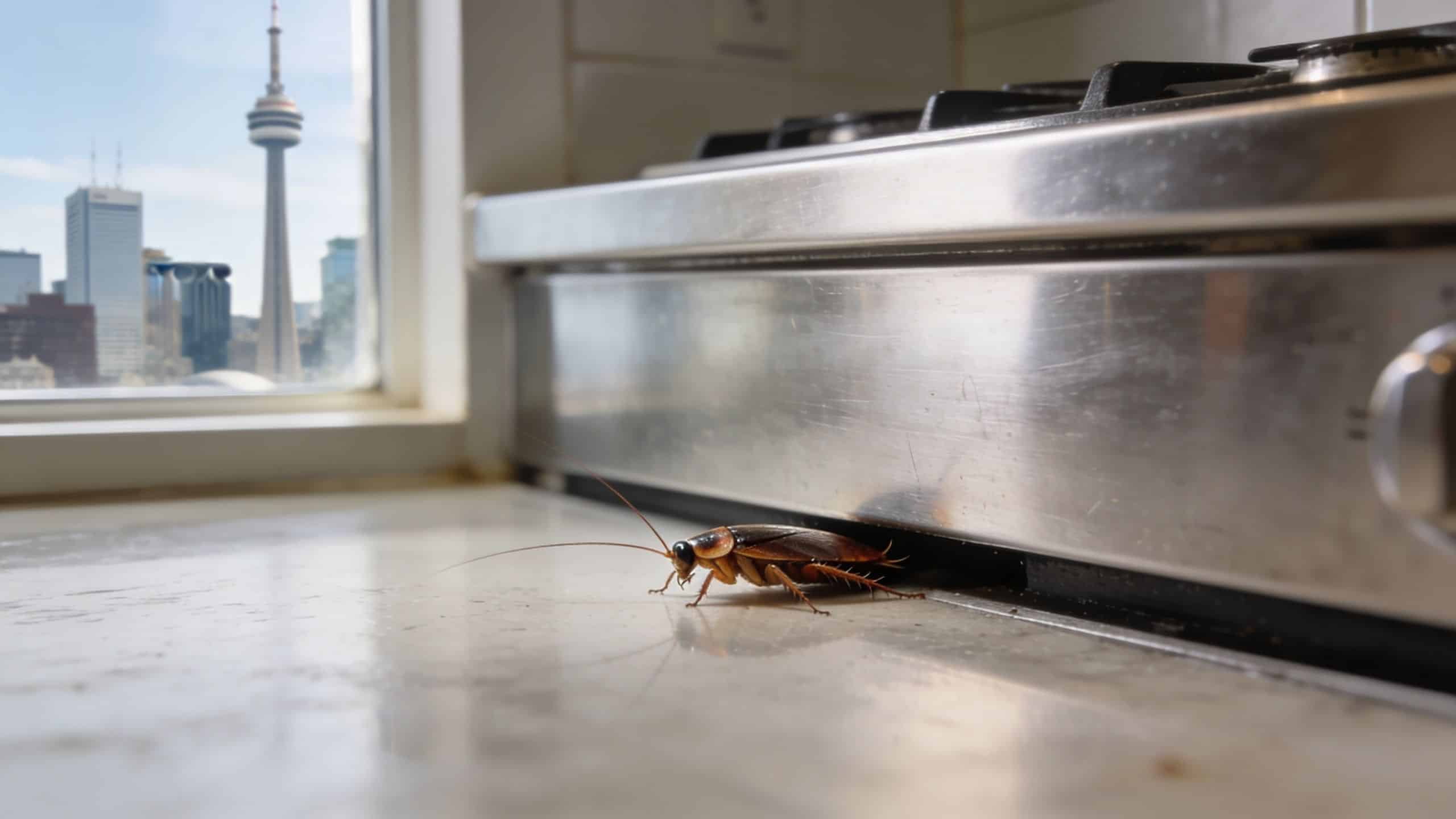
German cockroaches in hot and damp kitchen zones
German cockroaches are one of the most serious restaurant pests in Toronto. They thrive in 25-30°C environments like drains and kitchen equipment, and proper species identification is a key step in control. A professional IPM program can achieve 95% elimination within 4 weeks and 70-90% sustained control over 12 months, according to food-industry pest control guidance on cockroach identification and IPM outcomes.
In a restaurant, staff should check:
- Behind hot equipment such as fryers, refrigerators, dish machines, and prep-line motors
- Under sinks and around drains where warmth and moisture stay consistent
- Inside cluttered storage areas with cardboard, paper, and undisturbed voids
- Near electrical channels and wall seams where insects travel out of sight
Common warning signs include pepper-like droppings, shed skins, egg cases, and a musty odour in tight spaces. For operators who want a plain-language overview of entry patterns and hiding behaviour, this guide on how cockroaches invade buildings is a useful starting point.
Mice and rats in storage and service areas
Rodents in Toronto restaurants usually show up first in less glamorous zones. Dry storage, basement shelving, utility closets, receiving areas, and the space behind stacked supplies are common hotspots. Mice often leave smaller droppings near edges and tight travel routes. Rats usually leave heavier signs, including stronger grease marks, larger droppings, gnawing, and disturbed materials around hidden nesting points.
Managers should look for signs, not just animals:
- Chew damage on packaging, caulking, and soft materials
- Rub marks along walls or behind bins
- Gaps around pipes and conduits that act as runways
- Shredded paper or insulation in quiet corners
Rodent sightings in a dining room are dramatic. Rodent evidence in a storage room is just as serious, because inspectors care about contamination risk, not whether the pest stayed out of customer view.
Flies around drains bars and waste
Flies are often misread as minor annoyance pests. In a restaurant, they usually point to a maintenance or sanitation problem that needs correction. Fruit flies gather where sugary residue, fermenting liquids, or sticky bar spills stay in place. Drain flies indicate organic buildup in drains or floor sinks. House flies often enter through doors, loading areas, and waste-handling zones.
A practical approach is to identify where they concentrate:
| Pest | Where staff usually notice it | What it often means |
|---|---|---|
| Fruit flies | Bar mats, syrup stations, garnish bins, recycling | Sugary residue or fermenting organic matter |
| Drain flies | Floor drains, mop sinks, dish areas | Organic film inside drains |
| House flies | Back doors, receiving, waste exits | Entry from outside plus sanitation gaps |
A single pest type can point to very different failures. Roaches usually mean hidden harbourage. Rodents usually mean access. Flies often mean moisture or residue.
Building Your Fortress An IPM Prevention Plan
Prevention in Toronto restaurants has to be physical, repeatable, and boring in the best way. Strong pest control for restaurants is built on routines that happen whether the site looks busy or quiet.
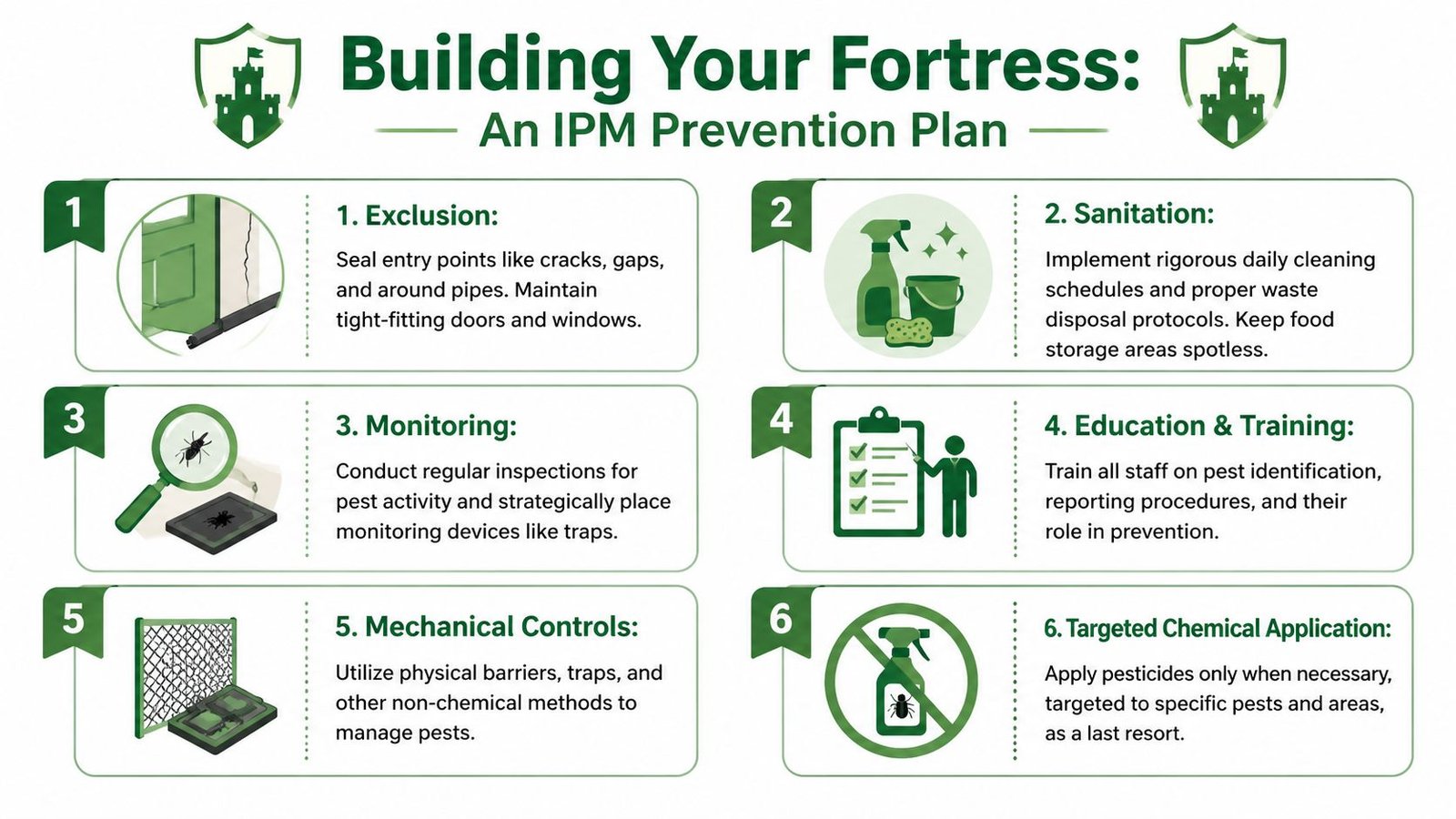
Sanitation excellence
Cleaning for appearance isn’t the same as cleaning for pest prevention. A polished floor in the open kitchen means little if grease is layered behind the fryer casters or if syrup has dried under the bar sink.
Daily and weekly routines should be written clearly and assigned by role:
- End-of-line cleaning Remove food scraps under cook lines, prep tables, reach-ins, and shelving. Hidden food feeds infestations far more than exposed counters do.
- Drain care Scrub and flush problem drains so organic buildup doesn’t sit undisturbed. A shiny grate doesn’t mean the drain is clean inside.
- Waste handling Empty interior bins promptly, keep liners intact, and wash the bins themselves. Spills at the bottom of containers attract pests long after the visible garbage is gone.
- Dry storage discipline Rotate stock, break down cardboard quickly, and keep materials organised so staff can inspect corners and wall lines.
- Water control Fix leaks fast, dry mop sinks, and avoid leaving standing water under dishwashing or prep stations.
A simple closing checklist usually works better than a detailed document nobody follows. What matters is consistency, supervision, and proof that the tasks were done.
Structural exclusion
Toronto buildings give pests plenty of chances to enter. Older brick properties, rear laneway access, shared utility penetrations, worn thresholds, and basement-level service routes all create weak points. At these vulnerabilities, many restaurant owners underestimate the problem.
In the GTA, traditional baits can fail up to 35% of the time due to resistance, while humane exclusion methods such as professional entry point sealing reduce rodent re-infestation by 60%, based on GTA rodent-proofing data and exclusion guidance. That matters because exclusion solves the access problem instead of just reacting after activity starts.
The highest-value areas to inspect are usually:
- Rear doors and delivery entrances where light shows under the threshold
- Pipe and conduit penetrations under sinks, in prep rooms, and behind equipment
- Damaged wall junctions in basements or old storerooms
- Ceiling void access points above suspended ceilings
- Exterior waste areas where lids, enclosures, and door closers fail
For operators building a broader prevention mindset, MODERN LYFE's IPM insights offer a good overview of why prevention, monitoring, and correction need to work together. Restaurants looking for site-specific commercial support can also review commercial pest management options for how inspection, exclusion, and scheduled service are typically structured.
Site reality: If a Toronto restaurant keeps feeding a wall void or leaving a back threshold open, repeat baiting won’t fix the reason rodents return.
Monitoring that catches trouble early
Monitoring is where good prevention becomes operational. Without it, managers rely on chance sightings. With it, they can find pressure before it reaches the dining room.
A workable monitoring routine includes:
- Sticky monitors in discreet interior locations near equipment, drains, and storage edges
- Rodent devices in secured, mapped positions along likely travel routes
- A staff reporting rule that requires exact location, time, and what was seen
- Trend review so recurring hotspots get corrected, not just noted
Monitoring should never become a box-ticking exercise. If the same trap location keeps showing activity, the site needs a sanitation correction, an exclusion repair, or both.
Mastering Your Health Inspection Logbook
A restaurant can do solid work and still struggle during an inspection if nothing is documented properly. The logbook is what turns daily effort into evidence.
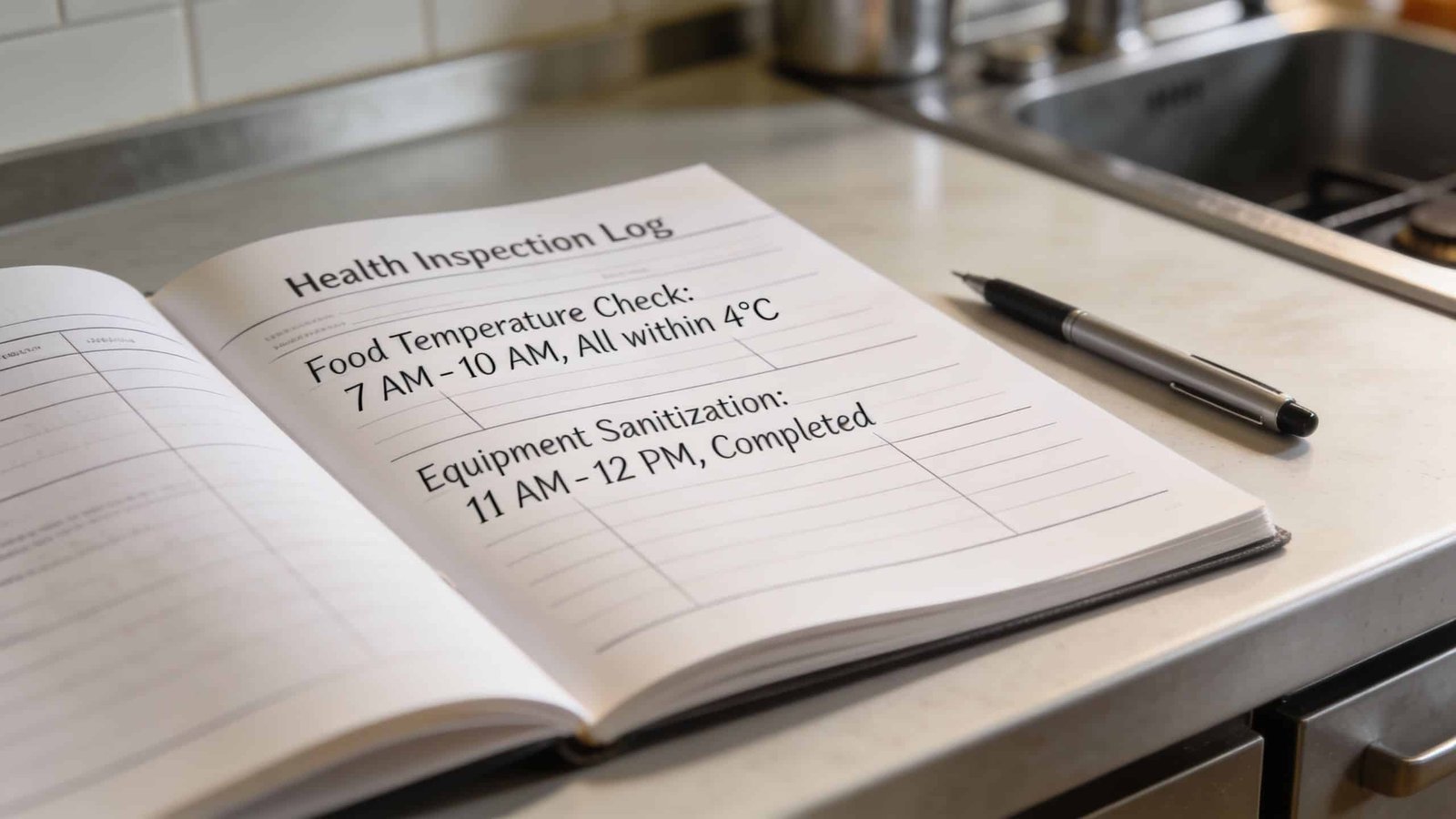
What inspectors want to see
Under Ontario Food Premises Regulation, pest control violations can make up about 20% of a restaurant’s health inspection score, and a single pest sighting can be grounds for immediate closure with fines starting at $500 per violation, as noted in Ontario restaurant inspection reporting on pest score impact and closure risk.
That means documentation can’t be an afterthought. Inspectors generally want to see that the operator knows the site’s risk points, checks them regularly, and responds when something changes. A thin binder full of invoices but no real notes often signals passive management. A current, organised logbook shows control.
What a useful pest logbook should contain
The strongest logbooks are simple enough that managers put them to use. They don’t need to be fancy. They need to be current, legible, and tied to action.
A strong restaurant pest file usually includes:
- Service records with dates, treatment areas, observations, and technician recommendations
- Sightings log recording the exact location, pest type if known, time, and who reported it
- Corrective actions such as drain cleaning, sealing work, deep-clean tasks, or stock-room reorganisation
- Monitoring map showing where traps or stations are placed and when they were checked
- Staff follow-up notes confirming that assigned corrections were completed
A good manager also keeps related compliance items nearby. For example, kitchen exhaust cleanliness affects sanitation standards and hidden grease accumulation. Operators reviewing broader kitchen safety obligations may also want to understand NFPA 96 compliance for kitchens as part of the overall inspection-readiness picture.
How documentation protects the business
Documentation does three jobs at once. It helps the operator manage the site, helps the service provider work accurately, and helps the restaurant defend itself if questions arise.
Consider the difference between these two scenarios:
| Weak record-keeping | Strong record-keeping |
|---|---|
| Staff mention “bugs near sink” verbally | Log notes exact sink, shift, and visible signs |
| Deep clean was requested but not tracked | Corrective action is dated and signed off |
| Trap activity is checked inconsistently | Monitoring devices are mapped and reviewed routinely |
| Service report is filed away unread | Manager responds to recommendations the same week |
“Show the problem, show the correction, show the follow-up.” That’s what a useful logbook does.
A Toronto restaurant doesn’t need perfect paperwork. It needs records that prove attention, action, and accountability.
Choosing Your Professional Pest Control Partner in Toronto
Restaurant owners shouldn’t hand over pest management blindly. In Toronto, the legal and operational details matter too much for that.
What licensed service should include
Many Toronto restaurants run into trouble because treatment was approached too casually. According to Ontario pesticide compliance guidance for restaurants, an estimated 40% of pest-related closures are linked to improper chemical applications, and Ontario’s Pesticides Act requires strict IPM plans and record-keeping, with fines up to $100,000 for non-compliance.
That changes how owners should evaluate a provider. The job isn’t just eliminating pests. The job is eliminating pests in a way that fits a food business, protects documentation, and keeps the restaurant compliant.
A professional partner should be able to explain:
- What pest was identified and why that diagnosis matters
- Which non-chemical corrections the restaurant must complete
- Where treatment will occur and what preparation is required
- How records will be provided for inspection files
- What follow-up looks like if activity continues
What to ask before authorising treatment
A good service conversation is specific. If the answers stay vague, the owner should slow down.
Useful questions include:
- Is the treatment plan based on inspection findings or just a standard package?
- What prep does kitchen staff need to complete before service?
- How are sensitive food and prep areas protected during application?
- What documentation will be left on-site after each visit?
- What building repairs or sanitation changes are still the restaurant’s responsibility?
For owners comparing service standards, this article on what to look for in Toronto pest control companies gives a practical checklist for licensing, communication, and treatment planning.
How Toronto operators should think about value
The cheapest service call is often the most expensive arrangement if it creates repeat problems, rushed applications, poor records, or failed follow-through. Restaurants need reliability more than promises.
Value in pest control for restaurants usually looks like this:
- Fast response when a live sighting threatens operations
- Clear written recommendations that kitchen managers can implement
- Eco-conscious options where they fit the site and pest pressure
- Structured follow-up rather than one-and-done treatment
- Coordination with cleaning and operational timing so service doesn’t create chaos
Vanish Pest Control Inc. is one Toronto-area option that provides commercial pest management, same-day response, documentation support, and eco-conscious treatment planning for food businesses. The important point for any operator is broader than one provider. Hire a licensed team that understands restaurant compliance, not just pest elimination.
Your Toronto Restaurant Pest Control Questions Answered
How often should a Toronto restaurant book pest service
Service frequency depends on the building, surrounding tenants, waste exposure, and pest history. High-risk restaurants usually need a tighter inspection cycle than low-risk sites. What matters most is that service is regular enough to catch pressure early and keep monitoring current.
Professionally implemented IPM achieves 90% effectiveness in pest reduction while cutting pesticide use by 70% compared with conventional methods, according to restaurant IPM performance guidance. That’s why scheduled service tends to outperform emergency-only treatment.
What if pests are coming from a neighbouring unit
That’s common in Toronto plazas, mixed-use blocks, and shared commercial buildings. The restaurant still needs to control its own conditions first. Staff should document exact sighting locations, inspect shared-wall areas, seal penetrations, tighten waste practices, and notify property management in writing.
The mistake is assuming the problem is “next door” and therefore out of the restaurant’s hands. Inspectors won’t make that distinction if activity is present inside the premises.
Manager’s reminder: Control what can be controlled inside the unit immediately, then escalate the shared-building issue with records and photos.
Is IPM really better than routine spraying
Yes, because routine spraying alone doesn’t fix food, water, shelter, and entry. It may suppress visible activity briefly, but it won’t deliver stable control if the site conditions remain favourable.
IPM also reduces common failure points. The same source notes that neglecting non-food areas contributes to 40% of reinfestations, while poor staff training contributes to 25% of failures in early detection. That’s especially important in restaurants, where back rooms, utility spaces, and delivery zones often get less attention than prep lines and dining areas.
For a Toronto operator, the most effective approach is straightforward:
- Train staff to report signs early
- Keep non-food areas on the same cleaning standard as visible kitchen zones
- Fix structural gaps quickly
- Maintain monitoring and records
- Use licensed treatment as one part of the system, not the whole system
Toronto restaurants don’t get much room for error when pests are involved. If the site needs a practical IPM plan, rodent-proofing, cockroach control, or inspection-ready documentation support, Vanish Pest Control Inc. can help build a compliant pest control program that fits the realities of Toronto food service.
Generated with Outrank app




