

A Cambridge homeowner usually doesn't start searching for pest control on a good day. It's often after hearing scratching in the wall over the bed, finding ant trails under the toaster, or noticing a wasp line moving in and out of the soffit above the front door. In older Galt homes, gaps around plumbing, shifting foundations, and unfinished basement corners often give pests a way in. In newer parts of Cambridge, the problem is different but just as real. Tight homes can still attract mice, cockroaches, ants, and wildlife when food, moisture, or shelter are easy to find.
That stress is real. Pest activity changes how a home feels. People sleep lightly, keep checking cupboards, and stop trusting that the problem will stay contained.
A reliable plan starts with proper identification, targeted treatment, and fixing the condition that allowed the pest to settle in. In some cases, the issue also overlaps with moisture, ventilation, and stale indoor conditions, especially after a hidden infestation in an attic, crawl space, or damp basement. Homeowners dealing with that side of the problem may also find this guide on how to fix indoor air quality useful.
Table of Contents
- Your Local Guide to a Pest-Free Cambridge Home
- Identifying Common Pests in Cambridge Homes and Businesses
- Our Guaranteed Pest Control Services for Cambridge Residents
- The Vanish Pest Control Process What to Expect
- A Seasonal Calendar of Pest Threats in Cambridge
- Choosing a Trusted Pest Control Partner in Cambridge
- Frequently Asked Questions About Cambridge Pest Control
Your Local Guide to a Pest-Free Cambridge Home
Cambridge homes deal with a wide range of pest pressures because the city has a bit of everything. Century homes, finished basements, riverside areas, newer subdivisions, backyard sheds, restaurant strips, and multi-unit buildings all create different hiding spots and food sources. That's why pest control Cambridge searches often come from residents who aren't just looking for a spray. They want a clear answer on what's happening, what works, and how to stop the problem from coming back.
A mouse issue in a detached home near an older neighbourhood usually starts differently than a cockroach issue in a multi-unit building or a raccoon issue over a garage. The treatment has to match the pest, the structure, and the level of activity. Quick fixes almost always miss one of those three.
The problem most homeowners actually face
Most infestations don't begin with a dramatic sighting. They begin with subtle evidence:
- Rodents: Droppings under the sink, grease rub marks on a baseboard, torn insulation in the attic
- Ants: A few scouts near the dishwasher, then a larger trail after rain or a heat wave
- Cockroaches: Activity at night in kitchens, utility rooms, and behind appliances
- Wildlife: Noises in the ceiling before dawn, displaced soffit, or disturbed garbage nearby
Practical rule: If pests are visible during the day, the issue often isn't new. It usually means the population or activity level has grown enough that the pests are competing for space and food.
Cambridge residents don't need vague advice. They need a buyer's guide that explains the seasonal patterns, the inspection process, the limits of DIY treatments, and the signs that it's time to bring in trained help.
What lasting control looks like
Permanent control comes from combining several actions at once, not from relying on a single product. That usually includes:
- Finding the source instead of treating only the symptom
- Reducing access through sealing and exclusion
- Removing attractants like food residue, standing water, and clutter
- Using targeted treatment where the pest is living and travelling
- Monitoring to confirm the problem is declining
That's the standard Cambridge homeowners should expect when comparing providers.
Identifying Common Pests in Cambridge Homes and Businesses
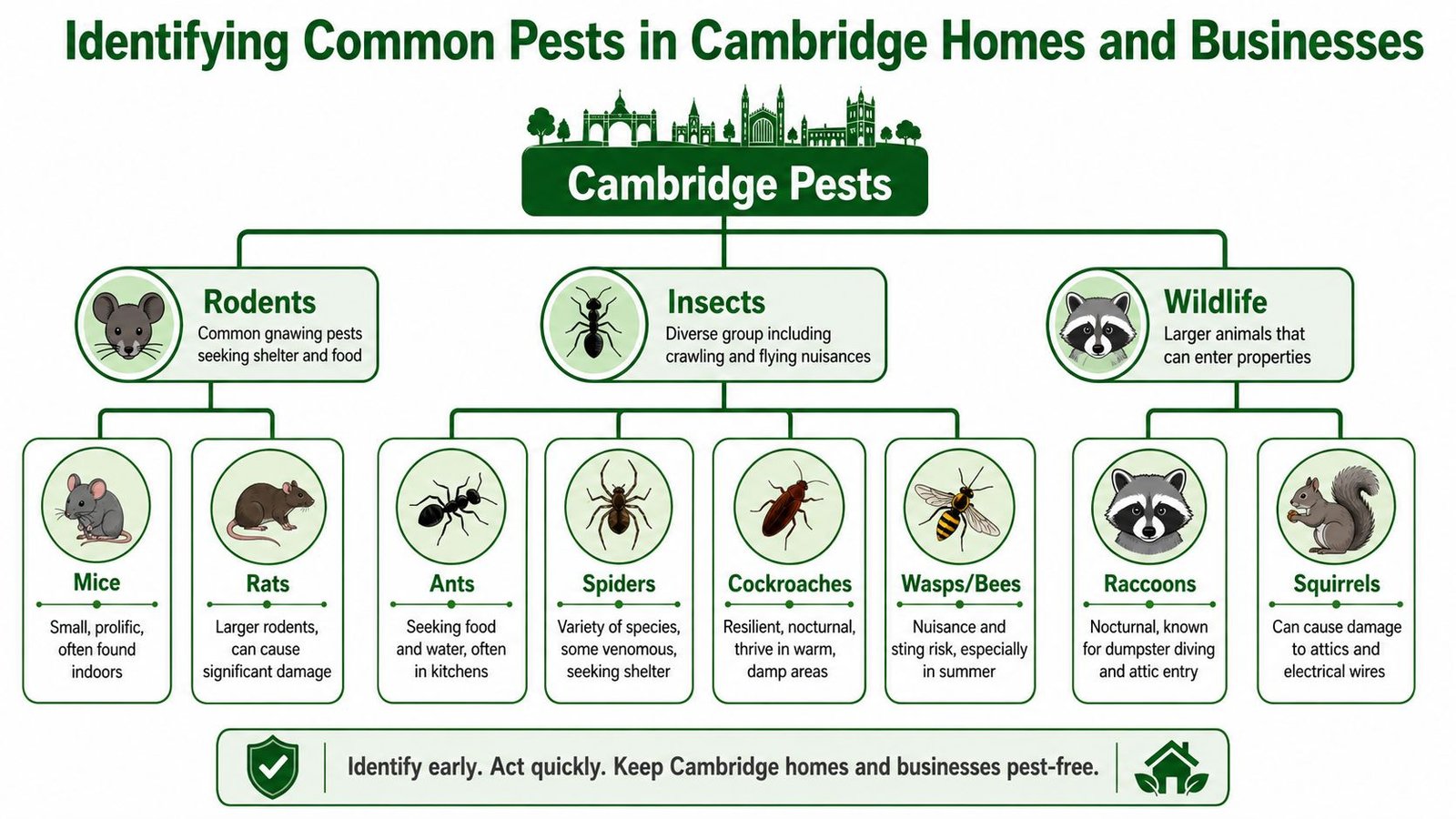
Cambridge properties don't all get the same pests for the same reasons. Older wood framing, damp basements, shared walls, maintained yards, rooflines, and proximity to green space all change the risk. Good pest control starts with knowing which pest is active and why it chose that building.
Homeowners who want a broader primer on inspection basics can also review this essential guide for homeowners.
Why Cambridge properties attract different pests
Mice and rats move into homes for shelter, warmth, and dependable food. In Cambridge, they show up in attics, basements, garages, utility penetrations, and under kitchen cabinetry. Mice can live unnoticed for a while before the homeowner notices anything. Rats usually leave heavier signs, including stronger odours, larger droppings, and more obvious gnawing.
Ants are one of the most misread pest problems in Cambridge homes. Residents often wipe the visible trail and assume that solved it. It didn't. Worker ants are only the visible part of the colony's foraging pattern. In kitchens, they follow grease, sugar, pet food, and moisture. Outside, they often originate under patios, stones, roots, or siding edges.
Carpenter ants need special attention in homes with damp wood, older trim, porch framing, or leaks that softened structural material. They don't eat wood the way termites do, but they tunnel through it and can spread slowly if the moisture issue remains.
Cockroaches prefer warmth, moisture, and dark harborage. In residential settings, they're common around stoves, fridges, dishwashers, laundry areas, and pipe voids. In commercial spaces, they often settle where heat and food residue stay consistent.
What to look for before the problem spreads
Some signs are easy to miss because they don't look dramatic at first.
| Pest | Early sign | Common location | Why action matters |
|---|---|---|---|
| Mice | Small droppings, scratching, chewed packaging | Pantry, basement, attic | Rodents contaminate surfaces and keep breeding if entry points stay open |
| Ants | Stray workers, thin trails | Kitchen, windows, baseboards | Surface sprays rarely reach the colony |
| Cockroaches | Musty odour, pepper-like droppings, night sightings | Behind appliances, utility rooms | They spread through hidden voids and shared structures |
| Wasps | Repeated flight path to one spot | Eaves, soffits, sheds | Nests get harder to treat safely as they expand |
| Bed bugs | Bites, spotting on bedding, live bugs in seams | Bedrooms, upholstered furniture | Delay makes rooms harder to clear |
| Wildlife | Sounds, torn vents, displaced soffit | Attic, roofline, chimney area | Entry damage can grow quickly |
A homeowner doesn't need a perfect species ID before calling. A few solid clues, where the activity is, what time it happens, and what was seen, are usually enough to start a focused inspection.
Wasps and bees become a serious issue once they anchor a nest in a wall void, soffit, shed roof, or deck cavity. DIY foams sometimes make the problem worse by agitating the nest without resolving the entry or removing the source.
Bed bugs are different from most structural pests because cleanliness isn't the deciding factor. They travel with people and belongings, then hide close to where someone rests. The key signs are usually bites, spotting on bedding, cast skins, and activity in seams and cracks.
Raccoons, squirrels, skunks, and bats are wildlife problems, not standard spray jobs. They use damaged roof edges, attic vents, loose soffit, decks, and outbuildings. Once inside, they create noise, odour, contamination, and property damage quickly.
Our Guaranteed Pest Control Services for Cambridge Residents
Homeowners looking for pest control Cambridge service usually want two things at once. Fast relief now, and a plan that doesn't leave them in the same situation a few weeks later. That means the service has to fit the pest category, the layout of the home, and the pressure points that let the infestation start.

Rodent control that solves the entry problem
A proper rodent job isn't just setting traps and hoping for silence. It starts with tracking movement. Technicians look for runways, rub marks, droppings, grease transfer, nesting material, and entry gaps around utilities, sill plates, vents, garage doors, and roof intersections.
Effective rodent service usually includes:
- Inspection of the structure: Entry points, pressure zones, attic and basement conditions
- Targeted trapping or baiting: Based on where rodents are travelling
- Exclusion work: Sealing or screening openings once activity is controlled
- Sanitation guidance: Removing food access, pet food exposure, and clutter that supports nesting
What doesn't work well is placing a few traps in the kitchen while ignoring the opening behind the stove line or the gap at the garage threshold. If the structure stays open, the problem stays open.
Insect treatments built around the pest
Not every crawling insect gets the same treatment. Ants need colony-focused work. Cockroaches need crack-and-crevice treatment, monitoring, sanitation correction, and often repeated follow-up. Bed bugs require a room-by-room plan with careful preparation and treatment of all harbourage zones.
Some homes need low-odour residual products. Others are better suited to baiting systems, dust in inaccessible voids, or non-chemical heat treatment for bed bugs. The correct method depends on where the pest hides and how it moves.
The strongest treatment is the one that reaches the pest where it lives, not the one that feels strongest to the homeowner on application day.
Vanish Pest Control Inc. offers residential and commercial pest control, termite service, rodent-proofing, wildlife removal, and chemical-free bed bug heat treatments across Ontario communities, including same-day service where available. The important point for buyers is to choose a provider whose methods match the pest and the property, not a one-size-fits-all package.
Wildlife removal needs exclusion, not guesswork
Wildlife service is part removal and part construction detail. Raccoons, squirrels, and other nuisance animals usually enter because a roofline, vent, soffit, or fascia gave them a weak point. Removing the animal without securing that access leaves the home vulnerable to repeat entry.
A solid wildlife service should cover:
- Humane removal approach: Clear identification of species, location, and young if present
- Entry-point repair: Screening, sealing, or rebuilding damaged access areas
- Contamination advice: Droppings, nesting material, and insulation concerns
- Prevention steps: Tree trimming near rooflines, securing bins, and repairing vulnerable exterior areas
Homeowners should be cautious with DIY wildlife removal. Blocking a hole at the wrong time can trap an animal inside, separate young from the parent, or drive the animal deeper into the structure.
The Vanish Pest Control Process What to Expect
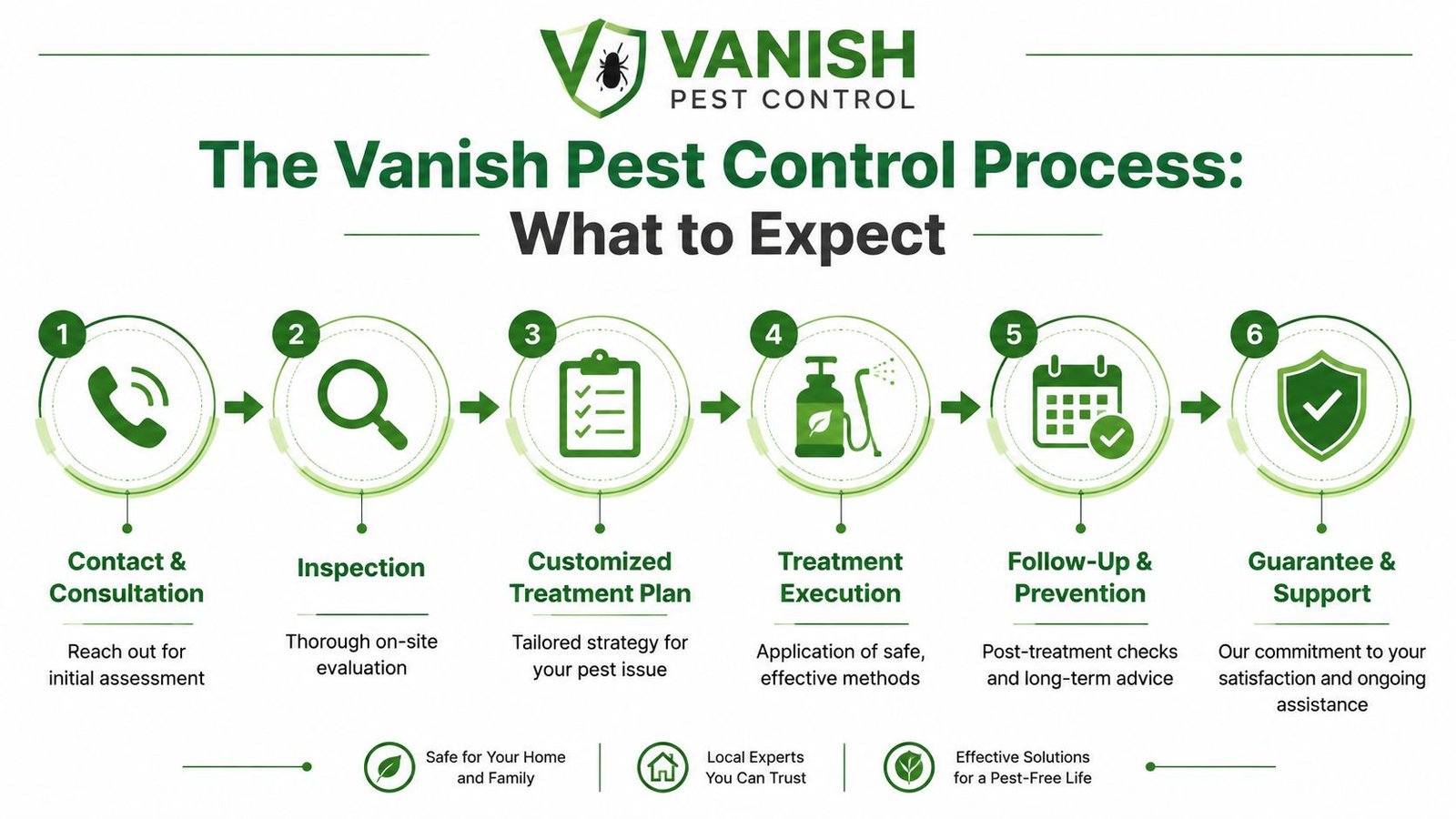
Most homeowners feel better once they know what happens after the call. A clear process removes a lot of uncertainty and helps them prepare properly. The goal isn't just to arrive and treat. It's to inspect accurately, explain the findings plainly, and carry out the right method without unnecessary disruption.
Step one through step three
The first step is contact and consultation. The homeowner describes what's been seen, heard, or smelled, where it's happening, and how long it's been going on. Even small details matter. Night activity in the ceiling suggests something different than daytime ants under a window.
Next comes the inspection. That means checking the affected area and the likely source points. In a rodent job, that may include basements, attics, utility penetrations, garage edges, and exterior gaps. In an insect job, it often means appliances, moisture zones, wall voids, trim lines, and sleeping areas.
Then comes the custom treatment plan. A reliable technician explains the pest identified, the likely source, the treatment method, what preparation is needed, and what results should look like over time. Homeowners should get a clear quote and a clear scope.
Treatment day and follow-up
Treatment day depends on the pest. Rodent service may involve traps, bait stations, exclusion recommendations, and sanitation corrections. Cockroach work may focus on hidden harbourage and monitoring points. Wildlife service may require removal, one-way door work, and sealing access after the animal exits.
Preparation should be simple and specific. Homeowners shouldn't be left guessing. If food needs to be cleared from cupboards, bedding needs laundering, or access is needed to utility areas, that should be explained in advance.
After treatment, good service includes follow-up expectations:
- What activity may still be seen at first
- When results should become noticeable
- What the homeowner must change
- Whether additional visits are needed
- How the guarantee applies
Good pest control is organised. The homeowner should never have to guess whether the next step is inspection, treatment, sealing, or monitoring.
A Seasonal Calendar of Pest Threats in Cambridge
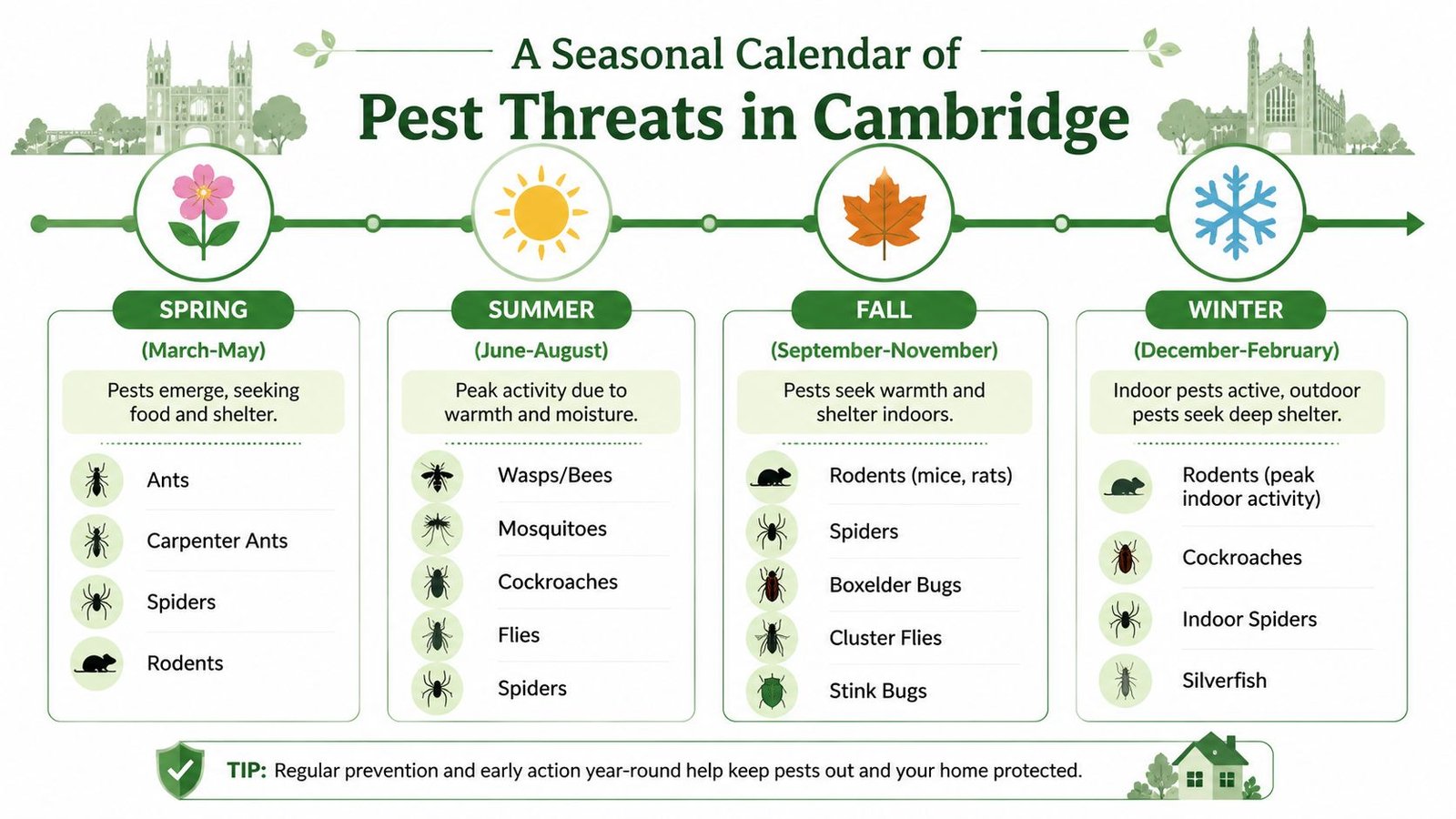
Pest pressure in Cambridge changes with the season, but the pattern isn't random. Weather, food access, moisture, and shelter all shift through the year. Homeowners who understand those patterns can act earlier and avoid bigger infestations.
For readers dealing specifically with cold-weather rodent pressure, this guide to winter rodent problems gives a closer look at how mice and rats settle in once temperatures drop.
Spring and summer pressure
Spring is when many Cambridge homeowners first notice pests again. Ants resume foraging, carpenter ants become more visible around damp wood, and overwintering pests start moving from hidden voids into living space. Early wasp nest starts under eaves or around sheds are also easier to handle now than later.
Helpful spring prevention steps include:
- Dry out moisture areas: Fix drips under sinks, improve basement ventilation, and repair soft exterior wood
- Clean food zones thoroughly: Pull out the stove and fridge, wipe grease, and store pantry goods properly
- Inspect the exterior: Look at door sweeps, window frames, utility lines, and siding transitions
Summer usually brings the highest visible pest activity. Wasps, flies, mosquitoes, spiders, and cockroaches all become more active with warmth and moisture. Outdoor living also creates more food exposure. Open drink containers, barbecue grease, overflowing bins, and pet bowls all pull pests closer to the house.
A summer routine should focus on:
- Bin control: Keep lids tight and wash residue from containers
- Yard maintenance: Trim heavy vegetation away from siding and reduce standing water
- Deck and soffit checks: Watch for repeated wasp traffic into a single opening
Fall and winter intrusion
Fall is rodent season in Cambridge homes. As nights cool, mice and rats start testing garages, basements, attic edges, and service penetrations. Spiders also move inward, often following the insects they feed on. Homeowners often notice the first signs in utility rooms, cupboards, or around stored items in the basement.
A strong fall checklist includes:
| Area | What to check | Why it matters |
|---|---|---|
| Garage | Bottom seal, side gaps, clutter | Rodents often enter here first |
| Exterior wall | Pipe penetrations, cable lines, vents | Small openings become active access points |
| Attic edge | Soffit, roof returns, vents | Wildlife and mice both exploit weak roofline areas |
Winter is when hidden infestations become obvious. Once pests are inside, they're sheltered and harder to dislodge with casual DIY effort. Mice stay active, cockroaches continue breeding in warm interiors, and silverfish persist in damp bathrooms, laundry areas, and basements.
Winter silence outdoors often means more pressure indoors. If a homeowner hears scratching, finds fresh droppings, or sees repeated activity in one room, waiting rarely improves the outcome.
Useful winter habits are simple:
- Reduce storage clutter: Cardboard, paper piles, and undisturbed corners help pests hide
- Monitor vulnerable rooms: Laundry rooms, furnace areas, and under-sink spaces need regular checks
- Act on first signs: One mouse sighting in winter usually means more investigation is needed, not less
Choosing a Trusted Pest Control Partner in Cambridge
A homeowner doesn't need flashy promises. They need proof that the company is organised, insured, properly trained, and willing to stand behind the work. That applies whether the issue is ants in a kitchen, mice in a basement, or wildlife in the attic.
The trust signals that matter
Start with the basics:
- Licensing and insurance: The company should be able to explain its credentials and service scope clearly
- Clear inspection process: Buyers should know what gets checked and why
- Written treatment plan: The recommendation should fit the pest and property, not a generic script
- Service guarantee: Terms should be explained in plain language
- Local relevance: Cambridge homes, condos, restaurants, and commercial spaces all have different needs
Reviews matter too, but not just the star rating. Homeowners should read for specifics. Did the technician identify the source? Was the communication clear? Did the company explain preparation and follow-up properly?
There's also value in checking whether a company teaches, not just sells. For businesses evaluating online visibility and how service companies present local expertise, this article on mastering local pest control SEO gives a useful view of what strong local service pages should communicate. Homeowners can use the same lens when reading a pest control website.
A practical comparison point is whether the provider explains prevention transparently. If every answer is “just spray it,” that's a warning sign. This guide on why to choose professional pest control services is a useful reference for understanding the difference between real integrated service and surface-level treatment.
Frequently Asked Questions About Cambridge Pest Control
Common questions from Cambridge homeowners
How much does pest control typically cost in Cambridge?
It depends on the pest, the size of the property, how far the infestation has spread, and whether follow-up visits or exclusion work are needed. A mouse issue in one area of a home isn't priced the same way as a bed bug treatment, a cockroach infestation in a multi-unit setting, or wildlife removal from an attic. A proper quote should come after inspection, not before.
Are treatments safe for children and pets?
They should be when applied correctly and when the homeowner follows the preparation and re-entry instructions. The safest providers explain exactly what will be used, where it will be placed, and what precautions matter for children, cats, dogs, and food-contact areas.
How long does someone need to stay out of the house after treatment?
That depends on the treatment type. Some services involve minimal disruption, while others may require temporary vacancy of certain rooms or the full home for a period. The technician should give clear instructions in advance. If the answer is vague, that's not good enough.
Is a one-time treatment enough?
Sometimes, yes. Often, no. A single wasp nest treatment may resolve the issue if the nest is fully addressed. Rodents, cockroaches, bed bugs, and recurring ant problems often need more than one step because treatment, exclusion, and monitoring all matter.
What should a homeowner do before the technician arrives?
Keep the sighting area accessible, don't deep-clean away all evidence, and make a short list of where activity has been seen. Save photos if possible. For wildlife or stinging insects, don't try to block the entry point before inspection.
When should someone call instead of trying DIY first?
Call when the pest is recurring, spreading, active in more than one area, linked to bites or contamination, or involves wildlife, wasps, rodents, bed bugs, or cockroaches. DIY is most likely to fail when the source is hidden.
Cambridge homeowners who want a clear inspection, targeted treatment, and practical prevention support can contact Vanish Pest Control Inc. to discuss rodent, insect, or wildlife issues in homes, condos, and commercial properties. A proper service plan starts with identifying the pest, finding the access point or source, and choosing a treatment that fits the building instead of forcing a generic fix.
