

A Toronto homeowner usually notices the problem before seeing the animal. It starts with scratching above the bedroom ceiling at dawn, a thump over the kitchen at night, or the sound of movement travelling from one side of a semi-detached roof to the other. In laneways, raccoons work green bins with the confidence of long-time residents. In older neighbourhoods such as Cabbagetown, the Annex, Riverdale, and Parkdale, small gaps in aging rooflines and soffits give wildlife exactly what it wants: shelter, warmth, and a quiet place to raise young.
That's why panic often leads people in the wrong direction. A homeowner hears noise in the attic and thinks the answer is to get the animal out as fast as possible. But removal without diagnosis usually fails. If the entry point stays open, another raccoon, squirrel, or bird often returns. If there are babies inside, a rushed response can make the situation worse.
In Toronto homes, humane wildlife removal works best when it treats the building as carefully as the animal problem. The job isn't just getting something out. The job is finding how it got in, whether a family group is involved, what damage has already started, and how to stop the same call from happening again next month.
Homeowners who want to harden the vulnerable parts of the house can also learn a lot from this practical guide to effective attic pest prevention, especially where roofline gaps, vents, and insulation voids create hidden access. For a closer look at the most common entry routes in local attics, this overview of how raccoons and squirrels invade your attic and how to keep them out is useful background before any inspection is booked.
Table of Contents
- That Scratching in the Attic A Toronto Homeowner's Dilemma
- Defining Humane Removal More Than Just a Trap
- Ontario Wildlife Laws and Your Responsibilities
- The Professional Humane Removal Process A Step-by-Step Journey
- Long-Term Prevention How to Wildlife-Proof Your Toronto Home
- Understanding the Costs and Timelines in the GTA
- Frequently Asked Questions About Toronto Wildlife Removal
That Scratching in the Attic A Toronto Homeowner's Dilemma
A lot of Toronto wildlife calls follow the same pattern. The sound starts lightly, then becomes impossible to ignore. In a detached house in East York, it may be heavy movement near the roof peak before sunrise. In an older Annex semi, it may be quick skittering above a plaster ceiling wall. In a row of downtown townhomes, it's often a shared roofline issue where one vulnerable section affects more than one unit.
The stress is real because the homeowner usually doesn't know what kind of animal is inside, whether it's alone, or how long it has been there. There's worry about chewed wiring, torn insulation, droppings, odours, and damage spreading into the soffits or walls. Condo residents face a different version of the same anxiety. They may hear noise in a ceiling cavity but need to figure out whether responsibility falls to the unit owner, the corporation, or a mix of both.
Why Toronto homes are such attractive shelter
Dense neighbourhoods create ideal wildlife conditions. Food is everywhere. Green bins, restaurant waste, pet food left on porches, fruit trees, backyard decks, and laneway access all support animal activity. Older housing stock adds loose flashing, aging mortar, warped wood, and roof transitions that create entry points.
Common problem spots include:
- Soffit returns and fascia gaps where squirrels can widen weak seams.
- Roof vents and bathroom exhaust covers that birds and raccoons test repeatedly.
- Dormers and junctions on older roofs where water wear often softens wood.
- Under decks and sheds where skunks can den close to a house.
Toronto wildlife problems rarely begin with the animal. They begin with a building weakness and a reliable food or shelter reward.
Why a calm response matters
The first instinct is often to bang on the ceiling, set a store-bought trap, or block the visible hole immediately. That can backfire. Noise may drive an animal deeper into the structure. Fast sealing can trap young inside. A trap addresses the current visitor but not the condition that invited the next one.
A better approach is to treat the noise as a building and animal issue at the same time. Once that shift happens, the path forward gets much clearer.
Defining Humane Removal More Than Just a Trap
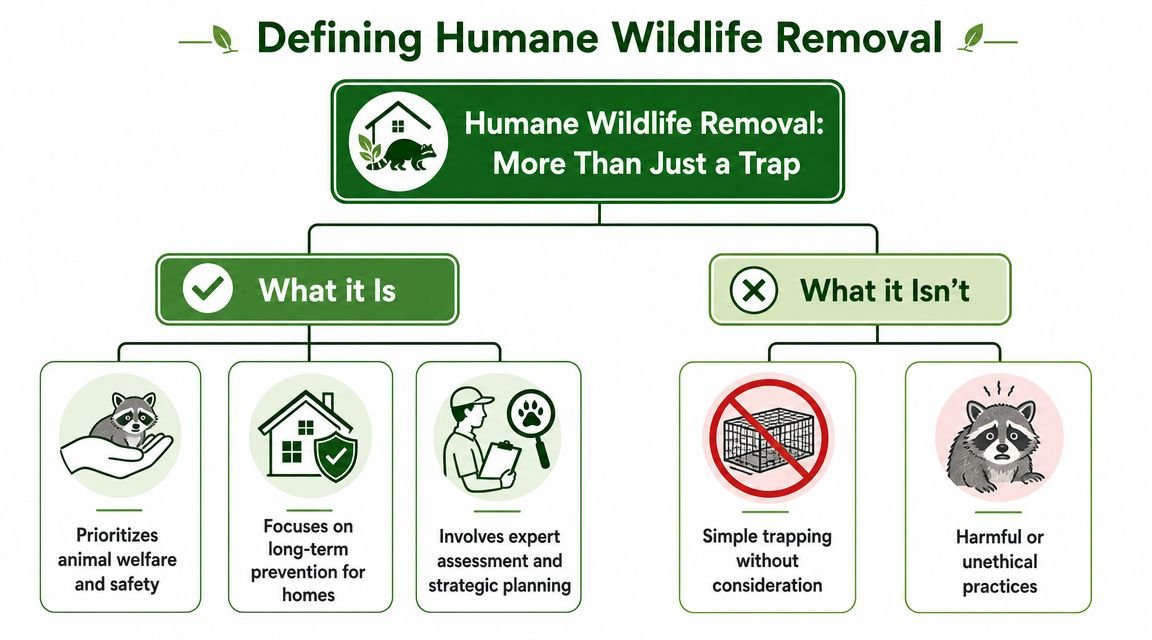
Humane wildlife removal isn't a softer word for capture. It's a method built around safe resolution, species-specific handling, and permanent prevention. In Ontario, that approach is shaped by a legal and policy framework that favours non-lethal resolution. Under Ontario's Fish and Wildlife Conservation Act, 1997, wildlife capture and handling are regulated, and Ministry guidance stresses that live trapping alone is usually only a temporary fix because the attractants or entry points remain, as outlined in this overview of effective humane wildlife removal and safe solutions for coexistence.
What humane actually means on a Toronto property
On a real service call, humane means the technician asks better questions before doing anything physical.
What species is involved? Is it using the attic, chimney, soffit, crawl space, or deck area? Is this an adult animal travelling alone, or a mother with young? Which opening is active, and which openings are secondary?
A humane approach usually includes these principles:
- Inspection before action so the animal, access point, and building condition are correctly identified.
- Minimum stress handling so removal doesn't create panic, injury, or separation when avoidable.
- Exclusion as the end goal so the property stops functioning as habitat.
- Attention to seasonal timing because birthing periods change what can be done safely.
What doesn't work for long
The biggest misconception is that success means an animal left the property. That's only part of the job.
A trap-and-release mindset ignores the structure. In Toronto, especially around older semis and tightly packed detached homes, one raccoon removed from a roofline often just opens the door for the next raccoon if the fascia remains weak. The same goes for squirrels entering through a construction gap near a dormer or vent stack.
A quick comparison helps:
| Approach | Likely outcome |
|---|---|
| Live trap without repair | Short-term removal, high chance of repeat entry |
| Hole sealed without confirming all animals are out | Risk of entrapment, odour, noise, and interior damage |
| Inspection plus exclusion | Solves the entry pathway and reduces recurrence |
Practical rule: If the proposal focuses on the animal but barely mentions the building, it likely isn't a complete humane wildlife removal plan.
Humane work is still firm. It protects the home. But it does so by removing the opportunity, not just the current occupant.
Ontario Wildlife Laws and Your Responsibilities
Toronto homeowners don't need to become legal experts, but they do need to understand that wildlife isn't a simple do-it-yourself category. Provincial rules govern capture and handling, and that changes what a homeowner should attempt alone. The legal side matters, but so does the practical one. A mistake made in an attic or chimney can turn a manageable issue into an urgent cleanup.
Why DIY gets risky fast
The first risk is separating adult animals from young. In spring and early summer, that's one of the most common ways a humane problem becomes an inhumane one. A sealed entry point may leave babies inside wall cavities or attic insulation. The second risk is personal safety. Corners, tight roof edges, contaminated insulation, and defensive animals are all hazards.
There's also a broader ethical reason for keeping wildlife solutions on-site where possible. Shelter systems across North America remain under pressure. In 2024, total adoptions reached 4,192,443, community intakes for dogs and cats were 1.4% fewer than in 2023, representing 83,000 fewer animals, and overall transfers were down 33.6% from 2019. Shelter Animals Count also reported 524,000 dogs and 369,000 cats transferred out in 2024. Those figures, available through Shelter Animals Count's 2024 statistics, reinforce why unnecessary capture and transfer should be avoided whenever humane on-site exclusion can solve the problem.
Property lines fences and shared responsibility
In Toronto, wildlife issues often overlap with shared boundaries. A raccoon may travel along a rear fence line, a skunk may den beneath a deck near a neighbour's yard, or squirrels may move between overhanging trees and adjoining roofs. When fences, gates, or property boundaries affect prevention work, homeowners should understand where maintenance obligations begin and end. This practical guide to the Line Fences Act is useful for sorting out shared fence questions before a minor access issue turns into a neighbour dispute.
A homeowner's core responsibility is simpler than many assume:
- Don't improvise with capture or relocation.
- Don't seal active openings without checking for young.
- Do address food sources and structural access quickly.
- Do involve a qualified professional when animals are using the building itself.
That approach protects the property, the animals, and the people living in the home.
The Professional Humane Removal Process A Step-by-Step Journey
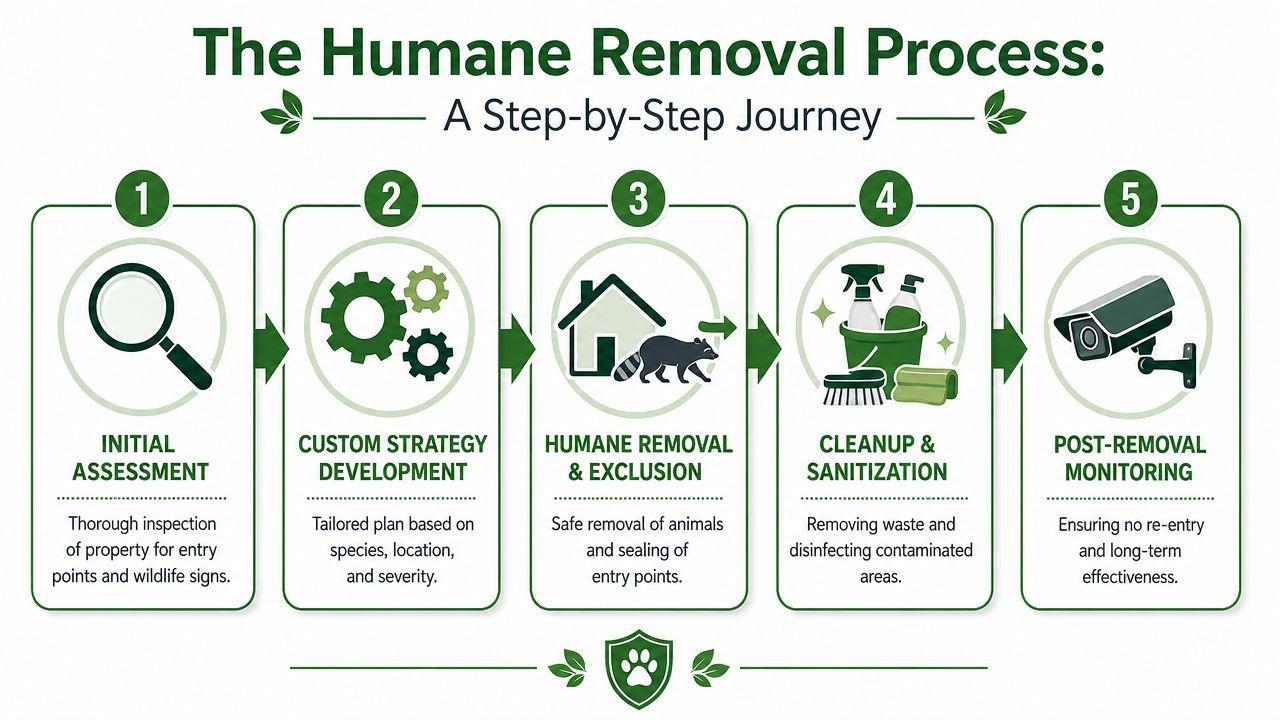
A proper wildlife call in Toronto should feel methodical, not rushed. The technician should move from evidence to plan, not from guesswork to trap. That's the difference between a repeat problem and a resolved one.
Inspection comes first
The first step is a detailed inspection of the exterior and the active interior zone. On Toronto homes, that usually means checking roof edges, vent covers, soffits, fascia boards, chimney areas, dormers, and any construction gaps around additions or porches. The technician also looks for rub marks, droppings, nesting material, compressed insulation, and staining around entry points.
Professional guidance supports exclusion after inspection, not before. HumanePro's conflict guide emphasizes identifying species, attractant, and entry route first. For bats, it specifically states that all bats must be able to leave through an eviction device before entry points are sealed, and it notes that guano cleanup should be done with respiratory protection and wet decontamination to reduce fungal-spore exposure, as outlined in the HumanePro wildlife conflict resolution guide.
That same logic applies beyond bats. Departure has to be confirmed before final closure.
Exclusion sealing and cleanup
Once the inspection confirms the situation, the technician chooses the right exclusion method. That may involve a one-way device over an active opening, hand removal in limited cases, or timing the work around dependent young. Secondary entry points are usually sealed first, while the main active point is left under controlled exclusion until the animals are out.
A complete service often includes:
- Species confirmation based on sign, noise pattern, and damage.
- Primary opening control using an exit method that prevents re-entry.
- Secondary gap sealing so the animal can't shift two feet over and get back in.
- Contaminated material assessment for droppings, nesting debris, or damaged insulation.
- Follow-up verification to make sure activity has ended.
The sealing stage is where many failed jobs begin. Closing the hole is not the goal. Closing the right holes, in the right order, after confirming exit, is the goal.
For homeowners wanting a local example of what that looks like in practice, this page on raccoon removal in Toronto with humane professional wildlife control reflects the kind of exclusion-focused process that's appropriate for GTA properties.
Cleanup matters too. Raccoon latrine areas, squirrel nesting debris, and bird droppings can leave odours and contamination behind. If the waste stays, the smell can linger and the space remains compromised even after the animal has gone.
Long-Term Prevention How to Wildlife-Proof Your Toronto Home
The strongest wildlife service call is the one that never needs to happen. In Toronto, prevention pays off because the same housing patterns repeat across neighbourhoods. Older brick homes have aging roof transitions. Post-war bungalows often develop soffit and fascia vulnerabilities. Newer infill homes may have attractive modern cladding but still hide vent and trim gaps that wildlife finds quickly.
Weak points by housing type
A prevention plan should match the structure.
For older Victorians and Edwardians, chimneys, roof valleys, and decorative trim are frequent trouble spots. Mortar wear, warped wood, and previous patchwork repairs create access routes that don't always show from the ground.
For Toronto semis and detached homes built in the mid-century period, soffits, roof vents, and garage roof intersections deserve special attention. Wildlife often tests the same edges where moisture has already weakened material.
For newer builds and townhomes, the issue is often less visible. Tight construction can still leave utility penetrations, vent terminations, and flashing details vulnerable if screens loosen or trim shifts.
Habits that make a home less attractive
Wildlife-proofing isn't just repair. It's also routine.
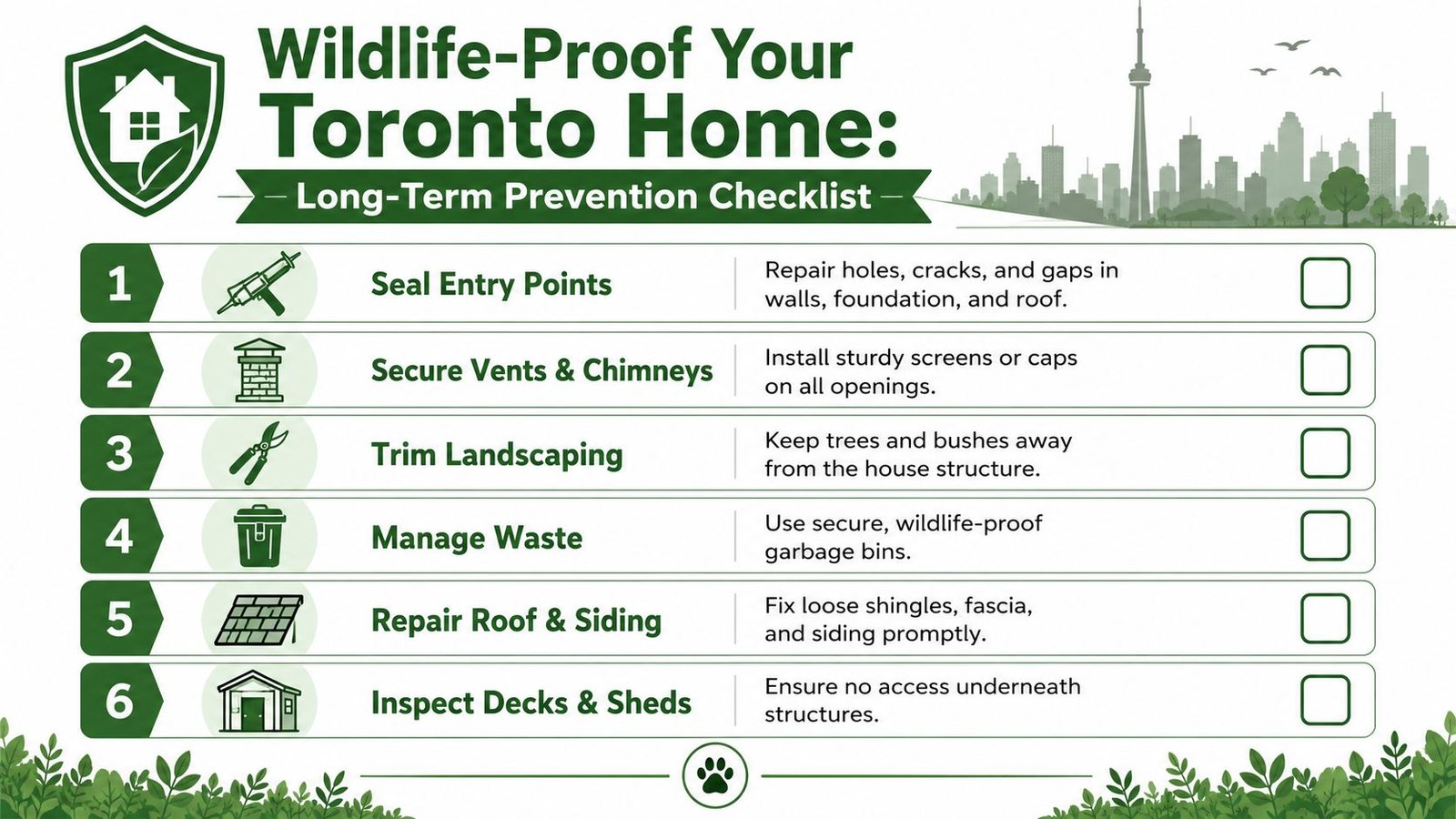
- Secure waste properly by keeping green bins closed and cleaning residue that attracts repeat scavenging.
- Trim access routes so branches don't give squirrels easy launch points to the roof.
- Repair exterior wear early because small roofline defects rarely stay small through a Toronto winter.
- Check beneath decks and stairs where skunks and other wildlife look for dark, sheltered space.
- Protect vents and chimneys with durable covers designed for exclusion, not light decorative screening.
Homeowners also benefit from improving the smaller openings that let insects and incidental pests indoors. This guide on how to fix screens to keep bugs out is useful because good screening habits often support broader exterior pest prevention as well. For a wider Ontario-focused overview, these top proven methods to protect Ontario homes align well with long-term exclusion thinking.
A house doesn't need to be perfect to resist wildlife. It needs to stop offering easy shelter, easy food, and easy repeat access.
One important mindset shift helps here. Prevention isn't cosmetic maintenance. It's part of protecting insulation, wiring, air quality, and roof assemblies. A patched vent or reinforced soffit may not look dramatic, but those details often prevent the most expensive kind of repeat intrusion.
Understanding the Costs and Timelines in the GTA
Homeowners often ask for a price before the inspection, which is understandable. But humane wildlife removal in Toronto isn't a single flat product. It's a scoped service that depends on where the animals are, how they're getting in, whether young are present, what damage exists, and how much exclusion work the building needs.

What a proper quote should include
Humane World for Animals advises that a legitimate wildlife-control company should provide an on-site inspection, identify entry points, check for offspring, and include long-term exclusion with at least a one-year re-entry guarantee. That guidance appears in this resource on choosing a wildlife control company, and it captures an important point for GTA homeowners. The actual cost reflects a multi-step building repair service, not a one-time trapping call.
A thorough quote should speak to scope, not just removal. It should address the inspection findings, the active opening, secondary vulnerabilities, the exclusion method, cleanup if needed, and what follow-up is included.
Why cheap trapping quotes are a warning sign
The lowest quote can become the most expensive outcome if it leaves the structure vulnerable. A lowball job often strips out the parts that matter most: time on the roof, secondary sealing, family checks, cleanup, and re-entry protection.
That's especially important in dense Toronto neighbourhoods where raccoons and squirrels move quickly between roofs, fences, garages, and mature trees. One untreated weakness can restart the whole problem.
A realistic timeline also depends on the species and the condition of the home. Some jobs move quickly once the active opening is identified. Others require staged exclusion and follow-up confirmation before the final repair is completed. That's normal. It usually means the work is being done properly.
Frequently Asked Questions About Toronto Wildlife Removal
Toronto homeowners usually ask the same few questions after the initial panic settles. The answers below clear up the most common misunderstandings.
Common Questions About Humane Wildlife Removal
| Question | Expert Answer |
|---|---|
| Can a homeowner just block the hole at night when the animal leaves? | That's risky. If babies or another animal remain inside, sealing can create odour, noise, and welfare problems. Active openings should only be closed after proper inspection and confirmed exit. |
| Is relocation the most humane option? | Not usually. Humane resolution often means on-site exclusion and prevention, not moving the animal somewhere else and leaving the property vulnerable. |
| What if there are babies in the attic? | The removal strategy changes. Young have to be considered before sealing or exclusion proceeds. This is one of the main reasons spring wildlife calls need professional assessment. |
| Do hardware store repellents solve attic wildlife problems? | They rarely solve the core issue. Smells, lights, and noise devices may create short-term disturbance, but they don't repair entry points or remove attractants. |
| Are raccoons and squirrels the only wildlife problem in Toronto homes? | No. Birds, skunks, and bats can also create structural or sanitation issues depending on the property type and season. |
| Should condo residents handle it the same way as homeowners? | Not always. Condo bylaws and building responsibilities can affect access, approvals, and repair scope. The wildlife issue may be inside one unit, but the entry route may be in a common element. |
A few final myths to drop
Some people still believe a humane job is the kinder version of trapping. It isn't. The better way to think about it is this: humane wildlife removal protects the animal by avoiding unnecessary harm, and protects the property by removing the conditions that allowed the conflict in the first place.
If the noise stops but the access point remains, the problem probably isn't solved. It's paused.
For Toronto residents, that distinction matters. Dense housing, mature trees, laneways, green bins, and older rooflines mean wildlife pressure is constant. The homes that stay quiet are usually the ones where exclusion, inspection, and maintenance all work together.
Toronto homeowners, condo residents, landlords, and property managers who need a lasting solution can contact Vanish Pest Control Inc. for professional help with humane wildlife removal, exclusion, cleanup, and prevention across the GTA. The focus should always be the same: resolve the immediate problem safely, repair the entry route properly, and keep the animals out for good.




