
A lot of Toronto residents start the same way. They notice droppings under the sink, hear scratching in a wall after midnight, or wake up with bites and realise this isn't a small problem anymore. Then the quotes start coming in, and the numbers often feel disconnected from what's happening in the home.
That's where most frustration begins. One quote sounds low but vague. Another sounds high but includes terms like follow-up, monitoring, exclusion, access challenges, and emergency response. Without context, it's hard to tell whether the bill reflects the actual work or just confusing pricing.
A clear guide to pest control cost Toronto should do more than list a few broad ranges. It should explain what changes the price, what belongs on the invoice, and why two Toronto homes with what looks like the same issue can end up with very different treatment plans.
Table of Contents
- Understanding Your Toronto Pest Control Quote
- The Average Pest Control Cost in Toronto for 2026
- Toronto Pest Control Prices by Pest Type
- Deconstructing Your Pest Control Quote Line by Line
- Key Factors That Influence Your Final Cost
- One-Time Service vs Ongoing Protection Plans
- How to Get an Accurate Quote and Avoid Red Flags
- Frequently Asked Questions About Pest Control Costs
Understanding Your Toronto Pest Control Quote
A Toronto homeowner in a semi-detached house notices mice in the basement. A condo resident finds cockroaches in the kitchen after a neighbouring unit has turnover. A landlord gets a bed bug complaint and needs action before another tenant moves in. In each case, the first question is usually the same. Why is this quote higher than expected?
The answer often has less to do with the word “treatment” and more to do with scope. Pest control pricing works a lot like other skilled trade pricing. The final number reflects labour, access, materials, urgency, follow-up, and whether the provider is solving the root cause or only the visible symptom. That's one reason broader trade pricing resources, such as this guide on pricing plumbing jobs, can help homeowners understand why service quotes aren't built around a single flat fee.
What a quote should tell Toronto residents
A useful pest control quote should identify the pest, the affected areas, the proposed treatment method, and any added work that changes the total bill. In Toronto homes, that often includes shared walls, tight crawlspaces, unfinished basements, older brick gaps, utility penetrations, or condo access restrictions.
Practical rule: A quote that only lists “spray treatment” without explaining where, why, and what happens next usually leaves too much unanswered.
Why vague pricing creates expensive mistakes
The cheapest quote can become the most expensive outcome if it misses the actual source. A mouse problem without entry-point sealing can keep recurring. A bed bug treatment that doesn't account for unit preparation, access, or follow-up can drag the issue out. A cockroach service in a multi-unit building may fail if the quote treats one kitchen as though it were a detached house with no adjoining pressure.
That's why pest control cost Toronto isn't just about the first invoice. It's about the total cost of resolution.
The Average Pest Control Cost in Toronto for 2026
A Toronto homeowner finds mouse droppings in the basement on Monday, books a visit on Tuesday, and expects one simple number. The invoice rarely works that way. In 2026, the average pest control cost in Toronto usually falls into three billing models. A one-time visit for a minor issue often sits at the lower end of the market, recurring monthly protection is commonly billed as a plan, and annual spend climbs quickly once follow-up visits, monitoring, or exclusion work are part of the job.
For budgeting, Toronto residents can expect a basic one-time service to cost less than a multi-visit treatment program, and an ongoing plan to spread cost across the year rather than load it into one invoice. The average matters as a rough starting point. It does not tell you how many rooms are affected, whether follow-up is included, or whether the quote covers proofing, traps, gel placements, dusting, or only the first treatment.
That gap is where bills start to vary.
At Vanish, this is the part property owners often miss. Two homes can both have “mice,” but one quote covers a basement bait setup and one inspection, while another includes attic work, entry-point sealing, trap checks, and a return visit. Both are pest control. They are not the same purchase.
Toronto pricing also trends higher than smaller markets for practical reasons. Condos can require strict booking windows, elevator coordination, and repeat access to the same unit. Older detached homes often involve stone foundations, additions built in stages, and hidden gaps around plumbing, vents, and sill plates. Heritage properties add labour because technicians spend more time finding the route pests are using, not just treating the room where activity shows up.
That is why average cost should be read as a range tied to scope, not as a flat citywide rate. A fair quote in Toronto reflects the actual work on site, the housing type, and whether the service is meant to suppress activity for now or solve the problem with follow-up and prevention built in.
Toronto Pest Control Prices by Pest Type
A tenant in a downtown condo spots two cockroaches in the kitchen and expects a modest bill. A week later, the quote is higher than expected because the job includes crack-and-crevice treatment, gel placements, monitoring, and a return visit to check adjoining pressure from nearby units. That pattern is common in Toronto. The pest on the invoice matters, but the actual cost comes from how that pest lives, spreads, and hides in the type of property you own.
Price ranges are still useful as a starting point. They are only useful if you read them as scope ranges, not fixed rates.
Estimated Pest Control Costs in Toronto by Pest 2026
| Pest Type | Typical Cost Range (One-Time Treatment) | Key Cost Factors |
|---|---|---|
| Ants | CAD 100 to CAD 300 | Nest location, species behaviour, kitchen or wall-void activity |
| Cockroaches | CAD 150 to CAD 400 | Unit size, sanitation conditions, spread into adjoining areas |
| Mice and rats | CAD 200 to CAD 500 | Entry points, attic or basement involvement, monitoring needs |
| Bed bugs | CAD 300 to CAD 800 or more | Room count, severity, repeat service risk, treatment method |
| Termites | CAD 225 to CAD 2,500 per treatment | Structural risk, inspection findings, treatment scope |
| Severe termite cases with whole-home fumigation | CAD 2,000 to CAD 8,000 | Full-structure treatment complexity |
These figures reflect broad market patterns for one-time treatment work. In practice, Toronto invoices move up or down based on access, follow-up, and whether the provider is pricing suppression or full resolution.
Why pest type changes the invoice
Ants
Ant jobs stay near the lower end when the trail is visible and the nest can be traced to one area. Costs rise when activity is inside wall voids, under flooring, or tied to carpenter ants in damp wood. In older Toronto homes, technicians often spend more time confirming whether the problem is nuisance ants in the kitchen or a colony linked to moisture damage.
Cockroaches
Roach work is labour-heavy even in small units because the treatment zone is larger than the visible activity. Kitchens, bathrooms, pipe penetrations, cabinet hinges, appliance cavities, and shared walls all matter. In condos, one unit rarely tells the full story. Residents comparing service scope can review this Toronto cockroach treatment cost guide.
Mice and rats
Rodent pricing often looks reasonable until exclusion enters the quote. Traps and bait are only part of the job. Sealing gaps around utility lines, vents, sill plates, garage corners, and roof transitions takes time, and that labour is often what separates a lower quote from a more durable result. In heritage homes, finding every active entry route can take longer than the initial treatment.
Bed bugs
Bed bug costs climb fast because the pest spreads through sleeping and seating areas, not just one room. Quotes also change based on treatment method, preparation requirements, room count, and whether neighbouring units may be involved. A low price for bed bugs usually means a narrower service scope, fewer visits, or fewer rooms covered.
Termites
Termite work is priced around inspection findings and risk to the structure. One property may need localized treatment. Another may need a much wider response because activity extends beyond the first damaged area. The bill reflects diagnosis, treatment method, and the amount of structure that has to be protected.
One detail property owners often miss is that two jobs with the same pest label can be priced very differently for valid reasons. “Mice” in a small condo locker area is not the same job as “mice” in a detached house with attic movement, basement droppings, and multiple exterior entry points.
A fair low quote fits a small, contained problem. A fair higher quote usually includes the labour, materials, and return visits needed to keep the same issue from coming back.
Toronto also sees wasps, carpenter ants, raccoons, and squirrels. Those prices are harder to estimate responsibly from a generic chart because nest height, roof access, ladder work, exclusion repairs, and municipal wildlife rules can all change the scope after inspection.
Deconstructing Your Pest Control Quote Line by Line
A Toronto homeowner gets a quote for mice at one price, then sees a second quote that is much higher for the same pest. The difference usually sits in the line items. One invoice may cover a single visit and a few traps. The other may include inspection time, exterior entry-point work, follow-up checks, and access coordination if the property is a condo or multiplex.
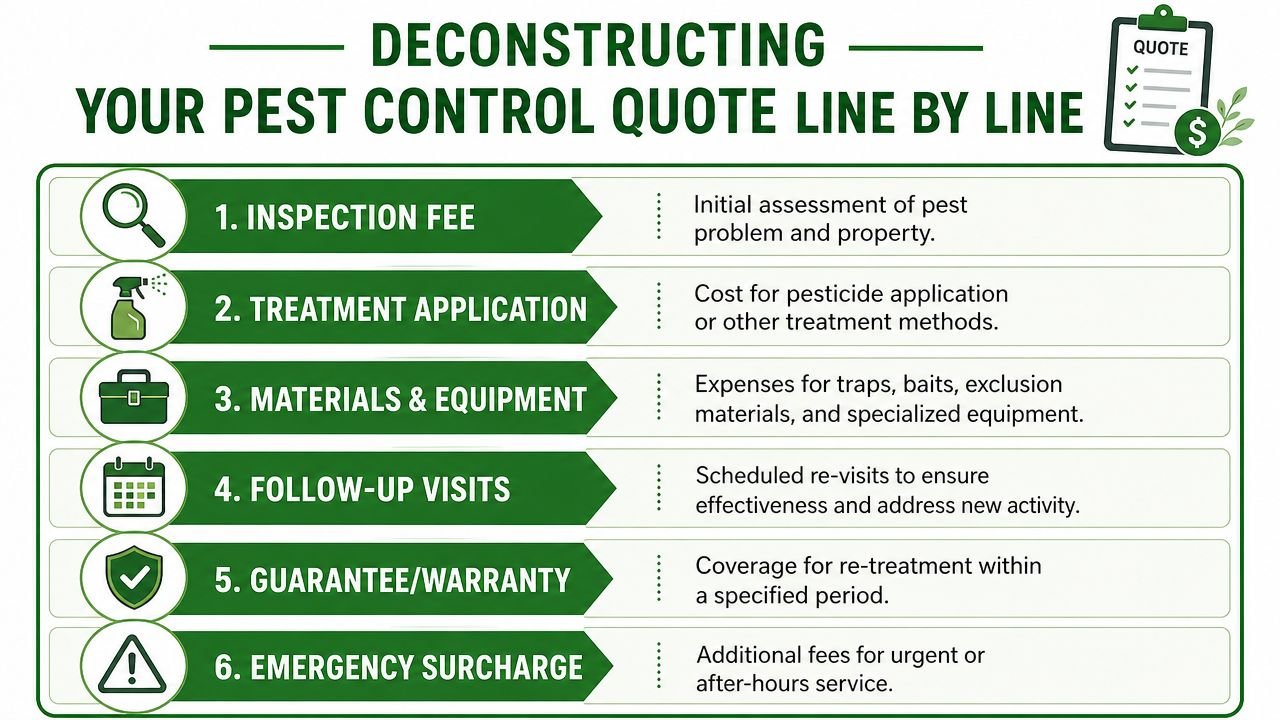
That is why a one-line total is hard to judge. A useful quote shows what you are paying for and what result each charge is meant to support. For Toronto properties, that matters even more because condos, heritage homes, laneway suites, and older detached houses each create different labour and material costs. Our Toronto homeowner pest control guide for 2026 explains that broader context. Here, the focus is the invoice itself.
What each line item usually means
Inspection fee
This covers identification, tracing activity, checking likely harbourage areas, and confirming how far the issue has spread. In a condo, it can also include time spent reviewing access rules, speaking with management, and noting whether adjacent units may affect the plan.
Treatment application
This is the direct control work. Depending on the pest, it may include bait placement, residual products, dust application, trapping, or targeted treatment in kitchens, basements, attics, utility rooms, and wall voids. On a detailed quote, this line should tell you whether the service is narrow or property-wide.
Materials and equipment
Some jobs are labour-heavy. Others need physical products that stay on site. This part of the quote may include traps, bait stations, sealants, exclusion mesh, monitoring devices, or specialty access equipment. In older Toronto homes, material costs can rise because more entry points need to be sealed to stop re-entry.
Where Toronto quotes often grow
Follow-up visits
Roaches, rodents, and bed bugs often need more than one appointment. A follow-up charge usually covers reinspection, product refresh, trap checks, and adjustments based on what changed after the first service.
Urgent scheduling
Same-day, evening, or weekend service may be priced separately. That charge is common when a tenant is moving in, a restaurant needs fast response, or a property manager has an active complaint that cannot wait for the next route day.
Access complexity
This line is easy to misunderstand. It often reflects real labour. Secured condo entry, elevator bookings, tight service windows, limited parking, narrow crawlspaces, finished basements, and tenant no-shows all increase time on site. In heritage homes, technicians may also need slower, more careful inspection work around fragile finishes and hidden voids.
A good test is simple. Ask what each charge does. If a line item improves identification, treatment reach, exclusion, or verification, it usually has a place on the invoice. If the provider cannot explain it clearly, ask for the wording to be revised before approving the work.
The clearest quote is not the cheapest-looking one. It is the one that shows how the problem will be found, treated, checked, and kept from returning.
At Vanish Pest Control Inc., quotes are often built around confirmed activity, scope of treatment, and preventive work instead of a flat "spray" price. That gives Toronto residents a more honest way to compare proposals, especially when two invoices look similar at the top but include very different levels of labour, materials, and return service.
Key Factors That Influence Your Final Cost
A landlord in a downtown condo and a homeowner in East York can both call about cockroaches and still receive very different quotes. The pest is the same. The labour, access, treatment reach, and follow-up requirements are not.
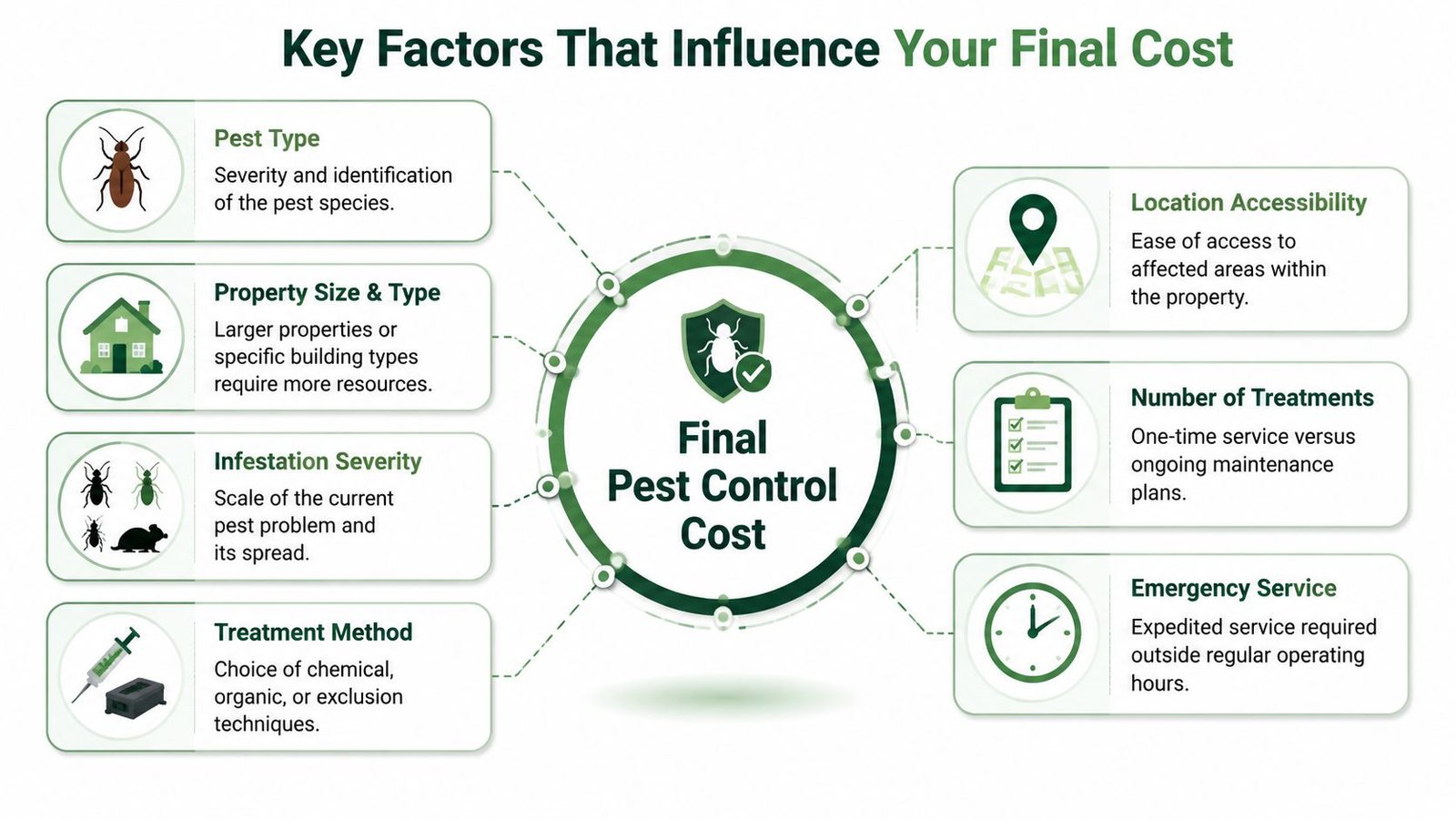
Property type changes labour before treatment even starts
Toronto housing stock creates pricing differences that do not show up in generic national averages. Detached homes often require exterior inspection, attic or crawlspace review, and a wider perimeter treatment area. Condos may have less square footage, but they can cost more per visit when entry has to be coordinated with management, elevator access is restricted, or pest pressure is coming from neighbouring units. Heritage homes add another layer because technicians often have to inspect more slowly around plaster walls, finished wood, old pipe chases, and hidden voids.
Commercial sites follow the same pattern. A restaurant with floor drains, dry storage, prep areas, and customer seating is not priced like a small office with occasional ant activity. The difference is not just size. It is the amount of inspection time, the number of treatment zones, and the documentation expected.
The treatment method drives the invoice
Method selection is one of the biggest reasons quotes vary. Bed bug work is a good example. Heat treatment usually carries a higher upfront price because it requires specialized equipment, more setup, and tighter temperature control across the unit. Conventional treatment often starts lower, but it may involve multiple visits, monitoring, and stricter preparation by the resident.
Neither option is automatically cheaper in the long run. In high-turnover rentals, a faster reset may justify the higher initial spend. In a smaller, contained infestation, a staged treatment plan may be the better value.
The same pricing logic applies to wood-destroying insects. If you want a clearer sense of how scope and method affect that bill, our guide to termite treatment cost in Toronto breaks out the main variables.
Fair pricing follows scope, access, and method. If one of those changes, the total should change with it.
Severity affects more than product use
People often assume severe infestations cost more because they need more chemical. In practice, labour is usually the larger driver. A light issue in one room may need targeted treatment and monitoring. Activity spread across multiple rooms, wall voids, or units usually means longer inspection time, more devices, more follow-up, and more documentation.
Toronto-specific conditions are important considerations. In older semis and multiplexes, pests often travel through shared voids, old utility penetrations, and unfinished transition points between units. In condos, treatment can be limited by access rules, resident availability, and building policies. Those are real cost variables, not padding.
Four line items tend to change totals fastest
- Extent of activity. One localized problem is cheaper to handle than established activity across several rooms or units.
- Treatment reach. Open, accessible areas take less time than drop ceilings, behind built-ins, crawlspaces, or service shafts.
- Follow-up needs. Some pests need verification visits and trap checks before the file can be closed confidently.
- Scheduling pressure. Rush service changes routing, staffing, and after-hours labour.
If you want to pressure-test a quote before approving it, a simple service pricing calculator can help you compare how companies structure labour, visit count, and scope. It will not replace an inspection, but it can show whether the numbers on the page reflect the work being proposed.
One-Time Service vs Ongoing Protection Plans
The choice between a one-time treatment and an ongoing plan isn't only financial. It's strategic. Some Toronto pest problems are isolated and don't need a long contract. Others are recurring by nature because the building stays vulnerable, the surrounding pressure remains high, or the property has a history of seasonal activity.
When one-time service makes sense
A one-time service often works when the issue is specific, visible, and limited. A wasp nest attached to one area of the exterior is a good example. So is a small ant trail that has a clear source and no sign of spread beyond the immediate room. In those cases, a direct treatment may be the most sensible spend.
One-time work can also suit move-out or pre-sale situations where the immediate goal is targeted resolution and documentation. The key is whether the root cause can be handled in the same service window.
When ongoing protection is the smarter spend
Ongoing plans fit properties with repeated pest pressure. Toronto homes with recurring mice in the autumn, recurring ants in spring kitchens, or persistent cockroach vulnerability in dense multi-unit housing often benefit from scheduled monitoring and prevention rather than repeated emergency calls.
A protection plan can include regular inspection, perimeter review, monitoring devices, and attention to conditions that let pests return. For landlords and property managers, that structure can make budgeting easier because the work becomes planned rather than reactive. For homeowners, it often reduces the cycle of seeing activity, calling for help, and starting over from zero.
The broad service models discussed in this Toronto homeowner pest control guide are most useful when the building has known weak points rather than a one-off event.
Ongoing service isn't automatically cheaper. It's often more predictable, and predictability has real value in a city where repeat pest pressure is common.
A practical way to decide is to ask two questions. Is this a one-location issue, or a building-condition issue? And if the pest returns next season, will the owner want to rebuild the response from scratch?
How to Get an Accurate Quote and Avoid Red Flags
An accurate quote starts with accurate information. If a resident only says “there are bugs,” the estimate will be broad. If the provider gets details about the pest, where activity appears, when it started, whether the property is a condo or detached home, and whether adjacent units may be involved, the quote gets sharper.
Questions worth asking before booking
- What pest has been identified: A quote should name the likely pest, not just the room where it appeared.
- What is included: Residents should ask whether the price covers inspection, treatment, follow-up, monitoring, and any preventative work.
- What could raise the final bill: Same-day scheduling, difficult access, and added visits should be discussed before service starts.
- What preparation is required: Bed bugs, cockroaches, and rodent work can all depend on proper prep and access.
For homeowners who want a rough way to think through labour and scope before comparing service estimates, a general service pricing calculator can help frame the questions to ask, even though pest quotes still need property-specific inspection.
Warning signs in a Toronto pest quote
A vague verbal price is a problem. So is a quote that sounds unusually low but doesn't explain what happens if the pest returns a week later. Another warning sign is a provider who refuses to identify exclusions. If follow-up, access complications, or preparation requirements are missing from the conversation, the resident may end up approving a partial solution by accident.
A stronger quote is usually written, specific, and limited by clear assumptions. If access changes, the quote should say so. If neighbouring units may affect success, it should say that too.
Toronto residents should also be cautious with any proposal that treats every building the same. A downtown condo, a Scarborough bungalow basement, and a heritage home in the older core don't share the same pest pathways.
Frequently Asked Questions About Pest Control Costs
FAQ
| Question | Answer |
|---|---|
| Is professional pest control worth the cost compared with DIY products? | Yes, in cases where the pest is nesting out of sight, spreading through shared walls, or requiring more than one treatment. Store-bought products can knock down visible activity, but they often miss the source that keeps the problem active. |
| Why can one Toronto quote be much higher than another for the same pest? | The invoice structure is usually the reason. One company may price a single visit and basic application. Another may include inspection time, technician labour, materials, follow-up visits, monitoring devices, sealing recommendations, and tenant or condo coordination. |
| Do condo pest problems usually cost less than house pest problems? | Condo jobs can cost less if access is simple and the issue is isolated to one unit. They can also cost more when management approvals, elevator booking, adjoining units, or repeated access windows slow the work down. |
| Are follow-up visits usually included? | Only if the quote says they are. Some Toronto pest control bills bundle follow-up into the program price, while others charge each revisit separately. |
| What usually makes a rodent job more expensive? | The labour around the traps often costs more than the traps themselves. Searching for entry points, working in crawlspaces or attics, sealing gaps, and returning to monitor activity usually drive the total. |
| Is eco-conscious treatment always more expensive? | No. Price is usually shaped by infestation size, access, and the treatment plan. The better question is whether the method fits the pest pressure and the building. |
| Why do bed bug jobs vary so much in price? | Bed bug pricing changes with room count, clutter level, treatment method, preparation quality, and the number of visits needed. In Toronto, apartment layouts and access rules can also affect labour time. |
| Should a written quote include preparation instructions? | Yes. If prep affects results, it should be in writing. That includes laundering, clearing baseboards, emptying cabinets, pet instructions, and any access requirements for basements, utility rooms, or affected bedrooms. |
A good pest control decision usually comes down to one thing. Whether the quote explains what you are paying for in plain language.
That matters more in Toronto than in many markets. A downtown condo, a semi-detached house with shared wall activity, and a century home with multiple entry points can all have the same pest on paper and very different final costs in practice. The right quote reflects the building, the access conditions, the labour involved, and the likelihood that follow-up will be needed.
For homeowners, condo residents, landlords, and property managers who want a clear written assessment, Vanish Pest Control Inc. provides pest control and wildlife removal across the GTA with property-specific inspections, transparent quoting, and treatment plans based on on-site conditions.