
Scratching over the bedroom ceiling at dawn. Thumping above the bathroom fan. A sudden burst of movement in the wall beside the kitchen. For many Toronto homeowners, that's the moment a quiet house stops feeling settled.
Squirrels are common in Toronto neighbourhoods, and once they find a roof gap, damaged vent, or weak soffit, they can turn an attic into a nesting site quickly. The stress is real. Homeowners worry about wiring, insulation, mess, odours, and whether a blocked hole will solve the issue or make it worse. In condos and older Toronto homes, the concern is often even sharper because small exterior failures can lead to repeated wildlife entry.
The right response isn't a rushed trap-and-remove job. It's a humane, legal, and permanent exclusion plan. That means identifying how squirrels got in, making sure they leave safely, confirming no young are trapped inside, and then sealing the structure with durable materials that can stand up to chewing and weather.
Toronto residents searching for Squirrel Removal Toronto usually want one thing. They want the noise to stop and stay stopped. That only happens when the removal process is done properly from the first inspection to the final seal.
Table of Contents
- Signs of a Squirrel Infestation in Your Toronto Home
- Humane Squirrel Removal and Ontario Wildlife Laws
- The Professional Squirrel Removal Process Step by Step
- Squirrel Removal Costs in Toronto What to Expect
- Long-Term Prevention How to Squirrel-Proof Your Home
- Why Choose Vanish for Your Toronto Squirrel Removal
- Frequently Asked Questions About Squirrel Removal
Signs of a Squirrel Infestation in Your Toronto Home
Squirrel activity inside a house rarely stays subtle for long. In Toronto homes, the first clues usually show up around the attic, roofline, or upper walls. The sounds may come and go, which leads some homeowners to wait. That delay often gives the animals more time to nest, chew, and widen access points.
What homeowners usually notice first
The most common early sign is noise at the roof or ceiling level. Squirrels are active, restless animals, and their movement often sounds faster and lighter than raccoons. Residents may hear running, scratching, or short bursts of gnawing, especially in the morning or around dusk.
Another clue is a new smell or a shift in indoor air quality. Disturbed insulation, nesting debris, and contamination in an attic can change how a home smells even before the source is obvious.
For homeowners trying to tell one animal from another, this guide on noise in a kitchen wall and whether it's a rat or squirrel can help narrow down what the sounds may mean.
Practical rule: If the sound is above the ceiling and repeats over several days, it should be treated as an active entry problem, not a one-off wildlife visit.
What the physical damage can tell you
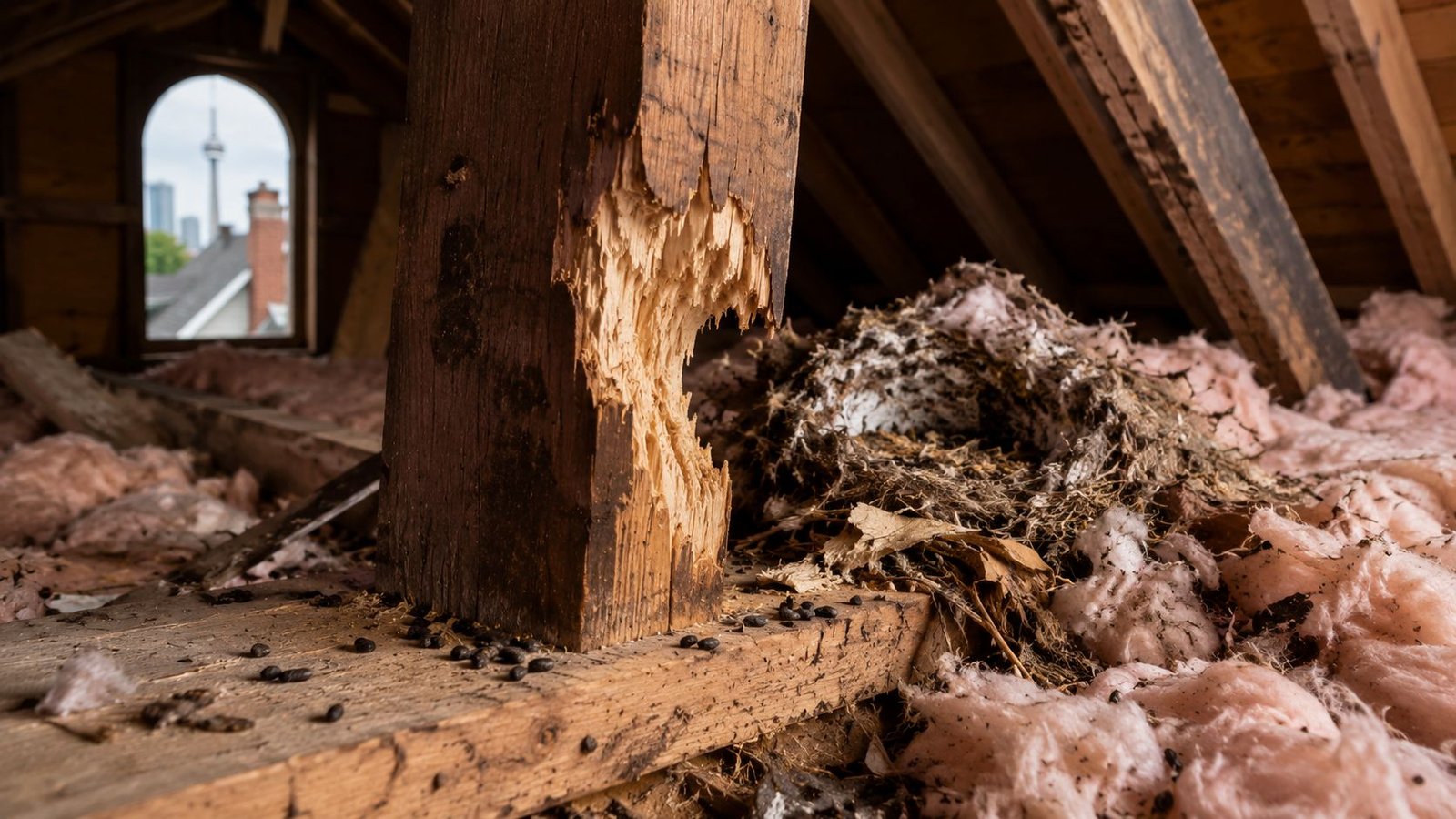
Once an inspection starts, several patterns tend to confirm squirrel activity:
- Chewed openings at the roofline. Squirrels often enlarge weak spots around vents, soffits, fascia edges, and roof transitions.
- Compressed or scattered insulation. Nesting squirrels don't leave attic insulation undisturbed.
- Droppings and nesting material. These signs help confirm that the animal has settled, rather than passing through.
- Chewed wiring or wood. This raises the urgency because gnawing can affect both safety and repair costs.
A quick exterior look from the ground can also reveal bent vent covers, lifted edges, or dark rub marks near entry points. Older Toronto homes are especially vulnerable because rooflines, dormers, and patched repairs often create small weaknesses that squirrels exploit.
Not every squirrel problem is dramatic at first. Some start with a single access point and light attic activity. Others involve multiple vulnerable openings, which is why a proper inspection matters more than guesswork.
Humane Squirrel Removal and Ontario Wildlife Laws
Many homeowners still assume the solution is simple. Catch the squirrel, move it somewhere else, and the problem is over. That approach sounds practical, but it creates legal, humane, and structural problems.
Why quick trapping creates bigger problems
The Toronto Wildlife Centre states that wildlife removal companies are not well monitored or licensed, advises homeowners to ask detailed questions about practices, warns that relocating squirrels is illegal and harmful, and recommends humane methods such as live traps or one-way doors while emphasizing that technicians should check for babies year-round in any removal plan. That guidance appears in its advice on choosing a squirrel removal company.
That matters because the underlying issue usually isn't the individual squirrel. It's the opening that allowed entry. If the animal is removed but the gap remains, another squirrel can use the same route.
Improper removal also creates a common disaster inside Toronto homes. A mother is excluded or taken away while young remain in the attic or wall cavity. Then the homeowner is dealing with distress calls, contamination, and a much harder retrieval job.
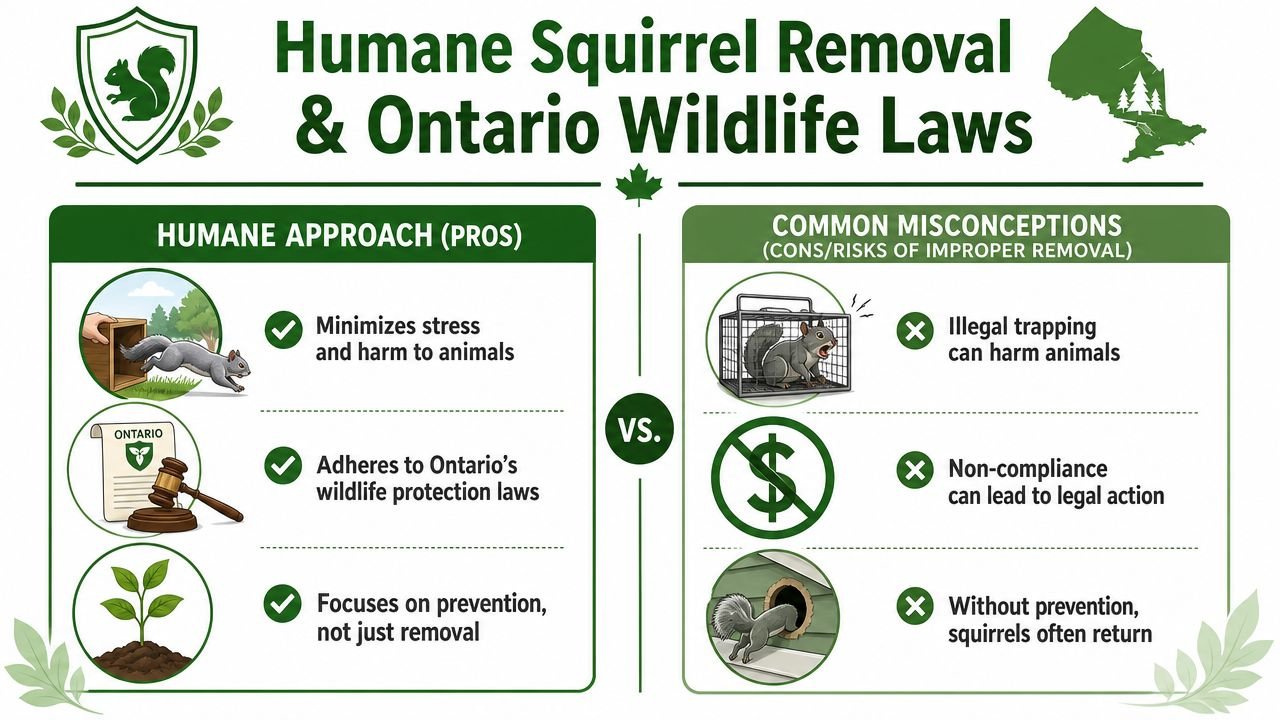
A legal wildlife job isn't just about removing an animal. It's about making sure the method doesn't create suffering or a repeat entry point.
What humane compliant removal looks like
A proper squirrel removal Toronto service focuses on exclusion, not just capture. In practical terms, that means the technician identifies the main entry point, checks for young, secures secondary openings, and uses a method that allows the squirrel to exit without re-entering.
Homeowners should also ask direct questions before approving work:
- What method will be used. The answer should describe exclusion clearly.
- How will the structure be sealed. A vague promise to “take care of it” isn't enough.
- How are babies checked for. This should never be skipped.
- What happens after the animal leaves. Final closure is part of the job, not an extra afterthought.
For readers comparing approaches, humane wildlife removal explains why exclusion-based work is the responsible standard for nuisance wildlife in occupied buildings.
The trade-off is straightforward. A fast capture-only approach may look cheaper or quicker at the start, but it often leaves the property vulnerable. A documented, humane exclusion plan usually solves the actual problem because it addresses both the animal and the access route.
The Professional Squirrel Removal Process Step by Step
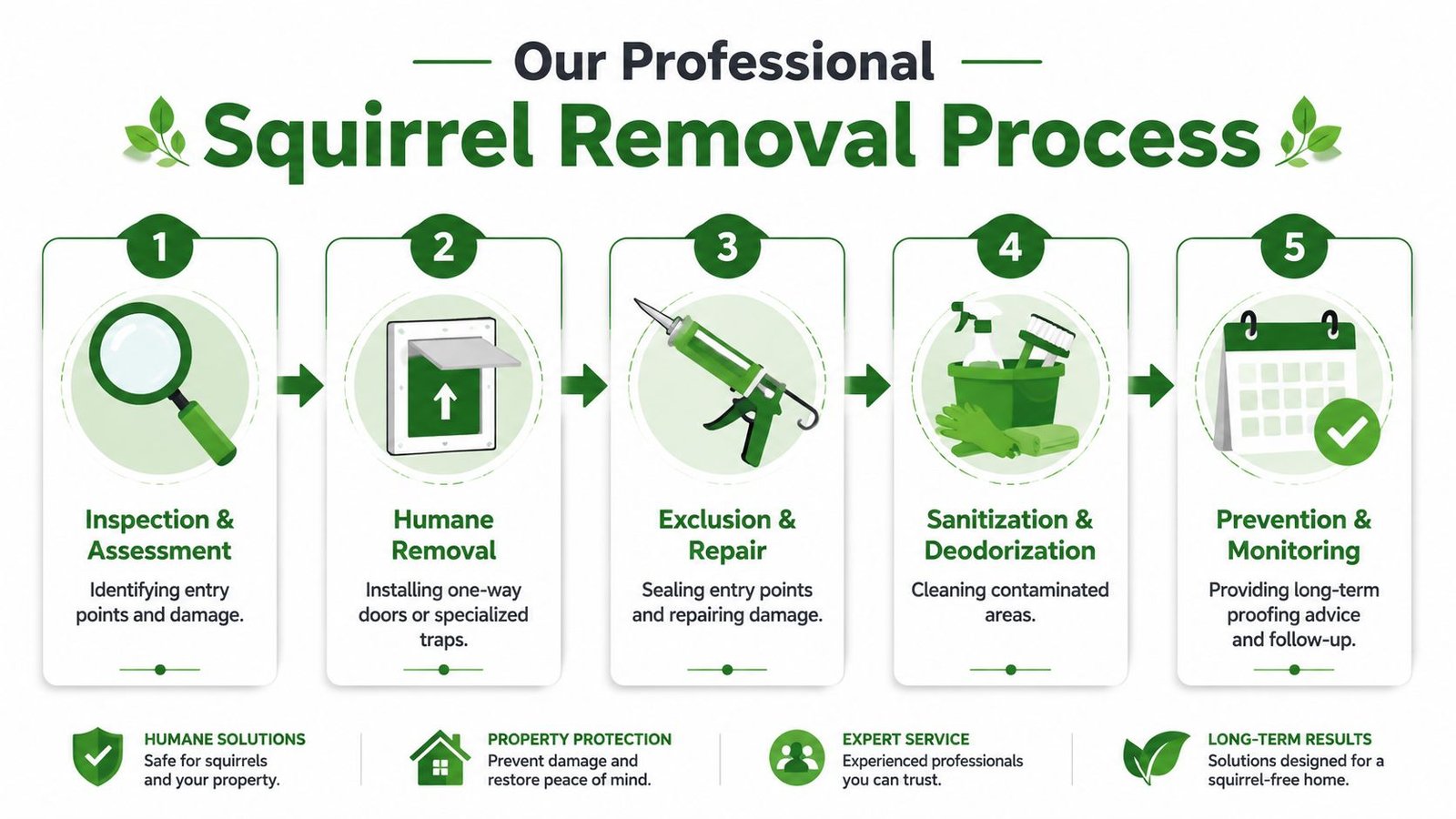
A professional squirrel job follows a sequence. Skipping steps is what leads to trapped animals, re-entry, or hidden damage being missed.
Inspection comes first
The first job is to inspect the full structure, not just the hole the homeowner noticed. On Toronto properties, squirrels often enter through roof vents, soffits, fascia gaps, gable vents, or weak construction joints near the upper roofline. A technician needs to identify the main access point and any secondary vulnerabilities nearby.
Inside the attic, the inspection looks for nesting material, travel paths, chewing, contamination, and signs of young. The goal is to understand whether the squirrel is actively using the space, sheltering briefly, or raising a litter.
Exclusion and sealing must work together
The City of Toronto advises residents to use a local animal removal agency and outlines an attic exit method that includes waiting 24 to 48 hours before blocking holes, then checking again after another 24 to 48 hours. The same municipal guidance emphasizes durable exclusion materials such as 1/4-inch wire mesh to stop re-entry, as described in the City's advice on dealing with squirrels in Toronto homes.
That timeline reflects how a proper exclusion works. The main opening is fitted with a one-way device or another humane exit method, while all other likely access points are secured first. If a technician seals everything at once without confirming exit, there's a real risk of trapping an animal inside.
A strong exclusion plan usually includes:
- Main entry control with a one-way exit system.
- Secondary gap sealing so the squirrel can't shift to another opening.
- Chew-resistant materials at vulnerable points, especially vents and roof edges.
- Monitoring during the exit period to confirm activity has stopped.
Blocking a hole the same day may feel decisive. On wildlife jobs, it can turn one squirrel problem into several bigger ones inside the structure.
Final closure and cleanup
After the exit period, the final opening is sealed permanently. This is the point where durable workmanship matters. Light screening, soft patch materials, or cosmetic filler won't hold up where squirrels have already tested the area.
If the attic has contamination or displaced insulation, the homeowner may also need cleaning, odour control, or selective restoration. Not every squirrel infestation leaves heavy interior damage, but the technician should assess it rather than assume the attic is fine once the noise stops.
Some providers, including Vanish Pest Control Inc., offer wildlife exclusion along with inspection, sealing, and related cleanup services for Toronto properties. What matters most is that the process is complete, documented, and focused on preventing re-entry rather than just removing visible activity.
Squirrel Removal Costs in Toronto What to Expect
Cost is one of the first questions Toronto homeowners ask, and it should be. Pricing varies because squirrel jobs aren't all the same. A single accessible entry point is very different from an attic infestation with roof damage, sanitation needs, and multiple gaps to seal.
What usually affects the price
Ontario pricing data shows that standard squirrel removal commonly falls between $200 and $600, while difficult attic cases with repair work can reach $1,500+. The same breakdown states that basic trap-and-relocate service averages about $400, and inspection fees can range from $100 to $250, according to this Ontario guide to squirrel removal cost breakdowns.
For Toronto properties, the biggest cost drivers are usually the structure and the scope of repairs. Steep roofs, older soffits, hidden entry points, and confined attic spaces make the work more complex. A condo townhome roofline and a detached older home in Toronto often present very different access challenges.
A homeowner is typically paying for several layers of work, not just the animal's removal:
| Cost factor | Why it changes the total |
|---|---|
| Inspection | Complex properties take more time to assess properly |
| Removal method | Humane exclusion requires setup, monitoring, and final closure |
| Repairs | Damaged vents, soffits, fascia, or roof edges may need restoration |
| Sanitation | Nesting debris and contamination can add labour and material costs |
Why the lowest quote can cost more later
The cheapest option often strips the job down to a single visit or a capture-based approach. That can leave vulnerable openings on the structure, which means the homeowner pays again when the next squirrel finds the same weakness.
A better way to judge price is to ask what's included. Does the quote cover inspection, exclusion, sealing, follow-up, and repair recommendations? If it doesn't, the lower number may only be the starting cost of a recurring problem.
Toronto homeowners are usually better served by treating squirrel removal as a building protection service, not a simple animal pickup.
Long-Term Prevention How to Squirrel-Proof Your Home
Once squirrels have tested a house, prevention needs to become part of regular exterior maintenance. Toronto weather, mature trees, and ageing roof components give squirrels plenty of opportunities to exploit small weaknesses.
The outdoor checklist that matters most
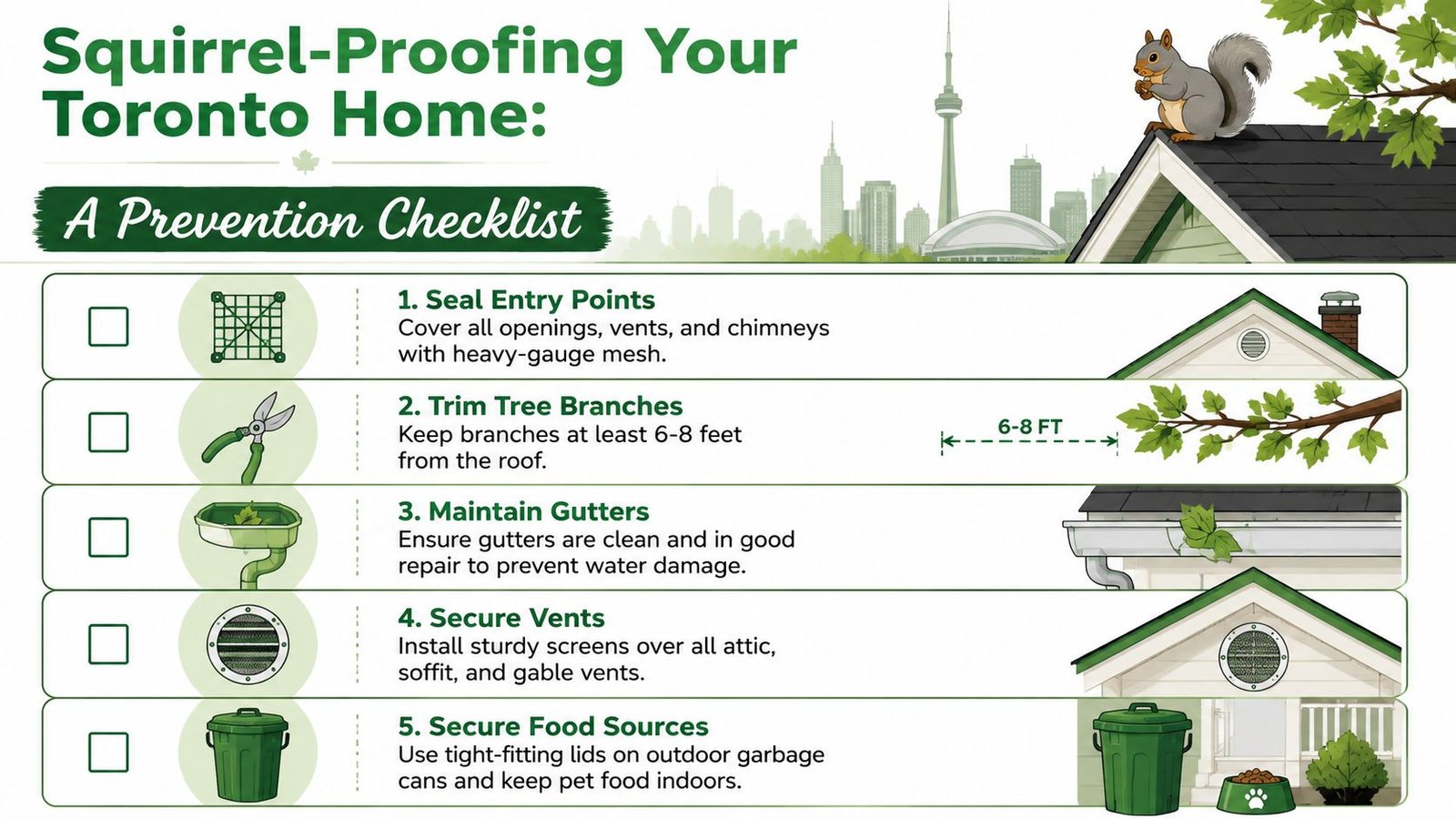
A practical squirrel-proofing plan for Toronto homes includes the following:
- Trim access routes. Branches that overhang or closely approach the roof make upper entry points easier to reach.
- Protect vents and openings. Roof vents, soffit vents, and similar penetrations need sturdy covers, not light decorative screening.
- Watch roof edges and trim. Small separations around fascia and soffit lines often become entry points.
- Reduce food attraction. Garbage, compost, and outdoor pet food can keep squirrels active around the property.
For a broader look at repeat attic entry, this article on how raccoons and squirrels invade your attic and how to keep them out gives homeowners a useful prevention overview.
Maintenance issues that invite wildlife
Prevention isn't only about animals. It's also about keeping the building envelope tight. Water damage, warped trim, and loose exterior materials often create the exact kind of weakness squirrels need.
Homeowners who aren't sure how these roofline components fit together may find this guide to soffit and fascia repair and damage helpful when checking vulnerable exterior areas.
Homes with recurring squirrel issues usually have a structure problem first and a wildlife problem second.
A few habits make a difference over time:
- Check after storms. Wind and freeze-thaw cycles can loosen vulnerable exterior points.
- Look high, not just low. Many squirrel entries are above eye level.
- Treat small damage early. Minor trim failure is easier to fix than a chewed opening into an attic.
- Reinspect after any repair. New roof, vent, or gutter work can sometimes leave gaps if details are missed.
Why Choose Vanish for Your Toronto Squirrel Removal
Toronto squirrel work demands more than a quick response. It requires humane handling, careful inspection, and durable exclusion that fits the property's actual weak points. That's especially important on older Toronto homes, semis, townhomes, and rooflines with multiple vents and transitions.
Homeowners should choose a provider that explains the method clearly, checks for young, secures secondary openings, and treats re-entry prevention as part of the core job. The right team should also speak plainly about repair needs, cleanup options, and what will happen before the final opening is sealed.
For Toronto residents dealing with attic noise, wall movement, or visible roofline entry, the best next step is a professional inspection and an exclusion plan built for long-term results.
Frequently Asked Questions About Squirrel Removal
Can squirrels in the attic damage wiring
Yes. Squirrels chew as part of normal behaviour, and attic wiring can be part of that damage pattern. They can also disturb insulation and tear nesting material into hidden spaces, which is why attic activity should be addressed quickly.
Should a homeowner just block the hole right away
No. Blocking an active entry point without a proper exit plan can trap a squirrel inside the attic or wall cavity. If young are present, the situation becomes even worse. The safer approach is to confirm the removal method first and close the final opening only after the animal has exited.
Are baby squirrels a concern only in spring
No. Baby squirrels should be considered year-round when a technician is planning removal. That's one of the most important reasons a fast seal-up or capture-only approach can fail both practically and humanely.
What should a homeowner ask before hiring help
A few questions reveal a lot:
- What exact removal method will be used
- How will the company check for babies
- What materials will be used to seal the entry points
- Will secondary openings be identified and secured
- Is the solution focused on exclusion or only on capture
Is squirrel removal different for condos and multi-unit buildings
It can be. Shared rooflines, connected soffits, and multiple upper penetrations can make the inspection more involved. In those cases, the technician has to think beyond a single unit and identify whether the entry route affects adjoining sections of the structure.
What doesn't work well for long-term control
Quick patch jobs, light screening, and one-visit fixes that ignore the rest of the roofline usually don't hold up. Squirrels are persistent, and if the structure still offers a weakness, they often test it again.
If squirrels are scratching in the attic, chewing at the roofline, or getting into wall spaces, Vanish Pest Control Inc. can help arrange a professional inspection for Toronto properties and provide a humane exclusion plan focused on safe removal, proper sealing, and long-term prevention.