
A lot of Toronto homeowners start looking up termite treatment cost after a bad few minutes in the basement. A strip of bubbling paint near a baseboard. A pile of shed wings on a sill. Soft wood around a window frame. The stress is immediate because termites rarely announce themselves early, and it's widely known that the repair bill can be worse than the treatment bill.
The problem is that most online cost guides don't help much once the property is in Toronto. A downtown semi, a Scarborough townhome, and an older detached house with a finished basement won't be priced the same way. Building type, access, treatment method, and follow-up requirements all change the quote. For Toronto residents, the only useful way to think about termite treatment cost is local, method-specific, and realistic about what happens after the first visit.
Table of Contents
- Why Toronto Termite Cost Guides Must Be Local
- The First Step Your Termite Inspection Cost in Toronto
- Toronto Termite Treatment Costs by Method
- Key Factors That Influence Your Final Termite Bill
- Beyond the Initial Bill Warranties and Follow-Up Costs
- How to Manage and Reduce Your Termite Control Costs
- Toronto Termite Treatment Cost FAQ
- Is termite treatment in Toronto usually a flat fee
- Is a termite inspection worth paying for if there's only a small sign
- Can condo owners have termite issues even if they don't own the whole building
- Does homeowners insurance cover termite damage
- Is DIY termite treatment a good way to save money
- What should a Toronto homeowner do first after finding possible termite signs
Why Toronto Termite Cost Guides Must Be Local
A homeowner in Toronto doesn't need another generic average pulled from a national article. They need to know what applies to Toronto homes, where basements, party walls, narrow side access, and older foundations can change both the treatment plan and the labour involved.
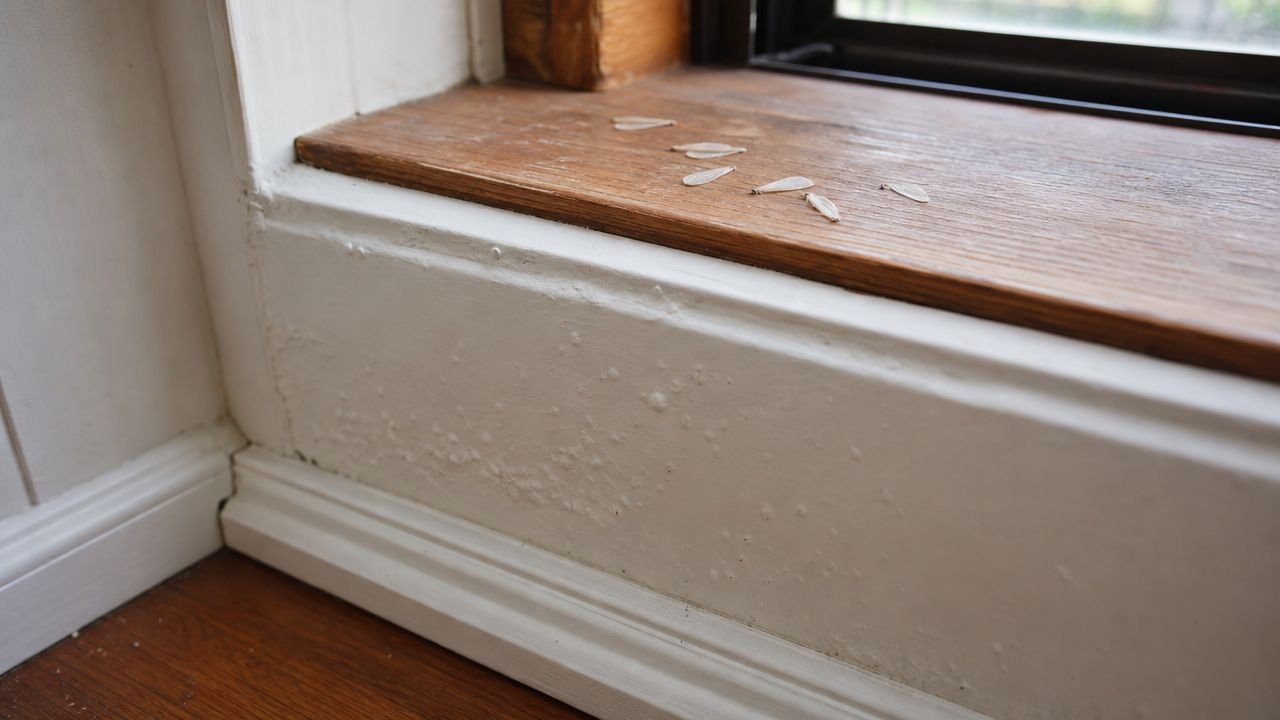
National pages often cite broad ranges like $263 to $1,033, but Ontario homeowners face different realities because subterranean termites are the dominant issue, and local providers price around specific treatment types such as perimeter liquid work and bait systems for GTA property styles like semis, townhomes, and homes with basements, as outlined in this Ontario-focused cost discussion.
That local difference matters in real life. A detached house in East York may need a longer treated perimeter. A row of attached homes in Toronto may require closer attention to shared structural conditions and access limits. A condo owner may have signs around trim or window framing, but the quote still depends on whether the activity is localised inside one unit or tied to a broader building issue.
Why broad averages mislead
Generic averages flatten the job into one number. Termite work doesn't behave that way.
A realistic quote in Toronto depends on questions like these:
- What kind of structure is being treated. Detached house, semi, townhome, condo unit, mixed-use building.
- Where the activity is showing up. Basement sill plate, garage wall, slab edge, utility entry points, window trim.
- How the technician can reach the affected areas. Finished basements, tight crawlspaces, decks, porches, and additions can all complicate treatment.
- Whether the goal is elimination, prevention, or both. Those are different scopes and different costs.
Local rule: A termite quote that doesn't mention the foundation layout, access points, and treatment method usually isn't specific enough to trust.
For homeowners comparing broader Toronto pest pricing across service categories, this Toronto pest control cost guide gives useful context. But termites still need their own local analysis because the treatment plan is far more dependent on structure and scope than many other pest problems.
The First Step Your Termite Inspection Cost in Toronto
Before anyone can price treatment properly, the property needs a real inspection. Not a quick walk-around. Not a photo texted from the basement. A proper termite inspection is the diagnostic stage that tells a homeowner whether there are termites, where they're active, how far they've moved, and what kind of treatment makes sense.
In Ontario, a professional termite inspection typically costs between CAD $250 and $500, and Orkin also notes that U.S. residents spend an estimated US$5 billion annually on termite control and termite damage repair, which shows why early detection matters so much for owners trying to avoid much larger losses, as noted in these termite statistics and inspection cost references.
What a proper inspection includes
In Toronto homes, technicians usually focus on the places where subterranean termite evidence tends to show first. That often means lower structural areas and moisture-prone zones.
A thorough inspection typically looks for:
- Mud tubes and shelter tubes along foundation walls, support posts, slab edges, and utility penetrations.
- Wood damage signs such as blistering, hollow-sounding trim, soft baseboards, or pinched-looking wood surfaces.
- Moisture conditions around leaks, grading problems, condensate lines, and damp basement corners.
- Access risk points including attached decks, steps, fence junctions, or wood-to-soil contact.
- Signs of previous treatment that may affect the next recommendation.
The inspection is where homeowners often save money later. If the issue is identified early and kept localised, the next stage may stay much smaller than a full perimeter strategy.
Inspection versus formal reporting
Not every inspection serves the same purpose. Some are meant to confirm whether active termites are present and provide a treatment recommendation. Others are tied to a sale, refinance, or property management requirement and need more formal documentation.
For Toronto real estate transactions, buyers and sellers often need a more structured written record of findings. That report work takes more time because the inspector has to document visible evidence, note inaccessible areas, and state whether current activity was observed. Landlords and property managers may also need reporting that can be shared with boards, insurers, or maintenance teams.
A termite inspection should answer three practical questions. Is there active termite evidence, how far does it appear to extend, and what treatment scope matches the building.
A good inspection also sets expectations clearly. If the technician can't access part of the basement wall because of finished construction, stored materials, or built-in cabinetry, that limitation should be stated before anyone assumes the quote covers every hidden void in the structure.
Toronto Termite Treatment Costs by Method
Once termites are confirmed, the treatment cost depends on the method selected. Many Toronto homeowners often find this frustrating. They expect one standard price, but termite treatment cost is really a ladder. Smaller localised jobs sit at the lower end, and broader protective systems move up fast.
According to Canstar's Ontario pricing summary, spot treatments range from CAD $300 to $900, baiting systems run CAD $2,500 to $3,500, and a termite barrier can cost as much as CAD $5,000, with the same source also noting that bait systems may require repeat visits that add around CAD $800 per visit in some cases, as detailed in this Ontario termite treatment cost breakdown.
2026 Toronto Termite Treatment Cost Comparison
| Treatment Type | Typical Cost Range (CAD) | Best For | Pros | Cons |
|---|---|---|---|---|
| Spot treatment | $300 to $900 | Localised termite activity in a defined area | Lower upfront cost, targeted application, useful when activity is clearly limited | May not address wider colony pressure if the problem extends beyond the visible area |
| Baiting system | $2,500 to $3,500 | Ongoing colony control and monitoring around the structure | Useful for monitoring, less disruptive than some structural work | Higher initial cost and may involve repeat service visits |
| Termite barrier | Up to $5,000 | Homes needing broad perimeter protection | Strong perimeter-focused strategy for subterranean termite risk | Higher cost and scope depends heavily on site conditions |
Spot treatment for localised activity
Spot work is usually the least expensive option because the treated area is smaller and the labour is more contained. This can make sense when activity appears isolated, such as a limited section of trim, one wall void, or a specific basement area where the technician can clearly identify the affected zone.
This method works best when the evidence supports a local problem, not a broad one. If there's widespread mud tubing around the foundation or multiple entry points, spot treatment alone often won't be enough.
Baiting systems for colony control and monitoring
Baiting systems are a different strategy. Instead of just treating one visible point, the technician installs stations that target termite activity around the property and support long-term monitoring.
For some Toronto homes, especially where trenching or perimeter treatment is difficult, baiting can be a practical choice. It can also help in situations where owners want ongoing monitoring built into the plan. The trade-off is cost and patience. Bait systems are not usually the cheapest route, and they may come with follow-up visits.
Practical rule: If a quote includes baiting, the homeowner should ask exactly what follow-up is included and what gets billed separately.
Homeowners who want a deeper look at causes, warning signs, and treatment approaches can review this termite causes protection and treatment resource.
Barrier treatments for perimeter protection
Barrier work is often the most relevant discussion in Southern Ontario because subterranean termites approach from the soil. A perimeter-focused treatment aims to create a treated zone around the structure so termites can't move into the building the same way.
This is often where the quote rises. Detached homes with larger perimeters, additions, patios, or awkward access points require more labour and more treated length. Older Toronto houses can also be more complicated because of retrofits, finished basements, and mixed foundation conditions.
Why fumigation is rarely the Toronto answer
Homeowners sometimes ask about whole-structure fumigation because they've seen it online. For most termite issues in Toronto, that's not the typical solution. The local problem is usually subterranean termites, which are addressed through soil, perimeter, localised, or monitoring-based methods.
That's why U.S.-style average articles often mislead GTA readers. They mix very different termite problems into one national number. In Toronto, the better question isn't “what's the average?” It's “what treatment fits this building and this infestation?”
Key Factors That Influence Your Final Termite Bill
Two Toronto houses can both have termites and still get very different quotes. That isn't random. It usually comes down to scope, perimeter, access, and how much of the structure the treatment has to protect.
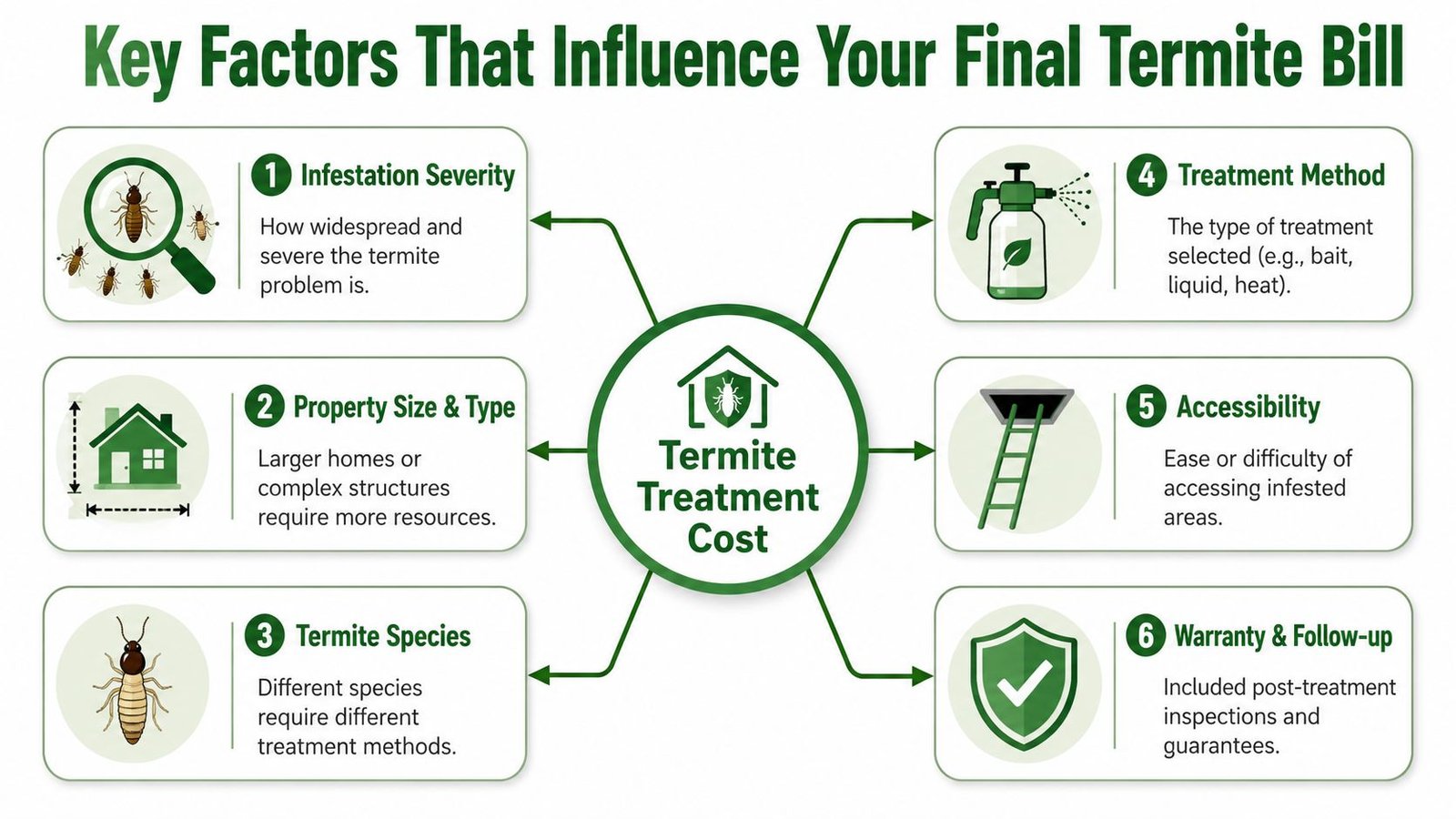
A useful benchmark for understanding termite treatment cost is linear-foot pricing. One operator example quotes C$6.25 per linear foot for crawlspace homes and C$5.25 per linear foot for basement or concrete slab foundations. On a 276-linear-foot crawlspace home, that works out to roughly C$1,725 before taxes or add-ons, which is a good illustration of why larger properties cost more to protect, based on this linear-foot pricing example.
Property size and perimeter
Square footage matters, but perimeter often matters more in termite work. A home with more exterior foundation length takes more treatment material, more inspection time, and more physical effort.
That shows up often in Toronto neighbourhoods with:
- Detached homes on wider lots that need longer perimeter coverage
- Irregular additions that create extra corners, seams, and footing changes
- Older houses with mixed foundation sections where one side may be easier to treat than another
A narrow but deep home may not price the same as a boxier structure, even if the interior living area feels similar.
Severity access and building layout
The same infestation is harder to treat when the access is poor. Finished basements are a common example. If the visible activity is near a utility room with clear wall access, the job is simpler. If it runs behind drywall, built-ins, or tightly enclosed sections, labour goes up and the treatment plan may need to change.
Toronto property layouts that commonly complicate termite work include:
- Finished lower levels with limited foundation exposure
- Townhomes and semis where side access is narrow
- Older basements with storage packed against walls
- Decks, porches, and landscaping that obstruct treatment zones
The final bill usually reflects how hard it is to reach the termite pathway, not just how easy it is to see the damage.
If there's already visible structural damage, owners may also need to separate pest control costs from repair and documentation costs. For anyone trying to organise evidence and next steps after property damage is discovered, this guide to successful insurance claims can help frame the documentation side of the problem.
Species method and scope
In Toronto, the practical concern is usually subterranean termites. That matters because the treatment scope often has to account for soil contact, foundation entry points, and colony pressure beyond the visibly damaged wood.
The method selected then changes the final price:
- Local scope tends to stay lower.
- Monitoring-based systems raise long-term service involvement.
- Perimeter defence increases labour where the footprint is larger or access is harder.
That's why a quote should always be read as a scope document, not just a price tag.
Beyond the Initial Bill Warranties and Follow-Up Costs
One of the biggest mistakes homeowners make is treating the first invoice like the whole cost. In termite work, that's often not true. The initial service may solve the immediate problem, but long-term protection often depends on monitoring, repeat inspections, and warranty renewals.
A useful way to frame this is the one-to-three-year view. As noted in this discussion of ongoing termite ownership costs, the most important question isn't just what treatment costs today. It's what the full one-to-three-year cost looks like after adding monitoring, repairs, and annual warranty renewals.
Why the first invoice isn't the whole story
The hidden issue is that termite treatment isn't always a one-and-done service. Some methods need follow-up to confirm activity has stopped. Monitoring programs need ongoing checks. If bait is part of the strategy, the stations have to be reviewed and maintained properly.
That matters even more in older Toronto homes where moisture, concealed voids, or hard-to-access structural sections make recurrence harder to rule out at a glance.
Common follow-up cost drivers include:
- Annual inspection or warranty renewals tied to continued coverage
- Monitoring visits after the main treatment is complete
- Additional bait or service calls if the selected method requires active oversight
- Repairs after control when damaged wood, trim, or finishes still need restoration
What Toronto owners should ask before approving treatment
A quote can look reasonable and still leave out important future costs. The paperwork should answer what happens after the initial service window ends.
Homeowners and property managers should ask:
- What follow-up inspections are included
- Whether warranty renewal is optional or expected
- What conditions could void coverage
- Whether future activity is treated under the agreement or billed separately
- Whether structural repairs are outside the pest scope
A low first invoice can become an expensive plan if the monitoring and renewal terms were never discussed clearly at the start.
For landlords, condo boards, and buyers of older Toronto properties, that longer view is often the difference between a controlled pest issue and a recurring building expense.
How to Manage and Reduce Your Termite Control Costs
The best way to control termite treatment cost is to stop small signs from becoming a larger structural job. Once termites are established, the homeowner usually isn't saving money by waiting. Delay tends to increase scope, not reduce it.
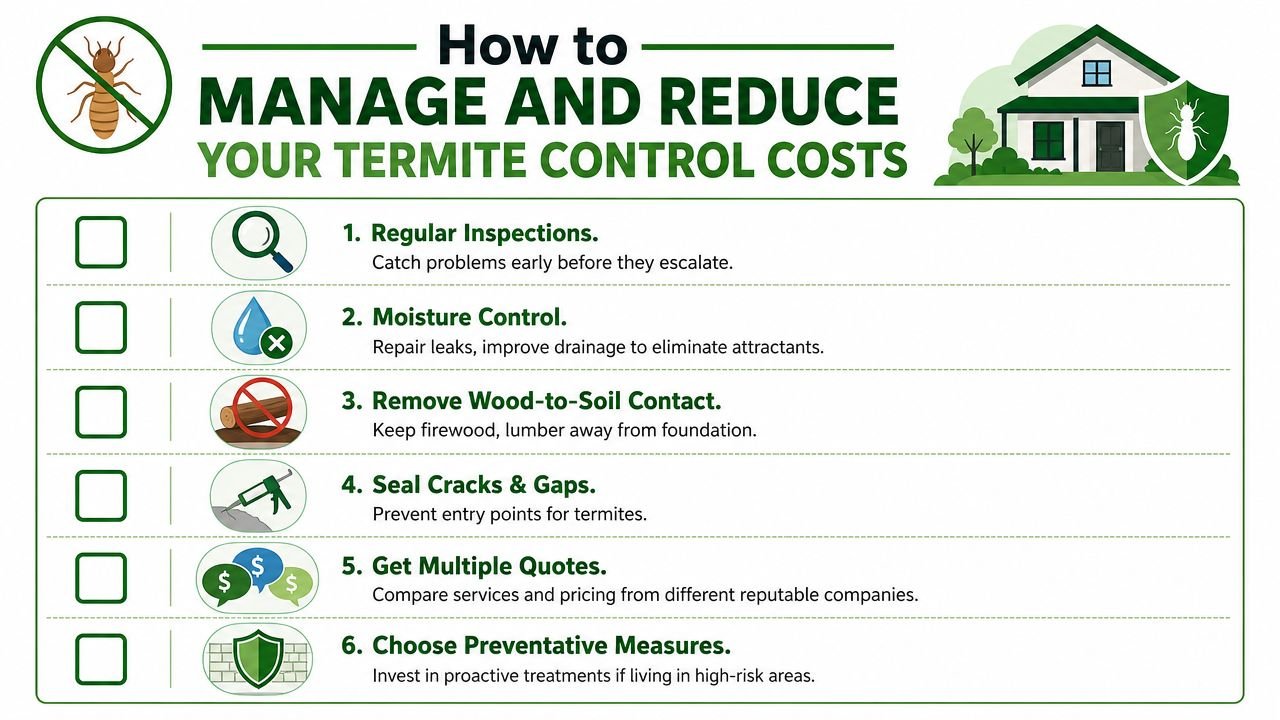
Practical prevention steps for Toronto homes
A few maintenance habits make a real difference, especially in houses with basements, older wood framing, or known moisture problems.
- Reduce moisture fast. Fix plumbing leaks, manage condensation, and make sure downspouts move water away from the foundation.
- Keep wood off soil. Firewood, scrap lumber, and outdoor wood materials shouldn't sit against the house.
- Expose problem areas where possible. If basement walls are packed with storage, termite signs can stay hidden longer.
- Seal obvious gaps. Cracks and utility penetrations won't make a house termite-proof, but they can reduce easy entry points.
- Book inspections early when signs appear. Bubbling paint, shed wings, and mud-like lines near the foundation shouldn't be ignored.
How to compare quotes without missing the real cost
The cheapest quote isn't always the lowest-cost outcome. Toronto residents should compare scope, follow-up terms, and whether the proposal fits the building type.
A practical screening step is to find reputable local professionals using a licensing and vetting mindset, especially when any structural repair work may follow the pest treatment. It also helps to review broader prevention planning for the property, including this guide on protecting a home from future pest infestations in the GTA.
Good termite cost control starts before treatment. It starts with moisture control, access, and not waiting for visible damage to spread.
Toronto Termite Treatment Cost FAQ
Is termite treatment in Toronto usually a flat fee
No. The quote is usually based on the scope of the infestation, the treatment method, the building layout, and how much of the structure needs protection. In Toronto, homes with basements, additions, and tight access often need a more customised price than generic online averages suggest.
Is a termite inspection worth paying for if there's only a small sign
Yes. A small visible sign can still point to hidden activity. Inspection is the stage that separates a limited issue from a broader structural concern. It's also the only reliable way to choose between a localised treatment, a monitoring system, or wider perimeter protection.
Can condo owners have termite issues even if they don't own the whole building
Yes. A condo resident can notice signs inside a unit, but the cause may involve shared structural elements or building-wide conditions. In that situation, the inspection findings need to be reviewed together with building management before anyone assumes the issue is isolated to one suite.
Does homeowners insurance cover termite damage
Coverage depends on the policy and the cause of loss. Many owners assume termite damage will be treated like sudden accidental damage, but that isn't always how insurers look at it. The safest step is to review the policy wording and document damage carefully before repair work starts.
Is DIY termite treatment a good way to save money
Usually not. DIY products may kill visible insects without addressing the colony pathway or the structural entry point. That can delay proper treatment while the activity continues behind walls or along the foundation. For subterranean termite issues in Toronto homes, misdiagnosis is one of the most expensive mistakes.
What should a Toronto homeowner do first after finding possible termite signs
Arrange a professional inspection, avoid disturbing the area too much, and document what was found. Photos of wings, mud tubes, or damaged trim can help support the inspection process, especially if repairs or building management discussions follow.
If a Toronto homeowner has found termite signs and needs a clear, professional next step, Vanish Pest Control Inc. provides termite inspections, treatment plans, and practical guidance for homes, condos, and rental properties across the GTA. A prompt inspection can turn uncertainty into a defined scope, a real cost, and a plan to protect the property properly.